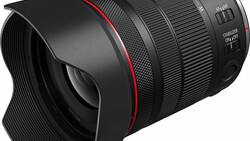
Canon's new RF 20-50mm f/4L IS USM PZ covers ultra-wide to standard focal lengths in a compact, lightweight body with a powered zoom and optical stabilization. At around $1,400, it sits in a competitive price bracket where Canon already has some well-established options.
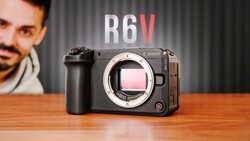
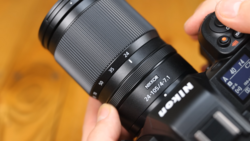
Coming to you from Gordon Laing, this detailed first-look video puts the RF 20-50mm f/4L IS USM PZ through its paces on the Canon EOS R6 V, testing everything from focus speed to image quality to stabilization performance. Laing notes that the powered zoom works in two distinct modes: a spring-loaded W/T twist that gives you two adjustable speeds, and a more traditional labeled zoom ring that you unlock via a switch on the barrel. Both are motor-assisted, but the second mode feels closer to a conventional manual zoom, with reaction times that Laing describes as surprisingly responsive for all but the fastest adjustments. That distinction matters if you shoot both stills and video, since most power zoom lenses lean heavily toward one or the other.
On image quality, Laing shoots with the Canon EOS R6 V and finds the lens performs well wide open at f/4 across the frame, at both 20mm and 50mm ends. Corner detail holds up cleanly, vignetting is minimal, and there are no obvious aberrations to flag. Diffraction starts to soften things around f/11 and gets progressively worse toward f/22, which is standard for any lens. The stabilization testing covers handheld video at 20mm with IBIS, standard digital stabilization, and the high digital stabilization setting, each producing noticeably different results in terms of crop and smoothness.
Where the video gets genuinely useful is in Laing's direct comparison with two competing Canon zooms: the RF 24-105mm f/4L IS USM and the RF 28-70mm f/2.8 STM. His take on the 24-105mm is blunt: he wasn't impressed by his own copy's overall performance and actually found the cheaper STM version more compelling despite its variable aperture. The 28-70mm f/2.8 trades the ultra-wide end for a bit more reach and an extra stop of light, and performs well especially for portraits, but lacks both the L-series build and the 20mm starting point. Laing lands on the RF 20-50mm f/4L as his pick at this price, drawing an interesting parallel to the much-loved EF 17-40mm f/4L USM, a lens he owned personally but found frustratingly inconsistent from copy to copy. Whether the new lens avoids that problem is something he addresses in the video with actual test results. Check out the video above for the full breakdown from Laing.



No comments yet