
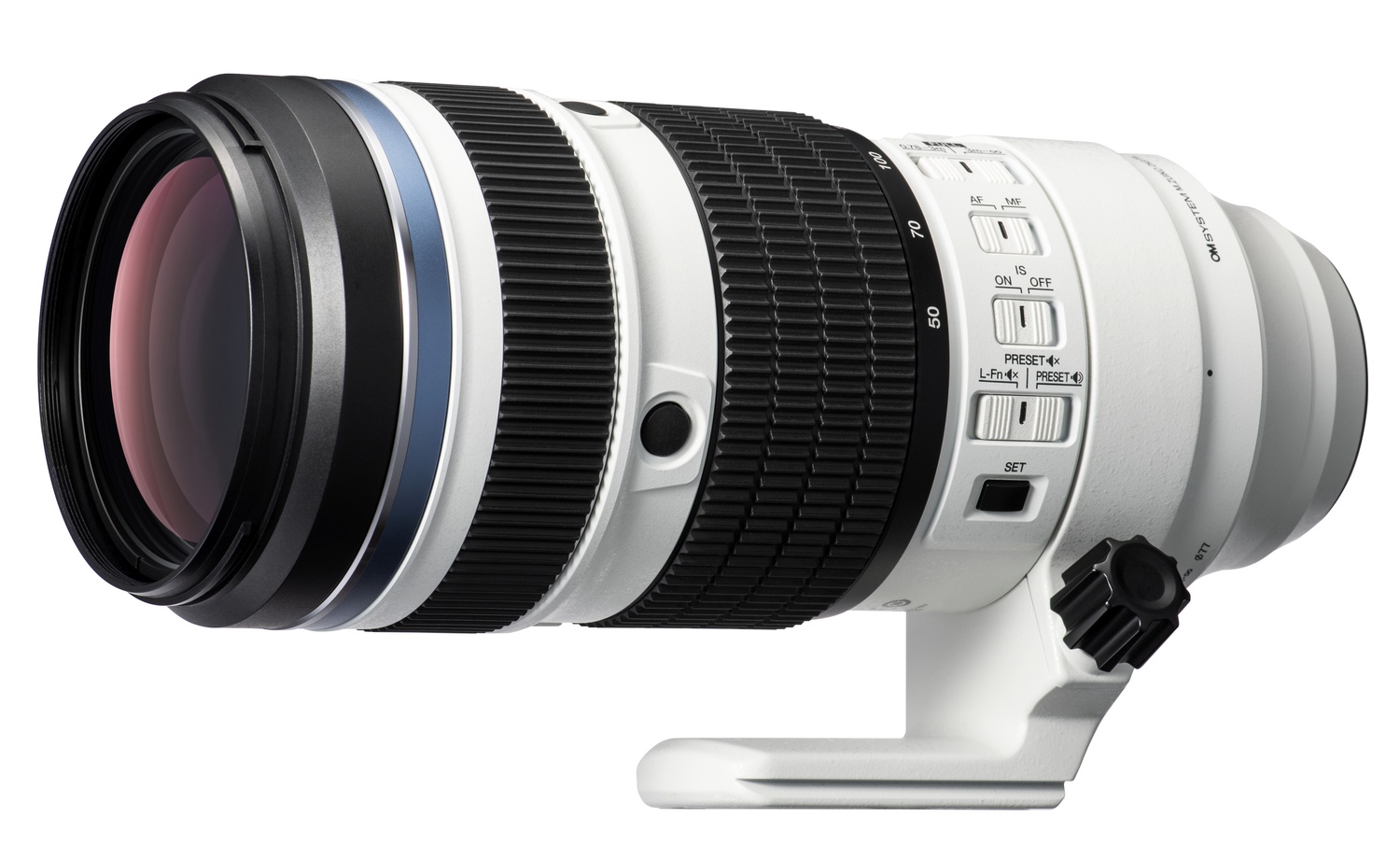
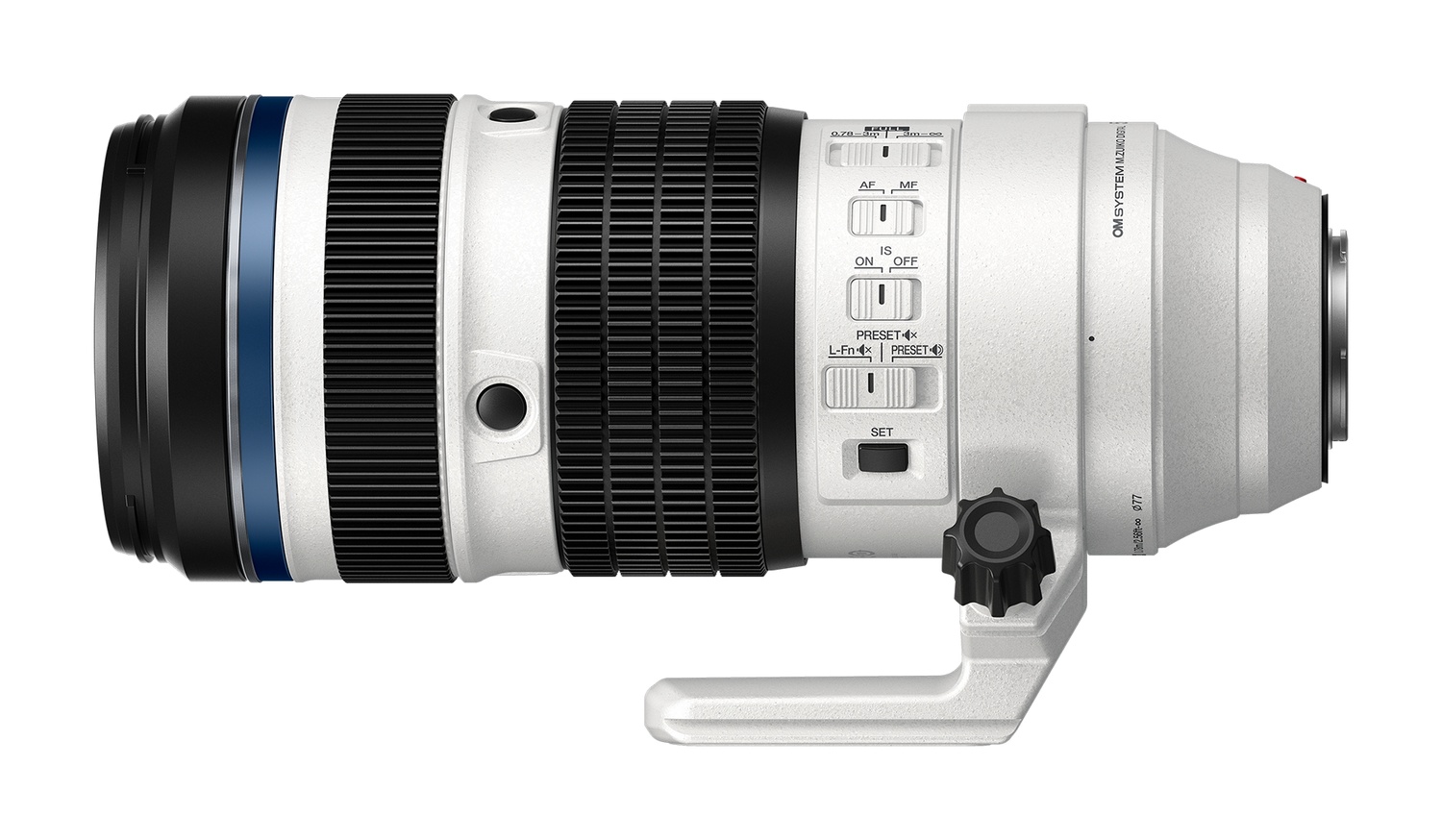
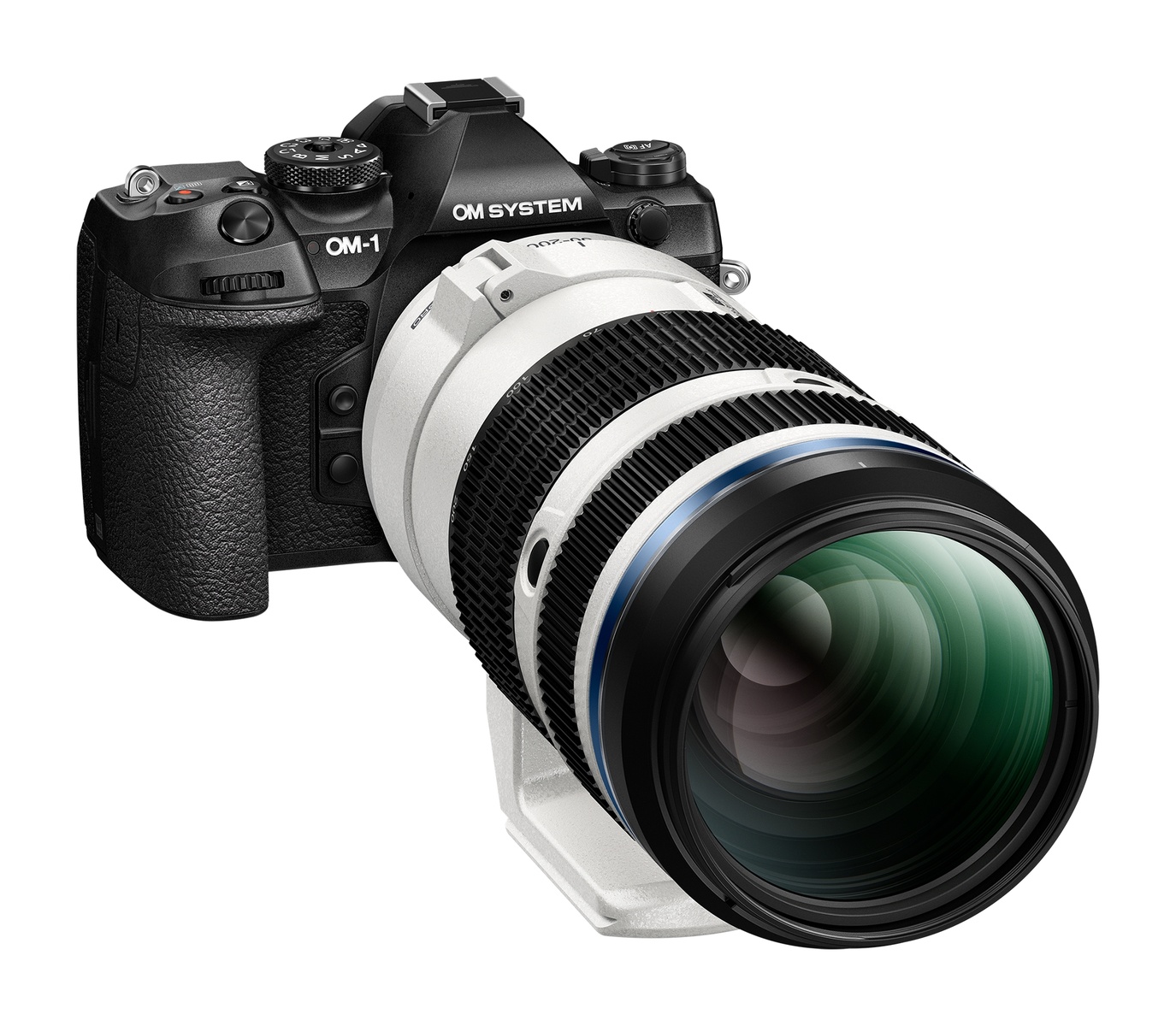
OM Digital Solutions has introduced the M.Zuiko Digital ED 50-200mm f/2.8 IS PRO, a professional super telephoto zoom lens for the Micro Four Thirds system. With a 100–400mm equivalent focal range and a constant f/2.8 aperture, the lens is designed to give photographers and videographers a versatile option for wildlife, sports, and macro work.
Weighing approximately 1,075 g without its tripod mount, the 50-200mm f/2.8 IS PRO aims to deliver portability alongside high optical performance. It incorporates OM System’s latest optical coatings and stabilization technologies, making it practical for handheld use even at longer focal lengths.
Key Specifications
-
Focal length: 50–200mm (100–400mm equivalent)
-
Maximum aperture: f/2.8 constant throughout zoom range
-
Minimum aperture: f/22
-
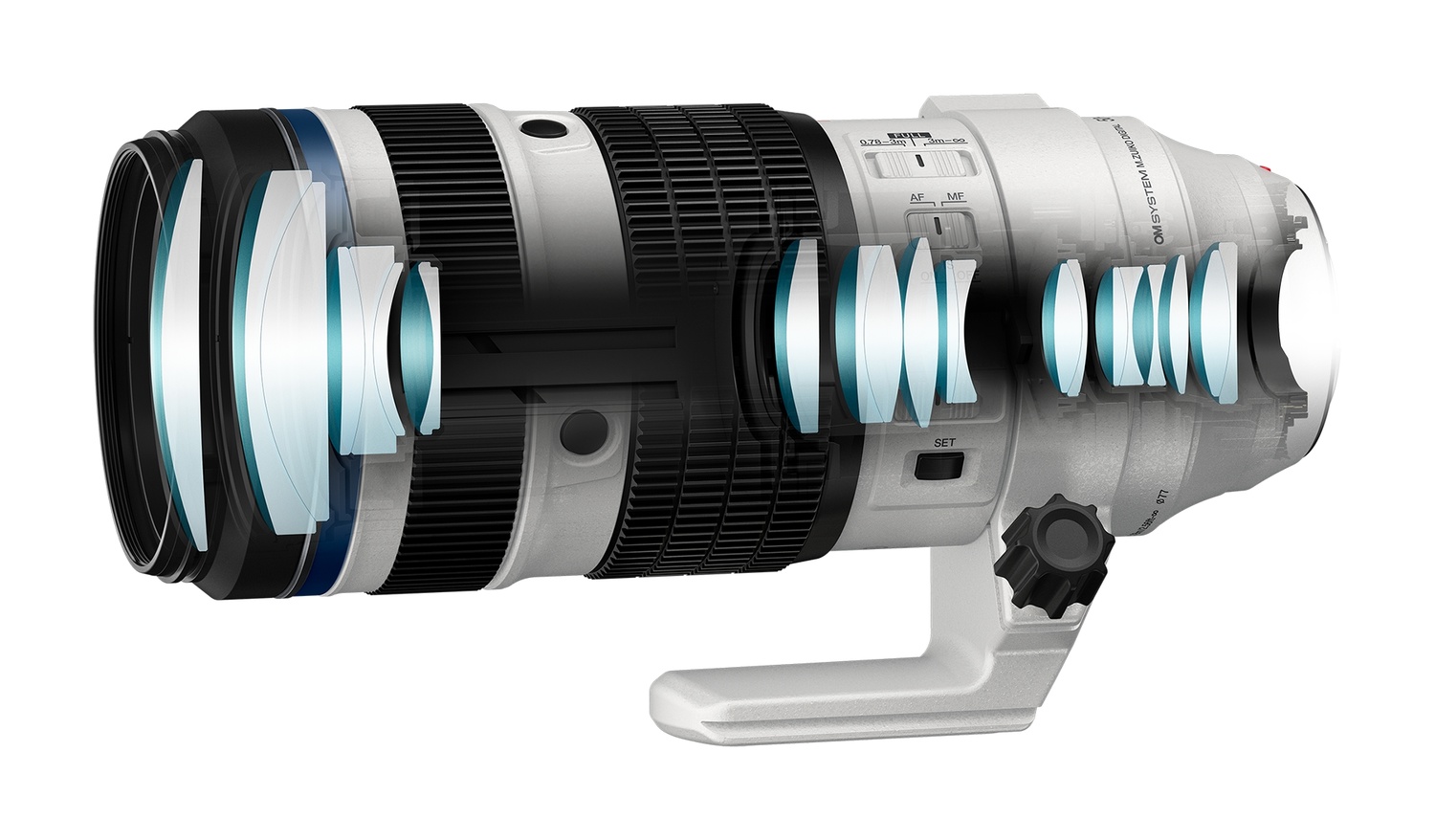
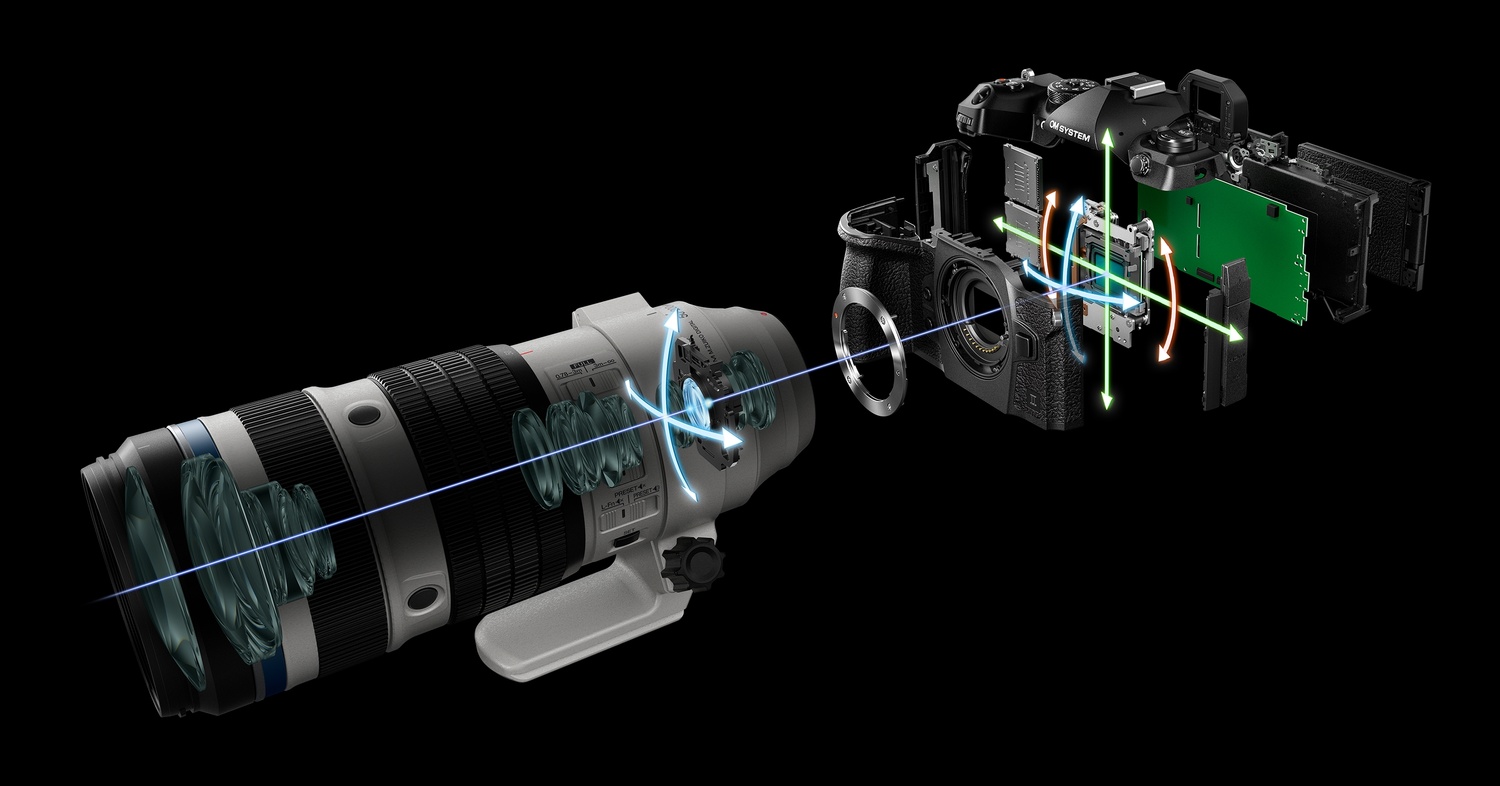
Lens construction: 21 elements in 13 groups (1 EDA, 2 Super ED, 1 ED, 2 HR, 3 E-HR)
-
Image stabilization: 5-axis sync IS, up to 7 stops (with OM-1 Mark II), 5.5 stops standalone
-
Close focusing distance: 0.78 m at all focal lengths
-
Maximum magnification:
-
0.25x (0.5x equivalent) at 200mm
-
Up to 1.0x equivalent with MC-20 teleconverter
-
-
Autofocus: supports up to 50 fps C-AF sequential shooting
-
Aperture blades: 9 (circular diaphragm)
-
Filter size: 77mm
-
Dimensions: 91.4 × 225.8 mm
-
Weight: 1,075 g (without tripod collar), 1,250 g (with tripod collar)
-
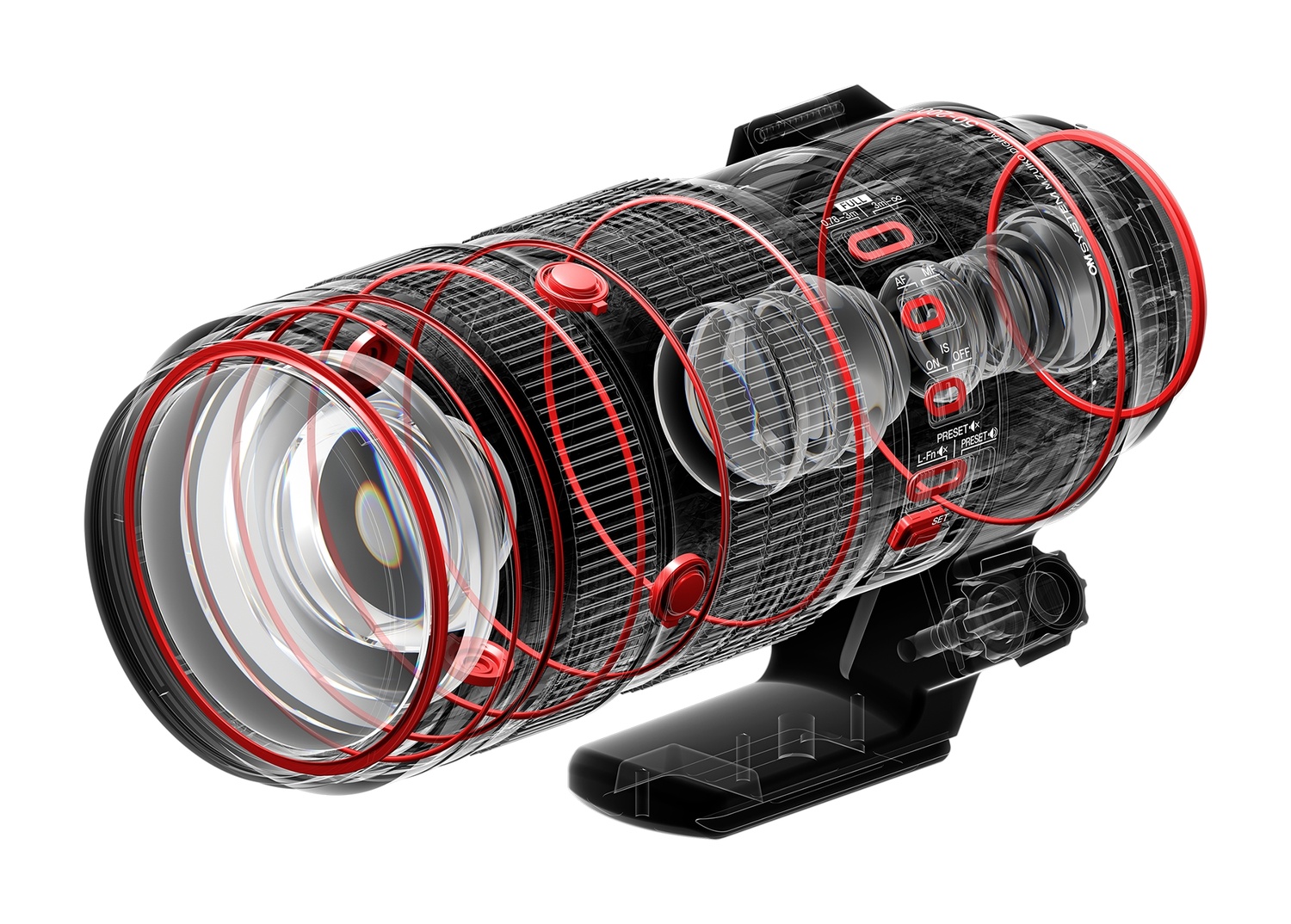
Weather sealing: IP53, freezeproof to -10 °C, fluorine-coated front element
-
Coatings: ZERO Coating II, fluorine protective coating
-
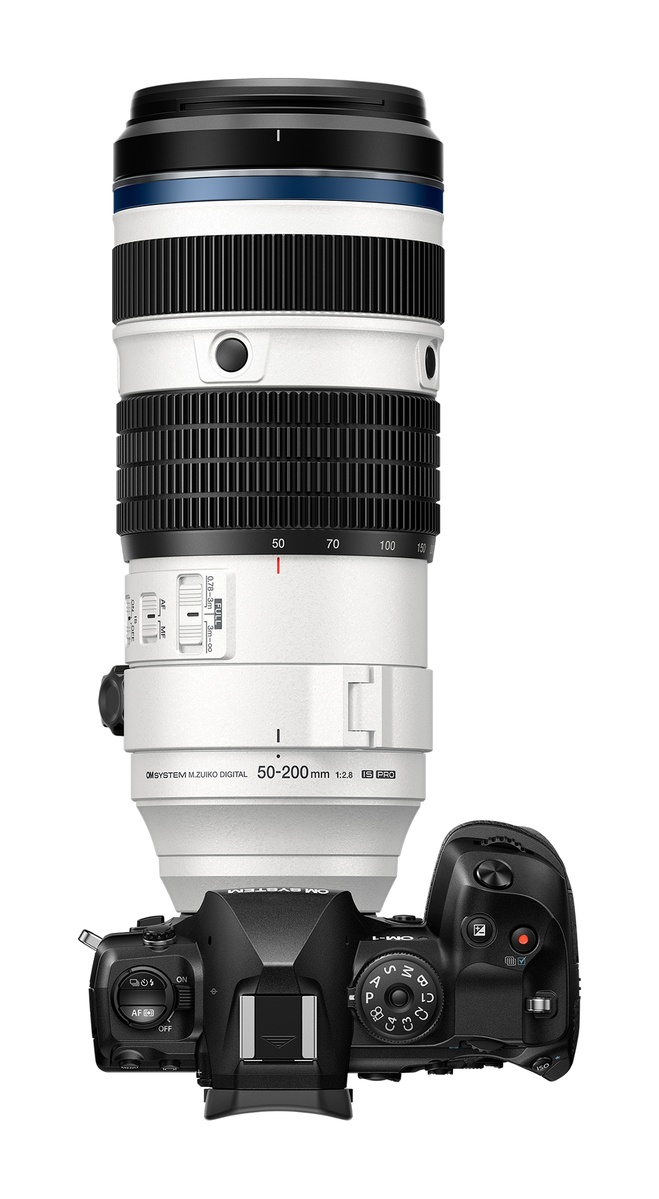
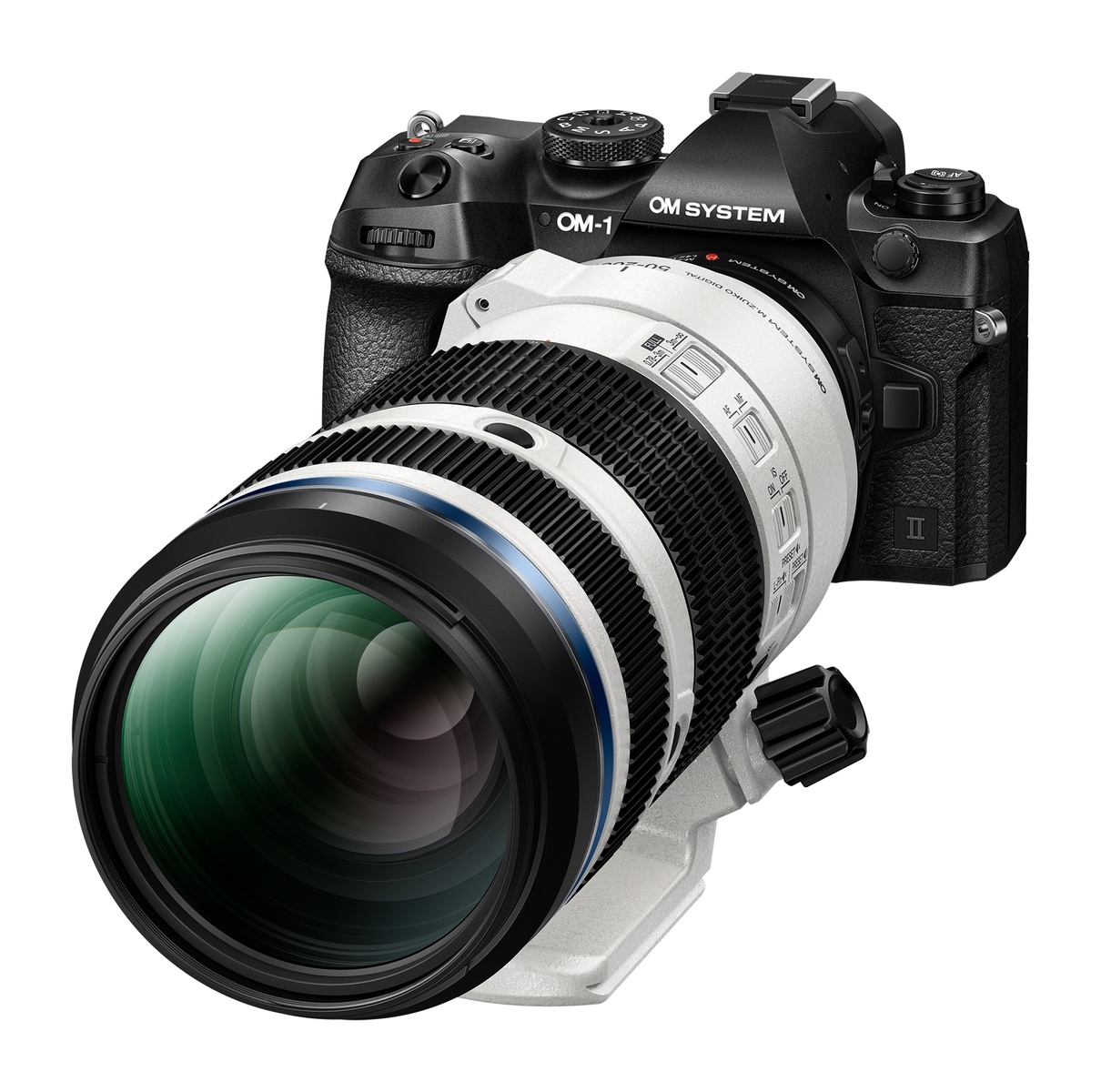
Extra features: focus limiter, focus mode switch, preset focus function, four customizable L-Fn buttons, tripod mount compatible with Arca-Swiss clamps
-
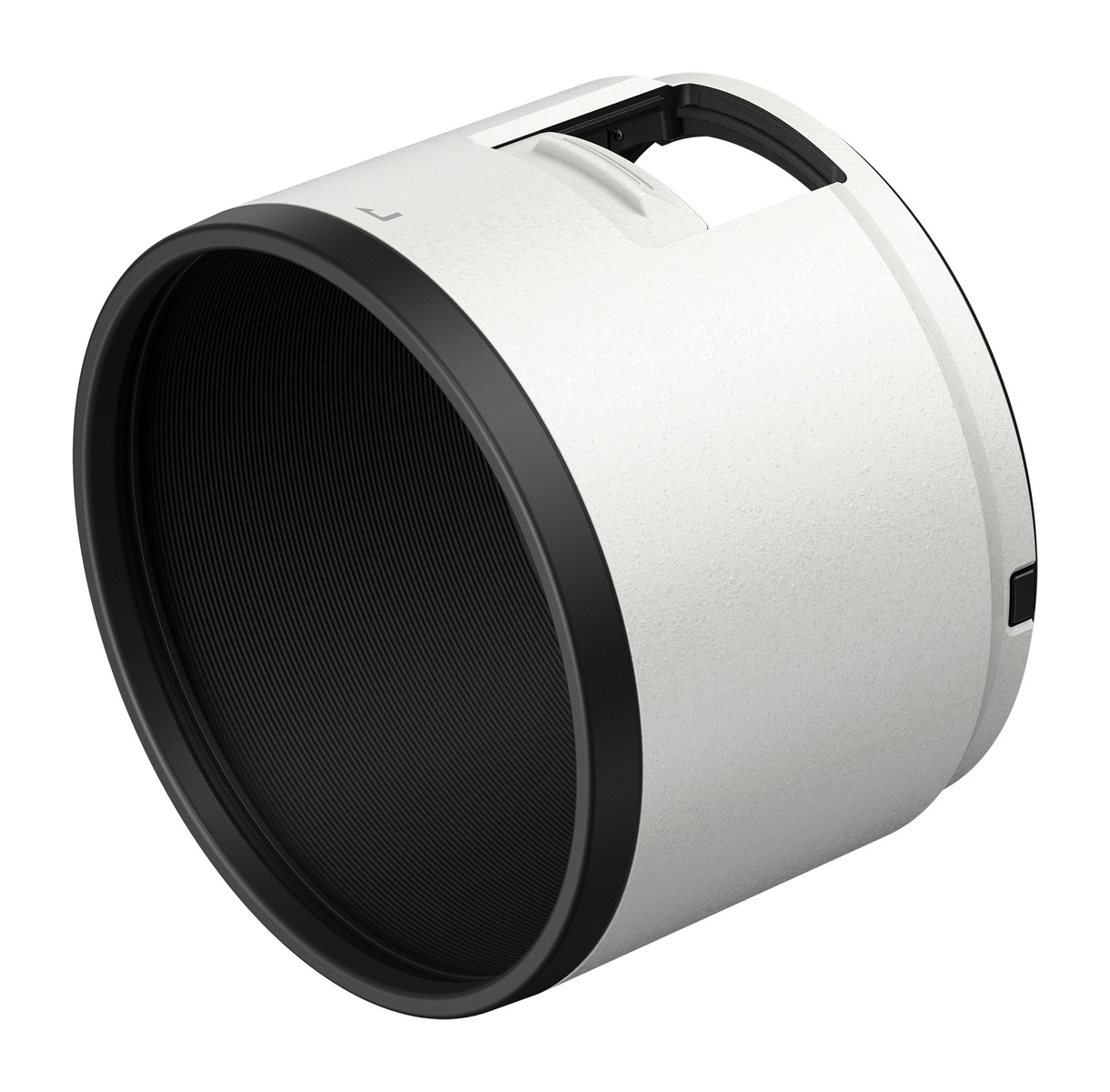
Included accessories: LH-82C lens hood, LC-77C lens cap, LR-2 rear cap, LSC-1127 lens case
-
Optional accessories: Zuiko PRF-ZD77 PRO protection filter
-
Price: $3,699.99
-
Availability: October 3, 2025
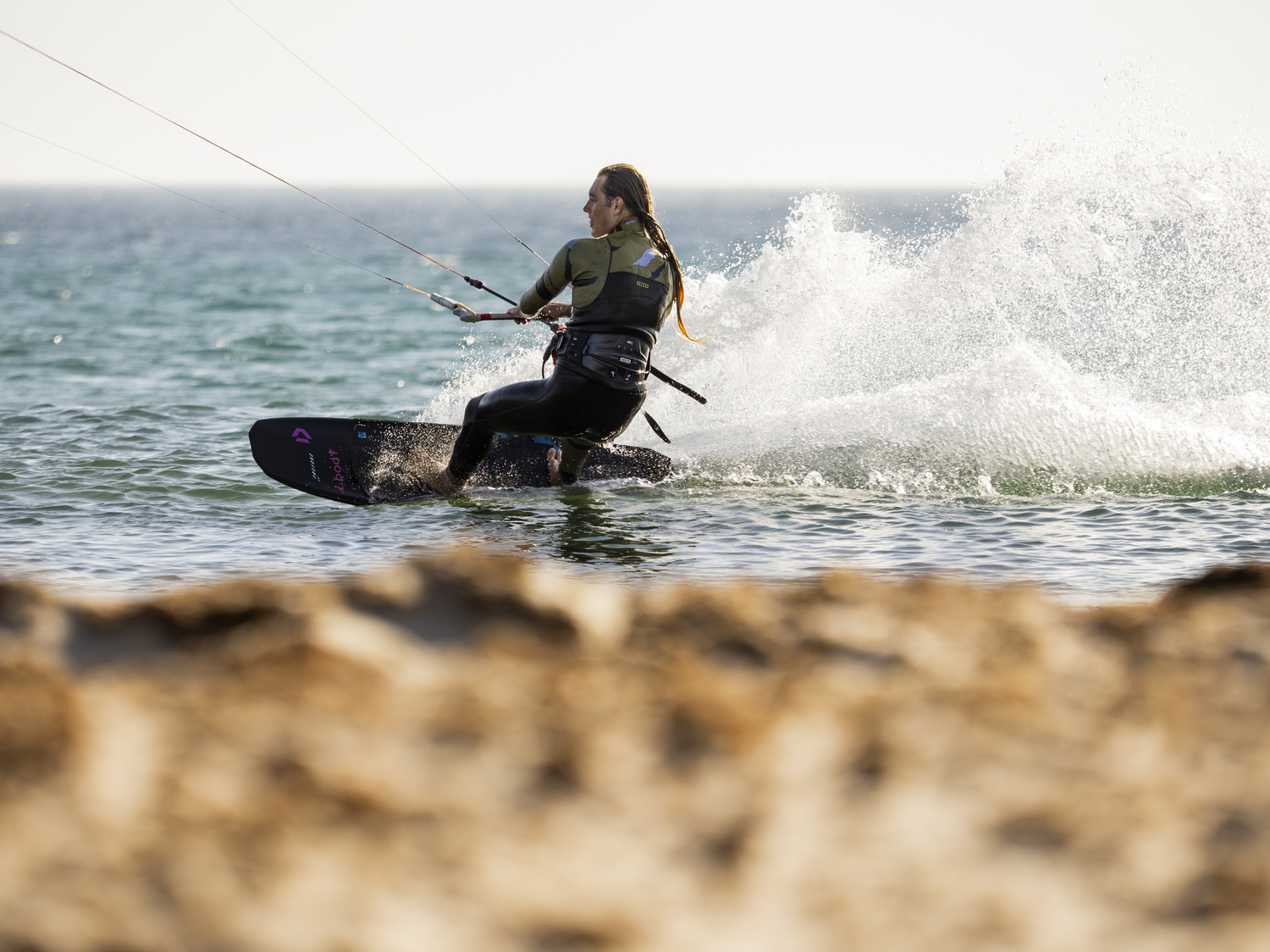
Sample Images















A Groundbreaking Lens
A constant f/2.8 aperture at a 100–400mm equivalent range is a first, let alone in a relatively compact and lightweight package. This makes the lens well-suited for photographers who work in challenging lighting conditions or need to freeze action without pushing ISO too high.
The lens’ 7-stop sync IS expands the potential for handheld shooting, reducing the reliance on tripods for super telephoto work. Its macro capabilities, with up to 1:1 equivalent magnification when paired with the MC-20 teleconverter, extend its use beyond traditional wildlife and sports into close-up nature photography.
For video shooters, the internal zoom design helps maintain balance and framing, while weather-sealing and heat-resistant coatings ensure reliability in field conditions.
Frankly, this might be the most versatile lens I've ever seen.
Conclusion
The M.Zuiko Digital ED 50-200mm f/2.8 IS PRO stands out as a unique offering in the Micro Four Thirds lineup. Its combination of reach, speed, and stabilization could make it a go-to lens for professionals who need a highly versatile telephoto option without the bulk typically associated with such lenses. Scheduled to ship in October 2025, it arrives with a premium price tag, but its feature set suggests OM System is targeting serious photographers and filmmakers looking for performance in demanding conditions. You can preorder yours here.




Join the Fstoppers community for free
-
Post comments and join in the discussions
-
Browse the site ad-free
-
Share your work and get featured in the community
-
Compete in the photo contests for fun and prizes
2 Comments
The weight is indeed ground breaking compared to a full frame equivalent like the Canon RF 100-500. The aperture of 2.8 would be equivalent to the 5.6 on the full frame in depth of field (the RF lens max aperture at 400 is 5.6) the iso on the Canon has to be raised of course but in the end it would be the same image quality because of the full frame sensor. Price is about the same. So in the end the results will not be ground breaking, but the weight and size surely will
Interesting! Comparing it to a the recent-ish Sony 70-200mm f/2.8 it’s just a smidge bigger and heavier. I wonder if even though the image circle would be smaller, the stretch to 50mm at the wide end might necessitate it staying chunky? Or could it be an altered full frame lens? Anyone have any goss on if it’s an in-house lens or a Sigma/Tamron collab?