Testing lenses is not about chasing perfection or comparing specs on a screen. It’s about knowing whether a lens solves a real problem in your workflow. When you shoot high-end commercial work, even small flaws can become huge headaches on set. Knowing how and why to test a lens before buying is the difference between spending wisely and wasting money.
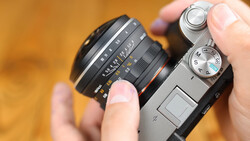
Coming to you from Scott Choucino of Tin House Studio, this practical video walks through how to test a lens with purpose. His go-to Mamiya Sekor 90mm lens started showing haze and blooming in highlights, especially when shooting reflective subjects. Instead of blindly upgrading, he borrowed a Cambo Actar 90mm to see if it fixed those issues. He tests using simple props: a metal clamp, a color checker, and harsh lighting to replicate problem conditions. The goal isn’t sharpness or resolution: it’s highlight control, contrast, and whether the new lens adds real value.
The process shows how much you can learn by focusing on the right questions. Choucino points out that dynamic range isn’t just about your camera’s sensor. Lens coatings, flare control, and micro-contrast all affect how highlights roll off. Swapping from the old Mamiya to the Cambo, he shows a clear difference: less haze, cleaner highlights, more control. But he also makes it clear that better doesn’t always mean necessary. He’s shot global campaigns with that Mamiya for years. The new lens just fixes a specific limitation, and it’s a practical buy. That point alone is what most people miss when they upgrade gear.
The video goes beyond lenses too. Choucino also tests his setup with a new Apple MacBook Pro M1 Max with 64 GB of RAM to see if it speeds up tethering 100-megapixel files from his camera. He discovers odd quirks: drive mode transfers faster than single shot mode for no obvious reason, and the bottleneck isn’t where you’d expect. These small findings underline a larger truth: gear testing should be grounded in how you actually work, not in theoretical performance. A faster computer or lens isn’t worth it if it doesn’t remove friction in your process.
There’s also an honest look at what “good enough” really means. The Mamiya might flare more, but it still produces campaign-quality results. The Cambo lens looks cleaner and sharper, but it doesn’t make the work more valuable. The takeaway is simple: don’t test to prove something’s better, test to see if it fixes a real problem. Everything else is a distraction. Check out the video above for the full rundown from Choucino.



Join the Fstoppers community for free
-
Post comments and join in the discussions
-
Browse the site ad-free
-
Share your work and get featured in the community
-
Compete in the photo contests for fun and prizes
No comments yet