Fujifilm's GFX system produces some of the most detailed, tonally rich files available to working photographers today, and the lens lineup is both the system's greatest strength and its most significant financial commitment. After six years of building out a GFX kit, Samuel Elkins has opinions on what actually earns its place in the bag and what doesn't.
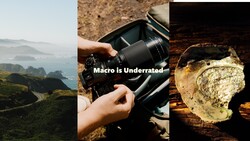
Coming to you from Samuel Elkins, this practical video walks through the lenses Elkins keeps coming back to, with honest context about what each one actually does in real shoots. His current favorite might surprise you: the Fujifilm GF 120mm f/4 Macro. Elkins says people tend to see "macro" and immediately dismiss it, but he's been shooting it on commercial assignments over the last few months and calls it one of the sharpest lenses in the entire GFX lineup. He uses it for tight detail shots on food shoots and restaurant assignments, where close-up texture shots of ingredients help build out the full story of a project. It also doubles as a medium telephoto for landscape work, which gives it more range than its category implies.
The lens he's owned the longest, and still reaches for most often, is the Fujifilm GF 32-64mm f/4 R LM WR. Elkins mentions he's sent it in for repairs multiple times simply because he's used it so heavily over six or seven years. The equivalent field of view runs roughly 25mm to 50mm in full frame terms, which covers wide atmospheric shots on one end and tight enough portraits on the other. He recently shot an entire commercial job for Mercedes and Condé Nast almost exclusively on this lens, leaning on it for both interior shots and wide landscape-style frames with the car in frame. For anyone entering the GFX system, this is the lens Elkins returns to as the most versatile starting point for outdoor and lifestyle work.
If you can only buy one lens for the GFX system, Elkins says make it the Fujifilm GF 45-100mm f/4 R LM OIS WR. It covers food work, environmental portraits, landscapes, and travel, and pairs with the 32-64mm to give you continuous coverage from 32mm to 100mm across two lenses. The one real trade-off is weight. It's a heavy lens, and if you're building a travel kit, that's a legitimate consideration. On the prime side, the Fujifilm GF 55mm f/1.7 R WR gets strong praise for portrait work, sitting at roughly 44mm equivalent and rendering images that feel natural and candid. Elkins typically shoots it around f/2.5 to f/2.8 rather than wide open, finding f/1.7 on a medium format sensor produces more background separation than he personally wants.
The video also covers honorable mentions including the Fujifilm GF 110mm f/2 R LM WR, the Fujifilm GF 250mm f/4 R LM OIS WR, the Fujifilm GF 100-200mm f/5.6 R LM OIS WR, and the Fujifilm GF 50mm f/3.5 R LM WR pancake, each suited to specific shooting situations. Elkins also shares his wish list for the system, including a version of the 45-100mm with a wider maximum aperture, which is worth hearing directly from someone who's been using the system this long. Check out the video above for the full rundown from Elkins.




Join the Fstoppers community for free
-
Post comments and join in the discussions
-
Browse the site ad-free
-
Share your work and get featured in the community
-
Compete in the photo contests for fun and prizes
No comments yet