Every photographer eventually has the same bad afternoon. The light finally turns, the shot is right there, and the camera blinks a red battery icon at you. Power is the least glamorous line item in a kit and the one that quietly decides whether a shoot happens. The two products that solve it have gotten genuinely excellent: a USB-C power bank will top up a mirrorless body, a laptop, and a phone off one brick, and a lithium iron phosphate power station will run strobes and chargers off-grid for a day without a generator.
The purchase turns on three axes. Capacity, measured in watt-hours, is the only number that tells you how much energy you are carrying. Output, measured in watts, tells you what you can plug in and how fast it charges. The third is the one nobody thinks about until a gate agent brings it up: the 100 Wh limit that separates a battery you can carry onto a plane from one you cannot fly with at all.
This guide splits into two halves. The first four picks are batteries you carry in a bag, sized to travel and legal in a cabin. The last four are power stations, heavier and far more capable, that stay in the car or the studio. Every entry is written from the manufacturer's current published specifications, checked against a live retailer listing, with the honest limitation of each unit stated in its section.
Our Picks
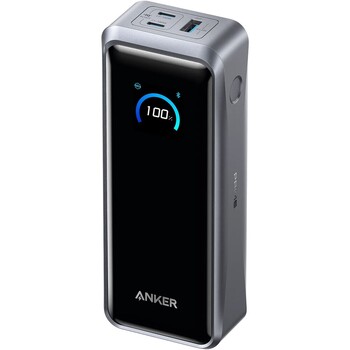 Best Overall Power Bank Anker Prime Power Bank (26,250mAh, 300W)
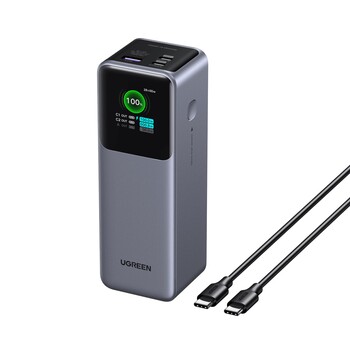 Best Budget UGREEN Nexode Power Bank (25,000mAh, 200W)
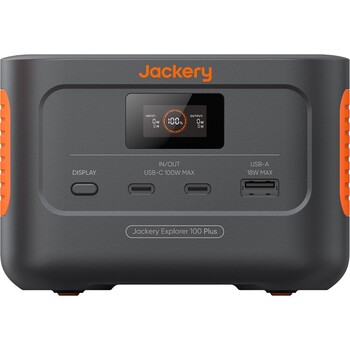 Best for Camera Charging Jackery Explorer 100 Plus
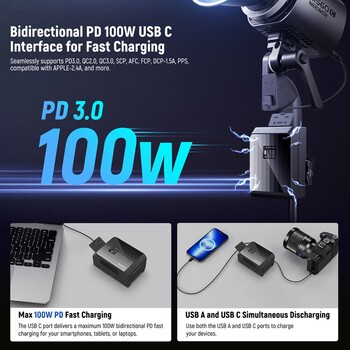 Best V-Mount Neewer PS099EP V-Mount Battery
 Best Power Station EcoFlow Delta 3 Plus
 Best Portable Power Station for Travel EcoFlow River 3 Plus
 Best High-Capacity Power Station BLUETTI Elite 200 V2
 Best for Drone Pilots DJI Power 1000 V2
Best Overall Power Bank: Anker Prime Power Bank (26,250mAh, 300W)
Rated at 99.75 Wh, this Anker Prime is the largest bank you can legally fly with, and 250W input refills it to half in 13 minutes.
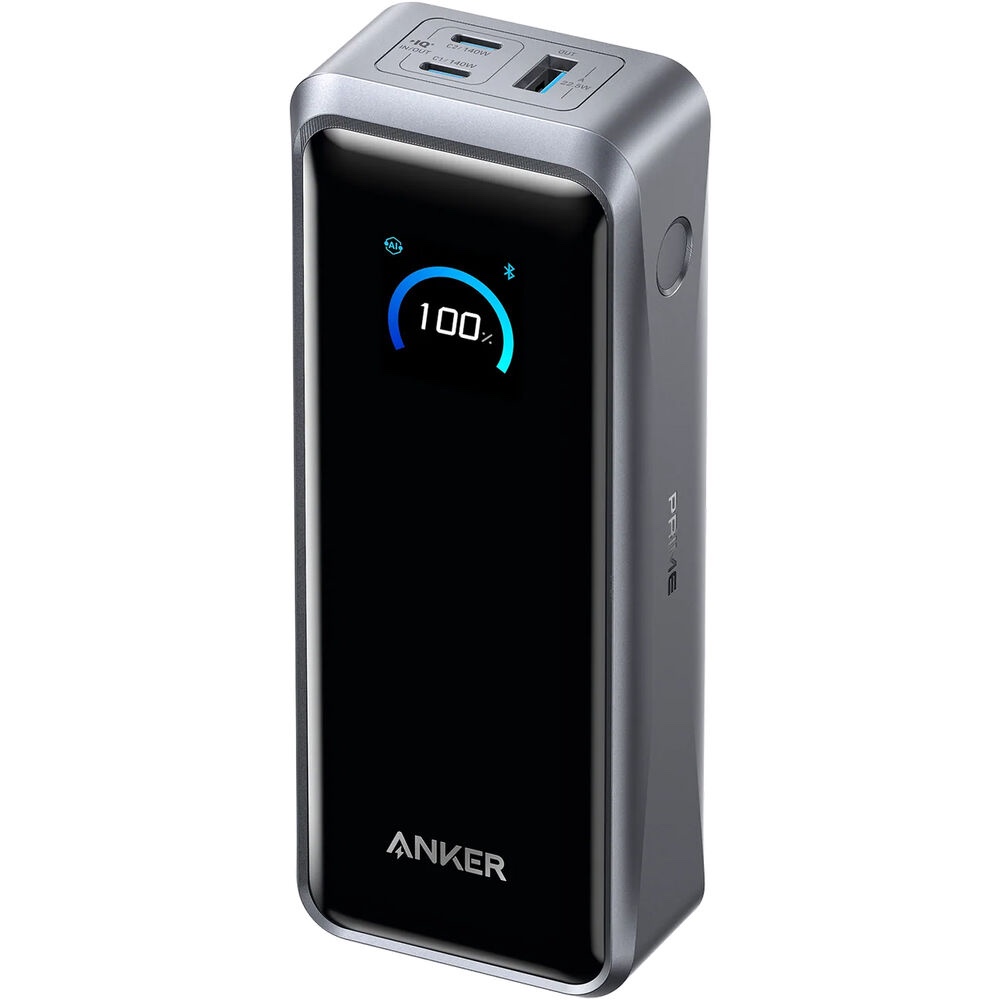
Anker built the Anker Prime Power Bank (26,250mAh, 300W) right up against the ceiling of what you are allowed to fly with, and that is why it wins. Its 99.75 Wh rating sits a quarter of a watt-hour below the 100 Wh threshold airlines enforce, so you get the largest legal cabin battery on the market. The 300 W total output charges a 16-inch MacBook Pro at full speed on one port while a camera body and a phone pull from the other two, and a single USB-C port will deliver 140 W on its own.
The input side changes how you use it. Feed it through both USB-C ports and it accepts 250 W, taking the pack to 50% in about 13 minutes. The smart display is the other quiet win: it reports live charging and discharging wattage along with remaining capacity, so you can see whether your camera is actually negotiating fast charging or has fallen back to a trickle.
What the specification sheet cannot hide is the weight. At 600 g this is a heavy object to have in a jacket pocket, and it is the wrong tool if your daily carry is a phone and a compact camera. The charging base that unlocks the six-device desktop setup is a separate purchase (Anker sells the bank on its own and in a bundle with the base), and sustained 140 W output warms the pack, which is normal physics rather than a fault.
For a photographer who flies with a laptop, two camera bodies, a phone, and a drone controller, this is the one battery that covers all of it and still clears security. Check the current price of the Anker Prime Power Bank (26,250mAh, 300W) at B&H. Also consider the Anker 737 Power Bank if you want the same 140 W single-port charging in an older, cheaper package.
What We Like
- 99.75 Wh sits just under the airline limit, so it is the largest bank you can legally fly with
- 300 W total output runs a laptop, a camera, and a phone at once
- 250 W dual-port input refills it faster than any rival here
What Could Be Better
- 600 g is heavy for a pocket carry
- The charging base is sold separately
- Runs warm under sustained high-wattage loads
Best Budget: UGREEN Nexode Power Bank (25,000mAh, 200W)
Matching the Anker's 140W single-port output for under 100 dollars, this UGREEN gives up only capacity and combined wattage, though its 65W input needs about two hours to refill.
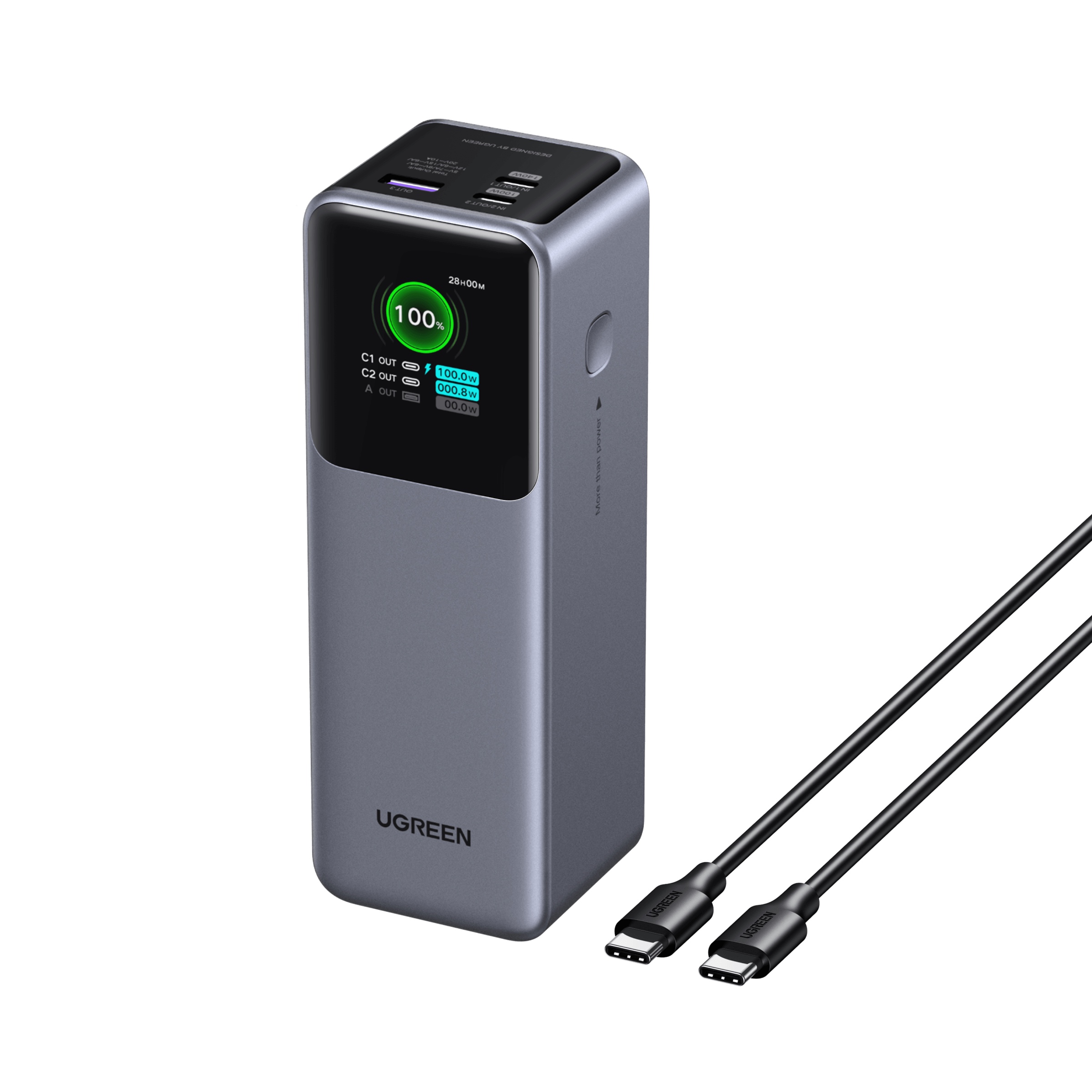
Set the numbers next to the Anker and the case for the UGREEN Nexode Power Bank (25,000mAh, 200W) makes itself. You get the same 140 W maximum from a single USB-C port, the same PD 3.1 support that wakes up a modern laptop at full speed, the same three-port layout, and a TFT display that reports voltage, current, and remaining capacity in real time. What you give up is 9.75 Wh of capacity and 100 W of combined output, for a street price routinely less than half of what the Prime costs.
UGREEN builds it around automotive-grade 21700 cells, and the slim upright shape slots down the side of a camera bag more easily than a squat brick. For most photographers, 90 Wh is the right amount of power anyway: roughly five full charges of a mirrorless body's battery, or one full charge of a MacBook Air with headroom left for a phone.
The compromise is the input. At 65 W, UGREEN rates a full recharge at about two hours, against the Anker's 13 minutes to half. On a multi-day trip, the pack that refills over a coffee break is a different tool from the one that occupies a hotel desk all evening. The 140 W peak is a peak: under sustained high draw the pack throttles as it warms, which is true of nearly every compact 25,000 mAh design.
It is the right pack for the photographer who wants one battery that can rescue a laptop, keep two camera bodies alive through a long day, and cost a fraction of the flagship. Check the current price of the UGREEN Nexode Power Bank (25,000mAh, 200W) at Amazon. Also consider the INIU Leopard Power 100W Power Bank if you want to spend less again and 100 W of single-port output is enough for your laptop.
What We Like
- 140 W single-port PD 3.1 output at a fraction of flagship money
- Live TFT readout of voltage, current, and capacity
- Slim upright shape slides into a bag's side pocket
What Could Be Better
- 65 W input makes a full recharge slow
- Sustained peak output throttles as the pack heats up
- 200 W total is short of running a laptop and a heavy second load
Best for Camera Charging: Jackery Explorer 100 Plus
Built on LiFePO4 cells rated for 2,000 cycles, this Jackery suits the constant top-ups a camera kit demands, and either USB-C port charges a body at a full 100W.
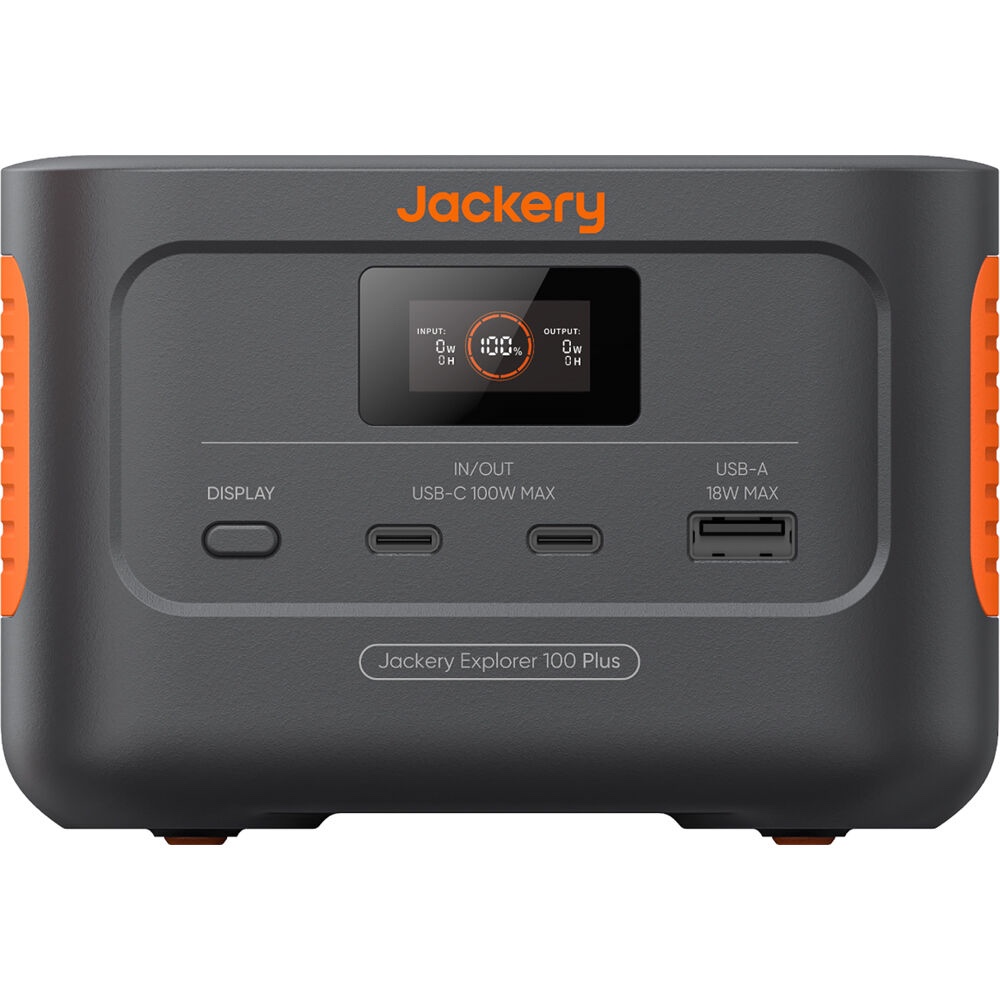
Photographers charge differently. You are not draining a battery to zero once and refilling it; you are topping up four camera batteries, a gimbal, a mic receiver, and a phone in short bursts across a day. That duty cycle grinds down a standard lithium-ion pack, and it is why the Jackery Explorer 100 Plus earns this slot. It uses lithium iron phosphate cells rated for 2,000 cycles to 80% capacity, where most power banks are rated for 500 to 1,000. Over three or four years of hard use, that is the difference between a battery you still trust and one you have quietly stopped relying on.
Jackery calls it a power station, a stretch given there is no AC outlet, but the two 100 W USB-C ports are the point. Modern mirrorless bodies from Canon, Nikon, Sony, and Fujifilm all charge in-body over USB-C PD, and a 100 W port has headroom to run a body while it charges rather than making you choose. Pair it with a USB-C multi-bay charger and you can refill a day's worth of camera batteries from a hotel table. At 99.2 Wh it sits just under the legal cabin ceiling, and at 965 g it weighs less than a 24-70mm f/2.8 lens.
The specification sheet makes its limits obvious. With no AC outlet, anything with a wall wart is out, so a strobe charger or an older camera brick will not run from it. The output is shared rather than parallel: either USB-C port is good for 100 W on its own, but use both and Jackery caps the pair at 110 W, with 128 W the ceiling across all three ports. Two bodies will charge at once, neither at full tilt. LFP cells are less energy-dense than lithium-ion as well, which is why this pack weighs about 60% more than the UGREEN while holding roughly the same energy.
Buy it if your charging life is dozens of small top-ups rather than one big drain. Check the current price of the Jackery Explorer 100 Plus at B&H.
What We Like
- LFP cells rated for 2,000 cycles suit constant top-up charging
- Either 100 W USB-C port will charge a camera in-body at full speed
- 99.2 Wh keeps it inside the carry-on limit
What Could Be Better
- No AC outlet, so wall-plug chargers are out
- Both USB-C ports together are capped at 110 W, and the unit at 128 W
- USB-A output is limited to 18 W
Best V-Mount: Neewer PS099EP V-Mount Battery
This mini V-mount packs 99 Wh into 630 grams with two-way 100W USB-C, so one PD charger feeds the camera, the laptop, and the battery itself.
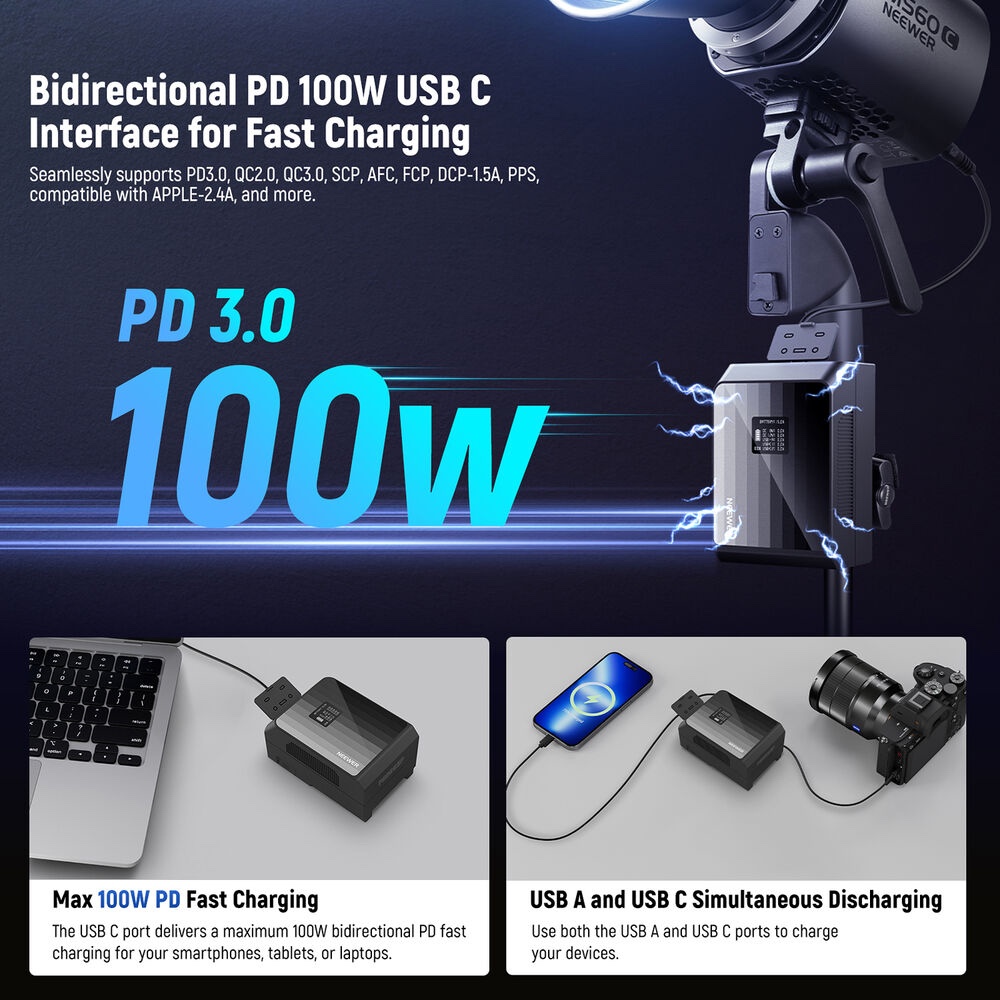
V-mount used to mean a brick the size of a paperback bolted to a cinema camera. The mini V-mount changed that, and the Neewer PS099EP V-Mount Battery is the version that makes sense for a photographer who has started shooting video, not a rental house. It measures 115 x 77 x 60 mm and weighs 630 g, small enough to hang off a cage without turning a mirrorless rig into a shoulder-mount, and it carries the ports that matter: a D-Tap for a monitor or an LED panel, two USB-C ports rated at 100 W with two-way PD, a USB-A, and both 8 V and 12 V DC barrels for dummy-battery adapters.
The two-way USB-C is the detail worth paying for. The same port that powers your camera also recharges the battery at 100 W, so you carry one PD charger for the laptop, the camera, and the V-mount rather than a dedicated V-mount charger and its own brick. Full charge takes about two hours. The 1.96-inch OLED screen reports remaining capacity and live draw, which beats the four-LED bar most batteries give you: you can see whether that panel is pulling 30 W or 70 W and do the arithmetic on how long you have.
At 99 Wh it is cabin-legal, which is the entire reason mini V-mounts exist. The harder cap is the 100 W total output. Run a camera, a monitor, and a light at once and they share that 100 W, so this is the battery for a single camera and one accessory, not a two-light interview setup. Neewer ships the battery and a manual, nothing else, so the D-Tap cable and the 100 W PD charger it wants are both extra, an irritating omission on a battery whose whole pitch is that you plug things into it.
For the hybrid shooter building a small video rig who wants one battery that flies, powers the camera, and recharges from the laptop's charger, this is the one to buy. If your lighting has outgrown 100 W, our flashes and strobes guide covers the units that need a real power station behind them instead. Check the current price of the Neewer PS099EP V-Mount Battery at B&H.
What We Like
- Two-way 100 W USB-C means one charger for the whole kit
- D-Tap plus 8 V and 12 V DC covers monitors, lights, and dummy batteries
- 99 Wh and 630 g, so it flies and it does not unbalance a small rig
What Could Be Better
- 100 W total output is shared across every port at once
- 99 Wh will not carry a multi-light setup
- No D-Tap cable in the box
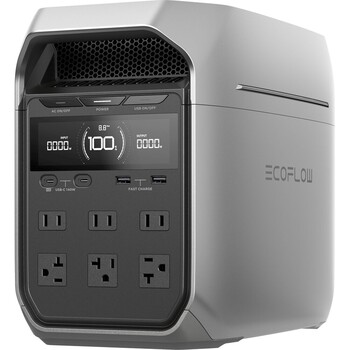
Best Power Station: EcoFlow Delta 3 Plus
A full kilowatt-hour of LiFePO4 rated for 4,000 cycles, the Delta 3 Plus runs an 1,800W inverter and recharges from empty in 56 minutes off the wall.
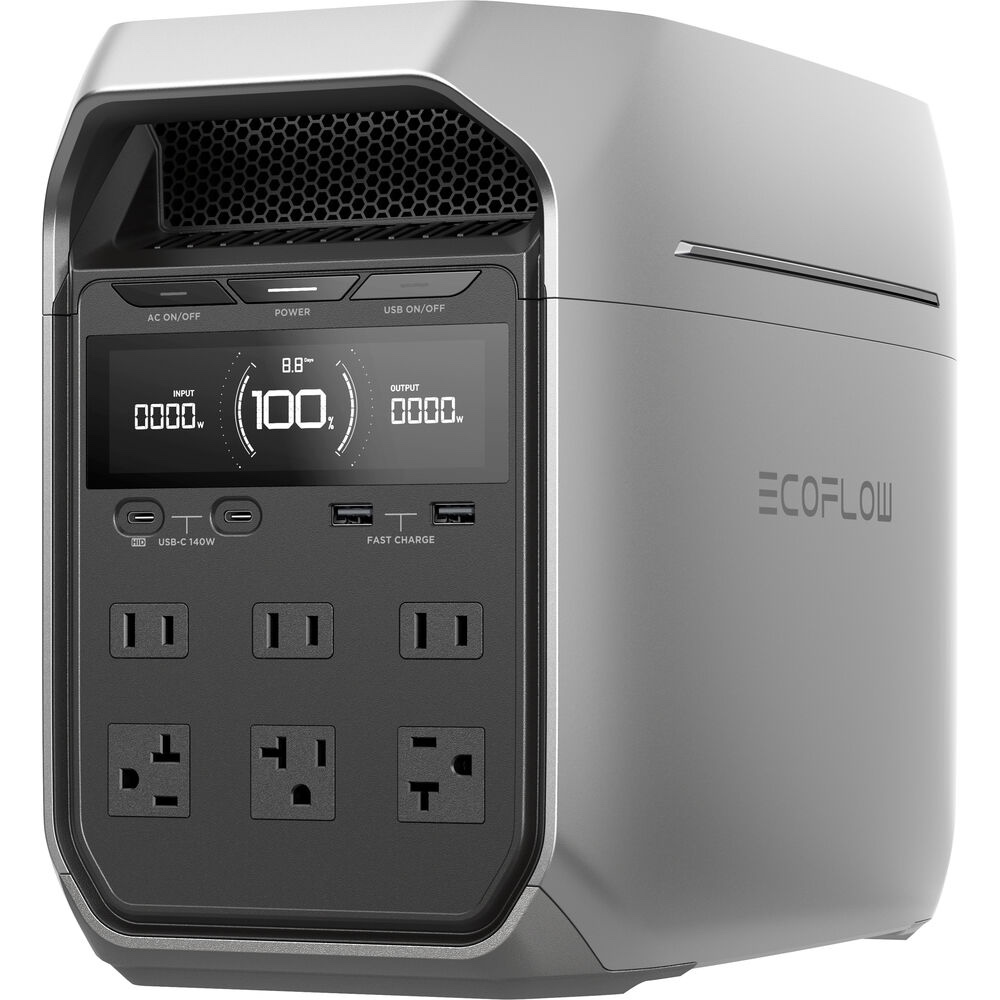
A kilowatt-hour is the sweet spot for photography, and the EcoFlow Delta 3 Plus hits it better than anything else at the price. Its 1,024 Wh will run a 400 Ws monolight through a full portrait session, keep a laptop and a monitor alive for an all-day tether, or power a client's coffee maker on location, an underrated use of a power station. The 1,800 W continuous inverter clears every strobe pack a set is likely to throw at it, and six AC outlets mean you are not stacking adapters.
Two numbers make it the default recommendation. The first is 56 minutes, what a full recharge takes on a 1,500 W wall input, which means you can use it hard on back-to-back days. The second is 4,000 cycles to 80% capacity, the LiFePO4 rating, so you can cycle it every working day for a decade before it meaningfully degrades. The under-10 ms UPS switchover matters too: plug an editing machine into it and a brownout stops being a lost session.
The honest weakness is capacity. A kilowatt-hour is a sweet spot, not a ceiling, and a long day of hard strobe recycling plus a laptop and a monitor will find the bottom of it. Adding headroom means buying an extra battery, which costs roughly as much again as the station and doubles the thing you have to lift. The 12.5 kg is manageable from a car to a set, but it is not something you carry up a trail. X-Boost, EcoFlow's trick for pushing past the rated output to 2,200 W, works by shaving voltage, which is fine for a kettle and something you should not do to a strobe pack or any other device with voltage protection, as EcoFlow's own manual warns.
It is the most sensible one-box answer for a photographer who works away from wall power more than a few days a year. Check the current price of the EcoFlow Delta 3 Plus at B&H.
What We Like
- Full recharge in 56 minutes from a wall outlet
- 1,800 W continuous output runs strobes and studio gear without complaint
- 4,000-cycle LFP cells and a 5-year warranty
What Could Be Better
- 1,024 Wh runs out on a long lighting day, and the extra battery is an expensive add-on
- 12.5 kg is a two-hands, short-distance carry
- X-Boost lowers voltage to fake headroom, which is not for sensitive gear
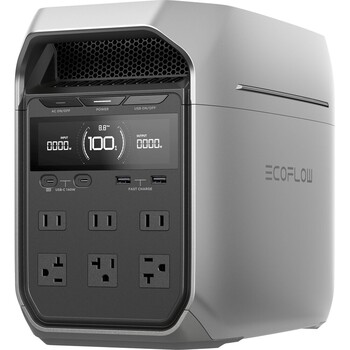
Best Portable Power Station for Travel: EcoFlow River 3 Plus
Weighing 4.7 kilograms, the River 3 Plus fits a car footwell yet runs a 600W inverter across three AC outlets and refills in about an hour.
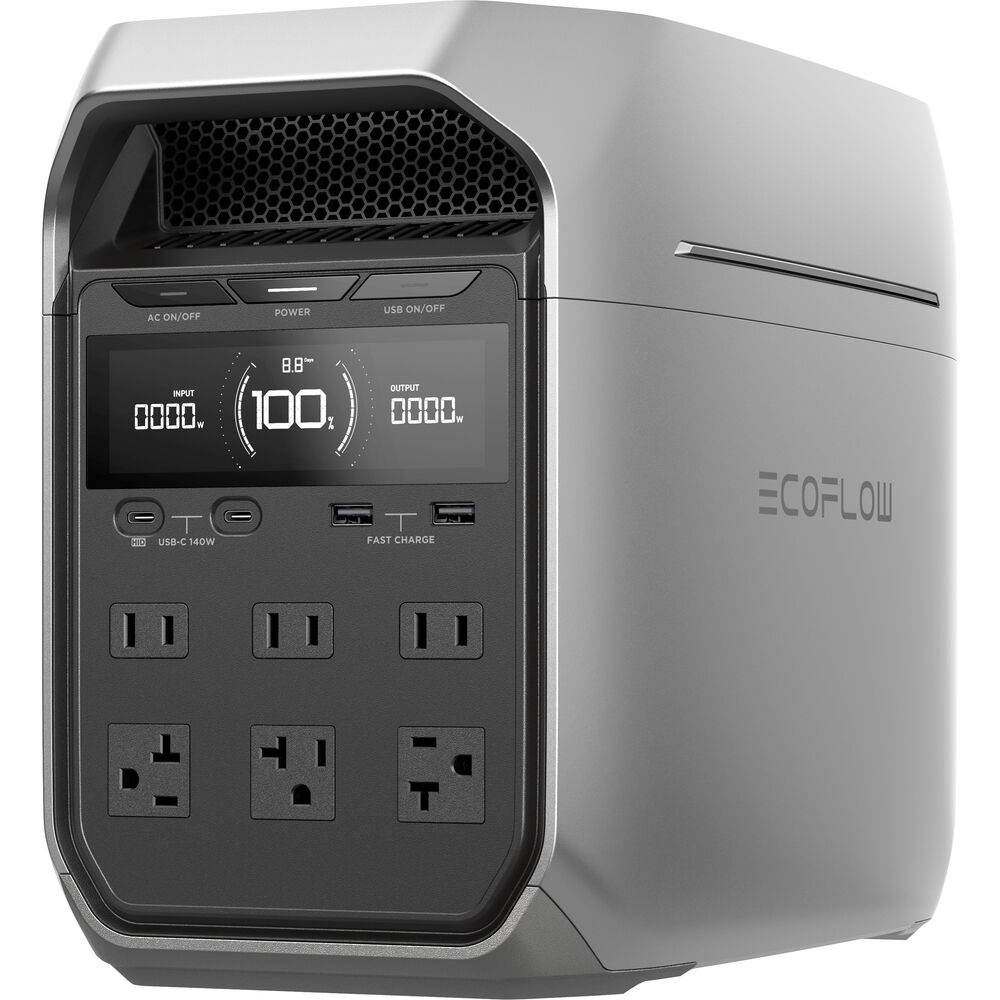
Ask what a landscape or astro photographer needs on a three-night trip and the answer is smaller than most people buy: camera batteries, a laptop, a phone, maybe a star tracker overnight. That is a few hundred watt-hours, not a kilowatt. The EcoFlow River 3 Plus is built for that shape of trip: 286 Wh, 4.7 kg, and small enough at 9.2 x 9.1 x 5.8 inches to sit in a car footwell or the bottom of a large hard case.
The 600 W inverter is the part that surprises people. That is enough to run a laptop charger, a camera battery charger, and a small LED panel at once, and its 1,200 W surge headroom handles the inrush from a strobe charger. Three AC outlets is generous at this size, the single 100 W USB-C port charges a mirrorless body in-camera at full speed, and the whole thing refills in about an hour.
Its limits are the ones you would expect. It is expandable to 858 Wh with an extra battery, but the base 286 Wh will not run a monolight through a session. There is only one USB-C port, a real constraint if you have three USB-C devices and no wall bricks with you. And while 4.7 kg is light for a power station, you will feel it a mile into a hike. The USB-A ports are 12 W each, so anything that is not USB-C charges slowly.
For anyone shooting nightscapes far from an outlet, this pairs naturally with the workflow in Fstoppers' Photographing the World 2: Cityscape, Astrophotography, and Advanced Post-Processing, where the shoot ends at 3 a.m. and the laptop still needs to survive the drive home. Check the current price of the EcoFlow River 3 Plus at B&H. Also consider the Jackery Explorer 240 v2 if you want to save weight, since it holds 256 Wh in a 3.5 kg package, at the cost of a single AC outlet instead of three.
What We Like
- 600 W inverter is far more than the size suggests
- Three AC outlets on a 4.7 kg station
- Refills in about an hour, so a lunch stop is enough
What Could Be Better
- Only one USB-C port
- 286 Wh will not run a monolight for a session
- Still too heavy to hike with comfortably
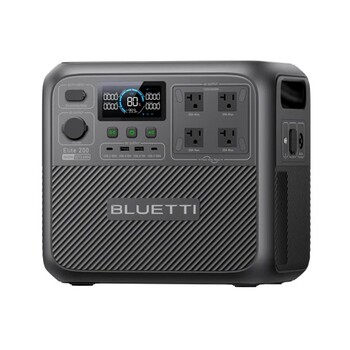
Best High-Capacity Power Station: BLUETTI Elite 200 V2
Holding 2,073.6 Wh behind a 2,600W inverter and NEMA 5-20 outlets, this BLUETTI ran strobes on location for a month for us and stayed nearly silent under load.
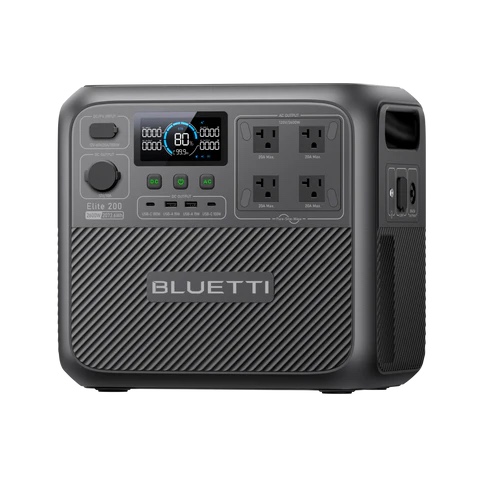
When the shoot is a two-day job in a barn with no working outlets, capacity stops being a nice-to-have. The BLUETTI Elite 200 V2 holds 2,073.6 Wh and pushes 2,600 W continuously, enough to run a pair of 1,000 Ws strobe packs recycling hard, a laptop, a monitor, and a fan off one box. The four AC outlets are NEMA 5-20, so they accept the 20-amp keyed plugs a lot of grip and lighting gear ships with and that most consumer stations cannot take at all.
The cell rating is the sleeper spec. BLUETTI rates these LiFePO4 cells at over 6,000 cycles, the highest figure in this guide, roughly 17 years of daily cycling. For anyone who treats a power station as a decade-long capital purchase rather than a gadget, that does more for total cost of ownership than any price tag. It takes 1,800 W of wall input and reaches 80% in about an hour, and it accepts up to 1,000 W of solar (2,400 W if you feed it wall and solar at once), which turns a two-panel array into a real off-grid workflow rather than a slow trickle.
We spent a month with it, running strobes on location for portrait and beauty shoots, plus cameras, laptops, LED panels, and power tools, and it never flinched at a mixed load. Two things stood out beyond the spec sheet. The first is how quiet it is: our reviewer found it nearly silent even under load, which is the difference between a station you can leave running next to an interview setup and one you have to shut off between takes. The second is TurboBoost, which took it from 20% to 80% in just over an hour on mains power. Paired with a 200 W solar panel, it held up as a genuine off-grid workflow rather than a novelty.
The cost is physical. At 24.2 kg this is a two-person lift into a trunk or a one-person lift you will regret, and its 350 x 250 x 323.6 mm footprint eats real estate in a packed car. As our reviewer put it, it is manageable but not something you would carry far into the wild without a trolley or a helper. The USB-C ports also top out at 100 W each, unambitious at this level and a step behind the 140 W USB-C ports on both 1 kWh stations in this guide, and the USB-A ports are only 15 W. There is no storage or carry bag in the box either, an odd omission on a unit this size and this expensive.
Buy it if your loads are large and your shoots are stationary. If you are carrying it more than 50 feet, buy the Delta 3 Plus and accept the smaller battery. Check the current price of the BLUETTI Elite 200 V2 at Amazon. Also consider the DJI Power 2000 if you need a similar 2,048 Wh with drone fast-charging built in.
What We Like
- 2,073.6 Wh runs a full lighting kit for a long day
- Four NEMA 5-20 outlets accept 20-amp gear other stations reject
- Nearly silent in use, so it can sit next to a video or interview setup
- Over 6,000 cycles, the longest-lived pack here
What Could Be Better
- 24.2 kg is a genuine two-person lift
- USB-C tops out at 100 W per port
- No storage or carry bag included

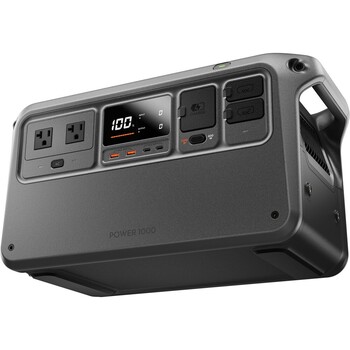
Best for Drone Pilots: DJI Power 1000 V2
Its proprietary SDC port fast-charges DJI flight batteries straight from the pack, and two full 140W USB-C ports plus a 2,600W inverter make it a strong general station.
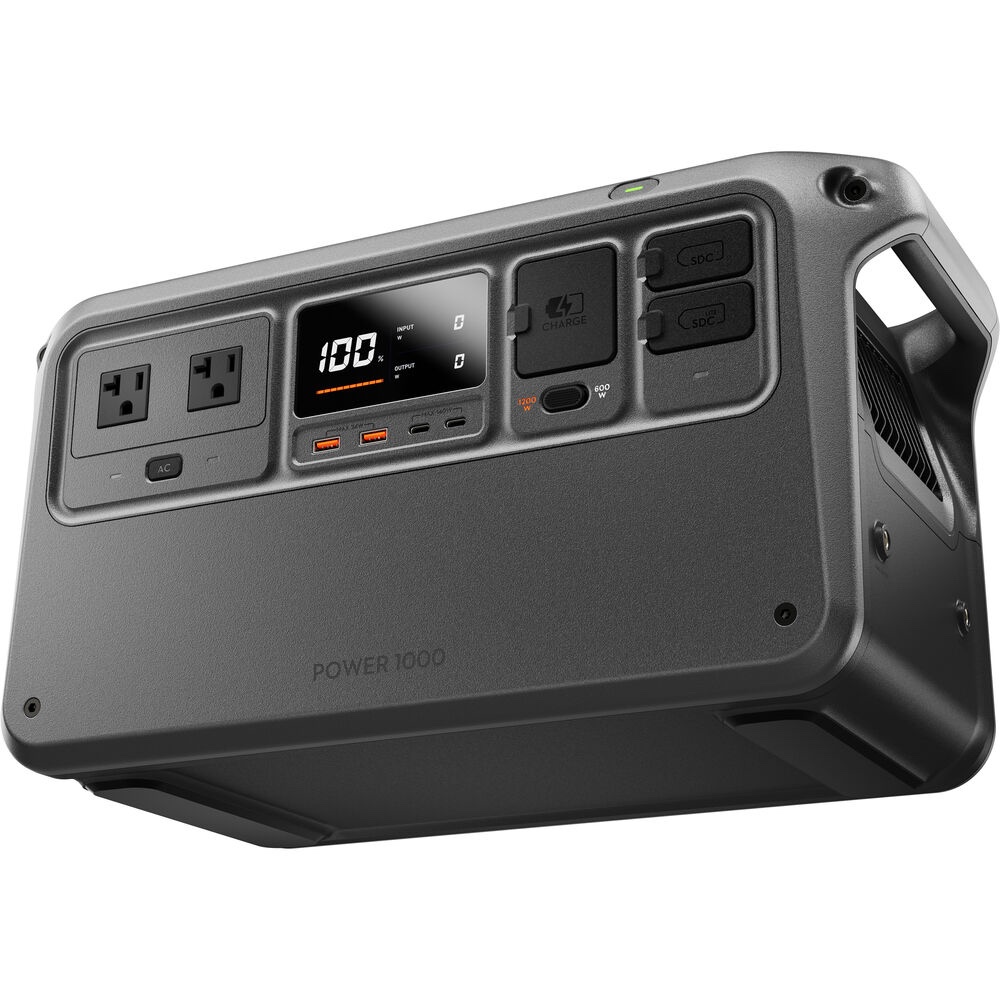
Anyone who flies commercially knows the rhythm of a drone day: fly a battery down, land, swap, then wait while the charger crawls through the pack you emptied. The DJI Power 1000 V2 attacks that wait directly. Its SDC port is DJI's own fast-charge connector (an SDC Lite port sits next to it for lower-draw accessories), and with the correct cable it refills Mavic 3 Series, Air 3 Series, Matrice 4 Series, Matrice 30 Series, and Inspire 3 batteries faster than the standard charging hub run off an AC outlet, because the power goes straight to the pack without a wall adapter converting it twice. DJI quotes takeoff-ready in as little as half an hour.
Everything else here would recommend it on its own. The 1,024 Wh capacity matches the Delta 3 Plus, but the inverter is stronger at 2,600 W continuous, and both USB-C ports carry a full 140 W each. It recharges to 80% in 37 minutes, hits full in 56, and runs at 26 dB while doing it, quiet enough to sit in the same room as an interview setup.
The catch is the ecosystem. The SDC connector is proprietary and the fast-charge cables are sold separately per drone family, so the headline benefit is a further purchase and only pays off if you fly DJI. At 14.2 kg it is heavier than the Delta 3 Plus for the same capacity. DJI hardware restrictions are also worth weighing for anyone with client or government work, a live consideration in 2026.
For a pilot already deep in DJI's ecosystem, this is the obvious pick, and it doubles as an excellent general-purpose station. Our camera drones guide covers which aircraft those SDC cables are worth buying for. Check the current price of the DJI Power 1000 V2 at B&H.
What We Like
- The SDC port fast-charges DJI flight batteries without a wall adapter
- Two full 140 W USB-C ports and a 26 dB charging noise figure
- 2,600 W inverter in a 1,024 Wh body
What Could Be Better
- SDC fast-charge cables are proprietary and sold separately
- Heavier than rivals of the same capacity
- DJI hardware restrictions are a real factor for some client work
How to Choose a Power Bank or Power Station
Start by ignoring milliamp-hours. A 25,000 mAh power bank and a 6,800 mAh V-mount battery can hold identical energy, because mAh only means anything alongside voltage. Watt-hours is the honest unit: multiply amp-hours by voltage and you get the number that tells you how long your gear will run. A 99 Wh pack recharges a typical 16 Wh mirrorless battery about five times after conversion losses. Every serious manufacturer prints the Wh figure. If a product hides it and shouts about mAh, that tells you something.
The 100 Wh Rule Decides More Than You Think
Airlines cap spare lithium batteries at 100 Wh for unrestricted carry-on. Between 101 Wh and 160 Wh you need explicit approval from the airline and are generally limited to two, and above 160 Wh the battery cannot fly on a passenger aircraft at all. Spare batteries and power banks always go in the cabin, never in checked baggage. This is why every power bank worth buying clusters just under 100 Wh, and it means no power station in this guide can fly with you. Several airlines have tightened their rules further, requiring power banks to stay visible in the cabin rather than in an overhead bin and banning in-flight charging, so check your carrier's current policy before you travel.
Match Output to the Loads You Actually Have
Wattage, not capacity, determines whether a device runs at all. A 100 W USB-C port charges a mirrorless body in-camera at full speed; a 30 W port makes it crawl. A 600 W inverter runs a laptop charger and a camera charger together; a 1,000 Ws strobe pack recycling hard wants an 1,800 W inverter or better. Write down your worst-case simultaneous load in watts, then buy a station rated comfortably above it, because inverters that run near their ceiling get hot and loud.
The Spec Nobody Checks
Cycle life decides what you still own in five years, and photographers abuse batteries in the way that punishes cheap chemistry: dozens of partial charges a day. Lithium iron phosphate cells are rated for 3,000 to 6,000 cycles to 80% capacity, where standard lithium-ion in a compact power bank is typically rated for 500 to 1,000. LFP is heavier for the same energy, which is why flagship power banks still use lithium-ion, but for anything that lives in a car or a studio it is the only sensible choice. The spec that matters less than people think is solar input; for most photographers, a 56-minute wall recharge is worth more than any panel.
What We're Looking For
Our picks weigh usable watt-hours against real-world portability, the honesty of the output rating under sustained load, cell chemistry and cycle life, and whether the port selection matches what photographers actually plug in. Every specification here was verified against the manufacturer's current spec page and a live retailer listing at the time of writing, and we confirmed each product still ships and has not been quietly superseded. Most picks across our buying guides come from gear our writers have used and reviewed hands-on; where we have not tested a unit ourselves, the entry is written from those verified specifications and each unit's documented design, and we do not dress that up as testing we did not do.
Frequently Asked Questions
What Is the Difference Between Wh and mAh?
Watt-hours measure energy, milliamp-hours measure charge, and only watt-hours let you compare batteries across voltages. Multiply amp-hours by voltage: a 6,800 mAh battery at 14.5 V holds 99 Wh, and so does a 31,000 mAh battery at 3.2 V. Airlines regulate watt-hours; manufacturers quote mAh because the number looks bigger.
Can I Take a Power Bank on a Plane?
Yes, if it is rated at 100 Wh or less, and it must be in your carry-on rather than checked baggage. Packs between 101 Wh and 160 Wh need airline approval and are usually limited to two. Anything above 160 Wh is banned from passenger aircraft, which rules out every power station. Some airlines now also require power banks to stay visible in the cabin and prohibit charging in flight.
Do I Need a Power Station or Is a Power Bank Enough?
If everything you charge takes USB-C, a power bank is enough. The moment you need a wall outlet, for a strobe charger, a monolight, or an older camera brick, you need a station with a real AC inverter. The other trigger is duration: a day away from power is a bank, a weekend is a station.
Will a Power Bank Charge My Camera Directly?
Most current mirrorless cameras charge in-body over USB-C Power Delivery, so yes. Check that your body supports charging rather than only powering, because some older models will run from USB-C but will not fill the battery. A dedicated multi-bay USB-C charger is still faster if you are refilling several batteries at once.
Is LiFePO4 Worth the Extra Weight?
For anything that lives in a car, a studio, or a van, yes. LFP cells last three to six times as many cycles as standard lithium-ion, run cooler, and tolerate constant partial charging. For a pack you carry in a pocket, the extra weight is hard to justify, which is why the best pocketable power banks are still lithium-ion.
Fstoppers may earn a commission from purchases made through links in this article. Our picks are made independently by our editorial team.