Nothing separates a snapshot from a photograph faster than light you control. Flash buying, though, has become a maze of watt-seconds, guide numbers, sync speeds, and competing wireless systems, and most of those numbers matter far less than the two questions almost nobody asks first: how much light do you actually need, and which radio system will you still be buying into in five years. A 76 Ws round-head speedlight and a 500 Ws studio monolight are not competing products. They are different tools for different rooms.
Three axes decide this purchase. Power sets the ceiling on what you can do (fill a face in the shade, overpower midday sun, light a group), portability sets what you will actually carry, and the wireless ecosystem sets what you can add later without starting over. Godox's 2.4 GHz X system now dominates the affordable end of the market so thoroughly that competitors build compatibility with it, while Profoto and Elinchrom sell reliability, color consistency, and a service network to people whose day rates make downtime expensive.
One honesty note. Four of the eight lights below have been through a full hands-on review at Fstoppers, and a fifth got a hands-on test before its launch. Those entries link to that coverage and speak from that experience. The other three have not, and we say so rather than inventing a flash count. Every specification was verified against the manufacturer's current spec sheet and a live retailer listing. Each entry also tells you where the product sits in its cycle, because buying a flash six weeks before its replacement lands is an avoidable mistake.
At a Glance
- Best Overall Speedlight: Godox V100
- Best Round-Head Flash for the Money: Neewer Z2 Pro
- Best for Beginners: Godox TT685 II
- Best Budget Flash: Viltrox Vintage Z2
- Best Portable Strobe: Godox AD200Pro II
- Best Location Strobe for Working Pros: Westcott FJ400 II
- Best Studio Strobe: Profoto D30
- Best for High-Speed Sync: Elinchrom THREE
Best Overall Speedlight: Godox V100
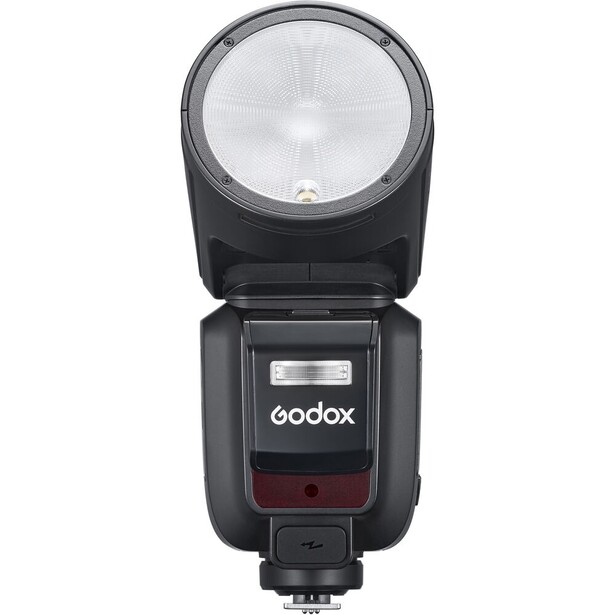
- Type: on-camera round-head speedlight, sold in Canon, Nikon, Sony, Fujifilm, and OM System versions
- Power output: 100 Ws
- Recycle time: approximately 1.7 s at full power, or as fast as 0.8 s with the optional PB960 pack
- Flash duration: 1/300 to 1/20,000 s
- Power source: VB30 7.2 V / 2,980 mAh lithium-ion, charged over USB-C, rated for about 400 full-power flashes
- Max sync: high-speed sync to 1/8,000 s, and up to 1/80,000 s on global-shutter cameras
- Modeling light: 2 W LED with 10 brightness levels
- Weight: 616 g with battery
- Price: $349 (B&H)
The V100 changes what a hot shoe flash is for. At 100 Ws it makes roughly a third more light than the 76 Ws round-head class below it, which works out to about four-tenths of a stop, and that sounds modest until you are bouncing off a 12-foot ceiling at a reception and it is the difference between ISO 1600 and ISO 2000. Godox also rebuilt the interface around a 2.3-inch color touchscreen, and our reviewer found it large, responsive, and intuitive in practice: you stop hunting through nested menus with a thumb wheel in a dark room.
The engineering that matters most is thermal. Godox rates the V100 for 70 to 100 consecutive full-power flashes before its cooling system needs a break, and that number decides whether you are shooting during a first dance or watching a blinking overheat icon. The 1.7-second full-power recycle is not the fastest here, though it drops to about 0.8 seconds with the PB960 external pack, and at the quarter and eighth power settings event photographers actually use, it keeps up with a burst.
Two details separate it from the cheaper round heads. The head takes the detachable SU-1 sub-flash, so you can bounce the main head into the ceiling and still throw a controlled kick of light at your subject's eyes. On a global-shutter camera it will also sync up to 1/80,000 s.
When we reviewed the V100, we came away calling it more than an incremental update, though not a flawless one. Our reviewer's two real objections were that the SU-1 sub-flash needs TTL support to be genuinely useful in fast-moving situations, and that the redesigned hot shoe still has to prove its long-term durability. The rest of the honest weaknesses sit on the spec sheet: it is heavy for a speedlight at 616 g with the battery, it costs noticeably more than the V1Pro it sits above, and the 2 W modeling lamp will not help you set a shot in a dim room. The V100 has been shipping since early 2025, and Godox has announced no successor. If the extra power is not worth the money, the Godox V1Pro gives you the same round head and the same sub-flash at 76 Ws for less. Otherwise, check the current price of the Godox V100 at B&H. Also consider the Profoto A2 if you shoot paid work and want the same 100 Ws with Profoto's color consistency, magnetic Clic modifiers, and rental-house availability, at several times the price, keeping in mind that the A2 is an off-camera monolight rather than a hot shoe flash.
Read our full review: Godox V100 Review: Premium Power Meets Modern Design
What We Like
- 100 Ws is a real, usable jump over the 76 Ws round-head class
- Color touchscreen makes power and group changes fast in the dark
- Rated for 70 to 100 consecutive full-power flashes before thermal throttling
- Detachable SU-1 sub-flash for bounce plus catchlight in one unit
What Could Be Better
- Heavy on a small mirrorless body at 616 g
- Priced well above the V1Pro for a modest power gain
- 2 W modeling lamp is close to useless for setting up a shot
- 1.7-second full-power recycle trails battery strobes
- Sub-flash lacks TTL, which limits it when the scene keeps changing
Best Round-Head Flash for the Money: Neewer Z2 Pro
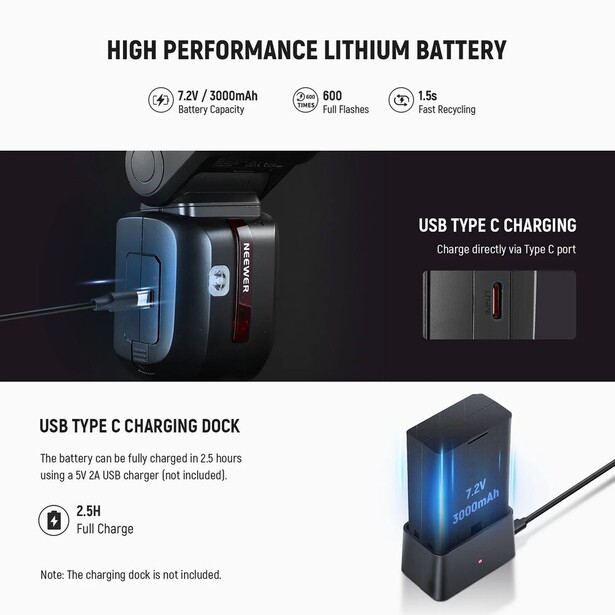
- Type: on-camera round-head speedlight, sold in Canon, Nikon, Sony, and Fujifilm versions
- Power output: 76 Ws
- Recycle time: approximately 1.5 s at full power
- Flash duration: 1/350 to 1/20,000 s
- Power source: 7.2 V / 3,000 mAh lithium-ion, USB-C, rated for about 600 full-power flashes
- Max sync: high-speed sync to 1/8,000 s
- Modeling light: dual 2 W LED with 10 brightness levels
- Weight: 580 g
- Price: $169.99 (B&H)
Round-head flashes throw a more even circle of light than a rectangular fresnel, and the magnetic accessory systems built around them (grids, gels, domes, snoots) are the fastest way to shape light on the run. Godox popularized that category with the V1. The Z2 Pro is Neewer's answer, and it undercuts the equivalent Godox while matching it on the numbers that count: 76 Ws, a 1.5-second full-power recycle, high-speed sync to 1/8,000 s, and a battery rated for about 600 full-power pops.
What makes it more than a clone is a menu setting called RX COMPAT, which lets the Z2 Pro receive from Godox's 2.4 GHz X system as well as Neewer's own Q system. Own a Godox trigger and two Godox lights already, and you can add this flash as a third head on the same transmitter. The two systems are exclusive, so you pick one at a time rather than running both at once, and few other budget flashes remove the mixing penalty at all.
Neewer also gave it a quartz flash tube rated for 100,000 firings and a cooling system it claims will run to 100 consecutive full-power flashes. Our reviewer shot it as her everyday portable light and came away praising the consistency of its output, the battery life, and how cleanly it integrated with a wireless trigger, to the point that she called it her new on-the-go lighting. Her one real complaint is a strange one: the flash keeps draining its battery after you switch it off, so it can turn up flat the next morning unless you pull the battery out between shoots.
Where it gives ground is at the top of its output range. There is no detachable sub-flash, the 76 Ws ceiling runs short under a tall ceiling, and the interface, much improved as it is, still trails the Godox touchscreen. This is a mature, currently shipping product. If you want round-head light and magnetic modifiers on a working budget, or a third head that talks to a Godox transmitter you already own, check the current price of the Neewer Z2 Pro at B&H.
Read our full review: New to Neewer: We Review the Neewer Z2 Pro Speedlight
What We Like
- Round-head light quality at a fraction of the premium price
- Receives from either the Neewer Q or the Godox X wireless system
- About 600 full-power flashes per charge, with USB-C charging
- Quartz tube rated for 100,000 firings
What Could Be Better
- 76 Ws runs short for big bounce and full-length groups
- No detachable sub-flash or second light source
- Interface is a step behind the Godox touchscreen
- Battery keeps draining after the flash is switched off, so pull it between shoots
Best for Beginners: Godox TT685 II
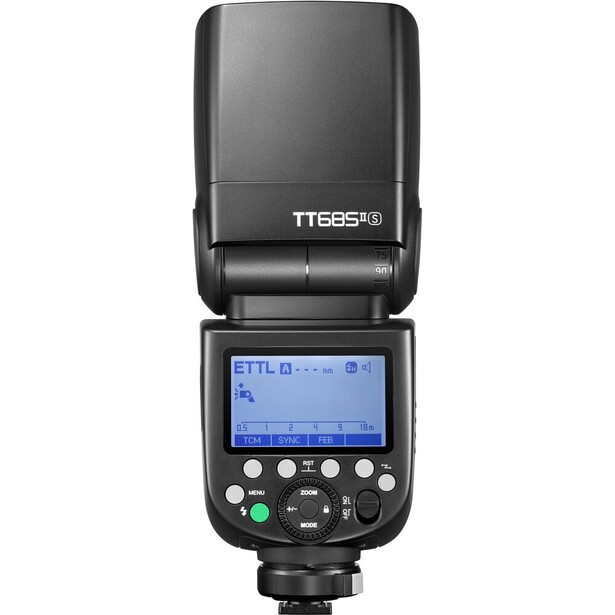
- Type: on-camera fresnel speedlight, sold in Canon, Nikon, Sony, Fujifilm, and Olympus/Panasonic versions
- Power output: guide number 60 (m, ISO 100, at 200mm)
- Recycle time: 0.1 to 2.6 s
- Flash duration: 1/300 to 1/20,000 s
- Power source: four AA batteries, rated for about 330 full-power flashes
- Max sync: high-speed sync to 1/8,000 s
- Modeling light: none
- Weight: 489 g with batteries
- Price: $129 (B&H)
Your first flash should teach you flash, not cost you a lens. The TT685 II is the least glamorous pick here and the one we would put in most new photographers' hands. It gives you TTL metering, manual control in 22 steps, high-speed sync to 1/8,000 s, and a built-in receiver for Godox's 2.4 GHz X system, so the day you take the flash off the camera, a cheap trigger and a stand is the whole upgrade path.
It runs on four AA batteries, which is an advantage for a beginner rather than a compromise. Rechargeable cells are cheap, replacements are available at a gas station at 11pm, and the flash is rated for about 330 full-power pops on a set. The tradeoff is a 2.6-second worst-case recycle, slow enough to notice when you are chasing a toddler mid-jump.
The learning feature worth knowing about is the TCM button. Shoot in TTL, let the camera work out the exposure, then press one button and the flash converts that result into the equivalent manual power setting and locks it there. That is the best on-ramp from "the camera decides" to "I decide" in any cheap flash, and it teaches the relationship between distance, aperture, and flash power faster than any tutorial. Fstoppers' Lighting 101 course covers the theory this flash lets you practice.
Be clear about what it is not. We have not tested one for this guide, the fresnel head is harsher than a round head, there is no modeling lamp, and the plastic body has no weather-sealing. It is a long-running, currently shipping design, which is part of why it is cheap and part of why every accessory in the world fits it. For a first flash that grows into a three-light kit without being replaced, check the current price of the Godox TT685 II at B&H.
What We Like
- TTL, manual, and high-speed sync at an entry-level price
- TCM button converts a TTL exposure into a manual setting instantly
- Built-in Godox X receiver, so it goes off-camera with one cheap trigger
- AA power means spares are cheap and available anywhere
What Could Be Better
- Worst-case recycle of 2.6 s is slow
- No modeling lamp
- Harsher fresnel light than a round head
- Plastic body with no weather-sealing
Best Budget Flash: Viltrox Vintage Z2
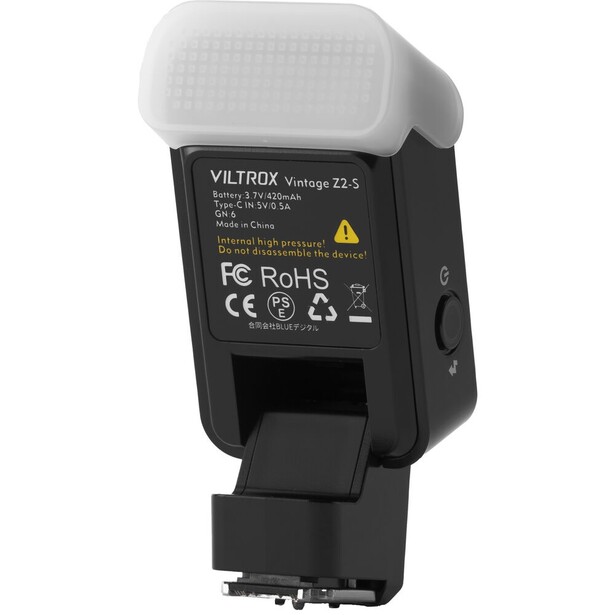
- Type: ultra-compact folding TTL flash, sold in Canon, Nikon, Sony, and Fujifilm versions
- Power output: 10 Ws, guide number 6 (m, ISO 100), five power levels from 1/16 to 1/1
- Recycle time: approximately 2 s at full power
- Flash duration: 1/16,500 to 1/50,000 s
- Power source: built-in 420 mAh battery, USB-C, rated for up to 700 full-power flashes
- Max sync: standard X-sync only, no high-speed sync
- Modeling light: none
- Weight: 52 g
- Price: $31.44 (B&H)
Most cheap flashes are bad versions of expensive flashes. The Vintage Z2 is something else: a 52-gram, folding, TTL-capable fill light that costs less than a memory card and lives in a jacket pocket permanently. Folded, it is the size of a matchbox. Unfolded, the head sits high enough above the lens axis to clear a hood.
Ten watt-seconds is a real limit and Viltrox does not pretend otherwise. This is fill-flash territory, not a light for bouncing across a room. Inside that limit it is genuinely useful: a catchlight at golden hour, a stop of fill under a hat brim, and the hard, direct, high-contrast look street and party photographers spend money chasing. It charges over USB-C, is rated for 700 full-power flashes per charge, and ships with proper TTL for each of the four major mounts.
Our reviewer carried one for street and documentary work and found the light quality more pleasing than he expected from something this cheap, calling it a small but surprisingly capable tool inside its intended limits. Those limits are steep and worth spelling out. There is no working high-speed sync, so bright sun locks you to your camera's native sync speed. The fixed head covers roughly a 28mm field of view with no zoom and cannot tilt to bounce, the guide number of 6 means your effective range is about arm's length, full-power recycle takes a second or two, and the glossy plastic shell scratches easily in a pocket. It also belongs to no wireless system, so it will never be your off-camera light.
Buy it as an accessory, not as your only flash. For a street or travel photographer who wants to try the direct-flash aesthetic before committing, or as the second flash you never take out of the bag, little else does the same job for the money. It launched in March 2026 and is the newest product in this guide. Check the current price of the Viltrox Vintage Z2 at B&H. Also consider the Viltrox Vintage Z1 Pro, which arrived in May 2026 with 24 Ws, TTL, and high-speed sync to 1/8,000 s, if the Z2's limits are too tight.
Read our full review: Viltrox Vintage Z2 TTL Flash: Breaking Street Photography Boundaries
What We Like
- Costs less than a memory card and weighs 52 g
- Real TTL, with dedicated versions for four mounts
- Folds flat, so it lives in the bag permanently
- USB-C charging and up to 700 full-power flashes
What Could Be Better
- 10 Ws is fill light only
- No high-speed sync at all
- Fixed head with no zoom, tilt, or bounce
- Glossy plastic body scratches easily
- Not part of any off-camera wireless system
Best Portable Strobe: Godox AD200Pro II
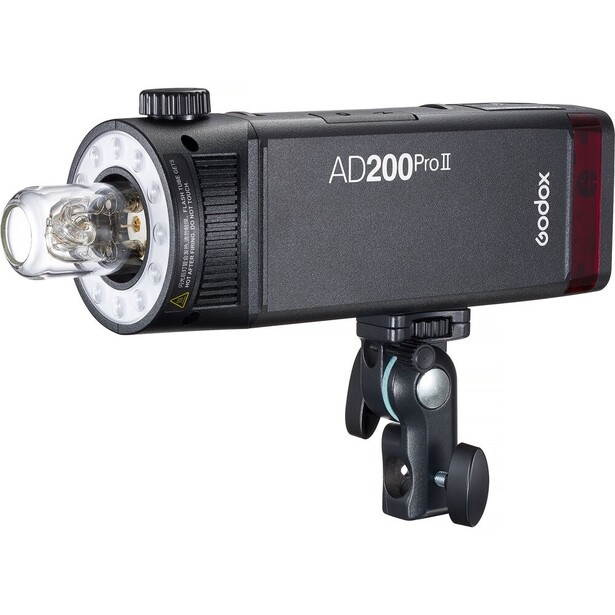
- Type: battery strobe with interchangeable speedlite and bare-bulb heads
- Power output: 200 Ws, adjustable from 1/1 to 1/512
- Recycle time: 0.01 to 1.8 s
- Flash duration: 1/272 to 1/23,500 s with the speedlite head, 1/252 to 1/16,200 s with the bare bulb
- Power source: 14.4 V / 2,980 mAh lithium-ion, rated for about 500 full-power flashes
- Max sync: high-speed sync to 1/8,000 s
- Modeling light: bi-color LED, 2,800 K to 6,000 K, 1,400 lux at 1 m
- Weight: 892 g with the battery and speedlite head
- Price: $349 (B&H)
The original AD200 rewrote location lighting by putting four times a speedlight's power into something the size of a paperback. The AD200Pro II is the current version of that idea, and it is the strobe most photographers should buy if they buy only one. Two hundred watt-seconds lights a headshot through a medium softbox in daylight shade, and the whole thing weighs 892 g with its battery and speedlite head.
The interchangeable heads are why it beats a speedlight rather than merely outpowering one. The bare-bulb head fires a naked flash tube in a near-360-degree pattern, filling a softbox or umbrella evenly instead of hot-spotting the middle the way a fresnel does, and the speedlite head snaps in when you want a tighter, harder beam. The second-generation body adds a stable color temperature mode that Godox rates to hold the bare bulb within plus or minus 100 K, the kind of number that used to justify a Profoto badge.
Recycle drops as low as 0.01 s at reduced power, the battery is rated for about 500 full-power flashes, and the bi-color modeling lamp is a real light rather than a token. We have not run one through our own testing, and the limits are honest ones: there is no built-in Bowens mount, so most large modifiers need a bracket, and 200 Ws still leaves you fighting midday sun through a big softbox. The AD200Pro II has been shipping since late 2024 and remains Godox's current 200 Ws pocket strobe, and Godox introduced the Godox AD100Pro II in January 2026 as a lighter 100 Ws take on the same idea. For a first off-camera kit, check the current price of the Godox AD200Pro II at B&H, and buy a heavy stand and a sandbag before a second head.
What We Like
- 200 Ws in a body that fits in a jacket pocket
- Bare-bulb head fills softboxes far more evenly than a fresnel
- Stable color mode holds the bare bulb within plus or minus 100 K
- Useful bi-color modeling lamp that doubles as a video light
What Could Be Better
- No native Bowens mount, so big modifiers need a bracket
- Still not enough power to overpower harsh midday sun through a large modifier
- Proprietary battery that you have to remember to charge
- Two heads to keep track of in the bag
Best Location Strobe for Working Pros: Westcott FJ400 II
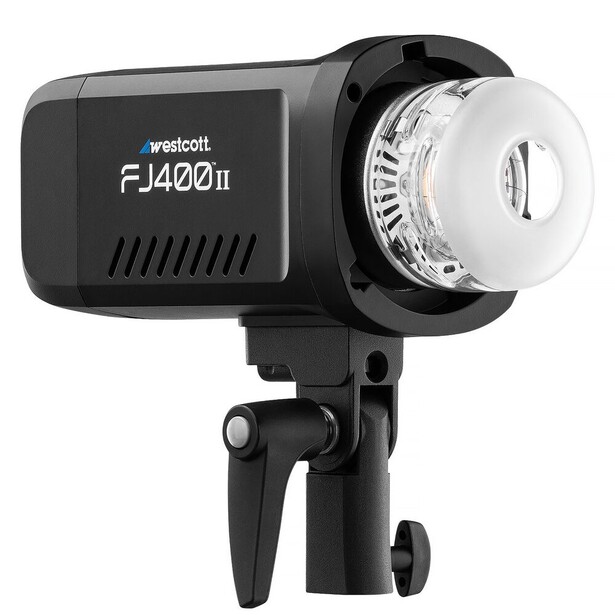
- Type: AC/DC monolight with a Bowens-compatible mount
- Power output: 400 Ws with a 9-stop range, 1.56 to 400 Ws
- Recycle time: 0.01 to 0.9 s
- Flash duration: 1/200 to 1/6,540 s normal, 1/500 to 1/24,000 s in Freeze Sync
- Power source: removable FJ Pro battery rated for 550-plus full-power flashes, or AC mains
- Max sync: high-speed sync to 1/8,000 s
- Modeling light: 30 W bi-color LED, 2,700 K to 6,500 K
- Weight: 2.4 kg
- Price: $649.90 (B&H)
One thing sets the FJ400 II apart from everything else here: Westcott's FJ wireless system is camera-agnostic. A single trigger fires the light with full TTL and high-speed sync on Canon, Nikon, Sony, Fujifilm, Panasonic, and Olympus bodies. If you have ever discovered at 6am that your trigger is the Canon one and today's camera is a Sony, you understand what that is worth.
The light itself is a proper 400 Ws working strobe. It recycles in as little as 0.01 s and never worse than 0.9 s at full power, holds 5,500 K to within plus or minus 150 K across its 9-stop range, runs on a removable battery rated for more than 550 full-power flashes or straight off AC, and takes a Bowens S-type mount, so the whole universe of inexpensive modifiers fits without an adapter. Freeze Sync pushes flash duration to 1/24,000 s, short enough to stop a splash cleanly. The 30 W bi-color modeling light is bright enough to set a shot by, and Creative Mask stores up to six lighting combinations so you can shoot several looks without moving a stand.
Nobody at Fstoppers has put an FJ400 II through a hands-on review, so this entry is built from Westcott's published specs and the light's documented design. The costs are real. At 2.4 kg it is well over twice the weight of an AD200Pro II, it costs meaningfully more than the equivalent Godox, and the FJ ecosystem is smaller, with fewer third-party accessories and fewer secondhand bargains. Westcott announced it in January 2025, so it is early in its cycle. If you own two camera systems, or work alongside a second shooter on a different brand, check the current price of the Westcott FJ400 II at B&H. Also consider the Godox AD400Pro II if you are already in the Godox system and want the same 400 Ws for less.
What We Like
- One trigger runs TTL and high-speed sync across every major camera brand
- 0.01 to 0.9 s recycle and 550-plus full-power flashes per battery
- Bowens-compatible mount fits inexpensive modifiers
- Bright 30 W bi-color modeling light and a genuinely good touchscreen
What Could Be Better
- 2.4 kg is heavy for a light you carry to a location
- Costs more than the equivalent Godox strobe
- Smaller accessory ecosystem and thinner used market
- Battery is proprietary and the spare is expensive
Best Studio Strobe: Profoto D30
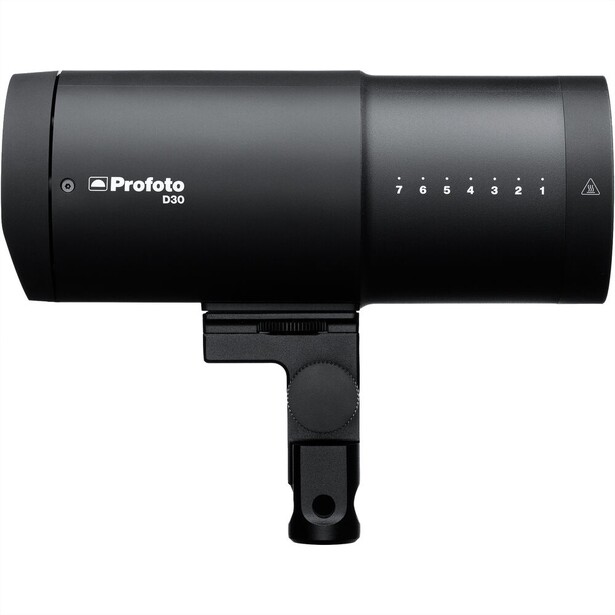
- Type: mains-powered studio monolight
- Power output: 500 Ws with an 11-stop range, 0.5 to 500 Ws
- Recycle time: 0.01 to 0.9 s, voltage dependent
- Flash duration: to 1/21,100 s (t0.5) in Freeze mode
- Power source: AC mains only, 100 to 240 V
- Max sync: TTL and high-speed sync to 1/8,000 s through Profoto AirX remotes
- Modeling light: 35 W bi-color LED, 2,800 K to 7,000 K, CRI above 94
- Weight: 2.1 kg
- Price: $1,795 (B&H)
A studio strobe lives on a stand, plugs into a wall, and fires tens of thousands of times a year, and those three facts change what matters. Battery life is irrelevant, weight barely registers, and what counts is recycle speed, color that holds as you change power, and a light that does not die during a paid shoot. The D30 is Profoto's answer to that brief, a 500 Ws mains monolight that arrived in October 2024 to take over the studio job the D2 used to do, and 500 Ws is the size most portrait and product studios need.
Three flash modes do the work. Eco prioritizes color accuracy and tube longevity, Boost maximizes output, and Freeze drops flash duration to 1/21,100 s at t0.5, short enough to catch flour thrown across a table or hair mid-flick. Recycle runs from 0.01 to 0.9 s across an 11-stop range down to 0.5 Ws, and that bottom end matters more than people expect: half a watt-second is what a delicate hair light in a small room needs, and plenty of strobes cannot go that low.
The modeling light is the other reason to spend the money: a 35 W bi-color LED with a CRI above 94, adjustable from 2,800 K to 7,000 K, so you can set a shot by eye or use it as a continuous source for video. We tested a D30 before its launch, and beyond that, this entry rests on Profoto's specification sheet and on the D2's long track record in rental houses.
The obvious problem is price. This costs several times what a Godox monolight of similar power costs, and the Godox will make perfectly good pictures. What you are buying is the modifier range, the color consistency, the resale value, and the certainty that a rental house in any city can hand you an identical light. Profoto splits the D2's old job between the D30 and the higher-output Profoto Pro-D3, which comes in 750 Ws and 1,250 Ws versions, so step up only if you need the extra output or a body built for high-volume commercial abuse. This one is early in its cycle with no successor announced. Check the current price of the Profoto D30 at B&H.
What We Like
- 11-stop range down to 0.5 Ws, which few strobes can match
- Eco, Boost, and Freeze modes cover longevity, power, and action
- 35 W bi-color modeling LED with CRI above 94 doubles as a video light
- Profoto's modifier range, service network, and resale value
What Could Be Better
- Costs several times a comparable Godox monolight
- AC only, so it is not a location light
- Modifiers use Profoto's proprietary mount
- 500 Ws is not enough for large-group or big-modifier commercial work
Best for High-Speed Sync: Elinchrom THREE
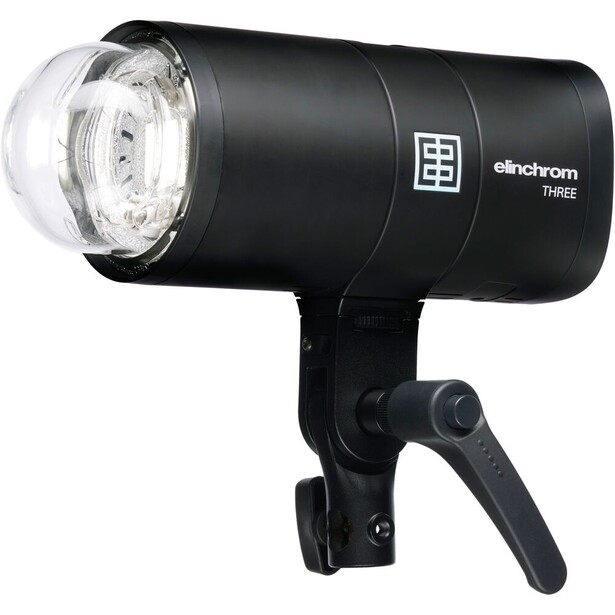
- Type: battery-powered off-camera strobe with an OCF mount
- Power output: 261 Ws, adjustable down to 7 Ws
- Recycle time: 0.08 to 1.2 s
- Flash duration: 1/255 to 1/1,550 s in Normal mode, 1/440 to 1/8,500 s in Action mode (t0.1)
- Power source: built-in 41 Wh lithium-ion, USB-C, rated for up to 525 full-power flashes with the LED off
- Max sync: high-speed sync to 1/8,000 s via the Skyport Transmitter Pro
- Modeling light: 20 W LED, 2,700 K to 6,500 K, CRI 95
- Weight: 1.65 kg with the tilt head
- Price: $2,434.95 (B&H)
High-speed sync is how you shoot a portrait at f/1.8 at noon without an ND filter, and it is brutally inefficient: the flash fires a long, low pulse across the whole travel of the shutter, and several stops of output go to waste. The light you pick for the job therefore matters more than the technique. The Elinchrom THREE is built for it, with 261 Ws that syncs to 1/8,000 s and a color temperature Elinchrom publishes separately for its Normal mode (5,600 K) and its short-duration Action mode (5,900 K) instead of pretending the two behave alike.
Elinchrom has been refining Hi-Sync and HSS longer than most of its competitors, and its flash tube and control system are tuned to deliver a flat, usable pulse rather than the ramped output that leaves a gradient across the frame. That flat pulse is what separates it from cheaper systems that treat HSS as a checkbox, and it holds output even across the frame instead of banding it. The rest of the light backs that up: 1.65 kg, a 1.2-second full-power recycle, USB-C charging from a laptop brick or a power bank, up to 525 full-power flashes per charge with the modeling lamp off, and an OCF mount that also accepts Profoto OCF modifiers.
The catch is value. At its price it competes with a Godox AD400Pro II that delivers more raw power for less, and 261 Ws is a modest ceiling once high-speed sync eats into it. The OCF modifier range is smaller and pricier than Bowens. We reviewed the THREE in 2023 and liked how much power it packs for its size, but that review did not test high-speed sync, so the case for it here rests on Elinchrom's published specs and the light's documented HSS design. The THREE has been shipping since 2023 with no announced successor. If beating the sun is the thing your lighting kit exists to do, check the current price of the Elinchrom THREE at B&H.
What We Like
- HSS output that stays even across the frame instead of gradient-banding
- Color temperature specified separately for Normal and Action modes
- USB-C charging from a laptop charger or power bank
- 1.65 kg, and OCF mount takes Profoto OCF modifiers
What Could Be Better
- 261 Ws is modest once high-speed sync eats into the output
- Costs more than more powerful Godox competition
- OCF modifiers are pricier and fewer than Bowens
- 1.2-second full-power recycle is slower than a mains-powered strobe
How to Choose a Flash or Strobe
Start with power, and be honest about the ceiling you need. A speedlight in the 60 to 100 Ws range covers on-camera bounce, event work, and outdoor fill. Two hundred watt-seconds gets you a lit portrait through a softbox in open shade. Four hundred is where you start fighting direct sun or lighting a group. Five hundred and up is studio and commercial territory. Doubling watt-seconds buys only one stop, so the gap between 200 Ws and 400 Ws is smaller than the numbers suggest.
Then pick your radio, because that decision outlives every light you buy. Godox's 2.4 GHz X system is the default: cheap, reliable, and stretching from a basic trigger to a 1,200 Ws strobe, with Neewer and others building compatibility into their own gear. Westcott's FJ system is the one to choose if you shoot more than one camera brand, since a single trigger handles TTL and high-speed sync on all of them. Profoto's AirX and Elinchrom's Skyport are excellent and expensive, and they make sense when consistency, service, and rental availability are worth real money to you.
Modifier mounts matter more than most buyers realize. Bowens is the universal standard, and a Bowens-mount light opens up hundreds of inexpensive softboxes, beauty dishes, and grids. Godox's own strobe mount and Profoto's OCF and 100 mm mounts each lock you into a narrower, pricier catalog. Round-head speedlights use magnetic accessory kits that are fast on a wedding day and largely useless in a studio.
Two specs quietly outrank the headline number. Recycle time at the power you actually use decides whether you catch the moment or the frame after it. Flash duration is the other: when the flash is the dominant light, a pulse lasting 1/20,000 s freezes motion that your shutter speed alone cannot touch, which is what the Freeze and Action modes on these lights are selling. Color consistency comes next, because a light that drifts 500 K as you change power will cost you time in editing.
Finally, budget for the parts that are not the light. A heavy stand, a sandbag, a modifier, and a spare battery cost about as much as a second flash and will do more for your pictures. If you are still assembling the rest of the kit, our beginner cameras guide covers the bodies these lights bolt onto, and our LED and continuous lights guide covers the video side of the same problem.
What We're Looking For
We weigh usable power rather than headline watt-seconds, recycle time at realistic working power, flash duration, color consistency across the power range, the cost and depth of each light's wireless and modifier ecosystem, and how well the product suits the photographer it is aimed at. Every specification here was verified against the manufacturer's current spec sheet and a live retailer listing at the time of writing. On testing, we are being straight with you: the Godox V100, the Neewer Z2 Pro, the Viltrox Vintage Z2, and the Elinchrom THREE have each been reviewed hands-on by an Fstoppers writer, and the Profoto D30 got a hands-on test before its launch. Those entries link to that coverage and draw on it. The other three picks were not tested for this guide, and each of those entries says so; their descriptions come from the manufacturer's published specification. No pick was selected on the strength of sponsored coverage. Most picks across our buying guides come from gear our writers have used and reviewed hands-on. Where we have not, we say so.
Frequently Asked Questions
What Is the Difference Between a Speedlight and a Strobe?
A speedlight is a battery-powered flash designed to sit on the camera's hot shoe, typically producing 60 to 100 Ws and running off AA cells or a small lithium battery. A strobe is a larger, more powerful light designed to live on a stand, usually 200 Ws and up, with a modeling lamp and a proper modifier mount. Speedlights are for portability, strobes are for control.
How Many Watt-Seconds Do I Need?
For on-camera bounce and event work, 60 to 100 Ws is enough. For a lit portrait through a softbox in open shade, 200 Ws. For overpowering direct sun through a modifier or lighting a group, 400 Ws or more. Remember that doubling watt-seconds only gains you one stop of light, so the difference between 200 Ws and 400 Ws is smaller than it sounds.
Is Godox Good Enough for Professional Work?
Yes, and a large number of working photographers use nothing else. The gap between Godox and Profoto is no longer image quality, it is color consistency across thousands of frames, build durability under daily abuse, service turnaround, and the ability to rent an identical light in any city. If those things do not affect your income, the money is better spent elsewhere.
Do I Need High-Speed Sync?
Only if you shoot flash outdoors in bright light at wide apertures. High-speed sync lets you go past your camera's native sync speed, usually 1/200 s to 1/250 s, so you can shoot at f/1.8 in full sun. It costs you flash output, typically a stop or two and considerably more at the fastest shutter speeds, so you need more power than you think. If you shoot indoors or in shade, you will rarely miss it.
Can I Mix Flash Brands in One Kit?
Sometimes. Neewer's Z2 Pro receives from Godox's X system, and several manufacturers build Godox compatibility into their gear, so a mixed kit on one trigger is possible. Profoto, Elinchrom, and Westcott each use their own protocol, and mixing them means a second transmitter or an optical trigger. Choose your radio system before your second light.
Fstoppers may earn a commission from purchases made through links in this article. Our picks are made independently by our editorial team.