
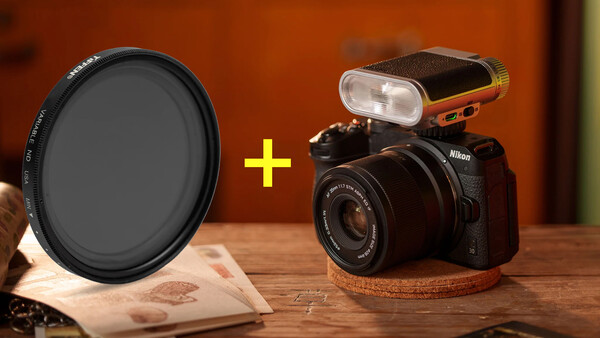
As a professional photographer, I'm always on the lookout for tools that punch above their weight, especially when it comes to lighting. When I first got my hands on the Viltrox Vintage Z1, I'll admit, its retro aesthetic did scratch an itch for me, being an insufferable vintage aficionado. It's a remarkably lightweight unit, coming in at just 116 grams, and at a mere $50, my expectations were tempered.
Yet, during a recent wedding, this unassuming flash surprisingly impressed me, earning its keep and then some. The quality of light it produces, especially with the built-in diffuser, is genuinely pleasing—quite a feat for such a compact unit. It boasts a guide number of 12 (ISO 100, meters) and a rechargeable battery that gives me around 400 full power flashes per charge, which I’ve found perfectly adequate for much of my needs.
Now, the Z1 is a strictly manual beast. We're talking seven power steps, from 1/1 down to 1/64, triggered either by the hot shoe pin or its optical S1/S2 slave modes. This manual-only approach means no fancy high-speed sync (HSS) to rescue me in bright daylight. I'm tied to my camera's X-sync speed, 1/250th of a second in the case of my Fujifilm X-T5. On a sunny afternoon, that usually means cranking down to f/8 or smaller, which just kills any hope of a shallow depth of field. HSS would normally be the workaround, but it also gobbles up precious flash power. That's where my little secret comes in: the neutral-density (ND) filter.

The ND Filter Advantage
For me, an ND filter is the elegant solution to the Z1's sync speed limitations. By simply sliding an ND filter over my lens, I darken the ambient scene, allowing me to open up my aperture without overexposing. For instance, a 3-stop ND filter lets me shoot at f/2.8 instead of f/8, all while keeping my shutter at 1/200th. Crucially, this preserves every watt-second of the Z1's 23 Ws output. This extra headroom is invaluable with a GN 12 unit; every stop I can keep in reserve translates to more working distance or a lower ISO setting.
You are not limited to this particular flash unit to use this method. Any flash that does not have high-speed sync capabilities can be put to good use in these same scenarios, including competing units like the Godox Lux Sr. and Jr.—both of which I own (I told you I was a vintage-look nut, didn't I?).
In practice, this technique opens up a world of possibilities. When I’m shooting portraits at high noon, an ND 8 filter combined with the Z1 at full power, placed about a meter from my subject, perfectly balances the f/2.8, ISO 100 ambient light at 1/200th of a second. This gives me that beautiful, blurred background that the stock sync speed would normally forbid. For the street photography I tested this out with so far, I found myself dropping the Z1's power to 1/16th with the same ND 8 filter. This provides a subtle, one-stop lift on faces, preventing harsh shadows without blowing out the sky—a critical balance for natural-looking fill.

Creative Freedom: Off-Camera With the Z1
The Z1's optical slave modes, S1 and S2, are fantastic for multi-light setups without needing complex radio triggers. My typical workflow involves putting any hot shoe flash (or even my camera's pop-up flash, if available) on my camera, set to a low manual power like 1/64. Then, I set the Z1's side switch to S1 if my master flash is a single pulse, or S2 if it fires a TTL pre-flash. I generally position the Z1 up to two meters from my master flash, though Viltrox suggests a bit closer in daylight.
With an ND filter already darkening the scene, I can keep both flashes under the camera's X-sync speed. This ensures the optical trigger fires cleanly and in step, which is vital for precise lighting. This setup opens up two practical scenarios: a budget-friendly key-and-fill arrangement, where the on-camera flash acts as a low-power fill, and the off-axis Z1 carries the key light duty for shaping my subject; or, reversing the roles, I can point my on-camera flash at the subject and hide the Z1 behind to kick a rim light or add a subtle background accent. The ND filtration allows me to maintain that wide-aperture look in bright daylight while the remote Z1 fires at full strength.
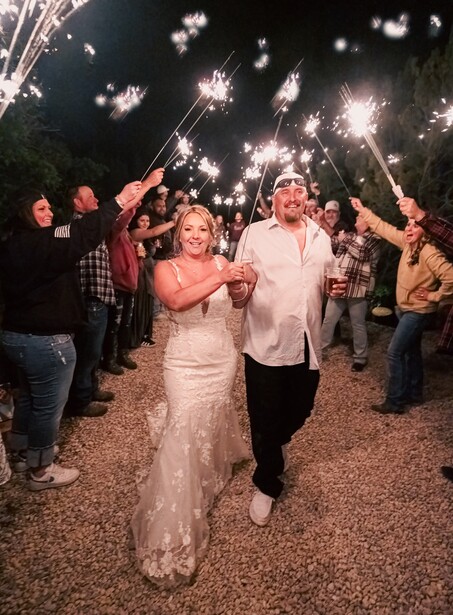
After the sun went away at the wedding I was testing the Z1 at, I was even able to do some star portraits of the bride and groom by using the slave mode and rear curtain sync to freeze the couple in the frame after a tripod-mounted long exposure. Rear curtain sync also came in handy using the Z1 to illuminate dance photos.

Workflow Notes and My Takeaway
A few practical notes from my use: focusing through a dark ND filter can be tricky, so I always focus first, then mount the filter if I have the time to spare. For metering, I always meter the ambient light first, dial in the ND strength to achieve my desired aperture, and then adjust the Z1's power. Its click-stop dial makes power changes incredibly quick, without any menu diving. Battery life is also a strong point; at 1/16 power, the Z1 can exceed 2,000 pops on a single 50-minute USB-C charge. The color balance is around 6,500 Kelvin, which is slightly cool, but I find it perfectly acceptable and easily adjusted in post-processing. While it covers a 28mm (35mm equivalent) lens well, I've noticed some minor vignetting as you go wider, and a bit of fall-off at the top in vertically oriented shots—minor quibbles given its performance.
Ultimately, my experience confirms that high-speed sync, while convenient, isn't the only path to shallow depth of field flash photography. The Viltrox Vintage Z1, combined with a simple ND filter, is a testament to that. It preserves every watt-second of the flash's power and keeps my exposures within the camera's native sync ceiling. Add in the Z1's S1/S2 optical slave and you get flexible, off-camera lighting control—all without breaking the bank. For its price, it's a solid, reliable workhorse that's found a spot in my kit.
Pros and Cons of the Viltrox Vintage Z1 (From My Perspective)
Pros
-
Incredibly lightweight and portable, easy to carry for long shoots.
-
Exceptional value for its $50 price point.
-
Produces surprisingly good light quality, especially with the built-in diffuser.
-
Highly versatile, integrates well with various camera systems.
-
Solid battery life (400 flashes per charge; over 2,000 at 1/16 power).
-
Intuitive, click-stop manual power dial for quick adjustments.
-
Reliable S1/S2 optical slave modes simplify off-camera setups.
-
Transforms into a powerful daylight tool when paired with ND filters.
Cons
-
Strictly manual operation, no TTL or HSS.
-
Reliance on X-sync speed can be restrictive without ND filters.
-
Color temperature is slightly on the cooler side (6,500 K).
-
Minor light fall-off noticed with wider lenses and in vertical orientations.



Join the Fstoppers community for free
-
Post comments and join in the discussions
-
Browse the site ad-free
-
Share your work and get featured in the community
-
Compete in the photo contests for fun and prizes
4 Comments
Well written .I bought two of these ...it does work at slightly faster shutter speeds on the OM5 ..but perfect for fill and street the diffuser really does a good job..other use on my Sony a7c
I must admit I am a sucker for the style too lol. Nice little kit
Does this Flash work with the Lumix FZ-80 Bridge Camera? I need a Strong Flash affordable that will Work with my 2 Year Old Camera.
This flash should fire on any traditional working hotshoe, because its just a manual flash, no ttl or extra pins. I dont have a fz80 to test it with, but if you have a working hotshoe, you should be fine.