In 2014, I was at Photokina in Cologne, Germany, which at the time was still one of those wonderfully overwhelming events where it seemed like the entire photography industry had temporarily relocated into a handful of enormous convention halls. I was there speaking on stages for DJI, Adobe, Fujifilm, and doing the usual Photokina routine: presentations, meetings, running into old friends, talking about photography for twelve hours straight, and consuming the quantity of coffee necessary to make all of that seem like a reasonable thing to do.
Somewhere in the middle of it, my friend Rafael Pons—Rafa—found me and said he really wanted to talk. He had a crazy idea.
Now, I’ve learned over the years that when someone begins a conversation with “I have this crazy idea,” you’re probably about to hear one of two things. Either it is, in fact, completely crazy, or you’re hearing the beginning of something genuinely interesting. In Rafa’s case, it turned out to be a little bit of both.
Rafa and his team in Menorca had created PhotoPills, an app that helps photographers plan images around the sun, moon, Milky Way, and night sky. I’ve always loved the fundamental idea behind PhotoPills because it begins in exactly the right place. It doesn’t tell you what photograph to make. It helps you answer a question that has already formed in your imagination. What if the moon appeared behind that building? What if the Milky Way lined up over that mountain? What if the sun dropped into exactly that opening in the skyline? PhotoPills can help you figure out the when and the where, but the what if still has to come from you.
But Rafa hadn’t pulled me aside at Photokina to talk about the app. He wanted to create something else. He wanted to create a photography camp.
Not a conference, and not exactly a workshop. He kept coming back to the word camp because he wanted it to feel comfortable and uncomplicated. He wanted people to come together almost like a family—to learn, share meals, tell stories, stay up too late talking about photography, and make friends around the photographic equivalent of a campfire. And he wanted to bring them all home to Menorca, this small Balearic island off the coast of Spain that he had started calling The Island of Light.
By then, my wife and I had already spent years running photography workshops and tours around the world, so Rafa wanted my advice. We escaped the chaos of the show floor, found one of the little cafeteria areas, grabbed some coffee, and sat down. I did what I thought I was there to do and started asking questions.
What about transportation?
“Oh, I’ve got that figured out.”
Okay. What about the hotel?
“Yeah, that’s all here.”
Meals?
“Got it.”
Locations? Group sizes? Timing? Logistics? Backup plans?
Every question I asked seemed to have an answer.
Then Rafa handed me what I can only describe as a small book.
He had introduced this thing to me as his crazy idea, so I was expecting something resembling an idea—maybe some notes, a rough itinerary, a few pages of thoughts. Instead, I’m sitting there with what must have been forty, fifty, maybe sixty pages of detailed planning.
And I started reading.
There were pages about accommodations. Pages about transportation. Pages about locations and schedules and meals. I’m pretty sure there were fifteen pages about the hotel alone. Every time I thought I’d finally found the section where Rafa actually needed my help, I’d turn the page and discover that, no, he’d already figured that out too.
Eventually I realized I had absolutely no idea why I was there.
I remember looking across the table at him and thinking, What exactly do you want me to tell you?
He kept asking, “What do you think?”
And I kept reading, desperately searching for something intelligent to contribute.
Finally, I slid the whole thing back across the table.
“Rafa, you don’t need my help. You’ve already done this.”
I meant it. In fact, he’d planned it better than I probably would have.
What I could do was help him connect some people. I knew photographers who I thought would love what he was building, and I was happy to send some messages and make introductions. More importantly, I told him that when he made this crazy thing real, I wanted to be part of it.
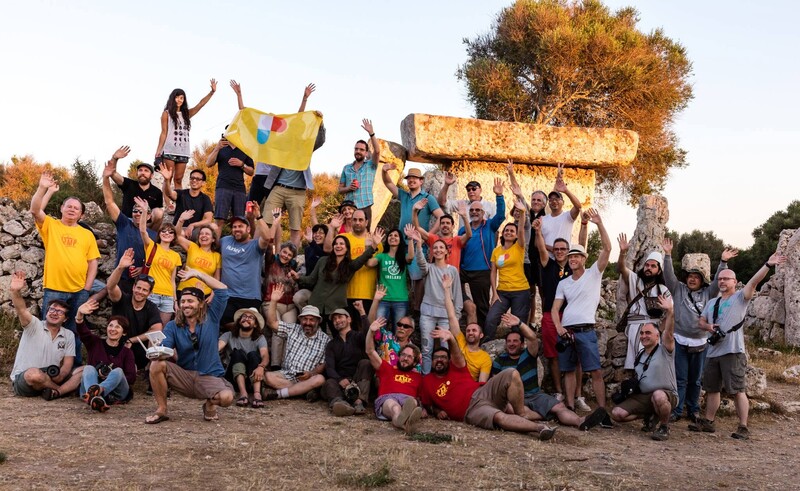
And he did. Here's all of us at the first PhotoPills Camp in 2017.
Twelve Years Later
The first PhotoPills Camp happened. Then another. The idea grew beyond a single event in Menorca and became a community of photographers coming together around the world to learn, explore, collaborate, and help one another create photographs that might otherwise have remained ideas.
Dream shots, basically.
Sometimes literally moonshots.
Sorry. The pun was right there.
And twelve years after that conversation while having coffee at Photokina, I found myself thinking about Rafa and his crazy idea again.
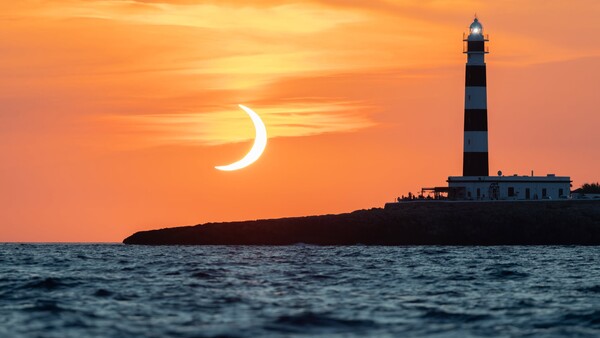
Last week, an extraordinary group of photographers came together in Spain to photograph the total solar eclipse. People like Albert Dros, Francesco Gola, Antoni Cladera, and others had spent months working with the PhotoPills team to prepare for a moment that would last only minutes. There were astronomical calculations, location scouting, weather analysis, equipment decisions, travel logistics, boats, massive lenses, and contingency plans for the contingency plans.
Then I started seeing the photographs and they were incredible.
I messaged Albert and Francesco immediately. You guys absolutely crushed this—hats off. Amazing job.
Albert’s response was essentially: You have no idea.
Apparently Francesco had spent a good portion of the experience puking his guts out.
This was information the photographs had somehow failed to communicate.
I grew up in the Florida Keys and spent a lot of my younger years working on and around boats, so I know seasickness. Once it arrives, you don’t negotiate with it. The ocean has made a decision on your behalf.
Francesco explained that perhaps he shouldn’t have eaten such a large lunch beforehand.
Living out his midday paella fantasy aside, he’s Italian, so naturally my diagnosis was different.
I’m pretty sure the mistake was the cappuccino after lunch.
Whatever the culinary decisions leading up to the event, the reality was pretty extraordinary. After six months of preparation and all of the technology that went into planning the exact position of the eclipse, it ultimately came down to human beings standing on boats in rough seas, hand-holding 600mm lenses, pushing ISO values, trying to keep one of the most spectacular astronomical events imaginable inside the frame while also trying not to lose lunch over the side.
And they got the shots. Beautiful ones, while also taking a bunch of PhotoPills Campers—quite literally—along for the ride.
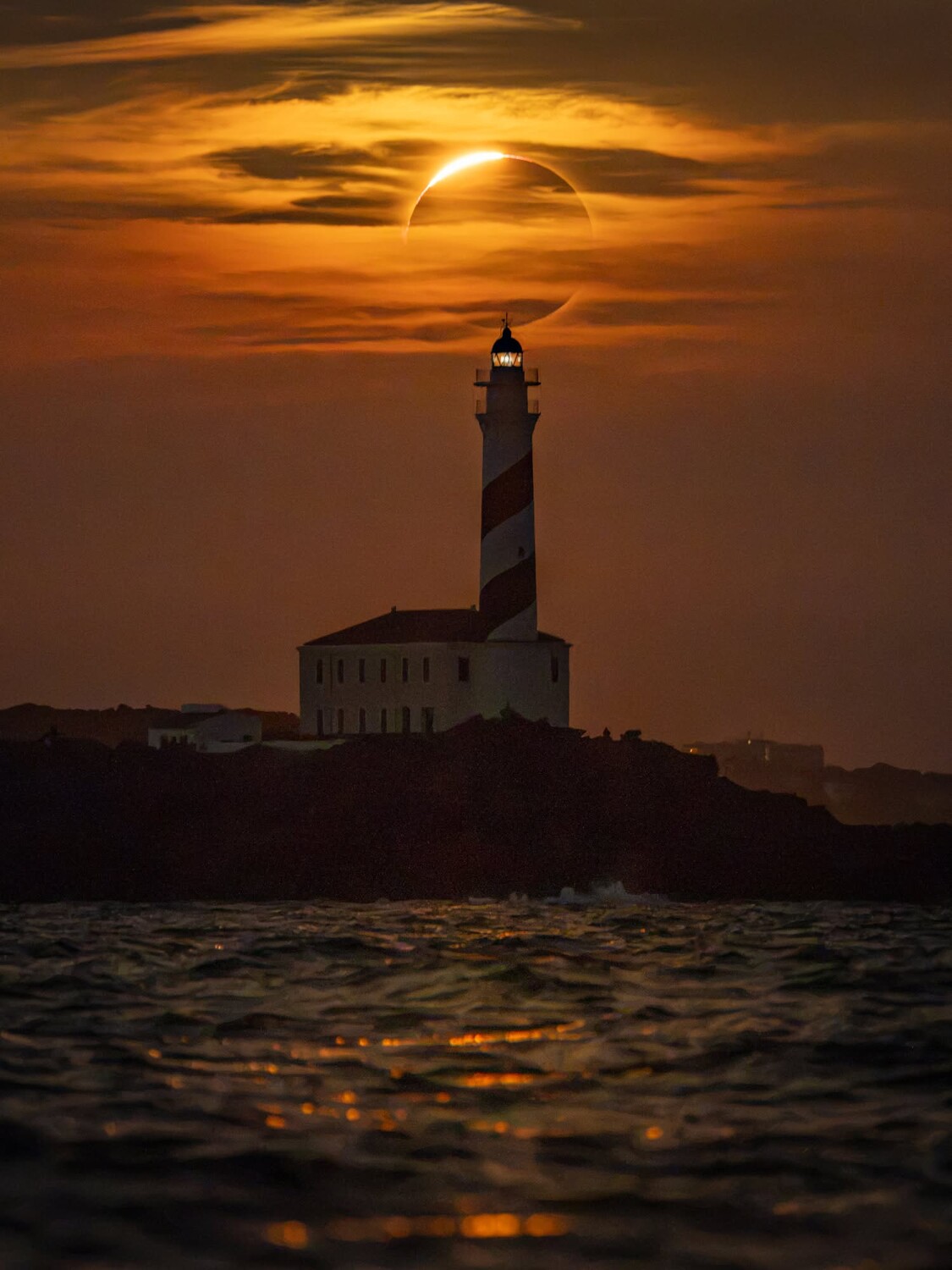
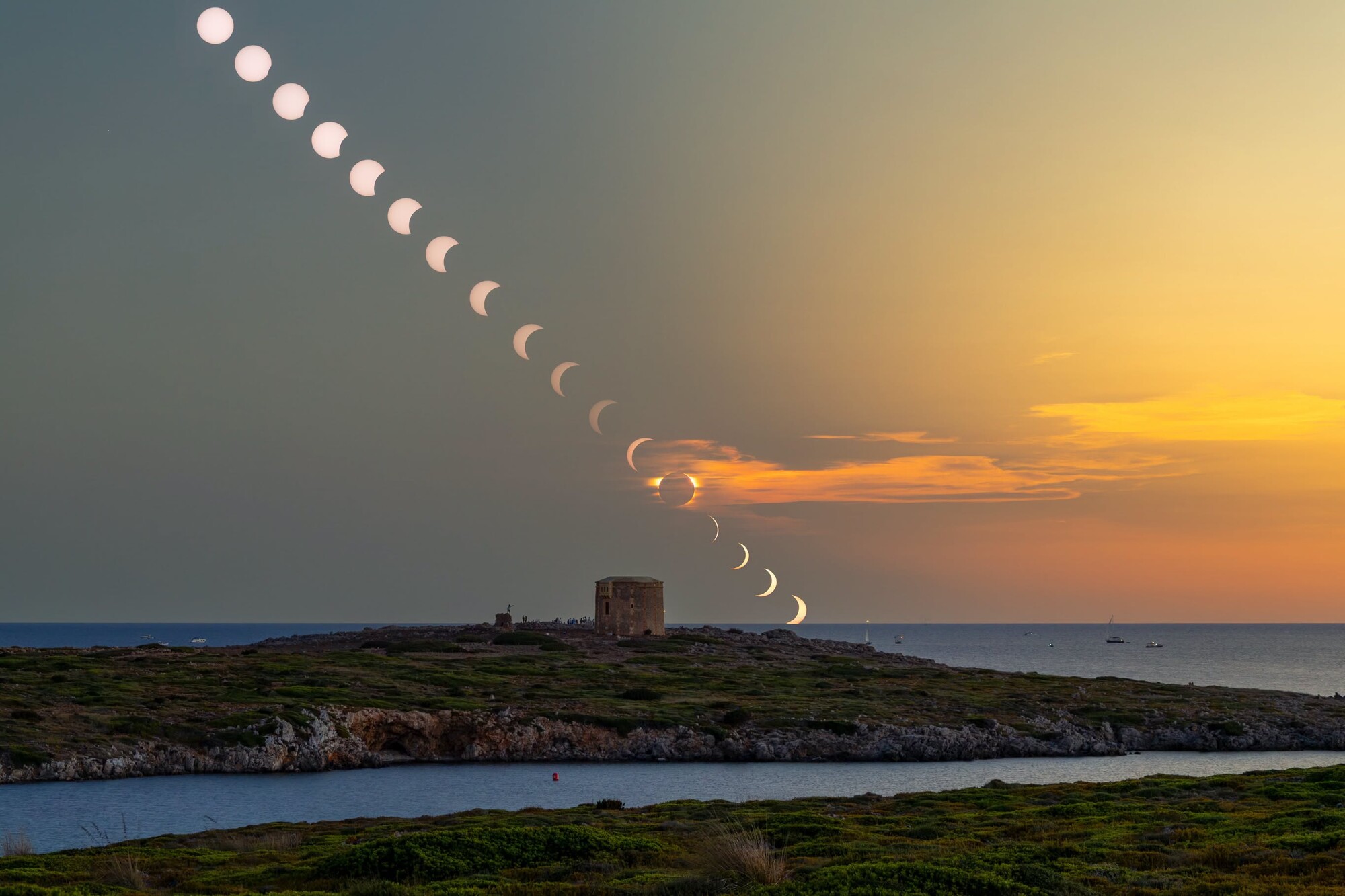
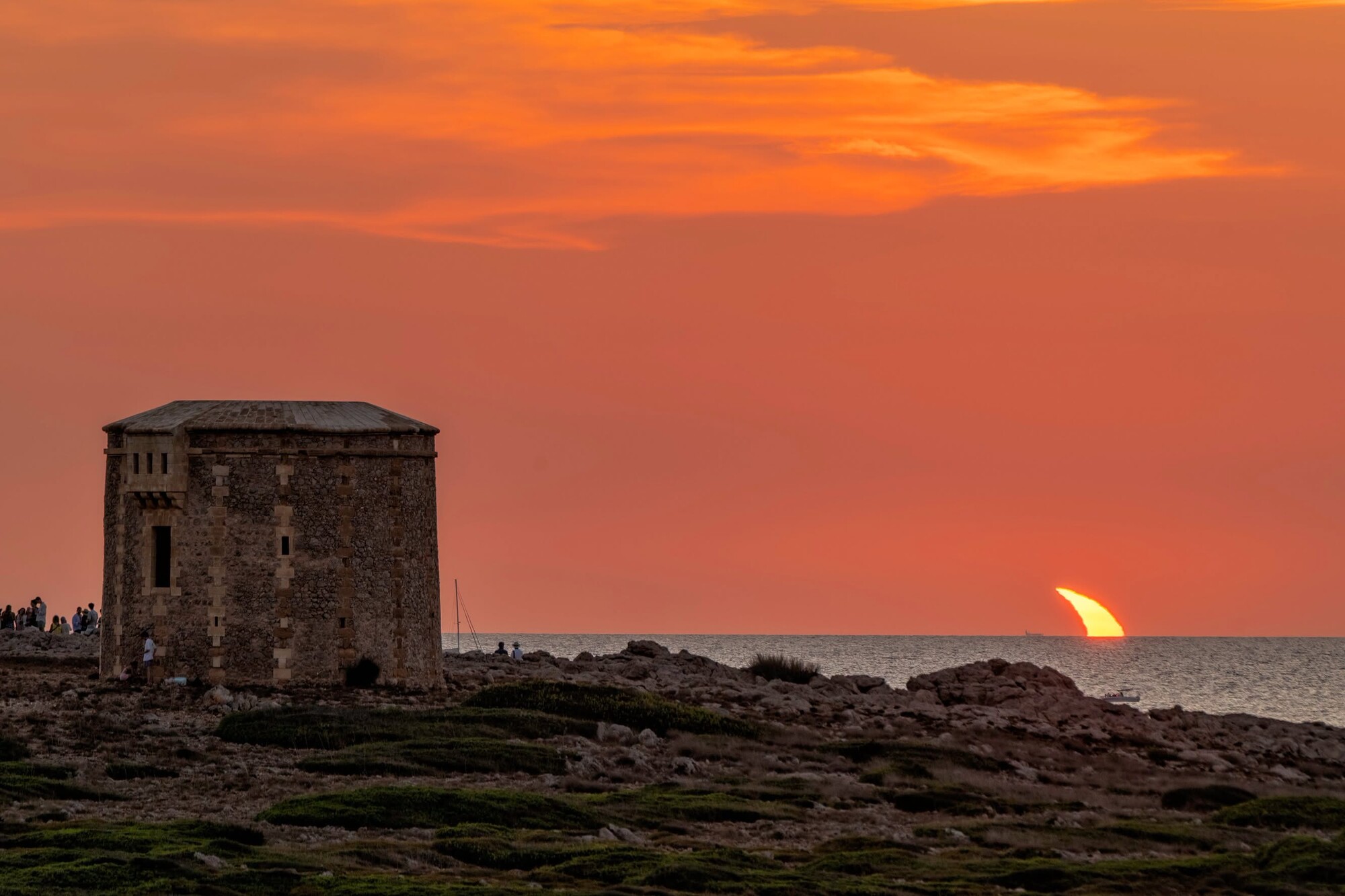
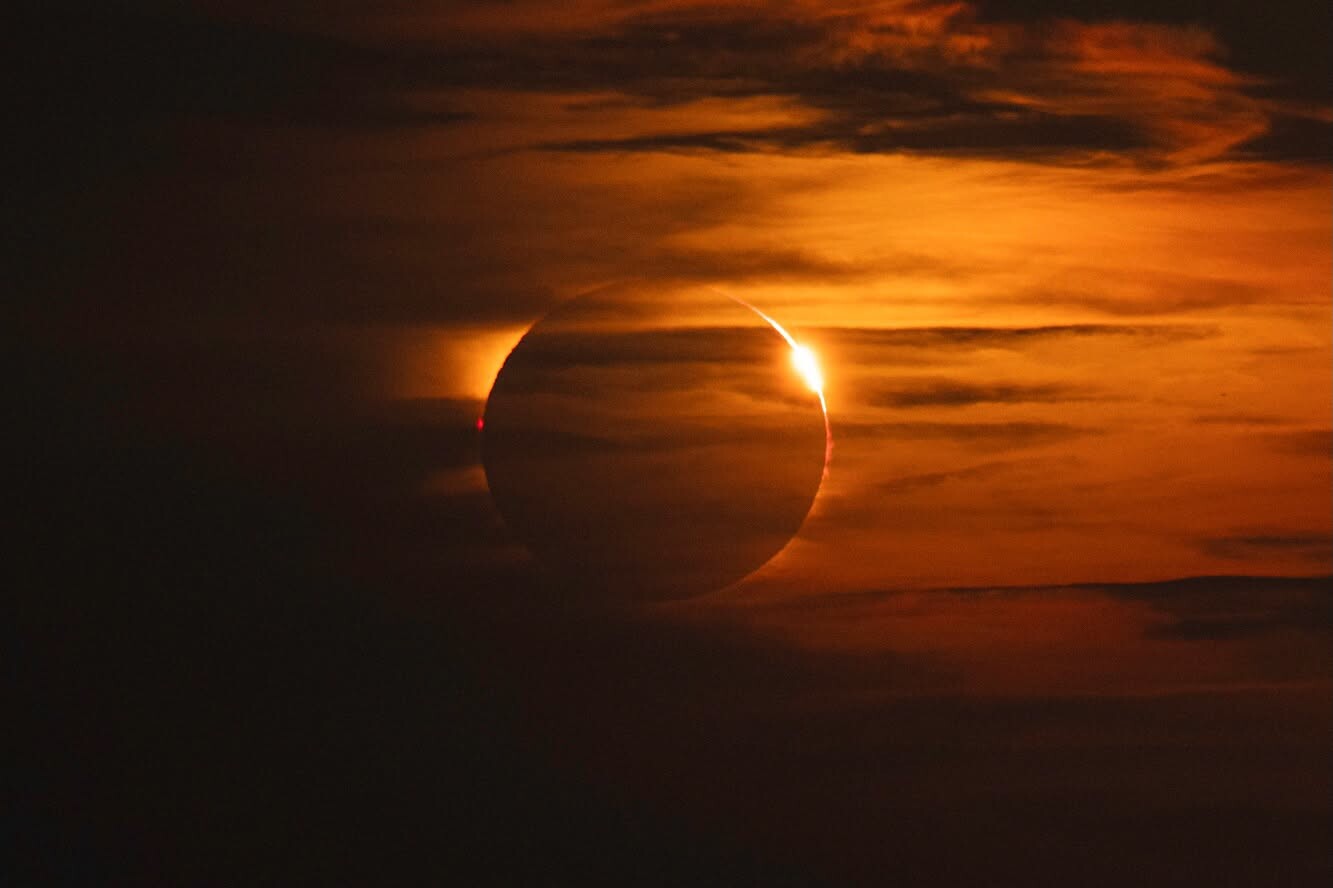
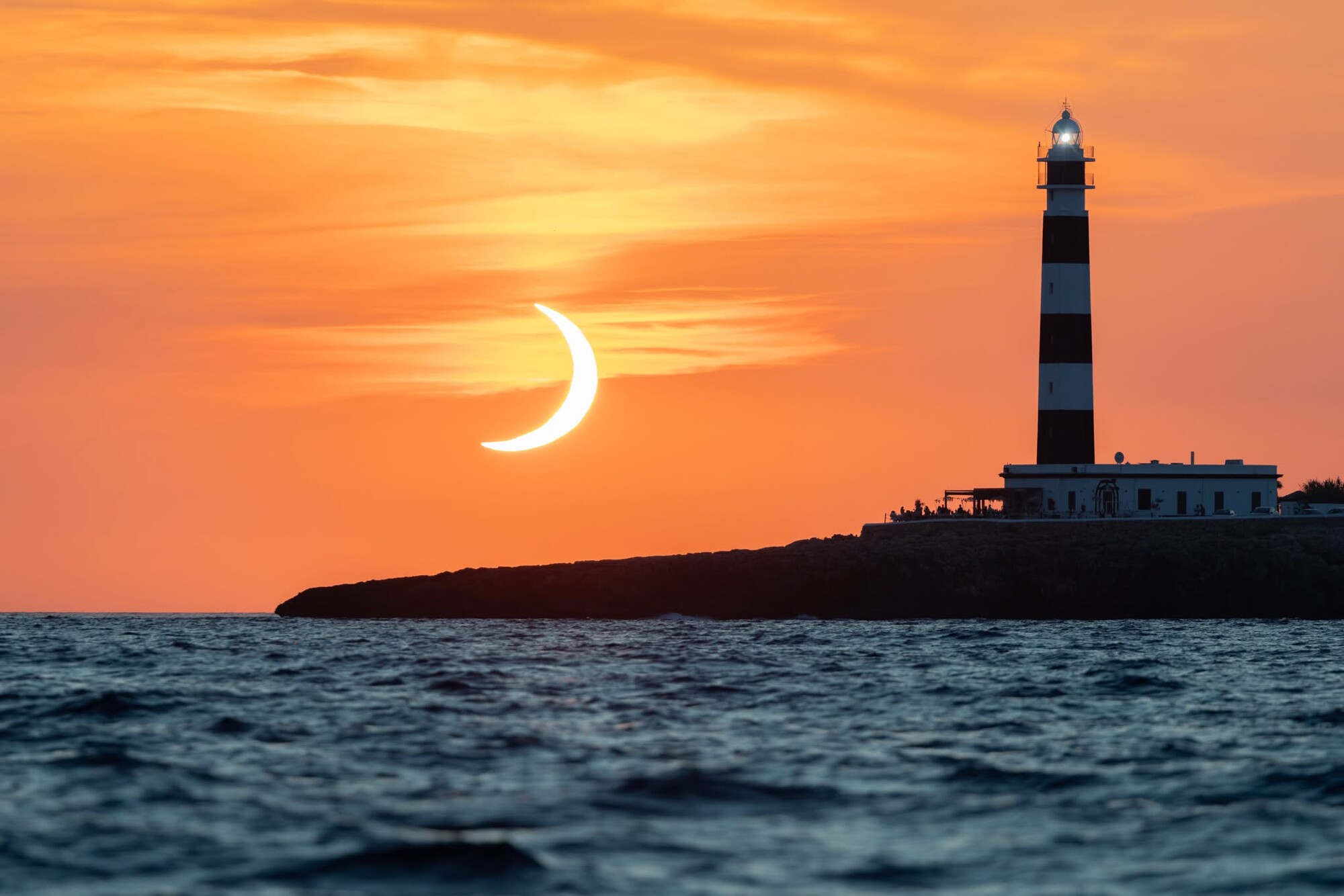
Looking at those images, I kept thinking about the distance between that cafeteria table in Cologne and those boats off the coast of Spain. It started with a question: What if? What if we created something that wasn’t quite a workshop? What if we brought people together differently? What if we created a community around photography, planning, adventure, and friendship?
Twelve years later, there was the answer.
Not the final answer, either. That’s the wonderful thing about big ideas. They tend to create more questions.
The Question Comes First
World Photography Day has me thinking about that a lot this year, because photography itself has always been propelled forward by people asking what if?
What if we could preserve an image made by light? What if cameras could become smaller? What if we could capture color? What if we didn’t need film? What if the camera could fit inside something we carried in our pockets? And, today, what if technology could help us spend less time struggling with the process and more time thinking about what we’re actually trying to create?
If those questions lead you toward landscapes, cityscapes, or the night sky, I dig much deeper into that process in Photographing the World: Landscape Photography and Post-Processing, Photographing the World 2: Cityscape, Astrophotography, and Advanced Post-Processing, and Photographing the World 4: Advanced Landscapes.
Photography has been evolving for nearly 200 years, and almost everything about the mechanics of making a photograph has changed along the way. Yet somehow, that original impulse hasn’t changed very much at all. Someone sees something—or imagines something—and wonders whether they can turn it into a photograph.
The tools help us answer the question. They shouldn’t be the ones asking it.
“Great tools answer questions. Great photographers ask them.” — Elia Locardi.
That’s an important distinction to me right now. We’re living through another enormous technological shift as artificial intelligence, generative imagery, and computational photography change the creative landscape at a remarkable pace. I don’t find that frightening. I find a lot of it fascinating. I run a technology company, after all. It would be slightly awkward if my official position were that technology was a terrible idea.
What interests me much more than asking what technology can do is asking what technology can help people do.
Those aren’t the same question, and we must not lose track of that.
PhotoPills can calculate exactly where the moon will be months from now, but it doesn’t wake up one morning wondering what that moon would look like behind a particular lighthouse. A modern camera can focus faster than I ever could manually, shoot at absurd ISO values, stabilize enormous lenses, and capture astonishing amounts of information. None of that explains why someone would voluntarily get on a boat with a 600mm lens during rough seas to photograph an eclipse.
That part is still wonderfully, irrationally human.
And I hope it stays that way.
“The best technology doesn’t replace vision. It amplifies it.” — Elia Locardi.
The photographs from Spain were a wonderful reminder of that for me. They’re proof that all of these things are capable of coexisting: ambitious ideas, great technology, meticulous planning, friendship, community, human skill, and apparently a heroic disregard for seasickness.
They’re also proof that the what if is still alive and well.
And that’s particularly meaningful to me because, in my own little corner of photography, I’ve been asking a few what-ifs too.
One of them has led us somewhere new at Radiant Imaging Labs. With Radiant Photo 2.5, we’re bringing raw to Radiant Photo through a completely new raw imaging engine and, more importantly, a rethink of how raw editing can work. We’ve spent a long time developing it, and the same question has sat underneath it from the beginning: What if we approached this differently?
That’s all I’m going to say about it today.
raw, but different.
More soon.
Because this isn’t really a story about raw processing, and it’s definitely not a story about software.
It’s a story about what happens when someone asks what if?
The Big Ideas Still Belong to Us
Maybe that’s what I want to celebrate most this World Photography Day: the questions, the ridiculous ideas, and the things that begin with somebody leaning across a table and saying, “Okay, hear me out.”
Rafa’s crazy idea became a plan. The plan became a camp. The camp became a community. That community grew, traveled, and collaborated. Twelve years later, it put photographers on boats chasing a total solar eclipse with enormous lenses, while at least one of them apparently reconsidered every decision he’d made since lunch.
That’s a pretty good journey for two words.
What if?
And maybe that’s the part of photography that I’m most encouraged about right now. We can spend an enormous amount of time debating what AI means, what generative technology means, what cameras will become, or whether some new piece of software changes everything. Those conversations have their place. But photographers have been responding to technological change since roughly five minutes after photography was invented.
What has endured is the impulse behind it.
Someone has an idea. Someone imagines a photograph that doesn’t exist yet. Someone wonders whether the moon could fit perfectly between two buildings, whether the light might hit a landscape differently tomorrow morning, or whether putting a group of photographers together on a little island in Spain might turn into something special.
Then somebody else says, “That’s crazy.”
And occasionally, that’s how you know you’re onto something.
Technology can help us calculate, plan, capture, process, communicate, and share. It can remove obstacles that once seemed impossible. And as it becomes more capable, the best technology will be less interested in replacing the human part of creativity and much better at empowering it.
Because big ideas don’t come from cameras and they don’t come from software.
They come from people.
And the really good ones have a strange habit of bringing other people along for the ride.
That’s community.
So this World Photography Day, maybe the best thing we can celebrate isn’t any particular camera, photograph, app, or piece of software. It’s the people who keep asking questions, sharing ideas, helping one another, traveling ridiculous distances, waking up at unreasonable hours, and occasionally vomiting off the side of a boat because somebody convinced them the photograph would be worth it.
Sometimes it is.
Actually, looking at Francesco’s photograph, sometimes it really is.
Happy World Photography Day.
And if you’ve got a crazy idea you’ve been sitting on, maybe it’s time to ask:
What if?


Join the Fstoppers community for free
-
Post comments and join in the discussions
-
Browse the site ad-free
-
Share your work and get featured in the community
-
Compete in the photo contests for fun and prizes
3 Comments
Interesting article---Dumb title! "Some" as opposed to "Every" great photos start with a crazy idea. would be more appropriate.
Why does the sun appear to be in front of the clouds on that first picture at the top of the article? And wouldn't the shape of the moon darken the area where it covers the sun?
Amazing content!