
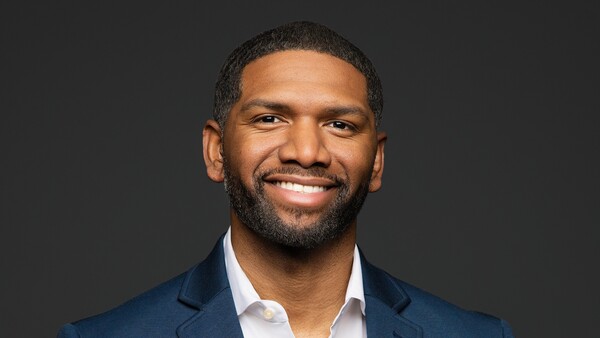
You can build a high-end headshot portfolio with nothing more than a speedlite, trigger, softbox, and stand, if you understand how to control light. You don't need 600-watt strobe lights or high-end softboxes to get the commercial portfolio. In this guide, I'm breaking down the budget-friendly studio workflow I use at 415Headshots Inc., when I need to deliver corporate headshots in cramped offices in San Francisco.
Myth of the Expensive Studio Rig
When I first started out, I always saw the Peter Hurley signature three-light setup or the Profoto B10 lights used by photographers on Instagram and YouTube. The headshots looked great, and some even appeared on the cover of Forbes. But I didn't have $5,000 to drop as I was starting my studio.
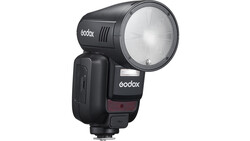
When I first started, I purchased a Sony a7 III and an 85mm lens. After that, I had to stretch my budget for studio equipment. I hopped on Amazon and found some cheap stands, a decent 105 cm softbox, a Sony trigger, and back then I purchased a Godox speedlite (I use the Godox V1 now).
This whole setup cost me less than the price of a prime lens. I think I spent around $400, and to this day, I still use this setup, especially when I'm shooting in tight, corporate spaces in San Francisco.
The bottom line is that you can produce magazine-quality results with a studio setup that fits in the back of a Honda Fit. It's not the price tag of your studio equipment, but rather how you control the physics of light.
The Gear: Why 'Cheap' Doesn't Mean 'Bad'
When I started, I thought I needed big power to get soft light. I was wrong. Softness comes from size, not wattage.
Here is the breakdown of the kit I grab when I need to shoot in a cramped corporate office:
- The Light: For headshots, your subject is sitting still. Once you dial in your power, it stays there. I use a basic manual speedlite, the Godox V1. It's a $200 flash. You will have to ensure each shot is taken with purpose. You can't click back-to-back like strobe lights, so beware.
- The Trigger: Any trigger works, respective to your camera brand. I use the Godox X2T-S for Sony, because it lets me adjust power from the camera.
- The Modifier: This is the only thing you can't skimp on. You can't point a bare speedlite at a person for a professional headshot — it's too harsh. I use a 24-inch or 26-inch collapsible softbox like the Glow EZ Lock. A 24-inch or 36-inch softbox is perfect for use in a cramped corporate office in San Francisco: big enough to wrap light around a subject's face, and small enough to lug around through elevators in Financial District skyscrapers.
- Stands and Godox Bowens Adapter: Any decent Amazon stands will do for this, as long as you get the Godox Bowens mount to place the speedlite and softbox on.
The Physics (Simplified)
I've had some photographers tell me, "Jasmeet, speedlites are too harsh. The light looks crispy. Better for editorial photos."
The softness of light is dictated by the relative size of the source. The sun is huge, but it's 93 million miles away, so it casts hard shadows. A speedlite is tiny, but if I put it inside a 36-inch softbox and bring it really close to the subject, it becomes massive relative to the subject's face.
That is the trick. I get that modifier really close to the subject — literally just outside the frame. That proximity creates that beautiful light fall-off that makes a headshot look expensive. It lights the face perfectly but lets the background drop off into a nice shadow.
Killing the Ambient Light
This is the technique that separates natural-light photographers from artificial-lighting photographers. When I walk into a location, I look at how to kill the ambient light.
Most offices have terrible overhead fluorescent lighting. It's unflattering, throws off the white balance, and gives people raccoon eyes.
Step 1: The Black Frame
Before I even turn my flash on, I switch my camera to Manual.
- ISO: 100–200
- Shutter: 1/200
- Aperture: f/5.6–f/8 (just in case I need to change the background later)
I take a picture. If the screen is totally black, I have successfully eliminated the ambient light. The office lights are now irrelevant. I am working with a blank canvas.
If the frame isn't black, I ask the subject to move, turn off the ambient lights, or see if we can close the blinds if there are windows nearby.
Step 2: Add the Flash
Now I turn on the trigger. I usually start at 1/8 to 1/4 power. Because the light is so close to the face, I rarely need full power. Avoiding full power keeps the recycle time of the flash quick, so I can shoot as the client changes expressions.
Step 3: The 'Butterfly' Placement
(More relevant if using a beauty dish modifier.) I place the light slightly above the subject, centered or just slightly off-axis, angled down 45 degrees. I'm looking for that shadow under the nose and chin. It carves out the jawline.



Headshots taken with a Godox V1 one-light setup and softbox. These headshots also include a reflector under the subject's chin.
The Cons of a Speedlite
I'm not going to lie to you and say a speedlite replaces a 600-watt strobe in every scenario. At 415Headshots, we use the right tool for the job.
Speedlites have a weaker modeling light. With a big studio strobe, a continuous LED shows you exactly where the shadows fall before you press the shutter. With a speedlite, you have to check the camera a few times to get the angle of the light right.
They also eat batteries. If you are shooting a team of 50 people back-to-back, a speedlite will struggle to keep up. But for a session with one to five people? It's a breeze.
Recycle times aren't as instant as those of dedicated strobe lights. If you're shooting a model who changes expressions quickly, you'll need faster recycle times than a speedlite can offer.
With a one-light setup, you can get unwanted shadows (e.g., raccoon eyes), so add a silver reflector to your setup to mitigate this problem.
The Bottom Line
When I'm not worried about dragging a cart of gear, sandbags, and extension cords, I can focus on what actually matters: connecting with the person in front of my lens.
I can joke with them, I can move around, I can find better angles. The gear becomes invisible.
If you've been holding off on starting your headshot portfolio because you think you can't afford the "pro" lights, stop making excuses. Grab a $200 speedlite, a cheap trigger, and a fold-up softbox. Grab a friend and find a blank wall.
Trust me, your sensor doesn't know the price tag of the light hitting it. It only knows good light and bad light. Go make some good light.

Join the Fstoppers community for free
-
Post comments and join in the discussions
-
Browse the site ad-free
-
Share your work and get featured in the community
-
Compete in the photo contests for fun and prizes
3 Comments
A Godox AD200 Pro would work even better with this exact setup -- additional power and faster recycling and almost nearly as compact.
Totally understand, I definitely use the Godox AD200 Pro for portability purposes. As a beginning photographer, the speedlite can come in handy for other use cases (flash photography, event photos, etc.), so if budget was a factor, the speedlite could be a jack-of-all-trades.
"If you're shooting a model who changes expressions quickly, you'll need faster recycle times than a speedlite can offer."
That's why I often use a Godox AD200 at 1/4 power instead of a V1 at full power.