A man in a full Darth Vader costume walked up to the microphone at a San Diego city council committee meeting and delivered a sarcastic endorsement of the Flock surveillance camera network. His identity was never revealed, and the council simply called out "Darth Vader?" before he took the podium in a black helmet and cape.
The stunt happened at the Public Safety and Livable Neighborhoods Committee meeting on August 19, as reported by Gizmodo. The costume and the villain framing made the satire obvious. Speaking in character, Vader praised the city's expanding camera network and mocked the arguments used to sell more surveillance to the public. 404 Media, which also covered the meeting, reported that he asked council members to "work their Jedi mind tricks" and use "double speaking" to convince people that more surveillance is good.
The bit leaned into the Star Wars villainy the whole way through. "The emperor is a fan of Flock, and we must continue utilizing Flock technologies so that we can follow and surveil the rebel scum," Vader said during the meeting. He also claimed the technology "will help us find Luke Skywalker as he traverses the universe in his X-wing," and called it "a necessary, necessary force." He worked in local grievances too, praising a camping ban that critics say effectively criminalizes homelessness and arguing money should go to "surveillance technology that imprisons" people instead of libraries, daycare centers, or homeless shelters.
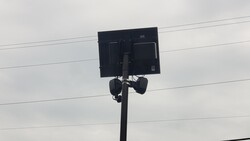
The reason a costume showed up at all is that Flock has become one of the most contested pieces of police tech in the country. Flock Safety operates automated license plate reader cameras that photograph plates and log the time and location of passing cars, and reporting this year has documented officers misusing that access. The Washington Post reported that more than 50 officers and prosecutors used the network to stalk exes, spy on spouses, or track women they wanted to meet. The company has responded by rolling out new safeguards. Flock announced it would shrink its default data retention from one month to one week, prompt officers to enter case numbers to hold data longer, and lock out users whose searches show abnormal activity.
In January 2026, a federal judge ruled for the city in a Fourth Amendment challenge to Norfolk, Virginia's Flock deployment, and the plaintiffs appealed to the Fourth Circuit, where the case sits as Schmidt v. City of Norfolk. Flock points out that courts across the country have largely upheld warrantless use of fixed license plate readers, on the theory that a plate on a public road is already in plain view. Critics counter that a searchable, nationwide record of everyone's movements is a different thing than a single snapshot, and that argument is exactly what the appeals courts are now weighing. Laws vary sharply by state too, which exposes gaps and inconsistencies rather than one clear national rule.
What the Vader appearance really signals is how far the pushback has spread beyond activists and lawyers. Cities and counties have been cutting ties with Flock, and residents have started mapping cameras and, in some cases, destroying them. In Louisville, police arrested 35-year-old Christopher Embry on August 19 after they say he shot a Flock camera at a local park; a search of his home turned up five damaged cameras, and he faces charges including first-degree criminal mischief and wanton endangerment. A costume and a microphone are a lower-stakes way to make the same point, and in San Diego, where more than 550 Flock cameras are already installed, the man in the cape got his three minutes.




Join the Fstoppers community for free
-
Post comments and join in the discussions
-
Browse the site ad-free
-
Share your work and get featured in the community
-
Compete in the photo contests for fun and prizes
2 Comments
Thanks for sharing this very important message. Flock is a bridge too far, and i'm afraid the US is not the only spot with these issues. And with a good impersonation you can reach more people. We only know how valuable our privacy was, when it's gone.
Clever way to frame the issue. Unfortunately this is just one of the many National Security State excesses that's been normalized since the Patriot Act.