
There are places a landscape photographer returns to with expectation, and others that quietly exceed it.
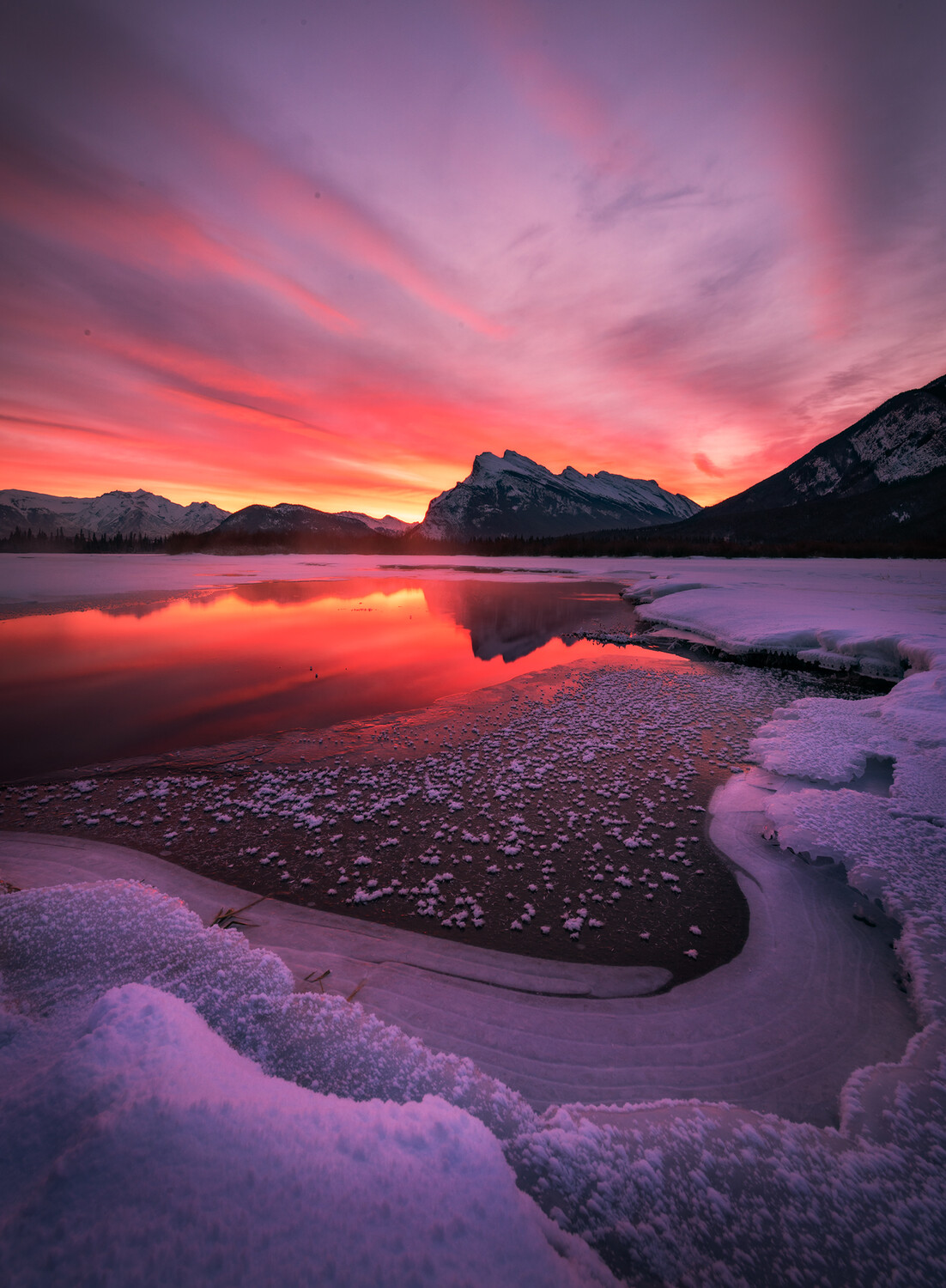
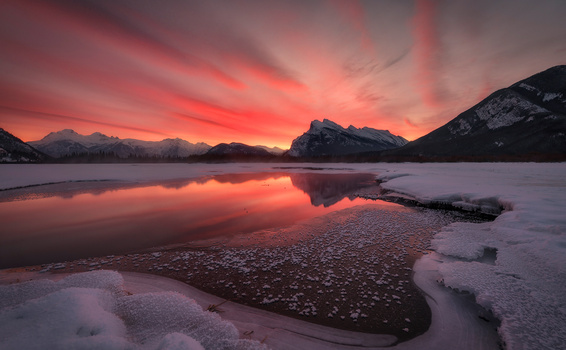
Vermilion Lakes, beneath the unmistakable silhouette of Mount Rundle, is one of those places.
Long before dawn, a small group of us stood along the frozen shoreline. The air was sharp, the kind that settles into your bones, and the lake was still, partially locked in ice, breathing just enough mist to hint at the warmth beneath. We were hopeful, as photographers always are at that hour, but grounded in experience. Most mornings offer something, few offer everything.
Mount Rundle rose in front of us, its long, slanted face carved by time, sediment, and unimaginable pressure, a mountain built layer by layer over millions of years. It has watched seasons come and go, watched glaciers retreat, watched forests rise at its feet. It does not perform. It simply exists.
And then, without warning, the sky changed.
What began as a faint glow turned into something far more intense, the horizon igniting in deep reds and oranges that climbed rapidly into the sky, stretching into long, radiant streaks. The lake caught it instantly, doubling the moment with a reflection so clean it felt unreal. Ice, water, mountain, and sky aligned for a brief window where everything was in balance.
There was no prediction for this, no forecast that could have prepared us. Just a shared realization, quiet at first, then unmistakable, that we were witnessing something rare. Cameras clicked, but almost reluctantly, as if interrupting the scene felt inappropriate.
This is the privilege of landscape photography.
To stand in a place shaped by history far beyond our own, and, for a moment, be present when it reveals itself completely. Not because it was planned, but because we showed up, waited, and were fortunate enough to be there when it happened.
Moments like this do not belong to us.
We simply bear witness.















2 Comments
nice
Thanks.