
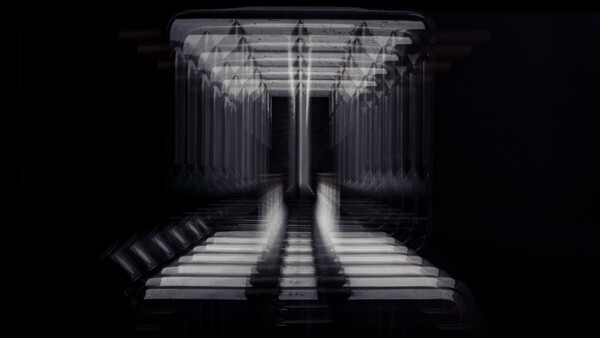
Photography isn’t being replaced by algorithms, but by its own predictability. Spend a day watching how most professionals shoot, and you’ll see the real issue: automation isn’t coming—it’s already in their hands. Even the safest niches are already changing because curiosity has been replaced by habit. Photography doesn’t need protection from the future; it needs a clear look at what it has already turned into.
The Comfort That Replaced Curiosity
Photographers aren’t fighting machines; they’re fighting their own comfort. For decades, the industry grew around technology until technology no longer needed us. Cameras became smarter, software faster, workflows simpler. Today, most professional routines can already be automated: exposure, retouching, color correction. What once defined intuition is now handled by systems.
The real problem isn’t how fast technology evolves, but how slowly photographers do. We mistook control for mastery, believing precision equals professionalism and consistency equals expertise. Yet when stability replaces exploration, skill turns into inertia.
Machines exist to repeat. They reproduce actions faster and cleaner, without fatigue—the same logic that once replaced hand-weaving with looms. Anything that can be described as a repeatable process eventually becomes mechanical. In photography, repetition is often celebrated as style. Photographers take pride in it: every frame consistent, every edit reliable. It looks professional, yes, but it’s also predictable. And predictability here isn’t mastery; it’s decline.
The paradox is simple: the skill that once protected us now exposes us. Algorithms learn fastest from what humans repeat. When pride lies in precision, we teach the machine how to replace us. The way forward begins with seeing how much of our craft has turned into routine. Awareness is harder than resistance, but without it, a photographer loses authorship.
Why Photographers Confuse Fairness With Stability
The industry has lived in this tone of complaint for years. Claims of image theft and the “AI threat” sound as if someone invaded sacred ground. But the truth is, there is no ground left. Everything that can be described, repeated, or standardized already belongs to technology.
This shift toward automation already happened in product photography. What used to be the most technical genre is now dominated by 3D workflows and virtual imaging. The same obsession with perfection that once defined professionalism made replacement inevitable. Clients no longer need a studio when they can rotate a photorealistic model under perfect light. That market didn’t collapse; it quietly moved elsewhere.
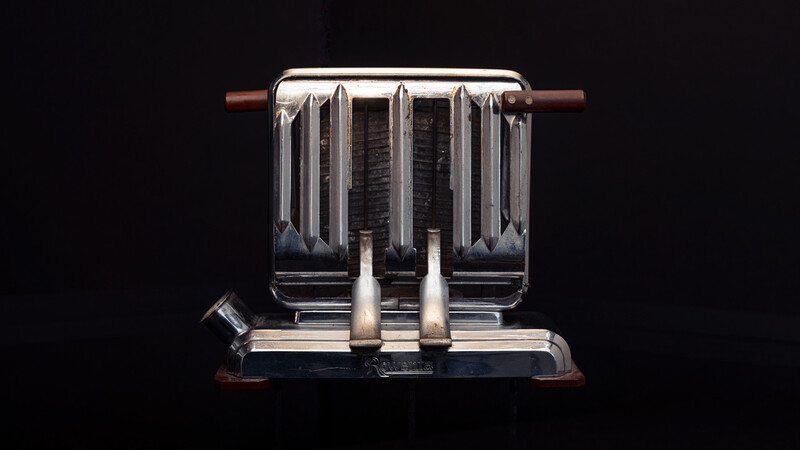
What photographers fear today is only the surface. The real disruption will come when AI starts controlling camera motion, replacing the photographer’s hands and feet. It’s already partly here through gimbals and stabilization systems. Put it on wheels—or better yet, attach propellers and let it hover like a butterfly above the couple and their guests. And that brings us to weddings—the last field that still believes it’s immune.
Wedding photography is a perfect example. It’s still seen as the safest niche. The thinking goes: emotions cannot be automated, trust cannot be faked. But this very assumption makes it fragile. It is also one of the most profitable, and that’s why it might be the first to suffer.
It has long been treated as a symbol of resilience, yet that belief in safety is exactly what weakens it. The illusion of safety costs more than any real risk. The louder these complaints grow, the clearer it becomes that photographers are not afraid of technology, but of being replaceable. And the more they defend the “human factor,” the more obvious it becomes that it has already lost substance. Ironically, some of the same AI tools that threaten professional photography also help us see what we’ve stopped noticing: the rhythm of light and the precision of color that modern automation has learned to perfect. It’s not the tool that matters, but the mind behind it. Perhaps the real question for any photographer today is not what technology can do next, but what remains worth doing by hand—what still carries the trace of human attention.
When Tradition Becomes Self-Defense
Many photographers now try to protect themselves by clinging to the past: to film, manual settings, and analog workflows. It may look like principle, but it’s often self-comfort. Technical loyalty is mistaken for artistic integrity. Tradition turns into a shield. Respect for craft becomes an excuse for stagnation. We take pride in working manually, as if effort itself had value. Yet respect for a camera operator doesn’t make them an artist, just as respect for a tailor doesn’t make them a designer.
Technical diligence isn’t meaning. When attention to tools becomes the only identity, the profession loses its foundation. An old camera doesn’t make an image honest, just as a manual gearbox doesn’t make a drive meaningful. Would you choose a taxi driver who asks for more simply because he drives a manual car? I don’t think so. It seems photographers do the same, holding on to technology in the wrong places—not where it sharpens vision, but where it sustains habit. But habit never saves anyone; it only makes the fall predictable.
Photography has always evolved by replacing others. It took from painting the right to depict reality. It made illustrators and engravers obsolete. Later, using cinematic tools, it took over advertising, fashion, and staged imagery. Yet our memory is short. Photographers now complain that technology is “stealing” their profession, forgetting that photography became a mass medium only after borrowing from cinema: the 35 mm film and the compact camera developed by Leica
The Error That Keeps Photography Alive
The defense of photography doesn’t lie in laws that protect it from AI or in compensation demanded from developers for using our images. (How much did you pay the heirs of Ansel Adams for studying his work?) It lies in the ability to see what machines cannot.
Algorithms analyze and predict. Their purpose is to eliminate error, yet the human gaze begins with it. Today, error in photography is a possibility, not a failure. A slight misfocus, a small movement, imperfect light—these are not flaws but proof that someone was there. What defined the Japanese are-bure-bokeh movement of the 1950s and ’60s now finds new meaning. Error brings back time to the image and, with it, life.
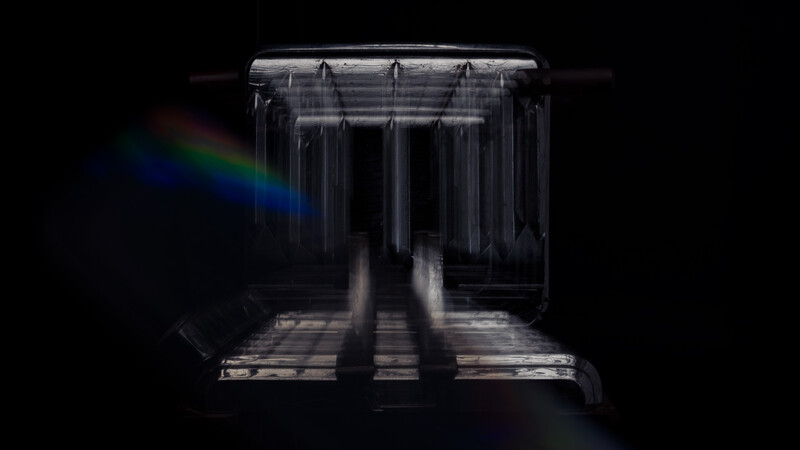
Error often makes digital photography feel alive. The “digital look” is the badge of sterile perfection. The digital lens hits the pupil directly, while the human one breathes, preserving the vitality of the image. Error is attention. It proves that seeing isn’t mechanical but requires awareness. Without error, there’s no intuition, no empathy, no presence. When photography leaves no room for mistakes, it also loses the human eye. Perhaps awareness won’t save photography, but it might help us see it differently—and that could be enough.
Conclusion
Photography doesn’t need protection or the return of respect. It needs movement. Photographers today fight not for growth but for the preservation of what feels familiar. Algorithms don’t make mistakes. That’s why human error becomes a luxury, not a flaw. Within it are risk, vulnerability, and presence. Machine precision is efficiency. Human precision is attention. As long as that distinction survives, photography retains meaning.
Every time we move, the frame changes. That’s how life still gets in. Movement—not respect or protection—is what keeps photography alive.

Join the Fstoppers community for free
-
Post comments and join in the discussions
-
Browse the site ad-free
-
Share your work and get featured in the community
-
Compete in the photo contests for fun and prizes
45 Comments
It's regression that is doing this. Statistical regression, evolutionary regression. Regression controls everything in the world, including all the algorithms and AI, all the interactions of animals, insects, viral particles, and even plants, and regression tells all the living things who to mate with. Now, imagine, if regression can easily commmand people who to mate with, a major life decision, it has literally no problem commanding them to worship their statistically regressed perfect form of a photograph as dictated by their overlords at Apple and Google HQ. Now we have the final regression. Regress back to zero. It's actually hilarious that I still exist... HILARIOUS. Now, don't stop laughing until you're dead.
The best article on AI-imaging and photography I've read for a long time.
What I have thought for a while, but expressed in an interesting way. Photographers are too often in the habit of replicability where photographs become derivatives. AI loves learning from derivatives.The aim of many photographers has been toward adhering to oft-repeated rules and perfection. Many award winning photographs of today could have been taken decades ago...we've all seen them before in slightly different forms. It's just the technology that has changed. In my view, worthwhile photographs are those that show a different way of looking at the subject, a creative way that makes one say: I have never or seldom seen a photograph like that. As a result, I find myself more interested in experimental photography.
I agree with you. Predictability makes many photographs interchangeable, and AI only amplifies that effect. What stays alive, authorial, and valuable appears in the places where repetition ends and a different way of seeing begins.
I think you guys are overthinking this. Ai can't replace a bride and groom walking done the isle. A lion attacking its prey durring a safari. A new home for sale. Your daughters graduation. Maybe Ai can replicate some things such as editing but even then Ai does not always get it right. Stop thinking and go shoot,. too much thinking is what got us into this mess in the first place.
Stop thinking. What a requirement!
In other words ... "see with your minds eye and shoot with your heart". Stay true to your original images integrity during post processing.
AI can't replace the process of you genuinely capturing your own memories for something like a safari or a wedding. But AI can absolutely render the most amazing lion attacking prey photo (attached images are directly from Nano Banana 3). It can take a few smartphone snapshots of a couple marrying, a graduation, or a new house and make them into professional-grade images.
I agree with, "Stop thinking and go shoot" for amateurs, but for most professionals, we REALLY need to be thinking hard about how to navigate the next couple of years if we want to keep paying the rent in the field we love.
It is interesting that the situations often seen as the safest for human photographers are also the ones where automation is developing quietly. Not because a machine feels anything, but because it can analyse the scene, react without hesitation, and operate in conditions that distract people. I do not think the camera is the part that will change first. The role of the photographer is under pressure long before the tool disappears.
There appear to be two references to photography here. 1. Photographs for one's personal memories, and 2. Photographs for exhibitions, awards, and so on. Sure, take as many photographs as you like for personal interest, even if they are derivatives. What I find frustrating is that photos for awards / exhibitions and general public consumption are too often repetitive. Photographs found in many photo magazines and from photo clubs are often photographs one has seen many times in one form or the other. Pushing the limits of photography and being experimental is preferable, in my view. Not the tired well-worn photographs that have been taken thousands of times. Photographers are too often resistant to new and creative ways of taking images. If they want anything new or creative, then it is up-to-date and revolutionary gizmos that increase shutter speeds, pixels, sharpness, and the like.
Deleted as it was a copy of previous comment.
Thank you. You expressed it very clearly. The public field suffers precisely because of this repetition, and reliance on new tools often replaces the search for a new way of seeing. Personal images can be anything, but once the work enters the professional realm, exhibitions or competitions, resistance to creative innovation becomes very apparent. Experimental work is not a detour at all. It is often the only space where photography continues to move.
After 180 years of photography, what can possibly be considered a new way of seeing, or experimental in terms of composition? If I were a portrait photographer, I could appreciate how fashion and style have changed over the years. A photograph made by Edward Steichen for Vogue Magazine in 1926 would undoubtedly have a different aesthetic than one appearing in the magazine today. But it's still a photograph which records light, as are all images produced by a camera. Images can be made purely in the computer if you want to go that route. CGI... Nothing new there.
Once you put your eye to the camera... how much is really all that new or different than it's ever been in the history of photography? ICM is not new, nor is it all that unique. Of course I try to look closer at my subjects in a way that renders something more interesting and creative than the ordinary snapshot, but that merely elevates my skill as a photographer. It's not a new way of seeing. Edward Weston frequently spoke of that concept 100 years ago.
Thank you, Ed. I agree that the core of photography has not changed much. What has changed is the viewer. With so much visual content everywhere, people look differently now, and it takes more to hold their attention. That shift, more than technique, is where new ways of seeing appear.
"After 180 years of photography, what can possibly be considered a new way of seeing, or experimental in terms of composition"
With wildlife - tons!
I don't know of anyone shooting wildlife action with drone-controlled cameras, EXTREMELY close to the animals, with wide angle lenses.
Imagine a photo of a mountain lion pouncing on a deer, taken at the very apex of its leap, from a distance of only 2 feet from the mountain lion's face, but at a 17mm focal length, so that the lion, the deer, and all of the surrounding habitat is in the frame and in focus?!
Imagine an image of a migrating King Eider in full flight, taken from a distance of just three inches from its bill, but at only 15mm focal length, so that it includes the other Eiders in the flock!
Imagine a tiny tiny camera implanted in the buttox of a Snowshoe Hare, that could capture images of a Lynx as it chases the Hare and closes in for the kill!
I can literally sit here and think of thousands and thousands of things that happen in nature every day, but that no one has ever photographed in certain ways.
There are probably over 10,000 ways to photograph a common squirrel that have never been done before - compositions and camera positions and perspectives that no one has ever even attempted yet. Ditto for every single species of mammal, bird, reptile, insect, etc., etc., etc.
As a photographer specialising in pregnancy and newborn sessions, I read this piece with a mixture of unease and recognition. The core idea — that photography risks becoming a repeatable, predictable process rather than a search for presence and emotion — touches me deeply. In my studio, every baby, every mother, every moment is unique. When I position a little one under softbox light, I’m not chasing “perfect settings” or “ideal exposure”; I’m waiting for that tiny sigh, that fragile stretch, that soft yawn — a gesture no algorithm could anticipate, no preset reproduce.
Relying on automation or formula may guarantee consistency, but it also flattens the possibility of surprise, of softness, of life. For newborn photography, the beauty lies in vulnerability, in fleeting spontaneity — in the gentle imperfection that makes a portrait warm and human. If we start treating photography like any other repeatable task, we risk losing what makes it sacred: the trust between photographer, parents, and child; the ability to see and hold a fleeting moment; the intention behind the frame.
At a time when machines can mimic sharpness, colour balance, even skin-tones, I believe it’s our human sensitivity — our patience, empathy, and respect for the fragile beginnings of life — that justifies the role of a newborn photographer.
Thank you for your thoughtful response. The aim of the article was not to predict an outcome but to create a moment for reflection. I also believe there will always be a place for photographers, especially in work that depends on trust and sensitivity. What may change is the nature of the task itself: less physical effort, more focus on choice, intention, and the ability to select what truly embodies your vision. That part remains human.
extremely well written comment - you rock!
Like all the previous advances in technology there will be some that find it scary because they can't use it and will say that technology came to destroy photography but there will be others that will welcome the technology and use it as one more tool to be used with their creativity. The photographers that stopped experimenting and rested in the comfort of repetition will be the ones that will not embrace this new technology.
I agree. This is precisely why we see so many defensive reactions today. In the end, it is always a personal decision: to resist change or to accept it and adapt it to one’s benefit. Each path carries its own choices and its own risks.
As a working pro doing high end corporate photography I locked myself in with Photoshop CS6 and would not want to rent it going forward.I use a couple of Pen F bodies and the 3 f1.2 lenses. I am appreciated by clients because my work does not look AI and too good to be true. Don't agree with article, we are all on our own journey.
Photographers can still do everything they ever did. Nothing has "gone away".
We can still shoot the things we have always enjoyed shooting, with the same gear we have always enjoyed shooting with. Technology and AI haven't taken anything away from us.
The only photographers who are facing problems because of AI and technology are the ones who are money-grubbing. The ones who aren't content to enjoy the thrill of image -making unless they can suck income out of it.
The photographers who do photography for entirely altruistic reasons are not being adversely affected by AI or by automated camera functions.
If you do photography only because you love it, then it doesn't matter if other photographers can do what you do. It doesn't matter if there's any market for your work or not. Because you are only doing it for your own enjoyment and you are not competing against anyone.
Keep it real. Keep it unselfish. Keep it for altruistic reasons. Don't seek any tangible reward, and you will be just fine for the rest of your photographic life
There is certainly room for photography done purely for personal enjoyment, and it has its own value. The article, however, speaks about photography as a profession, where people rely on their work to make a living. In that context, technology does change the landscape, and it is important to reflect on how the profession evolves. Both paths exist, but they follow different realities.
"There is certainly room for photography done purely for personal enjoyment, and it has its own value."
Well yeah, of course. That's what 99 percent of all photography is. People trying to make a living off of it is just a tiny tiny tiny tiny tiny tiny little niche within the overall scope of photography. Like not even one percent of all photos taken are taken for money. Probably not even one out of every thousand. So there has never been any question as to whether there is"room for" photography done for enjoyment. Because that's what photography essentially is.
You’re absolutely right — most photography is done for personal enjoyment. That has always been the case. Photography stopped being a rare craft long ago and became a universal form of communication. In that sense it works the same way writing does. Almost everyone writes messages every day, but very few people make a living as writers, and an even smaller group is recognized as authors.
The existence of a huge non-professional layer does not diminish the professional one. It simply means the medium is broad, and different roles inside it serve different purposes. Enjoyment and profession are both part of the same field, but they are not the same activity.
"The existence of a huge non-professional layer does not diminish the professional one."
You're absolutely right, Alvin!
The issue I have is that many people write things that are specifically about one, or specifically about the other, but don't preface what they write with a statement that tells very clearly which layer they're writing about. It is wrong to just assume that most readers will "just know" which of these layers the article or comment addresses.
If people would approach their writing as though they were preparing a document to be used in a court of law, where it will be picked apart and cross-examined, then there would be less room for misinterpretation by the readers.
When I see articles here on Fstoppers that have clickbait titles that include phrases similar to " ... The End of Photography ... " the writers had damn sure better state very clearly that they are writing about the end of photography -for-income. It is wrong if they don't spell out the context and just force the reader to make a correct assumption. Why imply something when it can be clearly written out instead?
I follow the discussion closely because writing for a broad platform like Fstoppers means the same idea can be read in very different ways. Your comment is a good reminder of why defining the frame clearly helps the conversation.
I appreciate your thoughtfulness on this issue, Alvin. Too many media outlets and too many authors consider a title to be something to suck people in and generate page views instead of seeing it as the means of informing the potential readers of precisely what the article is about. People are too practical and too greedy as opposed to being unselfish and altruistic. I am glad you're not one of them.
There are some aspects of photography that has been replaced by largely automated systems, though it is not really AI, instead it is high volume tasks where the artistic elements of photography are not needed. For example, an online store setting up automated photo booths with a rotating platform, where you run a script and the computer handles everything else, resulting in a 360 degree view of a product on an online store.
Basically if it doesn't require anything artistic or stylistic, then it is being replaced across the board by machines the nanosecond any universally automated method is developed for each specific area.
For difficult productions that need extensive planning and permits for filming, e.g., a car ad, many companies will opt for CGI, especially since the CAD models can be used to create photorealistic renders and animations. Though some high end stills are often still done in studio by some high end brands.
What makes a photo memorable outside of being some historically significant event, is the artistic and creative side of photography that cannot yet be replicated by AI.
Beyond that, Human photographers also try to eliminate error as much as possible as well. For example, if when Ansel Adams was doing photography, if the GFX 100, or A Hasselblad H6, were available at the time, You can bet that he would have used those cameras instead.
I completely agree with you.
The artistic and creative side is exactly where photography still holds its ground, and this idea is central to one of the next articles in the series. It is good to see that we are thinking along the same lines.
Yes, we can all be too complacent with our photography and how it is processed. I believe that is one of the reasons for the upsurge in film photography, which in addition to looking different than the plethora of hyper sharp digital images we see, but also is harder to manipulate on a computer. How can we break through the chaff and banality? I take a question from my brother to answer that: He asked "What is your favorite photo and why?" This brought me back to why am I really doing this? As has been said, memories are a huge component but also sharing with others some of the wonders of the world so many do not get to see. By the way, my favorite photo is of the Milky Way rising in the night sky above a boulder lit by a fire pit at the Devil's Marbles campsite in Australia.
Thank you for sharing this example. It shows well that uniqueness comes not from the technique, but from what we choose to make meaningful.
Personally I do not think it is equivalent to compare someone who has viewed Ansel Adams photographs and a machine learning that has scanned the work digitally bit by bit. It has been shown in legal cases that machine learning (notice I do not refer to it as AI as it is not intelligent, it resembles intelligence as it copies) can directly copy areas of an image, for instance the logo for getty images appearing in pictorial output. When a human looks at an image they can be influenced by it, but they are not copying from it (and if they are then there is a law to protect against that). There should be the same legal protection for direct copying of an image by machine learning.
I wanted to highlight something slightly different with this article. While the discussion about the legal status of AI and the fears surrounding its methods is important, these issues relate more to people trying to misuse the tool than to the tool itself. You are right to point out those risks, but my focus was elsewhere.
I wanted to draw attention to the way AI and technology can replace not photography, but the photographer as a person: the physical part of the work, hands and feet. In fields such as wildlife or wedding photography, where much of the effort is logistical, physical, and time-sensitive, this shift may become equally significant. And that, to me, is no less important to consider.
I see the point I think you are making. I would also like to point out that current machine learning is equally capable of mimicking mistakes, errors and movement as it is of copying from other works. What it does is scan a vast collection of images, and if something is weighted as successful in some kind of regard, it can be mimicked or copied, including mistakes (and Getty logos, which must be the height of a good image as it appears in so many successful images...). There is no protection for the photographer in mistakes or intentional movement or any other technique.
I understand your point of view. I don’t see AI as a threat to photography itself. On the contrary, I see it simplifying the more routine parts of the work and opening new possibilities for photographers instead of taking them away. The question, for me, is how the role changes when the physical and repetitive tasks become automated, and how that shift might free more space for creative intention.
To an extent I agree, I think AI will reach its limits. AI starts to struggle when its input is other AI generated images, and these are becoming more prevalent, it suffers from a form of breakdown at this point, and so in a way it has its own in built limiters. We should definitely make use of AI as a tool for refining images (to a point, everyone has to define for them what is ok and what is not), but not as a replacement for our creativity. I ran an exhibition in the summer, and got some questions on my use of AI - and I use it mostly for noise reduction, but you can see people looking at your images, and questioning even when you have no AI in the chain.
great point very well said ... real photography has always been about the artistic and creative choices that are made ..... getting settings right and stuff like that is just mundane brainless stuff that is better just left to automation
Aside from this article being an opinion piece and not necessarily factual, I feel as though you were just beating about the bush the entire way though it.
Aside from using a boat load of adjectives, I got to the end not really knowing what point you're trying to make due to a lack of specificity.
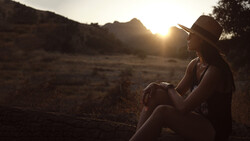
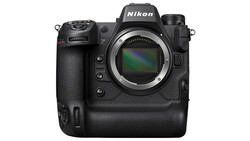
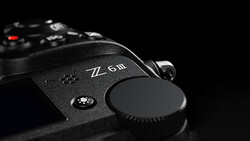
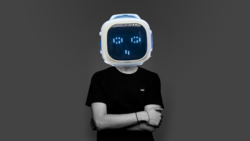
Then we have theee extremely random images that are nether acknowledged or explained that look like 3D renders of... I've no idea? Certainly not shining examples of AI and how it pushes the envelope of what is technically possible.
"Spend a day watching how most professionals shoot, and you’ll see the real issue: automation isn’t coming—it’s already in their hands." - I mean my Z8 doesn't compose photos for me, choose the settings, frame the shot, capture the shot, and then change angles-not without my input. I mean, It could choose the settings in auto mode. Where is all this automation in cameras you speak of?
"The paradox is simple: the skill that once protected us now exposes us. Algorithms learn fastest from what humans repeat." - what on earth are you even talking about here? What algorithms, which ones? The Ai-driven auto-focus tracking that can maintain locked focus on the eyes of a moving subject?
Or are you talking about time-saving, post-processing algorithms?
There's just no specificify in the article at all, and it's difficult understanding what you're actually trying to examine here, specifically.
The conclusion, supposed to bring everything together, just continues on even more vague and ambiguous terms as the article, so doesn't really conclude anything for the reader.
You seem to be talking about all this in rather apolalypic terms. What I see is more camera ownership than ever, especially with the uptake in mirrorlless use. More content creators on YouTube and Instagram picking up a camera and using it as a tool to make money from.
Thank you for this comment. It is interesting and, in many ways, very illustrative, because it shows the collision of two different ways of seeing the profession, which is exactly what the article tried to examine. I hope that some of the next pieces will shed more light on this difference.
Pretty much every article I have read on photography is an opinion piece. And as for facts, read Hard Times by Charles Dickens: “Thomas Gradgrind, sir. A man of realities. A man of facts and calculations…With a rule and a pair of scales, and the multiplication table always in his pocket, sir, ready to weigh and measure any parcel of human nature, and tell you exactly what it comes to.”
The dynamic has become the boring. I am particularly bored with photos of women: normal looking women need not apply.
Women's faces are a great example of evolutionary regression in biological systems.
This hits hard. As someone who’s no stranger to occasionally relying on Photoworks filters more than on actual observation, the point about comfort replacing curiosity feels painfully true. Technology isn’t the enemy but our habits surely are.
Thank you for this! What you describe is exactly the shift I tried to address.