
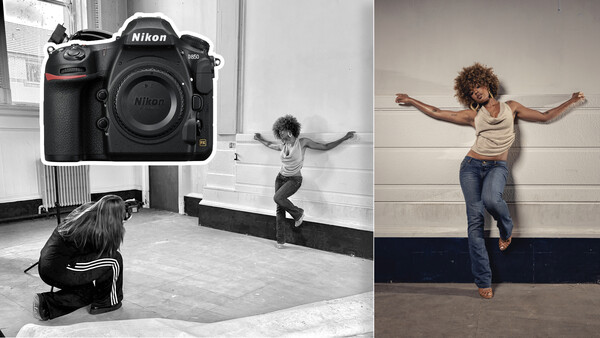
I've been asked more times than I can count when I'm finally going to move on from my DSLR. The assumption is always the same. People think that holding on is a technical decision, or a reluctance to keep up. But the truth is, it has very little to do with technology at all. Read on to find out why my Nikon D850 is still the camera that I reach for most today.
My Nikon D850 arrived in my life in 2018, and at the time it felt like the camera I had been waiting for all my life. It was the perfect fit for me, while being a significant leap forward from the Nikon D800 that had been my companion for many years before it. The camera felt reassuringly familiar, intuitive, and dependable. I didn't feel like I was using new equipment because it felt like a continuation of my previous practice with a slight level-up.
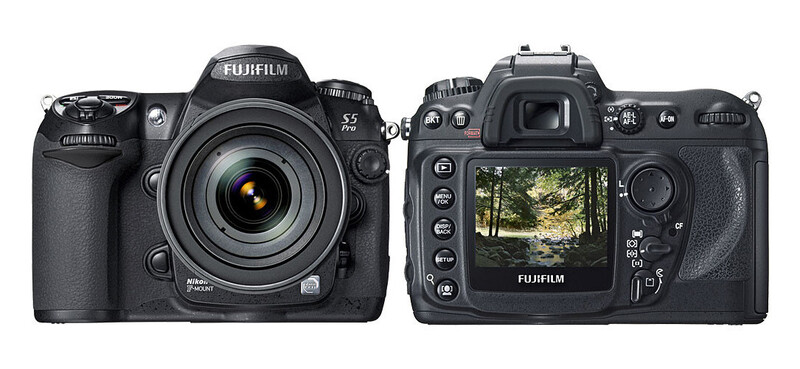
The first DSLR that I owned was a Fujifilm FinePix S5 Pro. Released in 2006, with 12.34 megapixels and a Super CCD sensor and a maximum ISO of 3200 — although I dared not venture over 1200 due to noise. I usually paired this with Nikon lenses, thanks to its F lens mount, and a 4 GB Compact Flash card, which was plenty of space to store over 100 Raw files per shoot. I liked that limitation — more storage capacity than film, of course, but still limitations that made me conscious of what I was shooting as a learner. It was a great companion for many years.
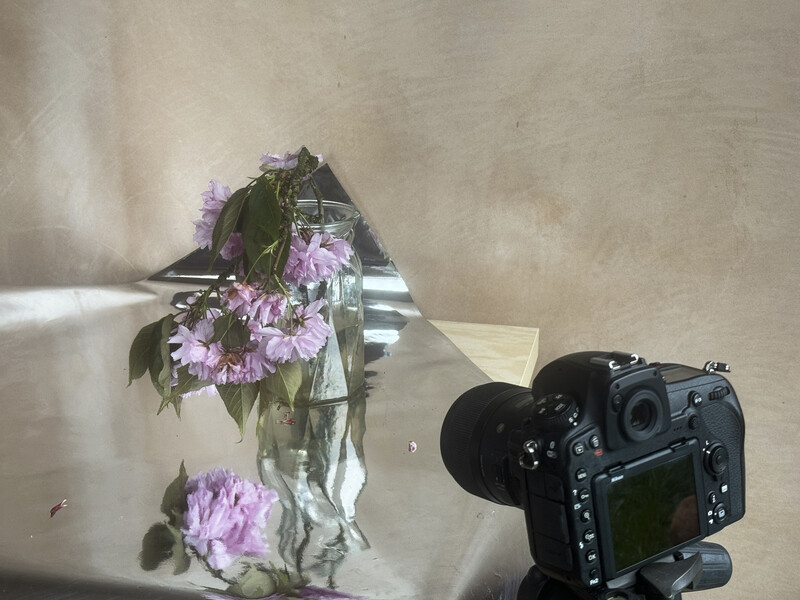
DSLR cameras have been there through the key moments that shaped who I am as a photographer. From my first job assisting a wedding photographer, learning the ropes using strobes in the studio, through college and eventually into professional practice, the DSLR has been a constant presence. When I wrap my hand around the grip of my current camera, I'm also holding onto a long lineage of cameras that led me here. Like the bodies before it, the D850 became a partner, accompanying me on countless shoots, assignments, long days, and quiet moments of discovery and reflection. My DSLRs have almost exclusively documented the various stages of my daughter growing up through the years.
The images I'm most attached to were all made through an optical viewfinder. These are real moments, observed directly rather than translated from a screen. When I look through an optical viewfinder, I'm looking at the moment itself, not a digital interpretation of it. The light hitting my eye is the same light illuminating the scene. That makes me feel more grounded in the process of shooting. With an OVF, only after the shutter is pressed do those moments become digital. There's something about the connection to the honesty in that process that still matters deeply to me, because most of the time, my work is about a collaboration or a narrative, not pixels or chasing perfection.
There's also a particular comfort in the familiar weight and size of a DSLR. The sound and feel of the shutter mechanics, and that clunk as the mirror moves in and out of place. The muscle memory built up over years of consistent use becomes almost ritualistic, with layers of trust formed through repetition, mistakes, and success. The D850 is my collaborator, and one which I know I can depend on.
From the outside, it might seem obvious that moving to mirrorless is simply the next logical step. Technologically, it is. And I'm honest enough with myself to admit that my hesitation isn't really about specs or performance. I've used mirrorless cameras extensively. I've borrowed various models, bought one for my daughter, tested an array of mirrorless bodies and lenses, and worked with them enough to know that the reasons I sometimes give myself — "I don't like the EVF" or "the shorter battery life will annoy me" — are flimsy at best. Within a few shots, I adapt to the mirrorless way of working. I carry a spare battery. The supposed obstacles quickly dissolve.
The truth is, the resistance isn't anything technical at all. It's emotional. Transitioning away from DSLRs feels like closing a chapter of a book I don't feel finished reading. The Nikon D850, and the other DSLRs before it, represent years of learning, growth, mistakes, breakthroughs, exhibitions, late nights, early mornings, and the slow forming of a visual identity. To set it aside feels strangely like setting aside a version of myself. There's a quiet grief in that, even if what comes next might be exciting.
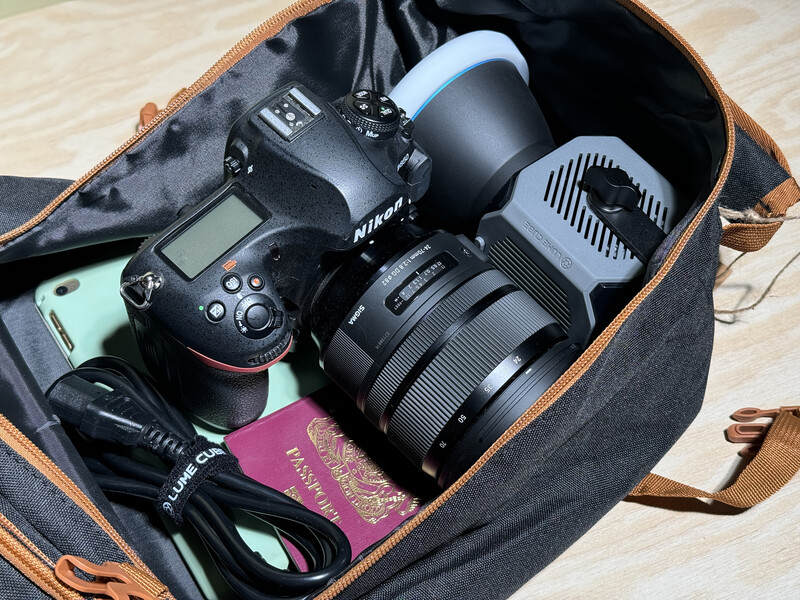
I know that progression is inevitable, and I am open to upgrading at some point in the near future. I previously discussed how I came close to upgrading during the pandemic, flirting with the idea of upgrading to a Nikon Z 9. Ultimately, due to supply issues after release, I didn't make the leap and I upgraded my kitchen instead. At the time, it felt sensible, and still feels the same way now. My D850 was still doing everything I needed it to do, and doing it exceptionally well. Nothing about my work suddenly became less possible just because a new flagship camera existed. I don't know what features will finally tempt me into being a full-time mirrorless camera user, whether there will be one single capability or whether the accumulation of existing reasons will eventually win out when I stop to think about upgrading again.
And that's part of the reason I'm still holding on. Not because I'm resistant to change, or unaware of where photography is heading, but because my current tools still feel alive and still feel relevant to me. They are still very capable. More importantly, they still feel connected to the way I see and the way I produce my work.
I know that growth often requires discomfort. Most of the projects I've loved working on began with uncertainty, and many of my favorite images came from moments where I experimented, trusted the process, or asked "what if?" My work has evolved because I've evolved, and that evolution won't stop when I'm no longer using a DSLR.
For now, holding on isn't about refusing the future. It's about honoring the path that brought me here, and enjoying it for a little while longer. The images I've made with these cameras aren't going anywhere. The experiences they facilitated are already part of me. When the time comes to move on, I'll carry those lessons forward, even when the camera changes.
Until then, I'm still holding on — and I am more than comfortable sharing with you that it is okay. Perhaps some of the readers are in a similar position; it would be great to hear your thoughts in the comments.

Join the Fstoppers community for free
-
Post comments and join in the discussions
-
Browse the site ad-free
-
Share your work and get featured in the community
-
Compete in the photo contests for fun and prizes
16 Comments
If it ain't broke, don't fix it. I know a veteran pro whose portrait work was on the covers of major sports and fitness magazines for decades who was still using his Canon EOS 1Ds MkIII up until his retirement a few years ago, during which time I'd migrated from that model to Micro Four Thirds and then a pair of modern Sonys. I knew better than to try to sell him on a transition to mirrorless because it would be foolish to argue with success.
OTOH, I do a very different kind of work, and for me the transitions have brought a boatload of benefits.
I totally agree, whatever works for you!
Hi Kim, I read your article and liked it very much. I can feel that it came from an engaged and enthusiastic photographer. The Nikon D850 is indeed an extremely capable camera and probably still one of the best low light cameras out there. I don't use one, however my daughter does and she produces excellent photography mostly evolving around equestrian subjects.
I shoot Sony mirrorless since about 15 years and basically shoot just for my enjoyment.
However, I like to point out that contrary to what you think, your OVF does not show you the image you are going to get after you press the shutter. The EVF of a mirrorless will get you mostly WYSIWYG. In your view finder you can do all the adjustments you need, to get the image you would like to see coming out of your camera. Furthermore, there is no need for lens micro adjustments.
Cheers, Joachim
https://www.flickr.com/photos/jowul/
Thanks for your comment! I think you have misunderstood me in terms of the OVF/EVF. What I mean is that you see the real light with an OVF not the real exposure. With an EVF you will see the correct exposure but a digitised version of your scene, therefore, not the real light. Hope that makes sense.
I fell in love with the D800 in 2013. Except in my line of work, I never found the need to upgrade to the D850. I was close many times... nearly clicked the buy button when B&H offered a discount. I'm still tempted by the $1,996.95 price tag. That's $1,300, and some change, cheaper than I bought my D800E for in 2013. But alas, I'm way beyond the prime of my career and can't justify buying everything I'd like. In fact, I continue to sell prints up to 40" x 60" that I make myself on a Canon 44" wide-format printer, and nobody has ever questioned the limitations of my camera. Nobody else cares about the camera... the print is all that matters.
In 2013, the D800 was being compared to medium format film. If it was good enough to be considered in the same breath with medium format then, it still is. Granted, if money were no object, I'd probably go for a Fuji GFX100, but having essentially sold my commercial printing business and decided that fiddling around with art photography was better than the stress of a real business, I'll sacrifice the newest gear. If something breaks, we fix it. Until then, we keep what we have. Besides, I still love the D800.
I also loved my D800. Absolutely, go with what works for you and you are right about the print!
I specialize in Food and Lifestyle images, I work on a tripod at least 75% of the time and see no advantage to migrate to mirrorless. Besides, I'm heavily invested in those L lenses and got deals on clean used pieces through the years and I'm still happy with the results that I receive. If you compare the price of transitioning to mirrorless even if I use adapters it simply doesn't make business sense. After more than thirty years, I'm going to stick with what I have until I'm convinced it's a better choice.
Sounds like a solid reason Tony!
I know of a professional photographer who shoots with a D850 and an OM-1 Mark II, so it doesn't have to be one or another. DSLRs are superior to mirrorless in some ways, and vice versa. Depends on what you're shooting. I shoot a lot of macro, and my OM-1 Mark II has a lot of features for that genre that just don't exist in DSLRs, so it's is a better choice for me. But if the D850 works for you and you're happy with it, more power to you. You have the expression "horses for courses" on your side of the pond, right? Seems apt here.
I think all the people asking you about (criticizing you for) your camera choice just have their own weird hangups and insecurities that they are projecting on you. There are people who criticize those of us who shoot mirrorless micro four thirds (MFT) because it's a small sensor with only 20 MP, it's bad in low light, it's difficult or impossible to get good bokeh, dynamic range sucks, and it's an allegedly dying format. They've been saying all this for years, but the format is still around, they are still making new cameras and lenses, and I've been seeing experienced pros either adding a MFT system to their arsenal or switching entirely after testing it out and realizing the advantages. I could have bought a full-frame system from one of the major manufacturers, but I determined that the OM-1 Mark II is best for me. I still feel that way.
So keep using and enjoying your D850. Why should we care about what other people think about our gear?
Thank you for your perspective, Jeff! I will stick with it until something tempts me towards mirrorless.
When you do a lot of studio work with strobes, the EVF has no advantage whatsoever, the opposite in my opinion. I’m just an amateur and use an old 6D and an EOS R (also not that current) the EVF is convenient with the histogram in the viewfinder, but most of the time prefer the OVF.
Be careful about making absolute and universal claims.
I find my EVF extremely useful when making flash-lit group portraits. I set the camera to display the image in the EVF immediately after capture. This way, I don't have to chimp to check focus, exposure, and facial expressions, and people don't start walking away thinking the shoot is over when the camera is lowered.
The review of the shots in the EVF is certainly a plus. With group shots I always overshoot a lot , there’s always one that blinked.
Correct! I shoot a lot in the studio
Love this. I too returned to shooting on a DSLR, the Nikon Df, after years of shooting Fujifilm. The weight, the feel.
The Df is a beautiful camera!