
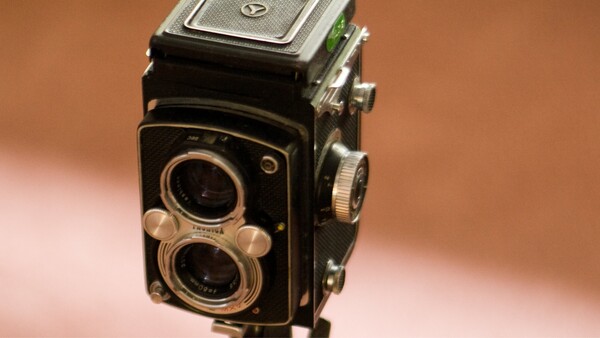
Demarchelier. Eggleston. Avedon. Penn. Mann. Leibovitz. These names are etched into the history of photography. They are the figures whose work appears in museum retrospectives, on coffee tables, and in academic textbooks. But will photography ever produce universally recognized legends like this again?
The Golden Era of Photography Legends
There was a time when a single image could transform a photographer’s career. One Vogue cover, one groundbreaking Life magazine spread, one gallery exhibition could take a photographer from anonymity to international recognition. Magazines were cultural gatekeepers. Photo editors wielded immense power in determining which photographers would be elevated to household names.
The Power of Print and Exhibition
These photographers often worked within slower media cycles. A fashion editorial could live in the public consciousness for months. A Magnum Photos assignment might be discussed for years. Exhibitions traveled internationally, with critics debating the work long after the opening night. The public had fewer images to consume, which gave the most impactful ones space to breathe and take root in cultural memory.
This infrastructure produced titans. Photographers like Richard Avedon, Helmut Newton, and Mapplethorpe were not just working artists; they were cultural figures in their own right. They defined aesthetics, set visual trends, and influenced the language of photography for generations to come.
How the Photography Landscape Has Shifted
Today, the environment is entirely different. The distribution of photography is faster, more fragmented, and more competitive than ever. The internet has made it possible for anyone with a camera and a vision to reach an audience. This is both a gift and a challenge.
The Internet's Double-Edged Sword for Photographers
While it is now easier for photographers to share work without gatekeepers, the sheer volume of images means fewer can stand out for long. What might have been a career-defining series in the past can now be lost in the scroll within days. Online attention spans are short, and the algorithms favor volume and engagement over long-term recognition.
Decline of Print's Cultural Influence
Publications that once shaped the careers of photographers no longer hold the same sway. Fashion photographers in particular have seen the influence of print magazines decline. A Vogue cover may still carry prestige, but its cultural footprint is smaller. Conversations about the work often last a few days on social media before the audience moves on to the next trending topic.
The Impact of Digital Saturation
In the past, audiences could recall the defining images of an era. Today, the pace of image consumption has made cultural memory far more fleeting. A groundbreaking series might earn viral attention, but viral attention is not the same as historical significance.
The Speed of the Scroll
Social media has also reshaped how photographers create. Many work in ways that are optimized for the platforms that distribute their work. Square crops for Instagram grids, short-form video for TikTok, and click-driven thumbnails for YouTube all affect artistic choices. This does not diminish the artistry of these photographers, but it does raise the question: will these works be studied decades from now, or will they exist primarily in the context of the platforms that birthed them?
Modern Candidates for Legendary Status
It would be unfair to say there are no photographers working today whose work could be considered legendary. Some have carved out significant places in the industry despite the challenges of the current media landscape.
Legends Still Working in the Industry
Gregory Crewdson’s meticulously staged suburban scenes have been exhibited in major museums and continue to influence younger photographers. Annie Leibovitz remains a household name with a career that spans decades, although her rise began in the pre-digital era. Steve McCurry’s Afghan Girl remains one of the most recognized images of all time, and he continues to produce work that garners attention.
Contemporary Standouts On the Way to Icon Status
Younger photographers such as Tyler Mitchell, who shot Beyoncé for Vogue at age 23, have the potential to be remembered as defining voices of their generation. Zanele Muholi, known for their powerful portraits exploring race, gender, and sexuality in South Africa, has gained critical acclaim and major institutional support. Dana Scruggs has built a body of work that blends fine art sensibilities with editorial commissions, creating a distinct and recognizable style.
Recognition Inside and Outside the Industry
However, the difference is in how these names are remembered. While they may be highly respected within industry circles, the average person outside of photography may not recognize them in the way they would have recognized Demarchelier or Avedon in the past.
Legends in Niche Communities
Perhaps the modern photography legend will not be a universally recognized figure. Instead, we may see the rise of niche legends—photographers who are revered within specific communities or genres but remain largely unknown outside of them.
Wedding Photography as a Case Study
Wedding photography offers a prime example. Within that industry, certain names are spoken with reverence. Their work influences countless others, and their workshops sell out instantly. Yet outside of that world, even other professional photographers may not know their names. The same can be said for wildlife photographers, documentary filmmakers, or even certain landscape specialists who have massive followings within their genres but little recognition outside of them.
Fragmentation of Cultural Audiences for Photography
This shift reflects the broader changes in culture itself. Audiences are more fragmented, with smaller communities forming around specific interests. A photographer can be a legend to hundreds of thousands without ever achieving mainstream recognition.
The AI Disruption and Direction of Image Making
The arrival of AI-generated imagery complicates the conversation even further. As artificial intelligence becomes more sophisticated, the lines between photography, illustration, and entirely synthetic creation blur. The Getty Museum’s decision to accept AI “photographs” into its collection is a sign that institutions are already grappling with this new reality.
Changing Definitions of What It Means to Make an Image
Future generations may not draw as sharp a distinction between human-created photographs and AI-generated ones. If the very definition of photography evolves, will the concept of the photography legend evolve with it? Or will it disappear entirely, replaced by a new kind of image-maker whose medium is as much code as it is light?
Defining a Magnum Opus in the Digital Era
One challenge in identifying modern legends is the difficulty of determining a photographer’s magnum opus. In the past, a photographer might spend years developing a single body of work, which would then be published, exhibited, and critiqued extensively. Today, the demand for constant content can make it harder for photographers to focus on long-term projects.
Long-Term Projects in a Short-Term Culture
That is not to say these projects do not exist. Many fine art photographers continue to work in series over years, producing deeply considered work. However, the public often encounters these projects in fragmented form online rather than experiencing them as cohesive bodies of work in galleries or books. The work may be as strong as ever, but the way it is presented can dilute its impact.
Institutional Influence on Legacies
Institutions still play a role in shaping who becomes a legend. Museums, galleries, and publishers can elevate a photographer’s work in ways that social media alone cannot. However, their influence has diminished in a culture where audiences increasingly turn to their own feeds for discovery.
The Changing Role of Photography Critics
Critics, too, once shaped the conversation around photography. Today, criticism often takes the form of online commentary, which can be insightful but is also subject to the same short attention span as the platforms it appears on. The thoughtful, sustained engagement that helps cement a photographer’s legacy is harder to come by.
The Possibility of a New Kind of Legend
Perhaps the concept of the photography legend will not vanish but will transform. The modern legend might not be the universally known cultural figure of the past but instead a network of widely respected voices, each dominating their own domain.
Niche Icons Could Pop Up Anywhere and Everywhere
A street photographer whose work becomes a definitive visual record of a city in the 2020s. Or a portrait photographer whose images help define public understanding of social movements. A conceptual artist whose AI-assisted work reshapes the boundaries of the medium. These may not be household names, but within the history of photography, they could stand alongside the greats.
Many Questions, Few Answers
The question remains: will we ever again have figures whose names carry the same weight as Demarchelier, Eggleston, or Leibovitz? The answer may depend on how we define “legend” in the first place.
In a world where photography is more accessible and more ubiquitous than ever, perhaps the age of the singular, universally recognized legend is over. But that does not mean greatness has disappeared. It may simply be scattered across countless communities, thriving quietly in spaces far from the spotlight.




Join the Fstoppers community for free
-
Post comments and join in the discussions
-
Browse the site ad-free
-
Share your work and get featured in the community
-
Compete in the photo contests for fun and prizes
5 Comments
An exceptional piece that asks — and answers — one of photography’s most important questions in the age of AI.
Meagan, your piece beautifully captures the quiet tension between the golden era of photography and today’s fast, fragmented, AI-shaped world. You’ve distilled a shifting reality into words that speak to both the heart and the craft — honoring the legends who came before while questioning what legacy will mean for those to come. I believe the legends of tomorrow will be hybrids: human storytellers who harness technology yet never lose the raw, irreplaceable vision that makes their work unforgettable. A timely and thought-provoking read that lingers well beyond the scroll.
Fionna
Thats a good question Meagan.. I wouldn't bet against the human experience and the power of life. We seem to be within an era though of cultural doldrums as people are looking within to find meaning. We also live in a world where people think they are already legends and certainly don't want another. Introspection isn't a bad thing in and of itself, yet life is more than just us. Technology has also put in everyones hands cameras that can perfectly record images of moving time at twenty frames per second. The cameras of today can adjust white balance and focus at light speed. Lenses are so sharp the images are often referred to as sterile. Today everyones digital photography all looks the same. Many just waiting for the latest technology so they can finally discover seeing. The irony of course being that Einstein said nothing can travel faster than light at 186,000 miles per second, which is the medium photographers create within. I often wonder what would Ansel Adams, Eugene Atget or Edward Weston would say if offered a new modern digital camera? Maybe something like wow thats nice but I think I will keep my film and view camera ! Its hard to say of course but one things for sure they knew what all great creators all knew and that was they saw the image long before they released the shutter. Seeing isnt something the camera does its something the photographer does. The best camera is the human eye, the best program the human soul and the fastest processor the human mind. Feeling isnt something the camera does its the photographers duty. Life seems to always ebb and flow as it moves on so I'm optimistic about it.I think once the self obsession ebbs and egos wither a little we all can look outside ourselves to see the world around us more realistically. I am an optimist at heart so my answer is yes, someday we will return to the ways of old, as far as legends go. Its in our DNA.
The gatekeepers on social media today will never allow innovation in photography because they think that opposition is trolling. They will only "like" photographers that appeal to mainstream tastes and anybody that goes against the crowd is punished by the algorithm or just outright banned/ blocked. Progress is only made when photographers go against each other and compete directly but today that is seen as bad manners and negative thinking. If you look at all of the photography that has been done on social media almost all of it is just a copy of something that came before because copies are safe and don't offend anybody. A genius photographer would be too offensive for social media so they will never get through the gatekeeping of up-votes and down-votes.
"But will photography ever produce universally recognized legends like this again?"
I doubt it. After all, there are a gazillion photographers churning out phenomenal work every day. There's simply no space left for truly innovative photography unless you're talking AI, and even then I find it hard to believe that any one individual will emerge as a notable legend in that field either.
Even the great Ansel Adams would be hard pressed to stand out from the crowd these days. McCurry and Leibovitz had become legends long before the digital age, but would undoubtedly find greater barriers and competition if they were starting their careers today. National Geographic no longer even employs a staff of photographers. Norman Rockwell eventually became a legend because of regular exposure over a long career. Job security doesn't exist like that today. So it's inconceivable to me that we'll ever have artists who have an impact like those who charted so much new territory in the 20th century. The biggest names in photography today are probably those who write books or garner huge YouTube followings... not because their photographs are legendary or even particularly memorable, but because they are good at producing followers.
A few years ago, Epson ran an advertising campaign using the slogan "Print Your Legacy." They even sent me a free tee-shirt printed with that across the front. Unfortunately, I might never become more than a legend in my own mind, but at least that's important to me, and that's mostly what matters. The rest from a personal point of view is sort of academic.
Great article!