
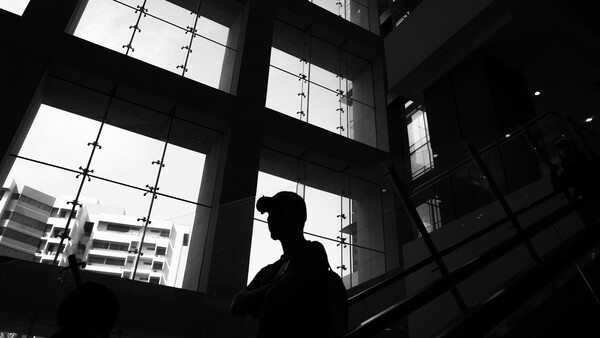
If you had a camera that only shoots in black and white, would you be satisfied with it? Let’s talk about what such a camera can actually bring to the table.
We all know that, from the invention of the process of photography until some decades ago, black and white was the only choice until further innovations made color film possible. That is why, for most people, seeing photographs in black and white, regardless of how they were made to be so, gives a feeling of nostalgia and sentimentality.
That aside, black-and-white images with the right subject and lighting can create undeniable visual impact through contrast and emphasis. This is not to say that any black-and-white photograph is automatically good, and in fact, with the options available nowadays, not everything is best photographed in black and white.
However, we ask the question: what value does monochrome offer a photographer in 2026? We try to understand this as we test out the Leica Q3 Monochrom.
The Leica Q3 Monochrom
The Leica Q line has been increasingly popular among digital Leica cameras, probably because of the combination of its compact form, highly powerful sensor, and the autofocus capabilities of the fixed lens. While this might not be the most versatile camera, users who prefer it are probably more drawn to the experience of shooting with a camera like it than the versatility that one would require for professional work.
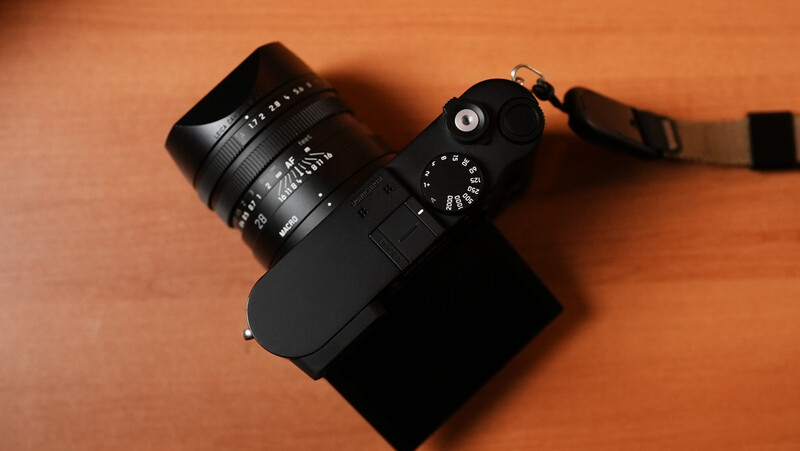
The Leica Q3 packs a 60.3-megapixel backside-illuminated CMOS sensor that is exclusively monochrome, which means that it truly does not record color and does not just apply a monochrome treatment to the images through the processor.
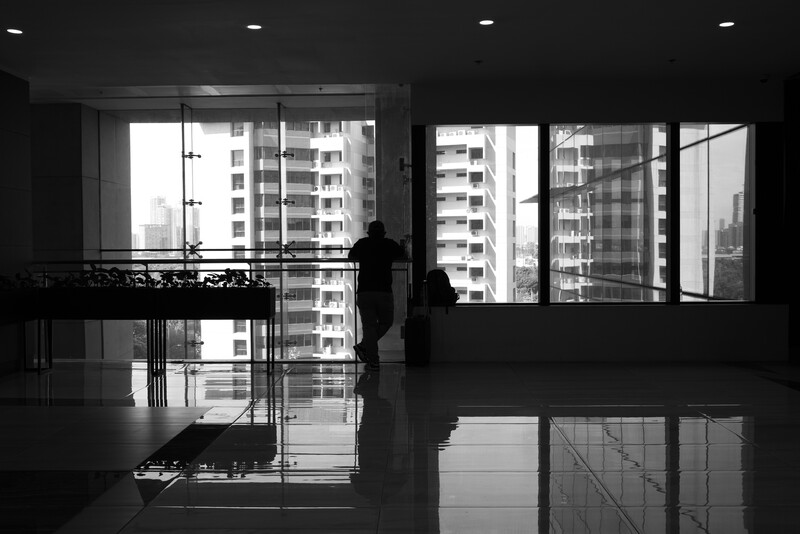
It comes with a Leica Maestro IV processor, which gives the images the supposedly iconic Leica monochrome contrast, as well as enabling this camera to have more responsive and adaptive autofocus and even film 8K footage, resulting in monochrome videos as well.
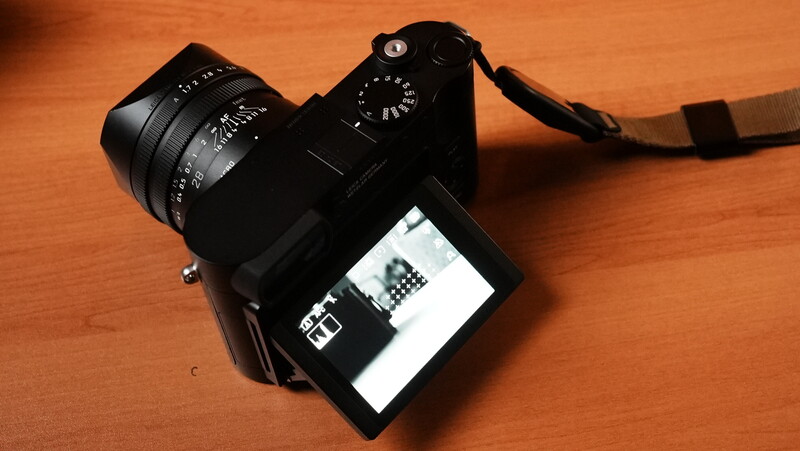
This fixed-lens camera comes with the reputable Leica Summilux 28 f/1.7 ASPH. lens. This autofocus lens, ideally made to give a wider-than-normal perspective, was made to complement the high-resolution capabilities of the sensor in order to give versatility through digital cropping. One of the two buttons right by the upper-right edge of the camera, along the line of the EVF, is a dedicated zoom/crop button that switches between a 28mm, 35mm, 50mm, 75mm, and even a 90mm equivalent perspective, all by cropping the image beginning from the live view itself.
The Leica Q3 Monochrom, much like the Q3, comes in a relatively compact body with a minimalist button layout, as well as the tilt screen that allows the user to shoot from more vertically diverse perspectives. Unlike most other mirrorless camera screens on the market, this only has a screen that tilts up and down, which seems to be coherent with the intention that this camera be used for street photography and travel more than anything that would require the screen to be viewed from the side. It would have been nice, though, if there were also a sort of tilt to the sides for the sake of vertical shooting from high or low angles.
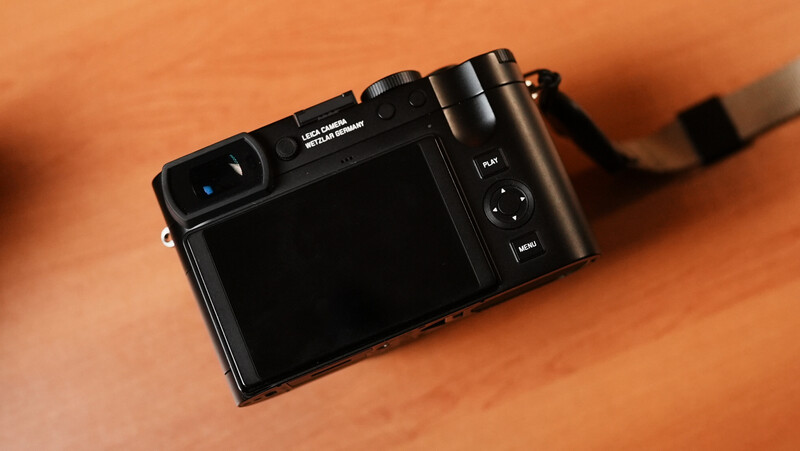
Paired with the screen is a 5.76-million-dot electronic viewfinder with a maximum frame rate of 120 fps, made for traditional shooting with the viewfinder as if trying to emulate the real-time view of an optical viewfinder. All these are housed in a body that is IP52 water-resistant and weather-sealed.
The Shooting Experience
Shooting with a compact 60-megapixel camera on its own can be quite rewarding for anyone who puts so much value into detail and resolution. As mentioned above, the intention of having such a high-resolution sensor on a camera with a fixed focal length lens is also for the sake of versatility. It won’t be like zooming in with a much larger lens, but at least the possibility of seeing the cropped perspective in real time is a huge plus.

In addition, compared to the older Leica Q2 that I personally own, the enhanced focusing and the tilt screen contribute so much to an improved shooting experience. While there is nothing like looking into the viewfinder, the option of being able to shoot from low or high angles without having to exert too much effort can do wonders, especially in situations where you don’t want to be seen so much. On its own, the Q3 has become such a capable and versatile camera, which is probably why it has gotten more and more popular in recent years.
How It’s Different
The difference with the Q3 Monochrom obviously has so many implications for the resulting image and, consequently, for those who care about it, the artistic intent of capturing a photograph. In the digital and color age of photography, shooting in black and white has ceased to be a necessity. However, for those who truly embrace the creative style, it seems to be a refinement of one’s creative vision.
The Q3 Monochrom is certainly not a camera that I would recommend to everyone. The regular Q3 could be something more universal for photographers who prefer smaller yet highly capable cameras, but an entirely monochrome version would definitely be reserved for those who are very selective and intentional with the things that they photograph.
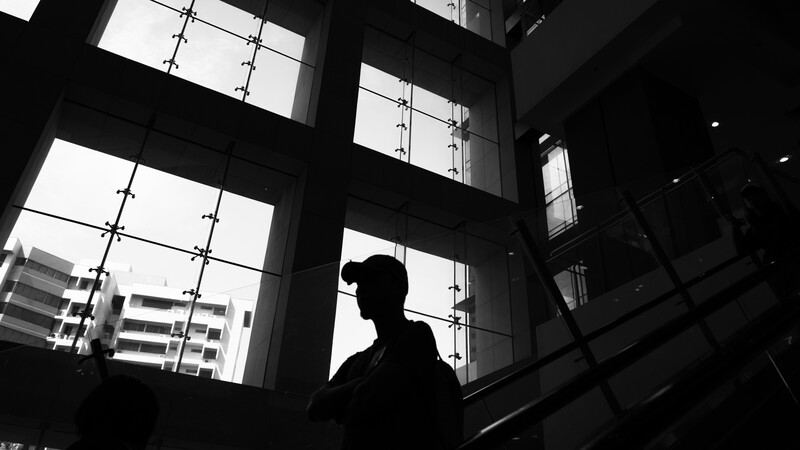
Using the Q3 Monochrom and having it with me every day for two weeks, I noticed that I would only take it out specifically when the light is right and when the right subject is around. For someone who enjoys the act of exploring a place or immersing themselves in the scene, it can be a camera that lets you focus on the things that match a more narrow spectrum of subjects and moments, but using it successfully and consistently would absolutely reflect a different level of refined artistry.
What I Liked
- 60.3-megapixel sensor
- Summilux 28 f/1.7 ASPH. offers such an immersive perspective for street and travel
- Versatile tilt screen
What Can Be Improved
- Perhaps a side tilt on the screen for vertical shooting



Join the Fstoppers community for free
-
Post comments and join in the discussions
-
Browse the site ad-free
-
Share your work and get featured in the community
-
Compete in the photo contests for fun and prizes
12 Comments
Hey,
I own this amasing piece of equipment since january 2026, and as said in the video, I am used to shoot with a whole branch of fixed optics, among the best lenses for nikon (35 1.2 and 135 plenar, as well as 400 2.8, 85 1.2 and 50 1.2) and I would never expect to fell such a revolution using the Q3 monochrom. The double constrain of fixed and bw gives the real creative punch. I am even traveling in cities with only that camera!
A must have and the lack of color sensor gives an amasing grey tonal range, coded 12bits.. I was surprised at first glance as it looked like my first bw films, shot with a M6.
By using the “Leica looks” option on the regular Q3 one can simulate the monochrome shooting experience. One gives up some high ISO capabilities and some very low light situations but that is marginal in the real world. Small price to pay for the versatility of being able to shoot both colour and black and white.
Buying a Q2 Monochrom was the best thing i ever did for my black and white photography. No colour sensor can give you the same results, especially in low light.
Does a Monochrome-Only Camera Really Make Sense? No it does not. Simply converting bayer mosiac images to monochrome is 99% as effective as using a sensor without a color filter. But of course Leica's entire business model is built on customers deluding themselves into believing they see actually see that 1%. Have fun.
If you are serious about black and white photography and have used a monochrom camera, you would understand that you are talking bollocks. 👍
I agree. But I took a different route. Having a Nikon Df body converted by removing the bayer filter is only done by one company, and they want $2500. Instead, I had it converted to 830nm infrared. No color exists at that wavelength, so you get a true B&W camera, for about $400.
The results are stunning. The only issue is sometimes foliage renders nearly white, which is unnatural. But the contrast and tonal range are outstanding. Images from this camera seem to have a luminance that reminds of some of Ansel Adams work.
From my viewpoint, no. I can take a color RAW and do a thousand different things with it. Why buy a one trick pony when I do a thousand tricks with another pony.
One big downside to a monochrome only camera is the loss of flexibility when editing. Several of my photos would never have been achievable if I couldn't convert to black and white and still use the colour information to shape the tones. Besides, there are very few monochrome only cameras, mainly expensive Leica's so not exactly practical for many.
I use a monochrome camera! Well, it's a monochrome camera when I put monochrome film in it.