
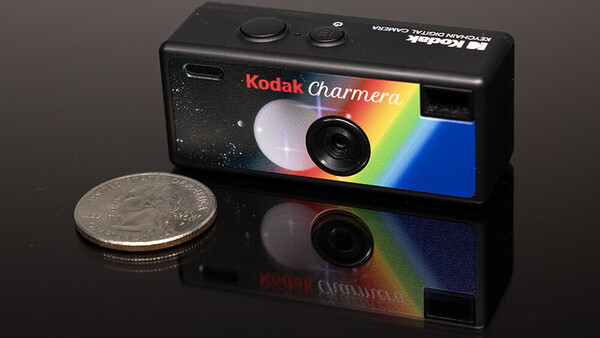
So after hearing about the Viral Cameras of 2026, there was one that stood out from a familiar, but somewhat tarnished, name in the camera business: the Kodak Charmera.
While I've opined in the past about what cameras are good for kids, this might be the one: the Goldilocks camera that's perfect for kids.
I get it. The design is irresistibly simple. For anyone of a certain age, it evokes memories of what was probably their first camera. In my case, it was a 110 film camera, a flat rectangle with a blue shutter button whose brand I can't even remember. It used 110 cartridges because my young self couldn't figure out how to load regular 35mm film. The Charmera particularly evokes late-1980s Kodak disposable cameras and carries that over completely into its simplified, kid-friendly operation. It's basically a one-button setup like cameras of old, with some added buttons to choose between video and photo modes as well as to navigate the photos and videos you've already taken. Basically, it's kid-proof.
The quality, though, isn't much better than those cameras. See for yourself:

There's a detailed review of the camera on Fstoppers here if you want to dive into the specs, but the headline is that it takes 1.6 MP images on a 1/4-inch sensor. Its exposure appears to be locked at f/3.0, ISO 153, and 1/50 shutter speed. It's not going to win on any of these parts for image quality. I'm not even entirely sure it's shooting at the speeds it says it is. City scenes in about the same light all day appeared mostly fine one second:

And then completely blown out the next:

But as the look on my daughter's face can attest, it's less about the photo quality and more about the experience:
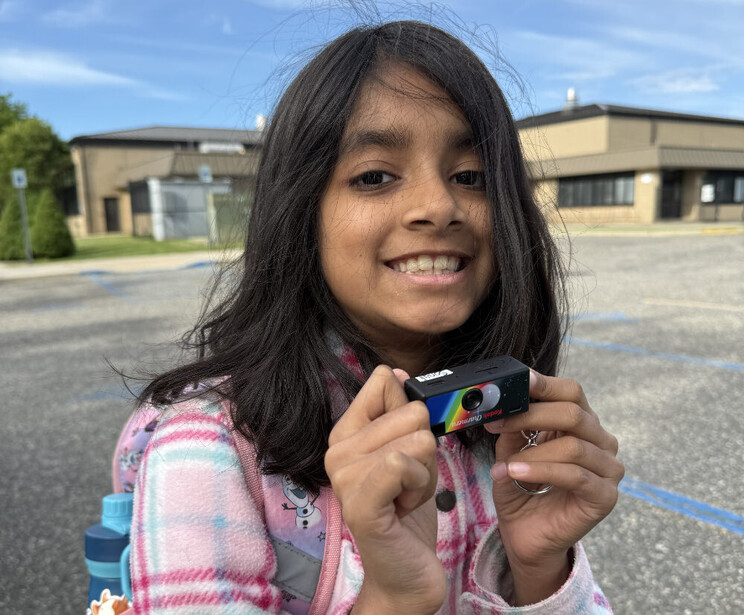
I gave the camera to my daughter to take to school. When she came back, there were snaps of her entire day featuring activities, food, friends, and laughter. The kids didn't care that the quality was terrible. When my daughter looked back at the pictures with me on the computer, she recounted the memories associated with them. As there is no flip screen, the ability to take selfies was also limited, and I appreciated that this meant her putting more thought into the photos, or handing off the camera to friends so they could take pictures, enhancing the social experience.

Shutter speed aside, I think some of the blurriness can be attributed to the somewhat squishy shutter button, which requires enough force that kids can sometimes accidentally introduce camera motion during the shot as a result.
The screen is so terrible that they don't spend much time reviewing the photos. It's a fascinating window into her life that I haven't seen from any of the other "real" cameras I've given her.
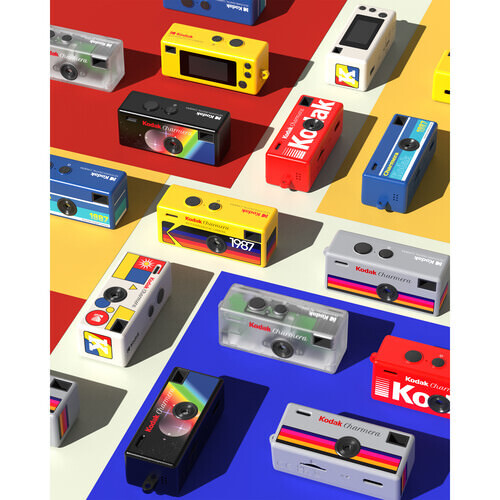
When gifting more of the cameras to her friends, the novelty of the "blind box" approach to selling the Charmeras became apparent. As kids of a certain age like to collect everything from every blind box they find, it's similar with these cameras, which come in one of seven fetching designs. I may or may not have bought six boxes. To give to the kids and friends, of course.
Interestingly, while I very much enjoyed the filters that could turn images into something that looks like a Game Boy Camera:
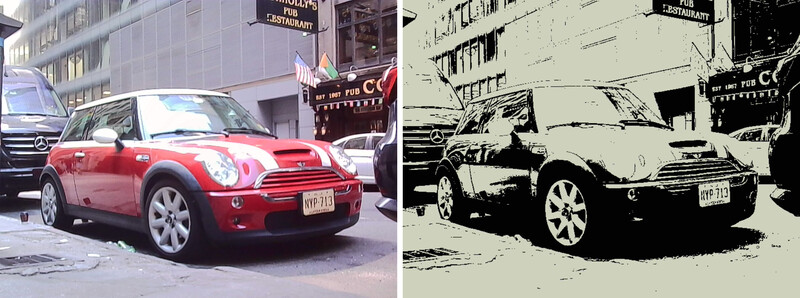
It turns out that the kids didn't care much for those, preferring just to use the straight-up normal mode. My daughter even preferred using the viewfinder (and I use the term for the hole that doesn't match up with the lens loosely), but that may be more a function of having a photographer father.
While my focus group included all of four eight-year-olds who were gifted these cameras, all seemed to be hooked almost immediately. The camera created an experience for them in a way a phone doesn't. Whether it's the eye-catching designs or the "fun" of using a real camera, something clicked that instantly made the Kodak Charmera worth the $35. My quest for a perfect kids' camera may have led me right back to the company that essentially started it all.



Join the Fstoppers community for free
-
Post comments and join in the discussions
-
Browse the site ad-free
-
Share your work and get featured in the community
-
Compete in the photo contests for fun and prizes
2 Comments
Thank you for this article. I am brainstorming fun birthday party ideas for an 11 year old and having an army of children armed with cameras sounds (in my head) like a fun/fascinating idea. This article confirmed that. I ended up ordering the W&O camera on Amazon to test it out. I would say picture quality seems similar. The flash doesn't really exist, however it does have its own internal SD card, at the time of writing this it set me back $27.69. It also has a large screen. It also comes with some bling - a silver bead loop for carrying and a metal chain to wear around your neck ,as well as stickers. I would add the best part, was what you described, My daughter's face lit up :) Thanks for unintentionally confirming my birthday party idea was somewhat reality based. Also, please note the manufacturer of the camera has no idea I exist and I received no benefits related to this review/comment.
I looked up the W&O Camera, looks like a fun camera for kids. Would love to see some of what they got at the party, it must have been interesting!