
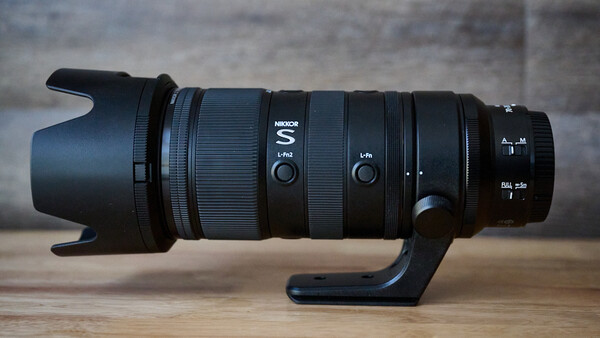
Today, I'd like to have a chat about Nikon's latest version of its workhorse 70-200mm zoom lens, the NIKKOR Z 70-200mm f/2.8 VR S II.
So if you've ever read any of my articles over the years, it's highly likely that you've heard me mention the fact that 24-70mm is my most used focal range. That's not a bold proclamation about that being the superior focal range or specific lens. Rather, I am nothing if not practical. And, as much as I love to collect amazing primes to sit on my shelf, when it's actual game time and I need to deliver for a client right here, right now, the 24-70mm just so happens to be the exact tool that allows me personally to deliver on that job. There is a second range, however, which picks up the rest of the work.
I should say upfront that I am not an event photographer. Nor am I a wedding photographer. I shoot athletes, but on controlled advertising production sets rather than needing reach to capture them from a sideline. I say all that only as a means to explain why 70-200mm is my secondary focal range rather than my own personal primary need. But that range is one that, well, let's just say "when you need it, you need it."
Such an occasion happened last week when I was shooting a small commercial campaign for a medium-sized company. I won't give you the details since, as with much of my commercial work, the job itself is under an NDA. So I can't give you too many details, and this should also explain why the images you'll see posted with this article will not be the ones I'm talking about shooting during this campaign, but rather stand-ins just to give you an idea of lens quality, as the real campaign is yet to be released.

Now, as I said, I create images under controlled production environments. But this particular job I was being asked to do was a bit different. I was still being tasked with creating commercial images, but the client was requesting they be captured at an event setting. There would be some chance for me to direct action, but most of the elements on the shot list would need to be shot photojournalism style and from a distance to ensure the safety of myself and the subjects who would be doing dynamic physical movements.
While I would use my trusty 24-70mm for much of the shoot, I knew that I would often need more reach than was available with that lens. So I loaded up a second Nikon body with the NIKKOR Z 70-200mm f/2.8 VR S II and went to the location with a camera in each hand (I used the Z9 with the 24-70mm and a Z6 III with the 70-200mm).
I've owned the previous 70-200mm f/2.8 VR S lens from Nikon, the original, but this was my first opportunity to try out the newly released updated version. One thing that stuck out right away was that the newer version is lighter. Nikon says it's 26% lighter than the original. I didn't put them on an actual weight scale, but holding the new 70-200mm did feel lighter than the previous version. It was no challenge holding the 998 g lens all day.
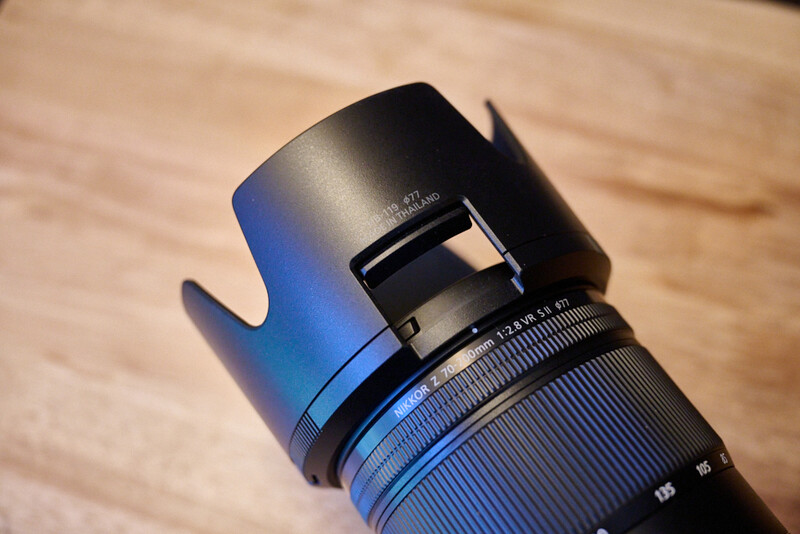
Because I was shooting both stills and motion during the shoot, it meant that I was going to need to use ND filters for exterior video. The 70-200mm's peekaboo window in its lens hood came in handy here. I don't know that it's actually called a peekaboo window. That's just what I call it. But being able to easily adjust my filtration without removing the lens hood was a real time saver in this live event scenario.
Nikon states that this version two lens has significantly better focus speed than the original. Again, I didn't set up a lab test and a stopwatch to examine this claim. In the actual field, however, I did find the focus more than up to speed. Although, I will say that the focus speed on the original 70-200mm was pretty darn good as well, so both are great options if focus speed is your priority. What I would say, if you are considering buying this lens, is that the Mark II version is indeed faster. It's the obvious choice if you are buying your first 70-200mm. If you already own the original, the focus speed alone may not be the reason to upgrade, but that's more a reflection on the quality of the first version than an indictment of the second.
The minimum focus distance of the lens is 1.2 feet on the wide end and 2.6 feet on the long end. This means you can easily draw focus to smaller objects and detail in your scene with the lens's 1:3.3 reproduction ratio. Again, for an event or wedding shooter, this flexibility should be a major advantage in efficiency.
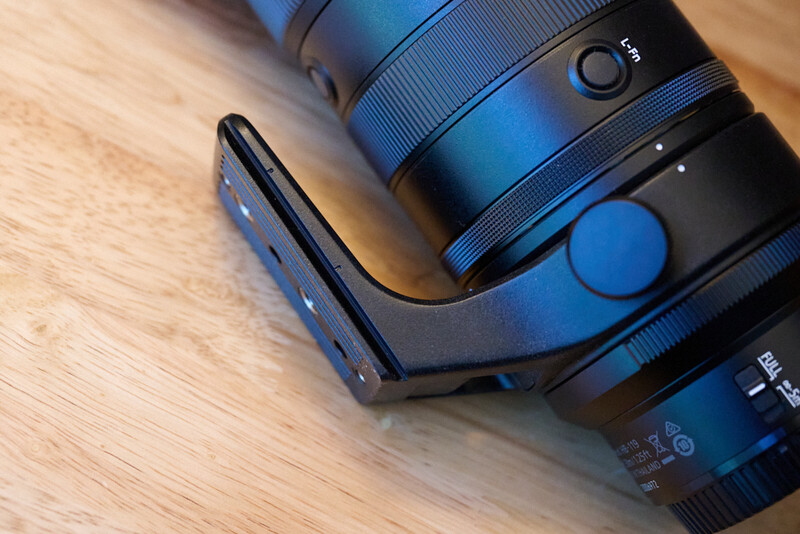
The reasons one may want to upgrade would be the lighter form factor and ergonomic benefits. There is no digital readout display on this lens that Nikon has offered on other lenses. But that allows room for an additional custom button, which may be more useful in actual practice. They have responded to community requests, and now the lens collar comes with an Arca-Swiss foot. This should make users extremely happy, as it simplifies rigging and is more natively compatible with most users' existing systems. I also appreciated that the collar was removable, which comes in handy for someone like me who often needs to fit these lenses into more complex video rigs. The 70-200mm is also compatible with teleconverters, meaning that you can quickly extend the zoom range to capture more sports and wildlife subjects when desired.
Pros
Lightweight
Arca-Swiss foot
Filter window
Focus speed
Sharpness
Compatible with teleconverters
Improved minimum focus distance
Cons
No digital readout window
A little more expensive at $3,196.95
Conclusion
The 70-200mm range is an incredibly useful focal range for a working photographer and excels in scenarios like the one I found myself in last week: an uncontrollable environment where reaction speed was a necessity and zooming with my (old) feet would have likely resulted in me missing more than a few moments. With the NIKKOR Z 70-200mm f/2.8 VR S II I was able to quickly focus on the many small details of the day and deliver a broader selection of assets to my client.





Join the Fstoppers community for free
-
Post comments and join in the discussions
-
Browse the site ad-free
-
Share your work and get featured in the community
-
Compete in the photo contests for fun and prizes
2 Comments
Thanks for the review. Love the new lens hood and nikon should offer them for the other Z lens as an upgrade as having to take off the hood grinds as the day progresses.
Perhaps the best Z mount lens currently - IQ, Video, Versatility