
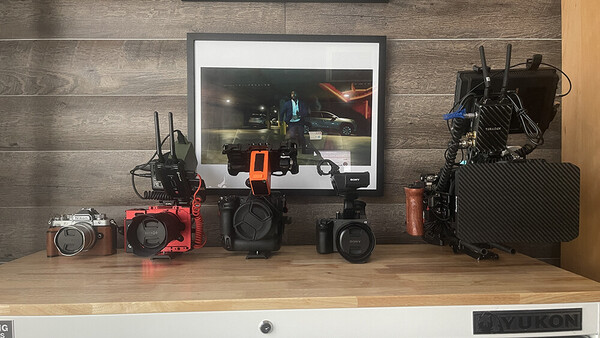
It’s that time again to sit back and dream about a one-size-fits-all camera that doesn’t actually exist, but really should.
I have a new hobby. And by “hobby,” what I really mean is obsession. And not an “obsession” in the cool “follow your passion” kind of way or in the surprise breakout box-office success Obsesseion kind of way. No, this obsession is more like my own little personal prison that I can’t seem to escape from despite knowing full well that it’s a cage of my own making.
So what is this new hobby? Well, every night just before I go to bed, I suddenly get a small idea in my head about how to better optimize my video rig to bring it closer to my dream setup that I thought I was buying when I purchased the system in the first place. This usually results in one small tweak just before bed turning into three hours of tinkering, trial-and-error style, only most of the time to end up right back where I started but with three hours less sleep than I had been planning.
To be clear, there’s nothing wrong with any of the cameras in my collection. In fact, I’m incredibly fortunate to have a camera lineup at the moment that well covers the majority of my use cases. But where my OCD kicks in is with that age-old fool’s errand we all subject ourselves to in trying to find the perfect one-size-fits-all camera. The everyday camera. The one camera that could reasonably obsolete every other camera I own in all but the most extreme circumstances. There is no such thing as the perfect camera. I’ve said so myself multiple times in this column. Yet, that small obsessive part of my brain simply can’t seem to accept my own advice. So, again and again, I find myself trying to force one of my specialized tools into the role of utility player.
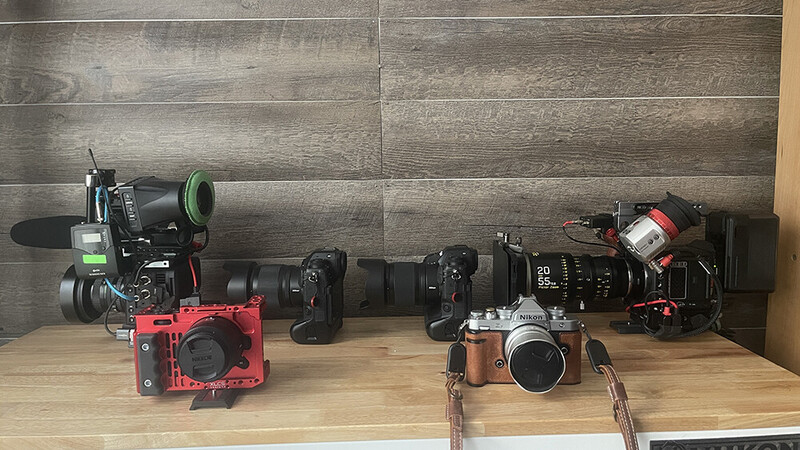
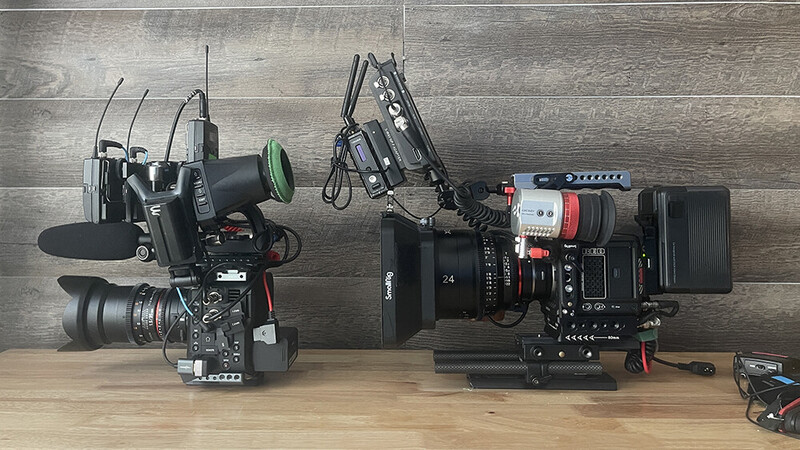
To illustrate, here’s my current camera lineup. I have two Nikon Z9s. These are the closest to my utility players. They do 100% of my professional still photography work. And I have used their video side to shoot multiple films in the four-plus years since I’ve had them. It’s the most “perfect” camera on this list. But, it is also a hybrid mirrorless camera and so it naturally lacks some features that a true cinema camera would have in exchange for superior stills capability. I also have a Nikon Zf, but that is actively for pure joy. So, while it has surprisingly capable video features, it was never meant to take the video king mantle. I have a RED Komodo. This is the current starter in my video lineup when working in a team-based workflow on commercial shoots. It has the best monitoring options and the best I/O for the connectivity required on a traditional production set. Of course, the Komodo was originally built to be a crash cam, so they seem to have completely ignored any kind of audio considerations. In practical terms, this means that I only use the Komodo when I have sound being recorded completely separately. I have a Canon EOS C70 specifically to address the audio issue. The best in-camera audio in my kit with four distinct channels and built-in mini-XLR ports, the C70 is my go-to for all things documentary or for any projects where “nothing can touch the ground.” Or, more plainly, projects where the camera and sound recorder need to be all one physical unit that can be held in the hand rather than being able to spread out across sets with various stands set up. Lastly, I have the Nikon ZR. Its advantages and limitations I’ve covered ad nauseam elsewhere. Long story short. The less you rig it, the more you’ll enjoy using it. Great image but more solo-content-creator-oriented rather than something that scales well into a team environment. So it gets the narrow task of being used when I specifically need R3D in an incognito small package and don’t need more than one audio input.
All of these cameras perform their job well. But they all have shortcomings. With the Z9, it’s the single 3.5 mm audio input. With the C70, it’s the LCDs being effectively useless in bright sunlight. With the Komodo, it’s the poor audio quality and requirement to really rig it to maximize it, resulting in a larger rig than desired for an “everyday camera.” For the ZR, it’s the limitation of a single audio input, the file size requirements, and the fact that any rigging at all immediately turns it into an ergonomic mess.
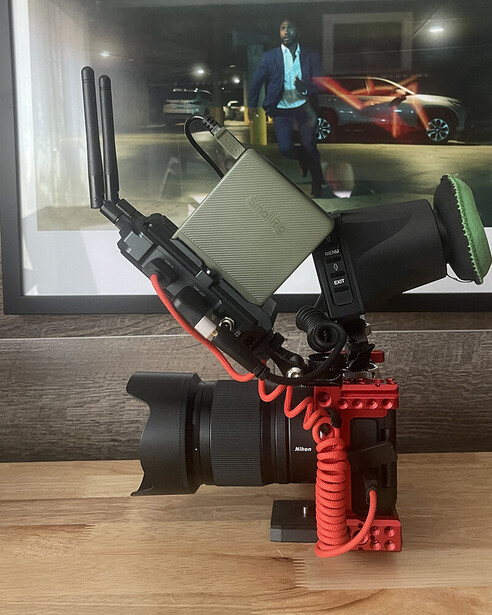
All of which started me daydreaming again about my perfect cinema camera. All the cameras I listed above are perfect at their specific niche. But, try as I might, they all hit certain limitations when I try to cross them over into the territory of my “everyday camera.” Somehow I have in my head that I’d have certain specialized cameras for specific use cases, but that I would still then be able to find The One. That camera that I can use both for professional and personal work. That’s big enough to rig comfortably for larger shoots but that is natively small and light enough to comfortably carry around on a fun walkabout without it feeling like a chore. Something with many of the convenience elements I’ve grown used to with mirrorless cameras but with enough professional filmmaking options that mean that it can easily integrate with a fully crewed workflow. Something that can easily scale up to be used in a proper production workflow, but also be used quickly and efficiently as a one-man-band production when the job calls for it.
Obviously, every filmmaker is different. That’s why the wishlist below describes my perfect cinema camera and not the perfect cinema camera. I should also note that, while I am a professional photographer as well, I’m focusing this list on video needs. I kind of feel like the perfect still/hybrid camera for me has existed for years in the Z9. So this list will be more focused on the video production side of my life. If you’re making that same jump from stills to motion, Introduction to Video: A Photographer’s Guide to Filmmaking is a good place to start. Those things that keep me up all hours of the night trying to pound a square peg into a round hole.
So, without further ado, I’d like you to meet the specs of my dream cinema camera.
Built-In EVF
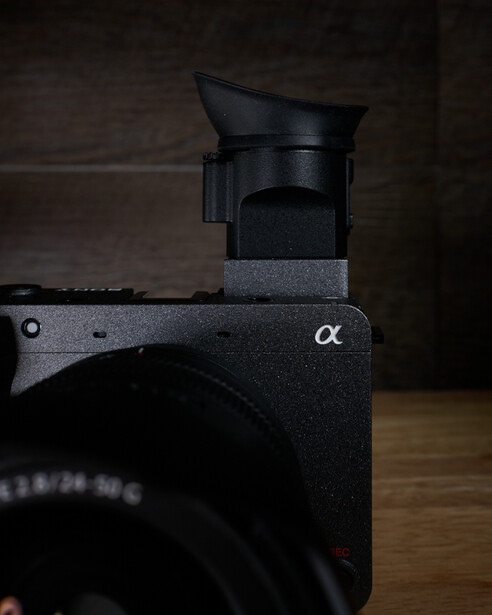
This is the single biggest thing robbing me of sleep at night. No matter what specs a camera possesses, the single most important factor that seems to determine my enjoyment of it is how comfortable it is for me to see what I’m shooting. I’ve detailed my vision issues before, but, long story short, an EVF is more than a preference for me. It’s a requirement. But most cinema cameras seem built with the idea in mind that either A) people would rather shoot from an LCD or B) people will want to rig their own EVF. I agree with the second part. There is a certain wisdom to owning an EVF you like and simply attaching it to whatever camera body you happen to be using. The problem is that certain bodies, my ZR for instance, just aren’t built to be rigged. So my enjoyment of the ZR is often limited by the awkwardness of trying to add an external EVF or the guessing game of trusting the LCD. Other cameras, like my Komodo, on the other hand, are more designed to be built. So attaching an EVF there is less of a disruption to using the tool. Ironically, this is one of the reasons I still default to the Z9. Camera rigs that end up super tall are one of my pet peeves. And the Z9’s built-in EVF means the profile of the camera body still remains short. So, even though the Z9 doesn’t have some of the video features of my other cameras, I often default to it simply because the built-in EVF and smaller but still usable LCD give me the most versatile viewing options in the smallest form factor.
Built-In NDs
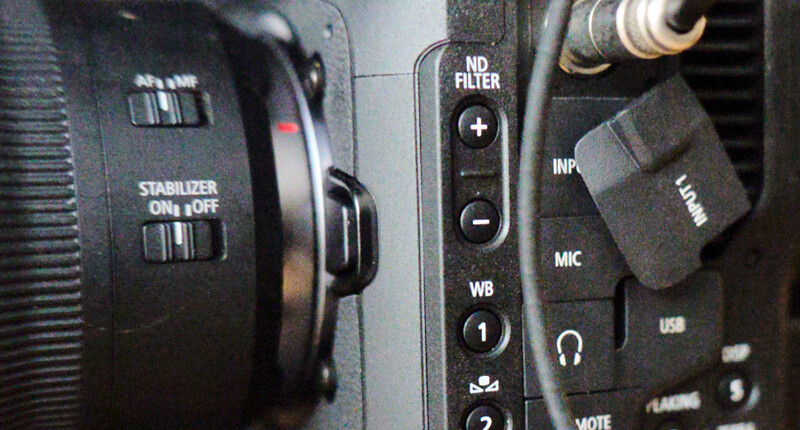
It is impossible to overstate how much efficiency this adds to my workflow. Yes, I have a cabinet full of variable and fixed NDs that screw on. I even have multiple lens adapters with built-in NDs. But being able to adjust ND with a quick button on the body regardless of mount rather than screwing and unscrewing a filter is shockingly important. It even allows me to leave the matte box at home on most occasions, further lightening my load. Since, ideally, an everyday camera is as light as possible, this is a major win for my perfect camera.
At Least 4 Channels of Audio
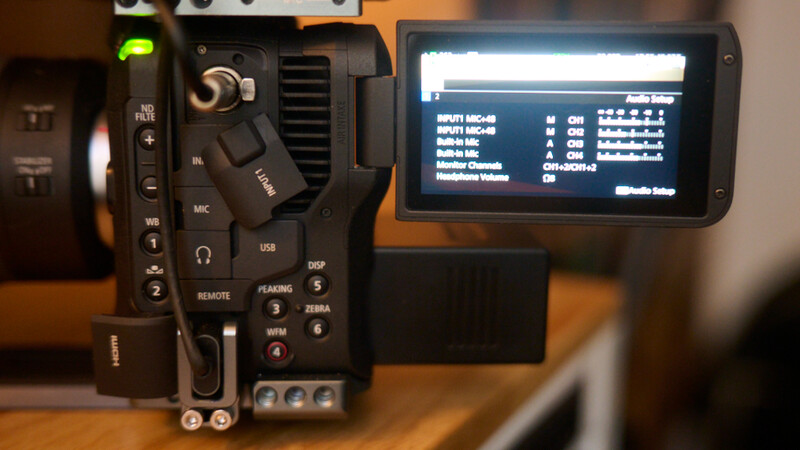
32-bit float is nice. I love 32-bit float. But, much to my surprise, I’ve found that having more audio channels available is actually even more important than having more bit depth per channel in practice. This is something I love about the C70. I almost always have a minimum of four mics going in every scene. A camera-mounted shotgun. A wireless boom. Two lavs (one for each talent in a two-person scene). Sometimes I need more. Sometimes I need less. But four seems like the right number for an everyday camera where I don’t know if I’ll be just shooting an interview or a short narrative scene. Ideally those would be four 32-bit float internal channels. But, in the name of not being too unreasonable, allow me to simply ask for four 24-bit channels to start. If you build a lot of multi-mic interviews, Tips for Shooting Professional Video Interviews covers the practical side of that setup.
Built-In XLR Ports
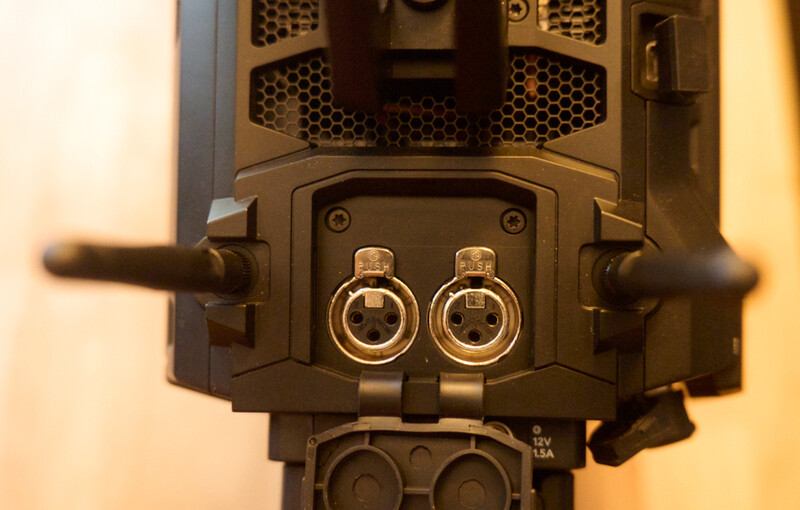
At least two phantom-powered XLR ports built into the camera body is another defining feature of my dream camera. I’ll take mini-XLR if that keeps the price and weight down. But give me a proper XLR port so I can attach my pro audio devices and get the cleanest and most efficient sound possible.
6K
I’ve come to think 6K is the perfect resolution. 4K is plenty. The 8K of the Z9 is nice to have. But 6K is a nice balance between having enough resolution to crop and/or stabilize footage in post, but still not absolutely drown in unnecessarily large file sizes when you’re likely to be delivering at 4K max for the foreseeable future.
Autofocus
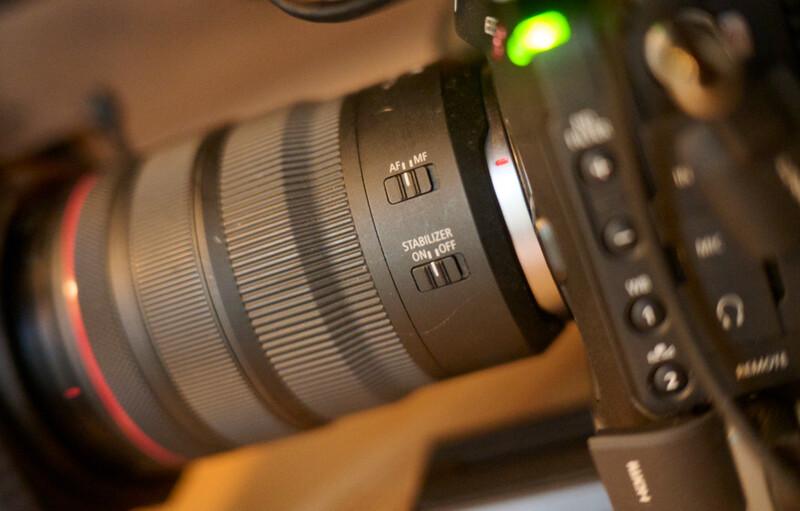
Okay, this one is controversial. I am aware that “real filmmakers don’t use autofocus.” And, while I say that tongue in cheek, I actually somewhat agree. Where you focus in a narrative world is a creative choice, not just a technical default. So having a more hands-on approach to focus is genuinely the right choice and my default choice when shooting video.
But, here’s the thing. There are practical considerations involved. Manual focus usually is going to mean either A) a stationary subject that I feel comfortable pulling my own focus on during a scene, which is difficult when actors understandably want to move more than potted plants or B) hiring a focus puller to take the focusing burden away. Clearly, the proper way to do things is to hire a focus puller. But, especially in one-man-band setups, I don’t always have hire-a-focus-puller money. So using autofocus becomes a necessary evil so that my actors have more freedom while I can be confident that they’ll be in far better focus than if I was pulling focus manually myself.
It’s true that I could simply practice and get better at manual focus or use a stop with more depth of field. But, since this is my own personal list, I should mention that my need for autofocus is also driven by my poor eyesight. Even with my glasses or contacts, even with focus peaking, I struggle to confirm focus visually. So, for me personally, autofocus is often less about budgetary restraints and more about sidestepping a personal limitation.
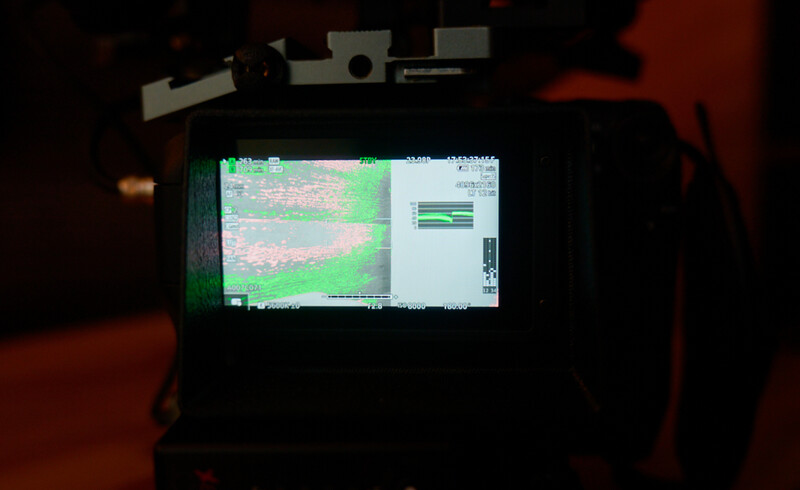
False Color and Waveforms
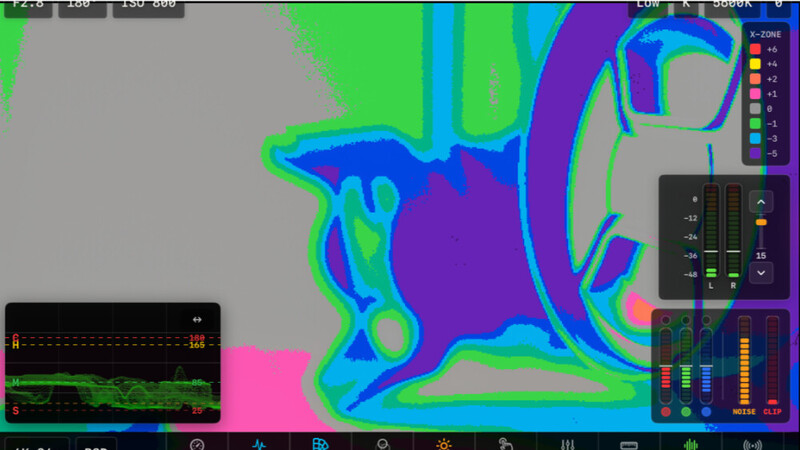
These are the two most used exposure tools for me. Some may add zebras to that list. But, for me, a short check of false color and the waveform to ensure I’m not clipping or crushing anything allows me to quickly make sure I’m bringing a usable image back to post. Gold star if the camera included RED traffic lights. But, since this dream camera isn’t brand specific, I’ll just be happy with false color and a waveform for now.
Anamorphic Desqueeze
You simply can’t consider yourself a cinema camera if you can’t do at least some basic desqueeze options in the body. Using anamorphic lenses is such a common practice that having 1.3x, 1.5x, 1.8x, and 2x should be a default. Bonus points if you include a custom desqueeze as well to fill in any gaps. Failing to do this now requires me to rig an external monitor or EVF to my camera. And my dream camera doesn’t require rigging. I want one solid tool in the hand that you can rig, but don’t have to rig.
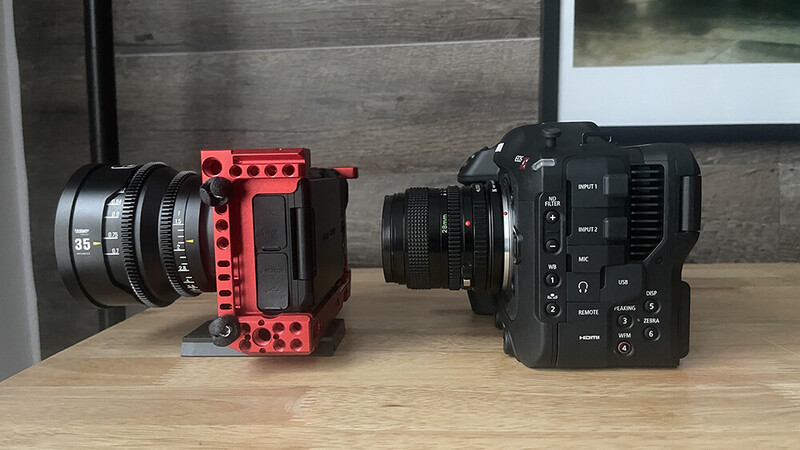
Small but Not Too Small
Size preference is subjective, so I can’t state a specific weight limit. Obviously some of the desires on my list are well covered with larger-body Alexas or Venices. Those cameras are perfect how they are. But, for this dream camera experiment, I’m looking at a camera that I can both rig up comfortably on a professional set yet that I can still use naked on a fun trip to the beach without feeling like I’m at work. I’m looking for a sweet spot. Maybe around the size of something like the C70 or C80. Or maybe even a touch lighter like in the Z9 weight class. Maybe something in the middle between those two. Some of the things on the list, like built-in NDs, require a larger body. I understand that. So it doesn’t have to be ZR sized. Just not quite full-on Alexa sized.
Here’s a simple test. I live about two miles away from my favorite museum. Often I’ll walk instead of driving. The camera should be light enough that I can comfortably carry it with me on the walk (about a four-mile round trip) and also be small enough that I can enter a public place like the museum without the security guards following me around.
A Proper Remote App
I was going to title this section “The RED Control App.” But, again trying to be brand agnostic, let’s just say that I want a camera control app that can reasonably function as a remote monitor without needing to rig another transmitter. I have plenty of video transmitters. So it’s not that I would never do this. But, for simple smaller shoots, the Komodo’s built-in Wi-Fi signal connecting to the RED Control app on my phone or tablet is massively important when trying to keep my production footprint small and be more nimble while still keeping some remote viewing capabilities.
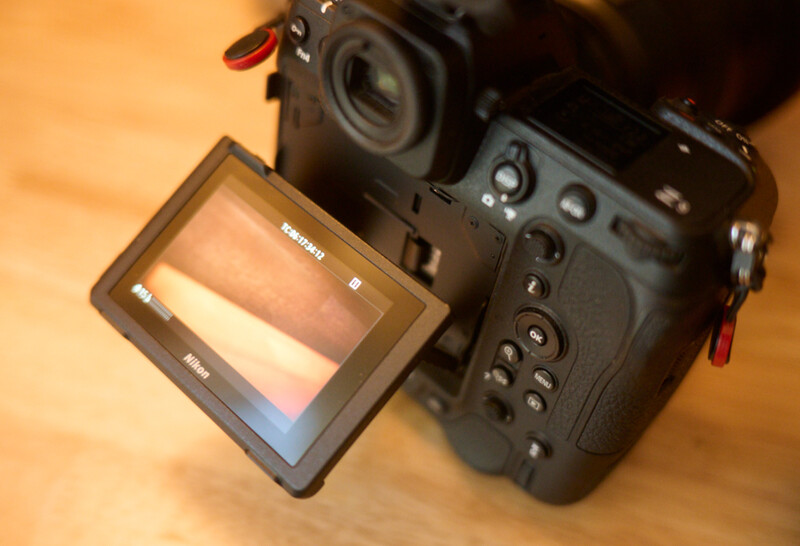
LCD That Can Tilt Straight Back
Okay. I used to be 50/50 on the articulating screens versus tilting-straight-back screens debate. But, alas, no, I am fully on Team Tilt Back now. No doubt, there are benefits to being able to flip a screen all the way around. But, to me, as I’m 95% behind the camera, the awkwardness of having to look off to the side to see my image far outweighs the ability to see myself when in front of the camera. In the best world, my dream camera would have the Sony mount, which allows you to both tilt the LCD straight back and flip it all the way front facing. That’s the best of both. But, at a minimum, my dream camera would allow me the option to tilt the LCD straight back in line with the lens.
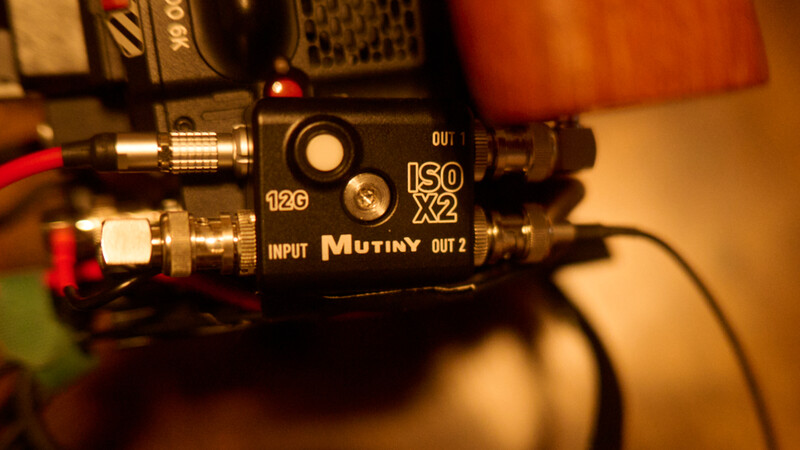
Both SDI and HDMI Ports
Less for the one-man-band shoots and more for when needing to rig this dream camera up into proper production form, having multiple video I/O that can be controlled individually is a requirement. Ideally, this would be dual SDI outputs. But, even dual HDMI, or a mixed one SDI and one HDMI, would work. Just some way to send a signal both to a wireless transmitter and to an external monitor/EVF at the same time (or one to the 1st AC and one to video village). This is where most mirrorless cameras fall short. They are awesome when working alone. But fall apart when needing to be integrated as the A cam into a proper team workflow.
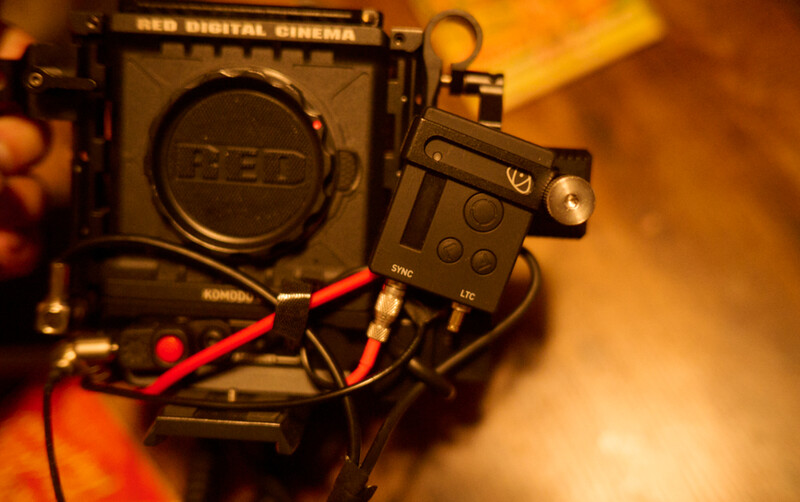
Timecode
Non-negotiable. I will say that Nikon’s implementation of wireless Bluetooth timecode sync with the UltraSync BLUE has been a massive efficiency improvement for me. So I could be talked into something like that. But foundationally, there really needs to be some kind of standard timecode port less tied to a specific kind of sync generation pipeline. Again, if you need to use this dream camera professionally, you’ll likely find yourself needing to plug into disparate systems and not everyone is going to be in the Nikon and Atomos world. So, the more universal the timecode process can be, the more useful it will be.
Internal Raw Video
This is another one that some pros may disagree with. In fact, the majority of professional video is not shot with raw video but rather more traditional and far less data-hungry codecs. So, it’s true that you don’t need raw. But, I will say that, because I’ve had internal raw video in so many cameras for so many years, any camera I see that doesn’t have internal raw makes me wonder why it’s missing. Since this is a dream camera, let’s put it in.
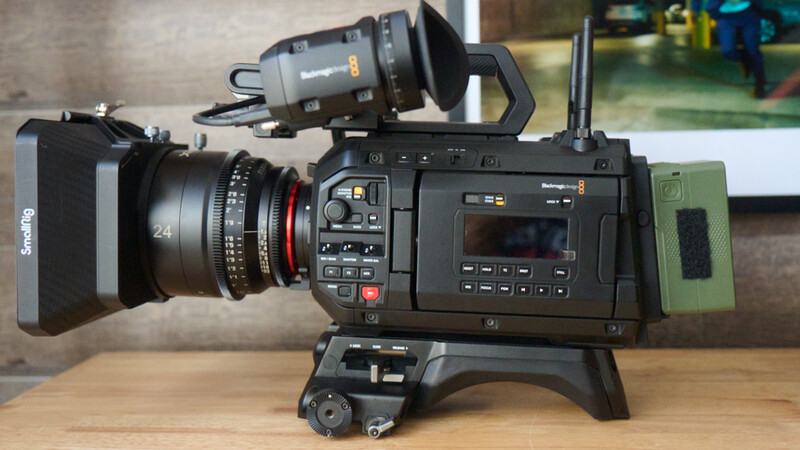
Full Frame
This is on my list, but you’ll notice it’s further down. I prefer full frame simply because the field of view means that I can more easily shoot in cramped spaces. Important for an everyday camera. But, if the company makes a speed booster or something that allows me to keep my lens data and focus options using full frame lenses on a crop sensor body, I’m open to a Super 35 sensor. Still, since we’re making this thing from scratch, go ahead and throw a full frame sensor in.
Open Gate
Okay, I’m putting this one in for you and not me. I don’t shoot a lot of vertical video. And, if I’m being honest, even when I do need to produce a vertical version of a video I find simply cropping into the horizontal 16:9 version to have more than enough resolution for the required deliverable which is likely to be viewed on tiny phones or tablets. If I really did need to shoot something that would be a vertical digital billboard or something of that scale, I would probably opt to just turn the camera I have vertically rather than compromise my horizontal composition by framing for the vertical cutdown. But, that’s just me.
With that said, I do understand the argument in favor. Especially for using open gate to result in a more usable aspect ratio for anamorphic shooting. So, I will put this one on the list. But if the camera companies leave this one out while giving me those things higher on the list, I’d be plenty happy.
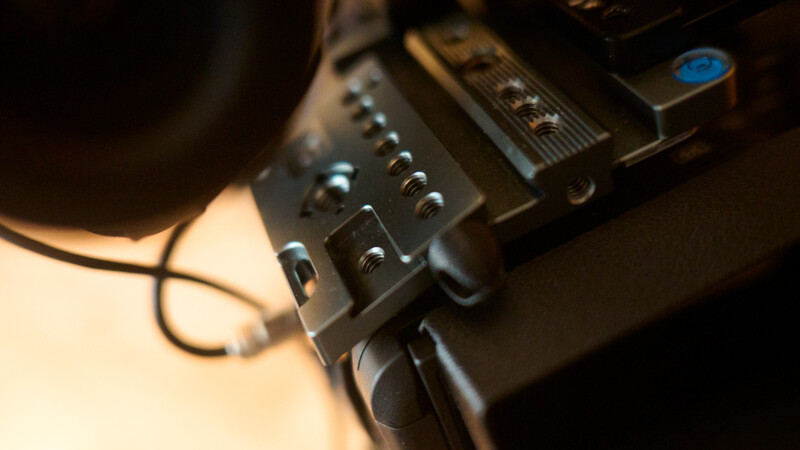
Mounting Points on the Body
The other day I was with a bunch of my filmmaking friends and I brought a fancy new camera in its cage. 6K. Full frame. Amazing specs. All anyone cared about were all the 1/4"-20 mounting points on the cage. Enough said.
Good Battery Life
With both my Z9 and C70, I feel like I can get through most full production days on two batteries. Three for longer days. I’d take this for my dream camera. Bonus points if it comes with an integrated V-mount plate with multiple power outputs for accessories to keep things more powered, more compact, and more efficient throughout the shoot day.
Why Doesn’t This Camera Already Exist?
So, in compiling this list, it became clear that nearly every element on my list exists in at least one of my cameras. There’s one glaring exception. Not a single one of my four bodies gives me both SDI and HDMI at the same time. The Komodo has SDI and no HDMI. The C70, the Z9, and the ZR all have HDMI and no SDI. Everything else on this list I already own somewhere. The problem is that none of the cameras have all of these elements at the same time.
The closest thing I’ve found on the market is the Canon EOS C80. It has the 6K full frame sensor, the built-in NDs, four channels of audio through two mini-XLR ports, autofocus, BNC timecode, internal raw, and simultaneous SDI and HDMI out. On paper, that is most of this list living in one body at a weight not far off the Z9. But it has no built-in EVF and no way to tilt the LCD straight back. Which means the camera that comes closest still misses on the very first thing I said mattered most to me.
Beyond that, in my camera research, every camera I’ve found seems to leave at least one or two of these things out. If I’m wrong about that, please do let me know in the comments section.
Yet the fact that I do have nearly all of these features in at least one body suggests to me that it’s physically possible to add all of these features into a single body. I’m no engineer, and I’m sure internal heat dissipation would need to be taken into account, but if the capabilities exist separately, there has to be a way for them to exist together. Right?
Anyway, as I said, this is just my own personal wishlist. If you’ve got a wishlist of your own, put it into the comments section. Perhaps the brands will read this article and make the dream into a reality.
Join the Fstoppers community for free
-
Post comments and join in the discussions
-
Browse the site ad-free
-
Share your work and get featured in the community
-
Compete in the photo contests for fun and prizes
No comments yet