
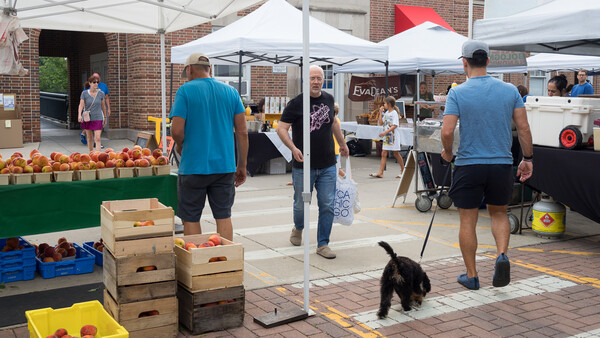
Every photographer who has thought about photographing a public space knows the low-humming anxiety of the "worst-case scenario." The fear of someone seeing and confronting us remains one of the steepest mental hurdles to actually getting started in street photography. For years, it was mine. We convince ourselves that the moment we are noticed, the world will grind to a halt and anger will follow. But what actually happens when the nightmare comes true?
On a summer Saturday morning, I had the dubious pleasure of finding out.
Caught in the Act
I went out looking to create a photograph of a local farmers market as part of a summer series I was working on. Having spent an hour or so looking for compositions in and among the crowd, I felt like I had made the image I would need for my set. Since I was already out, I decided to stick around and push myself. I played around with different approaches and compositions to see what else might feel right to me.
I circled the market a couple more times and then wandered down behind one row of vendor tents. That's when a scene caught my eye.
One of the white canopy tents had its back flap pulled halfway down, perfectly bisecting the two women working inside. From my vantage point, they were completely headless. Just two bodies in motion under a canvas frame. A few feet closer to me, a man from their team was sitting low in a folding chair. By lining up the shot just right, I could position his head at the bottom of the frame, visually "extending" the bodies under the tent. I was attempting to create a strange, humorous slice of everyday life. If you want to build a broader skill set across genres like this, The Well-Rounded Photographer: 8 Instructors Teach 8 Genres of Photography is a useful resource.
I clicked the shutter.
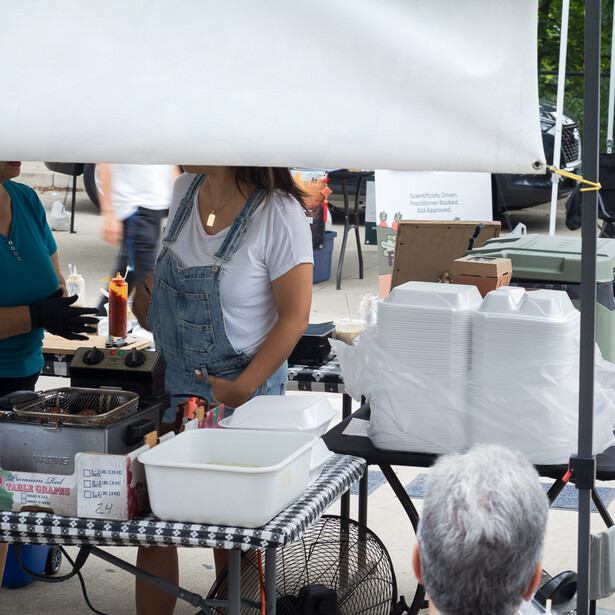
Not entirely convinced by this first attempt, I planned to refine the composition and try again. That's when, in unison, the two women popped their heads below the tent flap.
"Hi!" they said.
I froze.
Then the man sitting on the chair turned around.
"Hello," he said, somewhat quizzically. He was wondering what I was up to, what I had done to attract attention. I could sense it.
How should I respond? What was the right move here? Were they going to be upset that I was photographing them from behind, a bit surreptitiously?
My emotional self remained frozen, unwilling to move. Meanwhile, my mind started to race. I watched the thoughts form, almost as if they were in the air between me and these three people. They just kept looking at me, waiting.
In that split second, I noticed that my mind was serving up parts of the street photography books I had recently been reading through. One thing in particular, repeated by all the photographers: Bryan Peterson, Matt Stuart, Joel Meyerowitz. Be honest, be open, be genuine. Smile.
I finally spoke.
"Hi," I replied, filling the word with as much smile and sincerity as possible, and hoping that what felt like a minute of racing thoughts really was just a second.
"Are you photographing for the village?" one of the women asked.
My emotions exhaled. My mind continued to race. I saw that I was still standing behind the parked cars of the vendors. That felt more closed off than open. I stepped through the cars to stand next to their booth, while answering that I was not an official photographer.
As I stopped next to the tent, the woman continued asking questions. "Do you take family photos?"
"No," I said. "I primarily photograph landscapes and cityscapes. I'm trying to do more street."
"So you're local then?"
"Yes, I live just up on this road."
The man had moved to the back area of the tent, while I stood on the side.
"You look hungry," he insisted.
I had told him twice already that I was not. I suppose he wasn't as interested in what sort of photographer I am.
"Have a falafel," he said. "They don't have any fillers like flour. They're gluten free. I'll give you one on the house."
I've had falafels before. I don't dislike them, but I've never had a falafel that sold me on liking them either. But given my predicament, it seemed immensely rude to continue refusing. I relented, and bit into the one this gentleman had almost forced on me. There is no other way to put it: it was absolutely delicious. I told them as much. I thanked them. I walked on, in part to see if there were any other photographic opportunities, but also to release all the stress and adrenaline that had built up.
Expectation Versus Reality
Our brains are hardwired to protect us from threats, whether dangerous animals or social ones that feel a bit more existential. When it comes to street photography, this means they can often lie to us. We dream of a hostile, aggressive world that rarely exists where most of us would choose to wander with our cameras. We project our own feelings of vulnerability onto the people we are photographing, assuming they will meet our camera with anger.
But the reality of human connection is usually much kinder. When you get spotted, the outcome is rarely a shouting match. More often than not, it is simply curiosity.
If you are struggling to move past that initial fear of shooting in public, the worst thing you can do is hide the camera or sneak away. Slouching down or pretending you were looking at your screen can make it look like you were doing something wrong. It triggers suspicion, inviting the sorts of reactions you feared in the first place. Sneaking away keeps you behind the barrier. Instead, owning the moment, stepping into the space, and simply being honest about what you are doing humanizes you. It turns an anonymous lens into a neighbor.
Some lessons you have to learn by doing. All of those street photography books were helpful, edifying. They gave me the framework and encouragement to make the right move in that moment. And while it won't always result in a delicious, free falafel, being open even when feeling vulnerable is undoubtedly the right choice.
The only thing I regret from that Saturday at the farmers market is that I didn't get to play around with more compositions before they spotted me!

Join the Fstoppers community for free
-
Post comments and join in the discussions
-
Browse the site ad-free
-
Share your work and get featured in the community
-
Compete in the photo contests for fun and prizes
32 Comments
The whole chapter 'Caught in the Act' and your experience is what photographers like Joel Meyerowitz call 'bruising the scene'. In case you didn't know, that simply means staying in a place for too long where you are bound to get noticed and likely have someone ask what you are doing, often ruining the moment you were trying to capture.
Thanks Sam Sims -- I hadn't heard that term before! I can see how that would play out, although in this particular case I was standing at that spot for maybe a minute. I guess those ladies were particularly observant 😆
A minute can be a long time for street photography. A lot of seasoned street photographers learn to spot when something potentially interesting is about to happen, take a shot within a split second and move on before anyone has spotted them, leaving no time to get noticed.
Staying in one spot too long before getting noticed:
I went back to NY/NJ for a trade show and decided to visit my childhood home of more than 50 years ago. I just sat on the curb across the street, kind of just reminiscing and staring off into space. Before ten minutes went by, a police officer pulled up and asked what I was doing and for identification. I didn't think I looked like the dangerous type, but somebody thought differently. We live in a time of increasing fear and paranoia. I began telling the officer what the town was like back in the 1960s and he must of thought I was an alien from outer space.
I really have very little interest in street photography. Photographing other people without an invitation feels awkward at best. I can only suggest what works for dealing with any other sort of anxious moments or potential problems. Be prepared. If someone wants to know why I'm taking a picture, I simply say "Just for fun. Do you mind?" No need to complicate it further until they respond. And as the article suggests, their response will often surprise you. That said, I'd rather take my camera to the botanical garden and shoot plants and flowers instead of people. Too many people in one place is exhausting; flowers are calming.
I hear you Deleted User -- I just got back from photographing the water lilies at the nearby botanical garden. And honestly, when I go into the city I tend to like to have people as more anonymized presences than making any of my city or street images about specific people. But that said, I know street is a popular genre with many different styles and approaches, so I have at least tried a few out!
Sam brings up the concept of "bruising the scene," but you can also hang around till you become part of the scenery. An example, a group of teens skateboarding. They notice you, perhaps ask what you're doing and then go back to their activity. At that point your shots can be as candid as if they never saw you.
When you do get caught? Smile and wave and be friendly, don't runaway. Besides not everyone minds having their picture taken.
Great point Jim Mahoney ! I think that's probably more my style, just given who I am. Thanks for the comment!
Street photography sometimes has a purpose beyond documentary or photojournalism. For many years before the internet decimated print advertising, I designed and produced newsletters for one of the hotels in Aspen, Colorado. The general manager wanted better, more site specific photos showing the Aspen area than generic stock photos, but didn't want to pay the hourly rates for commissioning a photographer (an arm and a leg). More than just scenery, the hotel needed pictures of other amenities in town. That's when I got the job. Spent years taking "street" pictures in Aspen. For that type of work, it was easy responding to anyone who asked why I was taking the picture: "I'm taking pictures for a newsletter for one of the hotels in town." In a resort area, that's pretty normal. Simple easy answers are generally best.
If you're interested in portrait photography, taking pictures downtown might be a good idea for finding prospective customers. The woman who asked if you take family photos may have been thinking about having a portrait made. Anyone carrying a professional looking camera is often assumed to be a portrait photographer.
That sounds like a fun gig Deleted User ! I agree though, basically everyone seems to assume that a person with professional looking camera must take portraits of people. I guess it speaks to the purpose most people see in photos. It is definitely not my forte though, and I think the woman who asked would have been wildly disappointed if she had hired me for family portraits!
It was fun. I made my career from combining graphic design and photography with commercial printing work. I sold my product and services to hotels, realtors, hospitals, ski areas, resort reservation agencies, and more that I can't remember... everything from envelopes to catalogs. Lots of hotel rack brochures. My sales territory was mainly the Colorado resort towns of Aspen, Vail, and Telluride. When doing a job for a hotel, they'd nearly always give me a free room for a couple nights. On occasion when it was summer, I would bring my wife and she'd hang out with a book by the pool or enjoy shopping in town. One hotel in Vail that I worked for was modeled after the European style and had a restaurant which made the absolute best sauerbraten, on-the-house as a gift for doing great work taking care of all their printing needs. Plus, the customers I worked with became friends for decades. I sold parking ticket books to the City Clerk in Aspen, and every time I stopped in there she'd ask how my little children were doing... until she retired and my kids were in their 30s. Alas, nothing lasts forever... but it was a great way to make a living.
A job that combines photography, design, and ski resorts sounds like a version of heaven...
It was definitely a good fit for me. I moved from Denver to Grand Junction to be a lot closer to world-class skiing. If the work itself wasn't exactly heaven, skiing at Telluride was. My first year at college in 1972 was the second year that the ski area there had been open. Lift tickets at Aspen cost $10. Even a mostly broke college kid could afford it. Nowadays you need a second mortgage on your house to afford skiing in those resorts.
That's amazing! I can't believe how much the price of lift tickets has gone up over the last 20-25 years. It's wild. I've found it hard to justify the cost for some years now.
I wish the worst consequences of inflation had just impacted luxury items, and skiing is undoubtedly a luxury item. I bought my home in 1980. It wasn't easy but it was manageable, even on one income while mom stayed at home to raise the kids. But there's no way possible I could afford this place now if I were starting over again at age 25. Home prices are crazy. And if the mortgage doesn't break you, the price of property taxes and homeowners insurance will. Those extra add ons, plus the fact that you can't get a plumber or electrician out to do anything for less than several hundred bucks, really squeezes the budget. Thirty years ago, stuff didn't seem so ridiculously expensive.
I photograph at these kind of events all the time, and if asked what I'm doing or I get a quizzical look, I always say "I'm documenting this event, I hope you don't mind being included!". Works every time!
The secret is to walk around smiling and positive, and keep moving.
Lying, in other words. A sweet lie with a sweet smile.
I am documenting what's going on, so it's not a lie.
Makes sense Simon Burn ....and since the woman did basically ask if that's what I was doing it would've been easy enough to say yes!
You went through all of that effort, and yet none of your snapshots have any impact. They are scenes that anyone can see on any given day in the boring, ugly city they live in.
I would title the first snapshot "dog butt".
I would title the second snapshot "styrofoam containers". Did you deliberately cut off that woman's head to bring more attention to the styrofoam food containers?
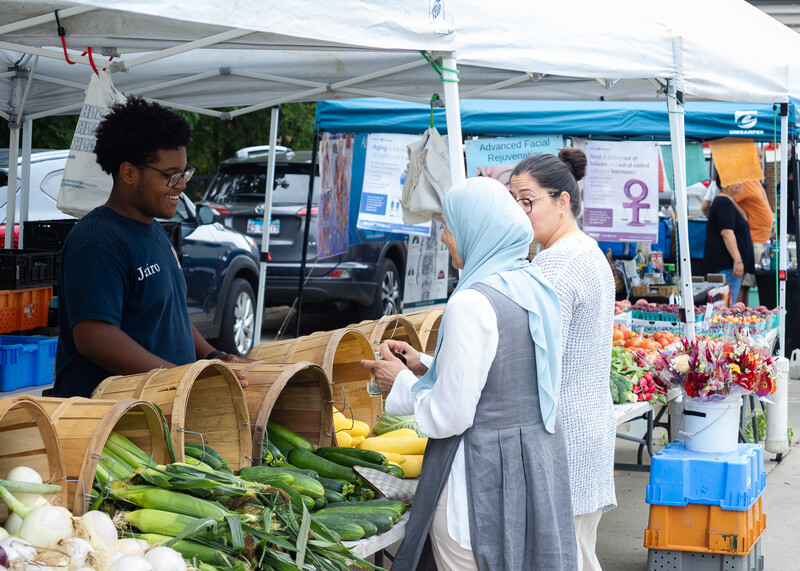
I would title the third snapshot "farmers market". I particularly hate the ugly parked cars in the background.
Go back to the forest preserves. Street trash snapshots suck.
My aren't you a ray of sunshine. Did you join Fstoppers just to mock street photography? It appears that way from your comment history. Nothing else interests you? If you've bothered to follow Adam, you'd realize that street photography is far down the list from his favorite types of photography. But he's trying to push those boundaries and experiment with other types of photography that are outside his comfort zone. Something that's really difficult for most of us, but sometimes you'll never know what you like until you try it... even at the risk of failing. Read the article and try to understand the message, instead of just picking apart the pictures. You're missing the point.
I can appreciate that your critique is handed down from God, but you offer no information about yourself in your profile or share any of your photography in your portfolio, so I have no respect for your comments. I'm sorry you have such disdain for images which reflect ordinary life on city streets, but aren't landscapes and wildlife images a reflection of ordinary life too? What distinguishes urban streets from rural landscapes? Please stop criticizing other people maybe just long enough to show us what you've photographed that is so compelling.
Thanks Deleted User -- I deeply appreciate this comment.
Hey there Levin Midravin -- I'm ok that these don't live up to whatever standard you've decided on for street photography. Bluntly, I didn't make these for you. And that's ok. However, I'll address a few of your points anyway: Parked cars are a part of life. This farmer's market set up in a suburban village by the train station is very much a part of life here. And to be honest, I don't find here to be particularly ugly. Maybe not to your taste, and that's fine. It doesn't have to be.
I'd say thanks for reading, but given your comment about the second photo it's relatively clear you didn't. So I'll just wish you well, and hope that you end up with a more positive relationship with photography.
As I said over in an article by Alex Coghe a moment ago... there are concepts which are shared by all genres of photography. In landscape photography, we examine the scene carefully for which elements to include, and equally important which to exclude from the picture. Nothing diminishes the impact of a photo faster than clutter or distractions.
The same principle applies to street photography, which is a huge challenge because there's probably nothing more cluttered than urban streets. And for a lot of photographers, they tend to include more and more stuff as context for the main subject, to the extent that the subject is lost. Yes, cars are a fact of life in urban areas, but does including them in the picture help or hurt the story or message you're trying to communicate? A lot of context can dilute that story. Or maybe not... just like landscapes or nature pictures, it's a decision worth examining carefully.
But that's the other problem with street photography... time to dissect a composition is a luxury that the genre does not afford. That's the sort of impulsive nature of street photography that is not my cup of tea, besides the fact that I don't like crowds of people. Like you, I tried it to see what the experience was like, and what sort of images I could come home with, but found out that how I approach photography was the biggest indicator of whether I enjoy it or not. And sincerely enjoying something is at the heart of becoming really good at it.
Very true. However the challenge is that we'll each see that clutter differently. Just because great photographers have cut off a car on the side of the frame, or even trees, doesn't diminish the photo. I find it telling how much people would rather dissect the technicalities of the composition than understand what or how the photo conveys the meaning of the photographer. Sure, it's harder work. But it's also a significantly more rewarding way to engage with photography. Honestly, I've seen so many Michael Kenna photos that people like this would say have compositional flaws...and yet they're incredible images.
That said, I am in no way saying these are my "best" street photos. I included them because they were all from that same farmer's market on that day. They're much more about setting the scene than holding them up as any sort of epitome of street photography. My favorite photo of the day, and the only one I'd probably actually call "good", is a variation on the lead image here. I just chose not to include it in the article since this wasn't an article about the photos themselves so much as the act of photographing itself. I do enjoy photographing in more urban environments....I'm just still figuring out how to express my voice in that context!
Don't you think that the elements of composition -- choosing which events to include or exclude and how to arrange them -- communicates the intention, meaning and purpose of the photographer? You imply that dissecting technicalities is a totally different aspect of photography than emotional impact, but I believe they are intrinsically connected. By including peripheral elements (what some people call clutter), the viewer sees a lot more stuff, and clutter is what opens the door for your viewer to see a different message than what you intended to emphasize. You saw the seller as the main subject of your picture... I saw the buyers as the main attraction. Compositional technicalities are what communicate the intention of the photographer and the story he wishes to tell.
Oh well, enough speculation on my part. I've probably already overstayed my welcome as a guest of your article. I need to go annoy other people on the AI truth-in-advertising article... another story with two sides to the argument.
It's a fair point, and if that is how people are discussing composition then I have no complaints. It's just that most of the conversation around it seems to imply that there are universal compositional rules that must be followed. People rarely seem to start by asking what the photographer intended. But I suppose that's rather natural.
Hmmm... I hardly notice any comments at all about photo composition. Most raging arguments revolve around gear. At least quoting the traditional rules would be a start of something to debate, although I think it was Edward Weston who was quoted as saying something such as: "Consulting the laws of photography before taking a picture is like consulting the laws of gravity before taking a walk."
That's a great line! I'll have to remember it.
Reflecting on your photo in question with the cars in the background....
I'm thinking that the real story in this picture is the two women negotiating the purchase of whatever is in her hand. That item is obscured though in the picture, as are the facial expressions on the two women. The second woman seems engaged too, but she's relegated as a background element in your composition. Capturing the women's faces would have had more impact, in my opinion, than the back of their heads and cars in the background.
So maybe the picture could have been shot from the side or behind the produce table and young man to capture more of the expression and emotion rather than simply the transaction? Like a lot of photography, the first or obvious camera position is not always the best. I don't mean to proclaim right or wrong, or come across as insulting... just a few ideas to think about.
It's a fair critique, Ed. Nothing insulting at all!
What caught my attention was actually the seller's expression. His warmth and joy at engaging with his customers. I had been standing where I was, near the entry to the market, for a few minutes at that point and these women were the first to approach his stall while I was there -- and he came absolutely alive. The woman is actually holding her purse / money back at this point. I don't remember what she was buying, or where it was. It would be incredibly hard to compose this around his face without the vendors' cars in the background, since they were all down that side of the market (the other side had no parking behind the stalls, making this side more crowded). If the women had been my primary subjects, it would be a different story.
All that said, I see plenty I'd like to change with this one. I have too much off to the right. Sure, it helps show the context of the farmer's market, but I don't think it's adding quite enough in many ways. I also would've liked to have less space between the vendor and the women, which would have entailed a simple move towards my right. I like to create quite spaces in my photos, and I think these two changes would've helped with that. They might have also put more of the emphasis on the vendor rather than the women, who seem to be coming across as the primary subjects!
Live and learn, though. I think it's fine as a photo. It captures a human moment, rather than just a transaction, which I like. But no doubt, it could be stronger. I think for me, though, that doesn't necessarily make it worthless....despite Levin's feelings on the matter 😉
Nothing you do is worthless. Forget that guy. Some critiques try to be constructive; his was not. He just appears to be the type of person who feels better about himself by trying to make other people look bad. That type surfaces every so often and then disappears.
With photography, every photo is either cherished as perfect the way it is, or a learning experience for the next opportunity. With street photography, it's exceptionally hard to get it perfect because everything is happening and changing so fast. You don't always have time to evaluate a half dozen different shooting positions. And I'm sure 99% of the street photos ever made could be picked apart for some little thing here or there that could have improved the picture. Maybe AI will fix that. In the meantime, an honest street picture will almost always have a couple things we wish we could change... sort of like life itself.
Oh don't worry. I'm a designer by training, it would take a lot more than his comment to throw me off.