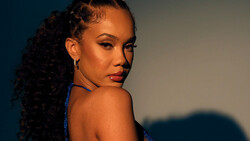
Adding smoke to a shoot can completely change the feel of an image. It builds depth, amplifies drama, and when you're working with colored backlights, it's often the only way to make that color visible in the atmosphere rather than just on your subject's skin.
Coming to you from James Quantz Jr, this practical video breaks down three tools Quantz uses to produce smoke on set, and more importantly, how he decides which one to reach for. Before he gets into the gear, he raises something most people overlook until it ruins a shoot: fire alarms. Quantz is direct about this. Talk to someone on location before you ever fire up a smoke machine. On one hotel ballroom shoot, the venue was able to disable the fire detection in just that zone so the crew could work without incident. Rolling in and filling a room with smoke without that conversation first is exactly how you get the fire department showing up mid-shoot.
His first and most portable option is an atmospheric aerosol can. Quantz uses them when space is tight or when he needs precise, controllable output. At around $11 per can, they're not cheap if you're burning through them all day, but buying in quantities of three to six brings the price down. One thing Quantz emphasizes: technique matters even with something this simple. Moving the can as you spray disperses the smoke and softens it, which makes it easier to separate your subject from the background. They also make single and dual-can trigger handles if your finger needs a break during a long session. Since you can't fly with aerosol cans, Quantz orders them shipped directly to shoot locations when he's traveling.
His second option is the Smoke Ninja Trident, a multi-unit system that comes with fans and a carrying case. The full kit runs around $700, and the fluid comes in 100 ml bottles, which is right at the carry-on liquid limit, so it's travel-friendly in that respect. The Trident puts out a serious volume of smoke fast, which is both the appeal and the risk in a smaller space. Quantz notes the battery situation is one of the main cons: the handle, the smoke units, and the fans all need separate charges, so you're managing a lot of moving parts. The remote control, though, is a genuine advantage. On a solo shoot, being able to trigger the machine from across the room without stopping to handle the device manually is a real workflow upgrade.
His third option is the ADJ VF1300, a traditional fog machine. This is his go-to for large-scale shoots, including week-long sessions with a football team. He owns two of them and sometimes runs them simultaneously on the same remote channel to cover a large space evenly. It's not something he travels with, since it's bulky and requires fluid, but for local work, it delivers volume at a price that's hard to argue with. Quantz also covers how he controls smoke density by mixing a quick-dissipating fog fluid with a medium-density fluid, because each formula on its own tends to either disappear too fast or hang in the room long after the shoot is done.
Check out the video above for the full rundown from Quantz, including live demonstrations of each machine and a closer look at how the smoke interacts with colored backlighting on a real set.
Join the Fstoppers community for free
-
Post comments and join in the discussions
-
Browse the site ad-free
-
Share your work and get featured in the community
-
Compete in the photo contests for fun and prizes
No comments yet