Minimalist photography is harder than it looks. When the summit of Pikes Peak closes due to a storm and your backup plan becomes a flat, windswept stretch of Colorado grassland, the only things separating a great shot from a boring one are patience, the right glass, and knowing how to work with almost nothing.
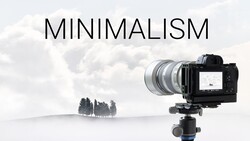
Coming to you from Carey West, this unfiltered field video follows West as he adapts on the fly after a massive storm shuts down his original Pikes Peak shoot. Rather than call it a day, he heads east of Colorado Springs into open plains, hauls out a Sigma 150-500mm and a handful of other lenses, and starts hunting for compositions in a landscape that offers almost nothing to shoot. That constraint, it turns out, is the whole point. West is drawn to minimalism precisely because it forces deliberate decisions. When there's a lone tree on a horizon, you either nail the composition or you don't. There's no busy background to hide behind.
One of the more practical moments in the video comes when West sets up a time lapse in the rain using nothing but a garbage bag with a corner cut off. He mounts his camera on a tripod, wraps it in the bag, and leaves it on the side of the road to capture the storm rolling in while he goes hunting for other shots. It's a low-tech solution to a real problem, and it works. He also spends time near a wind farm, shooting the turbines with the 150-500mm and reflecting on just how physically massive they are up close. If you've never stood underneath one while the blades are turning, West's description alone makes that section worth watching.
West also gets into aperture in a way that cuts through a lot of the noise around the topic. The usual argument is that you don't need f/1.2 or f/1.4 because most people shoot stopped down anyway. West's counter is that a fast lens stopped down to its sharpest point, often around f/2 or f/2.8, still outperforms a slower lens that doesn't hit its sharpest until f/5.6 or f/8. You're getting the best of both: sharpness and more light-gathering potential when you need it. It's the reason he keeps reaching for his Sigma. The video also touches on composition strategy in featureless landscapes, how the plains basically make compositional decisions for you, and why that limitation can actually produce some of the best work. West doesn't oversell any of it. He's candid that some of these shots might be boring to other people and openly wonders if the video itself will hold anyone's attention. That honesty, combined with some genuinely striking frames pulled from almost nothing, is what makes the whole thing work. Check out the video above for the full rundown from West.


No comments yet