A full frame 135mm lens at f/1.4 is rare, and for good reason—it’s challenging to build and even harder to perfect. But when done right, it delivers portraits with depth and character that other focal lengths can’t touch.
Coming to you from Christopher Frost, this detailed video covers the new Sigma 135mm f/1.4 DG Art lens. Sigma priced it at $1,899, putting it below Sony’s 135mm f/1.8 G Master while offering a brighter maximum aperture. Frost points out that this makes a visible difference in background separation, particularly for portraits where smooth bokeh is part of the appeal. It’s also the first autofocus 135mm f/1.4 on the market, something that sets it apart from earlier manual-only lenses.
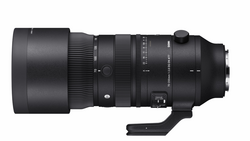
The build is substantial. At 3.15 lbs, you’ll notice it in your bag, but the mix of metal and high-grade plastics makes it feel solid. Frost notes that it comes with an Arca-Swiss compatible tripod collar and multiple external controls, including an aperture ring that can be set to click or turn smoothly for video work. Autofocus is both fast and quiet, keeping up even with moving subjects in continuous tracking mode on a Sony a7CR.
Key Specs
-
Focal Length: 135mm
-
Aperture: Maximum f/1.4, Minimum f/16
-
Lens Mount: Sony E, Leica L
-
Format Coverage: Full frame
-
Minimum Focus Distance: 43.3" / 110 cm
-
Magnification: 0.14x
-
Optical Design: 17 elements in 13 groups
-
Aperture Blades: 13, rounded
-
Focus Type: Autofocus
-
Image Stabilization: No
-
Tripod Mount: Removable, rotating collar
-
Filter Size: 105 mm
-
Dimensions: 4.4 x 5.3 in / 111.7 x 135.5 mm
-
Weight: 3.15 lbs / 1.43 kg
Image quality testing shows the lens can keep up with extremely demanding sensors. At f/1.4, center sharpness is already excellent, and stopping down slightly brings it close to flawless across the frame. On APS-C, it performs similarly well, delivering sharp and contrasty images corner to corner at f/2. Distortion and vignetting are present but manageable with corrections. Close-up performance is softer wide open but sharpens by f/2.8. Flare resistance is better than expected, with strong contrast even against bright light.
The real appeal here lies in how the lens renders out-of-focus areas. Frost describes the backgrounds as not just blurred but beautifully soft, giving subjects an almost three-dimensional pop. Chromatic aberration is visible wide open but improves quickly by f/2. Combined with fast autofocus, it makes the lens a strong option for weddings, portraits, and indoor sports where separation from the background matters. Check out the video above for the full rundown from Frost.




Join the Fstoppers community for free
-
Post comments and join in the discussions
-
Browse the site ad-free
-
Share your work and get featured in the community
-
Compete in the photo contests for fun and prizes
1 Comment
Why would I watch a VIDEO for a STILL camera lens, I want to see the images.