The Fujifilm X100VI has been one of the most talked-about compact cameras in years, partly because it took so long to get into people’s hands. If you’ve been holding out for one, the real question isn’t about hype, it’s about whether the changes actually affect how you shoot.
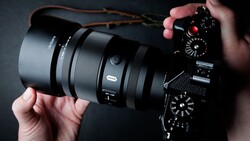
Coming to you from Dylan Goldby, this thoughtful video takes a hard look at the Fujifilm X100VI after an 18-month preorder wait. Goldby makes it clear this isn’t a specs-first camera. It’s not about beating other models on paper. The biggest additions are a new 40-megapixel sensor, a new processor, and, for the first time in the series, in-body image stabilization. IBIS is the headline change. Being able to handhold at 1/8 of a second, sometimes even 1/4 or 1/2 a second, shifts what’s possible with a fixed 23mm lens and leaf shutter. You can blur motion in the street or smooth water without a tripod and without thinking too hard about sharpness.
Then there’s that 40-megapixel sensor. Goldby is blunt about it. For a camera built around speed and simplicity, 40 megapixels can feel excessive. The files are larger than they need to be. Storage fills up faster. The lens itself hasn’t changed, so you’re not suddenly unlocking medium format levels of detail. If anything, it can slow you down when this camera is supposed to remove friction. The new processor brings updated subject detection modes, including birds and trains, but autofocus performance still feels limited by the lens. In real use, it doesn’t feel dramatically different from the previous generation.
What does stand out is how the X100VI shapes behavior. With a fixed 23mm lens and no real reason to swap anything, you stop thinking about options. You work with what’s in front of you. That constraint changes how you move. Goldby describes it as a kind of phone replacement, something small enough to carry everywhere, ready for everyday scenes, quick portraits, lunch on a table, light hitting a wall. Add IBIS to that formula and it becomes more flexible in low light without adding bulk.
He also points out a few frustrations. The Q menu still forces a custom settings tile that not everyone uses, slowing down what should be quick adjustments. The autofocus can hesitate in layered or backlit scenes. The EVF and LCD appear tuned to look punchy and polished, sometimes more flattering than the files appear on a calibrated monitor later. None of these are deal-breakers, but they shape expectations.
Accessories play a role in making the camera feel complete. Goldby skips the larger grip and instead uses a BlackRapid wrist strap to keep it ready at all times. He pairs the leaf shutter with a Godox X3 trigger and the compact Godox TT350 for flash work, taking advantage of high sync speeds. For protection and weather-sealing, he opts for a NiSi screw-on filter that keeps the original lens cap usable. He also discusses compact filter kits, including neutral density and graduated filters, especially useful when combined with the camera’s built-in four-stop ND filter.
Battery life is steady. Five hundred to six hundred frames on a charge is realistic if you’re not constantly reviewing images or transferring files. A small backup charger in a bag covers the rare long day.
The bigger question lingers: should you upgrade from the X100V? Goldby gives a mixed answer. IBIS genuinely adds new creative options. The higher resolution sensor, less so. If stabilization expands what you can do, the upgrade makes sense. If not, the previous model remains strong and avoids the larger file sizes and higher price. Check out the video above for the full rundown from Goldby.





Join the Fstoppers community for free
-
Post comments and join in the discussions
-
Browse the site ad-free
-
Share your work and get featured in the community
-
Compete in the photo contests for fun and prizes
No comments yet