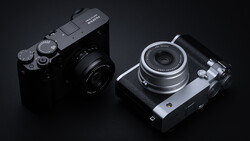
This camera is small enough to carry every day yet different enough to shift habits. Its design leans on simplicity and a film-like feel rather than digital precision.
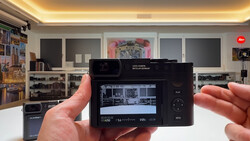
Coming to you from Jason Friend Photography, this candid video walks through the real-world quirks and charm of the Fujifilm X half digital camera. Friend keeps the setup lean and shows how the vertical native frame changes how scenes are approached and composed. The optical finder is more “aim and trust” than precision, which means the rear screen becomes the fallback for tighter framing. The film selection panel is another detail, mimicking the film-window on an old compact and prompting a “roll” choice instead of a preset.
JPEG-only output may sound restrictive until it’s treated as a finish-in-camera process. The results land straight away with Fuji’s color and black-and-white looks, eliminating the temptation to build an editing backlog. A built-in flash provides quick fill when needed, and the fixed 32mm equivalent lens covers day-to-day shooting without overthinking.
Key Specs
- Effective resolution: 17.74 megapixel
- Sensor: 13.3 x 8.8 mm (1"-type) CMOS
- Stabilization: None
- Lens: 10.8mm fixed (32mm equivalent)
- Aperture: f/2.8 to f/11
- ISO in Manual: 200 to 12,800
- Video: MOV/MP4, 2,160 x 1,440 23.98p, 1,080 x 1,440 23.98p, 10–50 Mb/s
- Card: Single SD/SDHC/SDXC (UHS-I), up to 2 TB
- Wireless: Wi-Fi 5, Bluetooth 5.2
- Display: 2.4" fixed touchscreen LCD, 920,000-dot
- Viewfinder: Optical, 90% coverage, approx. 0.38x
- Flash: Built in, no external shoe sync
- Power: NP-W126S, USB-C charging
- Dimensions: 4.2 x 2.5 x 1.8 in
- Weight: 6.7 oz body only, 8.5 oz with battery and card
The optical finder is simple, little more than a window without framelines. Parallax issues appear quickly with closer subjects, making the rear screen the safer bet when precision matters. It’s best used as a point-and-shoot, fast and unbothered by micro-adjustments.
The vertical sensor is unusual but practical. Everyday scenes, portraits, storefronts, and street details flow naturally into a tall frame. Those used to landscape orientation can still rotate, but the camera’s design pushes a different rhythm, which is part of its draw.
Film simulations and the tactile lever support the illusion of shooting film. The lever doubles as a quick way to check the last frame, avoiding menu presses. The diptych mode encourages in-camera storytelling, and the companion app moves finished files to a phone without delay.
This is not a feature-packed tool for precision shooters. It’s a compact that values immediacy and simplicity, with trade-offs that feel intentional. It prioritizes shooting over editing and makes everyday photography feel lighter. Check out the video above for the full rundown from Friend.

Join the Fstoppers community for free
-
Post comments and join in the discussions
-
Browse the site ad-free
-
Share your work and get featured in the community
-
Compete in the photo contests for fun and prizes
No comments yet