A 102-megapixel medium format sensor with a fixed 35mm lens is not a common combo, and it changes how you work from the first frame. If you care about resolution, cropping flexibility, and traveling lighter without giving up detail, this camera lands in a very specific sweet spot.
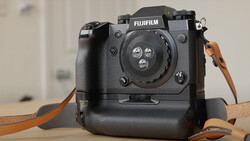
Coming to you from Jay P. Morgan of The Slanted Lens, this candid video looks at the Fujifilm GFX100RF medium format mirrorless camera as a real travel and landscape tool rather than a spec sheet trophy. Morgan leans into the 102-megapixel sensor and shows how far you can crop, whether you are framing vertical social content, panoramic landscapes, or tight slices out of a wide scene. You see how the fixed 35mm f/4 lens behaves when you treat the camera as a one-lens travel body that still lets you end up with huge, printable files. The video also walks through how that resolution lets you mimic something like a cropped a7R V frame while still landing at very high pixel counts, which changes how you think about “zooming.” You get a feel for how the camera behaves in the field, not just in a studio test.
The video also spends time on the creative tools built into the body rather than only talking about specs. Morgan uses Fujifilm’s film simulations to show different looks straight out of camera, from Provia to black and white options, while reminding you that your raw files stay clean. The dedicated crop and aspect ratio controls on the back are a big theme, since they let you compose in 4:3, 3:2, 16:9, 65:24, 17:6, and more, while still recording the full sensor area. That encourages you to think in final aspect ratios as you shoot instead of guessing and cropping later. You also see how powerful a vertical crop from this sensor can be when you are planning social posts or tall prints.
Key Specs
-
102-megapixel 43.8 x 32.9 mm medium format CMOS sensor
-
Fixed 35mm lens (28mm full frame equivalent) with f/4 to f/22 aperture range
-
Built-in 4-stop ND filter with front filter adapter options
-
Digital image stabilization in video mode, no stabilization for stills
-
DCI and UHD 4K up to 29.97 fps, 10-bit 4:2:2 internal H.264/H.265, Apple ProRes via external SSD
-
Continuous shooting up to 6 fps with buffers tailored for large raw files
-
Dual SD/SDHC/SDXC UHS-II card slots for high data rates and backup workflows
-
5.76-million-dot OLED EVF and tilting 3.2" 2.1-million-dot touchscreen LCD
-
NP-W235 battery rated around 820 shots, chargeable over USB-C
-
Weather-resistant body around 1.6 lb / 735 g with battery and card installed
Where the video gets more interesting is when Morgan talks about the fixed lens as both strength and limitation. You see how being locked at 35mm forces you to move for perspective, get low, climb higher, and work closer to your subjects if you want depth or separation. The video is honest about how hard it is to get that compressed, creamy background you might expect from a longer lens, especially if you are used to something like a Leica Q3 or a telephoto on a full frame system. You also see how the medium format sensor and f/4 aperture still give pleasant background falloff when you step in tight and pay attention to distance. That mix of constraint and flexibility will either fit the way you like to work or push you into new habits.
Morgan also walks through the handling in a practical way. The exposure compensation dial sits where your thumb naturally lands, which matters when you are riding between bright clouds and darker foregrounds and often underexposing by a third or a full stop. The tactile dials for shutter, ISO, and aperture make it straightforward to work in aperture priority or shutter priority without getting lost in menus. There is some criticism of the shallow grip and the placement of the rear D-pad, along with the note that the rear LCD only tilts and does not fully flip, so you see some of the ergonomic tradeoffs clearly. Battery behavior, card use, and the lag as the camera finds exposure when it first powers on are all things you watch play out instead of reading as bullet points.
If you are paying attention, there are also side notes that may matter to how you use a camera like this in the real world. Morgan talks about close focus and how getting within about 7.9" lets you capture details that still hold up when heavily cropped, which makes the camera more useful for near-macro work than it might look on paper. He touches on the frame rate options and buffer limits, making it clear this is not a sports body but is plenty quick for deliberate landscapes, portraits, and travel scenes. You also hear the comparison to cropping down to something similar to a Sony a7R V file, which puts the huge sensor into context. Check out the video above for the full rundown from Morgan.


Join the Fstoppers community for free
-
Post comments and join in the discussions
-
Browse the site ad-free
-
Share your work and get featured in the community
-
Compete in the photo contests for fun and prizes
No comments yet