Travel pushes you into long-reach situations you can’t plan but want to capture anyway. A compact super telephoto that stabilizes like a gimbal and fits under an airline seat changes what you can bring and what you get.
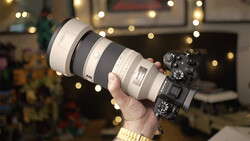
Coming to you from Mark Wiemels, this insightful video puts the new Panasonic Lumix S 100-500mm f/5-7.1 O.I.S. lens through a real trip, not a lab session. You see why a 5x zoom in a small body is practical when you’re packing two bodies and a couple of primes into a seat-friendly bag. The stabilization pairs with in-body systems to give steady 500mm handheld video and long exposures that would usually demand a tripod. The lens’ close-focus behavior at 500mm creates compressed, pseudo-macro shots that look different from typical macro glass.
The video also draws clean lines against familiar options. Compared to the Canon RF 100-500mm f/4.5-7.1 L IS USM, you trade a brighter wide end and a bit of brand cachet for smaller size and lower cost. Versus the Sony FE 200-600mm f/5.6-6.3 G OSS, you get a shorter, lighter lens that fits easier in a travel kit while giving up 600mm. If you’ve eyed the Sigma 60-600mm, weight and bulk are the tax you pay for that range, which is why the 100-500 slot makes sense for everyday carry. You also see how the Lumix 1.4x and 2x teleconverters extend reach without breaking the handling that makes the base lens useful.
Key Specs
-
Focal length: 100 to 500mm
-
Aperture: maximum f/5 to f/7.1; minimum f/29 to f/40
-
Lens mount: L-Mount
-
Format coverage: full frame
-
Minimum focus distance: 2.6' / 0.8 m (wide) to 4.9' / 1.5 m (tele)
-
Magnification: 1:2.8 reproduction ratio; 0.16 to 0.36x
-
Optical design: 19 elements in 12 groups
-
Aperture blades: 11, rounded
-
Image stabilization: Yes
-
Tripod mounting: Removable collar
-
Filter size: 82mm (front)
-
Dimensions: ø 3.6 x L 7.7" / ø 92 x L 196.1 mm
-
Weight: 2.8 lb / 1.3 kg
You get practical controls that matter when things start moving. A physical switch toggles stabilization modes so panning doesn’t fight you, and a tension ring lets you pick tighter or smoother zoom action with a subtle difference that prevents creep when you’re walking. The programmable lens button is handy as a crop-zoom trigger or focus hold depending on the body. A focus limiter keeps the AF from racking through the near range when you’re on birds or distant action. The removable collar carries an Arca-compatible foot and helps balance on a tripod when you need one.
Sharpness is consistent across the zoom, which is the tell when you’re scanning from 100 to 500mm and don’t want to avoid a soft focal length. Vignetting stays low and chromatic aberration is well controlled. You’ll spot mild longitudinal fringing in hard backlight on branches, but it doesn’t wreck files and cleans up fast. Flare control holds contrast even with point light sources, while bokeh stays round thanks to the 11-blade diaphragm, with the caveat that fine grasses can get busy at some distances. Pairing the lens with hybrid or crop zoom features on recent Lumix bodies can push effective focal length deep into super-tele territory without making your bag heavier. Check out the video above for the full rundown from Wiemels.


Join the Fstoppers community for free
-
Post comments and join in the discussions
-
Browse the site ad-free
-
Share your work and get featured in the community
-
Compete in the photo contests for fun and prizes
No comments yet