The Panasonic Lumix TZ300 lands in a market where its closest rivals are seven years old and increasingly hard to find. Whether that makes it a smart buy or a missed opportunity depends on which tradeoffs you're willing to live with.
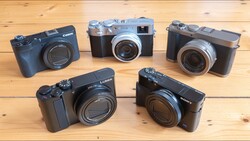
Coming to you from Gordon Laing, this detailed first-look video breaks down exactly where the Panasonic Lumix TZ300 earns its $900 price tag and where Panasonic clearly left things on the table. The biggest draw is the 15x optical zoom, which takes you from 24mm to 360mm, longer than anything else in this sensor class. The Sony RX100 VII tops out at 200mm, and the Canon G5X Mark II and Canon G7X Mark III reach only 120mm and 100mm respectively. Shoot in 4K and that effective range stretches even further, from 36mm to 540mm, with stabilization that Laing describes as genuinely impressive for handheld use. There's also a useful new feature that lets you temporarily zoom back out when you've lost your subject at full telephoto, showing your previous framing in a white box before snapping back to the zoomed view.
That said, the TZ300 carries some real limitations worth knowing before you buy. The aperture range of f/3.3 to f/6.4 is dimmer than the competition, so expect to push ISO higher in low light and don't count on much background blur unless you're zoomed in from a distance. The autofocus relies on Panasonic's DFD contrast-detect system rather than phase detect, and Laing found it struggled with fast-moving subjects like birds in flight. The Sony RX100 VII's autofocus is noticeably more confident in those situations. On the video side, 4K is capped at 15-minute clips, and the heavy crop means the wide angle end disappears entirely, making handheld vlogging at arm's length awkward. Laing is blunt about the fixed rear screen: he criticized it on the TZ200 eight years ago, and it's still fixed here.
The removal of the electronic viewfinder that was on the TZ200 is where Laing is most pointed in his criticism. For a camera with a 360mm telephoto, losing the viewfinder makes tracking subjects harder and hand-holding less stable. If a tilting screen and viewfinder are non-negotiable, the G5X Mark II and RX100 VII both deliver, but finding either one at a reasonable price is its own problem. The G5X Mark II is scarce new, and used prices can match or beat a new TZ300. A new RX100 VII can run double the TZ300's price. That availability gap is arguably the TZ300's strongest argument for existing at all. Used TZ200 bodies, which share the same zoom range and still have the viewfinder, are running around $500 on the secondhand market, which adds yet another wrinkle to the decision. Check out the video above for the full rundown from Laing, including sample photos from a pre-production unit and his complete breakdown of how the TZ300 stacks up against the competition.




Join the Fstoppers community for free
-
Post comments and join in the discussions
-
Browse the site ad-free
-
Share your work and get featured in the community
-
Compete in the photo contests for fun and prizes
No comments yet