The Sigma 17-40mm f/1.8 DC Art lens represents a significant step up from budget zoom options, but you might wonder if it's worth the extra cost over the popular 18-50mm f/2.8 Contemporary. This comparison takes a close look at both to help you decide.
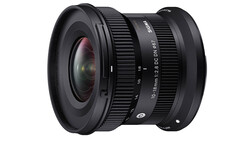
Coming to you from Arthur R, this detailed video puts the Sigma 17-40mm f/1.8 DC Art lens and 18-50mm f/2.8 DC DN Contemporary lens head to head in real-world shooting scenarios. The 17-40mm Art weighs nearly double the Contemporary at 535 grams versus 290 grams, but that extra weight brings premium build quality and an f/1.8 aperture. You get an aperture ring that can be clicked or declicked, custom buttons, and an autofocus switch that the minimalist 18-50mm lacks. Both lenses use different motor types: the Contemporary relies on a stepper motor while the Art uses a linear motor, but Arthur found no practical difference in autofocus performance. The real distinctions emerge when you start pixel-peeping image quality.
The sharpness advantage goes decisively to the 17-40mm Art, even when shooting wide open at f/1.8 compared to the 18-50mm at f/2.8. Arthur demonstrates this through portrait comparisons, where the Art lens delivers crisp center sharpness that rivals prime lenses. The bokeh quality tells an even starker story: the Contemporary lens shows problematic blue fringing and haloing around out-of-focus highlights, while the Art produces smooth, clean background blur. Color rendering differs between the lenses too, with the Contemporary leaning toward pinkish tones while the Art delivers warmer, more accurate colors. When both lenses are stopped down to f/2.8, the Art maintains its sharpness advantage across most of the frame.
However, the 18-50mm Contemporary claims victory in close-focus photography. Its minimum focus distance of 0.92 feet lets you get dramatically closer to subjects than the Art's 3.97 feet, essentially giving you macro-like capabilities for detail work. This makes the Contemporary particularly appealing if you frequently shoot small subjects or want one lens that can handle both landscapes and close-up work. The weight difference also becomes crucial for travel photography where every gram matters in your bag. Check out the video above for the full rundown.





Join the Fstoppers community for free
-
Post comments and join in the discussions
-
Browse the site ad-free
-
Share your work and get featured in the community
-
Compete in the photo contests for fun and prizes
No comments yet