There are lenses that photographers buy because they need them, and there are lenses photographers buy because they can't stop thinking about them.
The 200mm f/2 sits firmly in the latter category.
For years, the Nikon 200mm f/2 AF-S has occupied a near-mythical place in photography. It's one of those lenses spoken about in hushed tones by sports and news shooters, portrait photographers, and gear obsessives who spend too much time staring at old forum posts. It produces images that seem somehow detached from reality. Subjects don't merely separate from the background; they appear to have been cut out of the world entirely. A few years back, in a fit of self-indulgence, I bought myself this lens. It never became an everyday-carry bit of kit, but it came out as needed or if I ever felt the need to emasculate a fellow photographer. The first thing you notice about the Nikon is that it weighs approximately as much as a poor life decision: mounted on a modern body, the combination feels less like a tool and more like a crew-served weapon. Carrying it around a training field for several hours quickly becomes an exercise in commitment.
Then there's the Sigma.
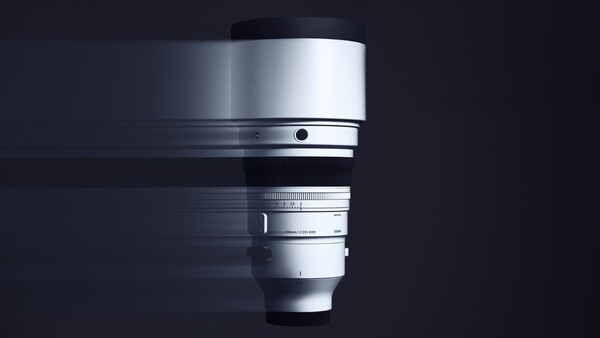
The Sigma 200mm F2 DG OS Sports isn't a lens that has yet enjoyed the same celebrity status, not because it doesn't deserve to but because it hasn't quite had the same amount of time to percolate as the Nikon version. At first glance, it has a lot going in its favor: far lighter than the lead-weighted beer keg that is the Nikon 200mm f/2 VR, faster and sharper with a much more modern optical formula and multicoating. It's a lens I loved using, though there were some elements I hope to see updated in the future. But we'll get into all that shortly.
For several weeks, I carried the Sigma into a world where subtlety goes to die: buhurt.

If you've never seen buhurt, imagine medieval armored combat stripped of whatever dignity history books and modern entertainment may have granted it. Men and women in steel armor crash into one another with axes, maces, and shields. It's violent, loud, exhausting, and visually spectacular. It's also a perfect place to test a lens designed to isolate chaos.

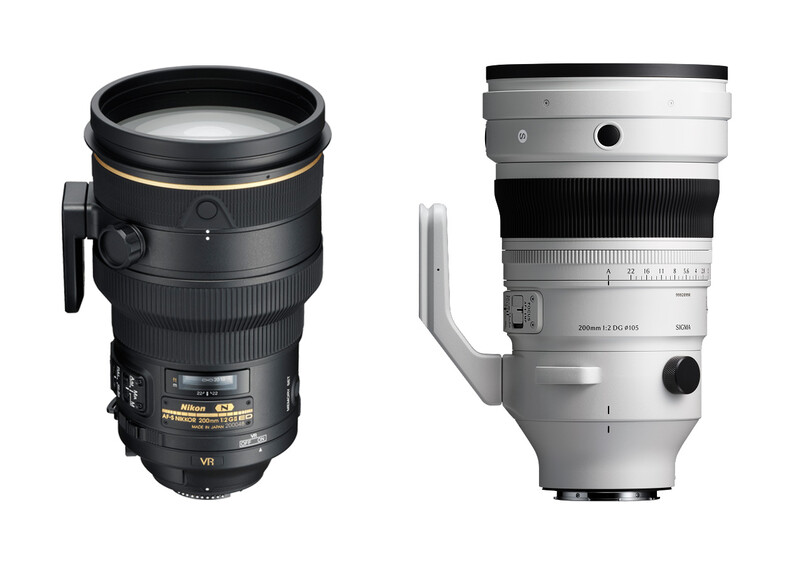
The Nikon isn't exactly svelte, but side by side the Sigma somehow manages to feel like a product of aerospace engineering. Where the Nikon could be used as a tool of self-defense, the Sigma felt relatively lightweight and easier to pack. At the end of the day my spine didn't feel abused, nor my shoulder rubbed raw from the weight of the strap. The finish, controls, and ergonomics are products of a different era of lens design.
At f/2, both lenses produce the sort of rendering that causes photographers to become irrational. Backgrounds dissolve into washes of color. Distracting elements simply cease to exist. Fighters separated from the crowd by mere feet suddenly appear isolated against a sea of steel and motion.
The Sigma, however, lands punches far above its weight class. It's difficult not to lean harder into favoring the Nikon. I invested a significant amount of money and time into procuring it, and it has a well-earned reputation as one of the finest lenses ever produced. It renders backgrounds into watercolor washes. It isolates subjects with almost supernatural precision.

But the Sigma 200mm f/2 is a product that builds on two decades of optical and engineering improvements. Picking it up, I expected this lens to be good. I did not expect it to be better. That realization didn't happen in a laboratory. It happened standing in a room watching armored fighters beat each other senseless with steel weapons.
Buhurt is not a forgiving environment for camera equipment. Fighters crash together in showers of dust and sweat. Helmets reflect sunlight in every direction. The action is fast, chaotic, and deeply unconcerned with the limitations of autofocus systems. If a lens has weaknesses, this is where they come to die.
What struck me first wasn't just the image quality; it was the weight. Despite being a modern lens packed with stabilization and fresh autofocus technology, the Sigma is noticeably easier to live with than the Nikon. Not light, exactly. Nobody has ever described a 200mm f/2 as light. But after several hours documenting training sessions, moving between portraits and action, the Sigma felt like equipment designed by people who understood that photographers occasionally have to carry their gear somewhere.

Of course, legends are eventually forced to answer uncomfortable questions. The biggest one is simple: what happens when modern optical engineering takes a run at a 20-year-old masterpiece? The Sigma 200mm f/2 DG Sports arrives with every advantage that two decades of lens development can provide. Designed for modern mirrorless systems in both Sony E-mount and L-Mount, the lens is built around a sophisticated optical formula of 19 elements in 14 groups, including two FLD and two SLD elements dedicated to controlling chromatic aberration and maximizing contrast. It features an 11-bladed diaphragm, a minimum focusing distance of 1.7 meters, a 105mm filter thread, and weather-sealed construction designed for professional use. Despite all of this, the Sigma weighs just 1,800 grams in Sony E-mount and 1,820 grams in L-Mount: roughly two and a half pounds lighter than Nikon's legendary F-mount 200mm f/2 AF-S. That difference may not sound dramatic on paper, but after a day spent moving around a training field photographing armored fighters, it becomes impossible to ignore.
More importantly, the Sigma delivers where it counts: the image itself. Wide open at f/2, sharpness is extraordinary, with excellent contrast and resolution extending well beyond the center of the frame. The Nikon remains a remarkable lens, but direct comparisons reveal its age. The Sigma exhibits less vignetting, superior edge-to-edge performance, and better control of chromatic aberration, particularly in high-contrast situations where polished armor, bright skies, and reflective surfaces can expose optical weaknesses. Fine details, from rivets and chainmail links to scars, sweat, and weathered skin, are rendered with remarkable clarity. Yet unlike some modern lenses that prioritize resolution at the expense of character, the Sigma retains the signature qualities that make a 200mm f/2 special. Backgrounds dissolve into smooth, unobtrusive washes of color, subjects seem to separate effortlessly from their surroundings, and portraits retain a three-dimensional quality that made the Nikon famous in the first place. The difference is that Sigma has managed to preserve that magic while delivering a lens that is sharper, lighter, and technologically more advanced in nearly every measurable way.

If there's one thing missing from this story, it's the lens that never existed. As impressive as the Sigma is, I can't help but wish Nikon had given the 200mm f/2 the same treatment it afforded lenses like the 135mm Plena and 400mm f/2.8. A native Z-mount 200mm f/2 feels like an obvious candidate for revival: a modern optical design, reduced weight, improved coatings, and autofocus optimized for mirrorless bodies. The reality, however, is that such a lens would likely be a difficult business case. The market for a 200mm f/2 has always been small, even among professionals, and Nikon already offers exceptional alternatives in the form of the Z 70-200mm f/2.8 and its super-telephoto primes. Building a lens of this complexity and size for a niche audience would almost certainly result in a price tag that would make the original look affordable by comparison. Rumors exist that such a lens may be in the making, but as of this year nothing substantial has yet come to the surface.
Given Nikon's reluctance to allow third-party companies to produce Z-mount lenses, the only way to mate this lens to my Z9 was with an E-mount to Z body adapter. They're not particularly expensive, and I noticed no loss in control, image stabilization, or autofocus, but it is a factor to consider.

And yet, despite the Sigma's advantages, the Nikon still occupies a permanent place in my kit. The reason has very little to do with optical performance and everything to do with the cameras I use. While much of my professional work is now shot on mirrorless bodies like the Z9, I still spend a considerable amount of time shooting film and Nikon DSLRs. The Nikon 200mm f/2 AF-S remains one of the few ways to experience this unique focal length and aperture combination across nearly the entire Nikon ecosystem, from modern digital bodies to decades-old film cameras. Mounted on a Nikon F6, an F100, or even an older autofocus film body, the lens continues to produce the same distinctive look that made it famous. The Sigma may be the objectively better tool, but photography has never been entirely about objectivity. Sometimes the right lens is the one that lets you move seamlessly between the newest camera in your bag and one that was built before social media existed.
The Nikon feels like a masterpiece. The Sigma feels like a masterpiece designed twenty years later. That distinction matters.





Join the Fstoppers community for free
-
Post comments and join in the discussions
-
Browse the site ad-free
-
Share your work and get featured in the community
-
Compete in the photo contests for fun and prizes
5 Comments
But for the weight the Fujifilm 200 mm F2 is a superb lens. The image quality is outstanding. And it comes with TC.
I haven't had a chance to try that one yet, so onto the list it goes!
I am sure you will be impressed, It is relatively heavy.
There is also another 2 famous lenses. The Canon 200 f1.8 and the 200 f2.0. They are in a class of their own. Totally amazing