A 20–200mm travel zoom changes how you work in tight rooms and sprawling streets. With this lens, you get framing options a 28–200mm simply can’t reach indoors, plus half-macro close-up tricks without switching lenses.
Coming to you from Dustin Abbott, this balanced video looks at the new Sigma 20-200mm f/3.5-6.3 DG Contemporary lens and shows where it wins and where it compromises. You see how the aperture ramps quickly: f/3.5 at 20mm, f/4 by about 22mm, and f/6.3 already near 83mm. You also see why the 20mm wide end matters more than spec sheets suggest, especially in interior spaces where 28mm feels cramped. Abbott points out that there’s no optical stabilization, so you rely on in-body stabilization, which can be shaky at telephoto on some bodies. The takeaways focus on what you can reliably expect in the field rather than test-chart fantasies.
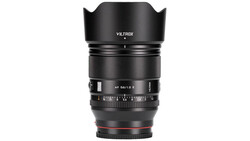
This informative video also compares it to the longtime favorite Tamron 28-200mm f/2.8-5.6 Di III RXD, which stays brighter deeper into the range and can feel steadier at the long end when shutter speeds dip. Abbott notes Tamron’s incoming 25–200mm G2, the Tamron 25-200mm f/2.8-5.6 G2, which muddies the waters, but the Sigma’s 20mm start is the differentiator. You also see that Sigma keeps the lens compact at 115.5 mm retracted and 550 g, with weather-sealing and a simple control layout with AF/MF and a zoom lock. The zoom ring can feel stiff near the wide end, and zoom/focus directions run opposite of Tamron, so muscle memory might complain.
Key Specs
-
Focal length: 20 to 200mm
-
Aperture: maximum f/3.5 to 6.3, minimum f/22 to 40
-
Mounts: Sony E, Leica L
-
Format coverage: full frame
-
Minimum focus distance: 9.8 in (wide) to 25.6 in (tele)
-
Magnification: 1:2 macro reproduction ratio, 0.5x magnification
-
Optical design: 18 elements in 14 groups
-
Aperture blades: 9, rounded
-
Focus: autofocus
-
Image stabilization: no
-
Filter size: 72 mm
-
Dimensions: 3 × 4.5 in / 77.2 × 115.5 mm
-
Weight: 1.2 lb / 550 g
You get real autofocus speed from Sigma’s HLA drive, and it doesn’t bog down at 200mm. Video AF is quiet and confident with minimal focus breathing, but the lens isn’t parfocal, so zoom pulls need care. At close distances, AF can hesitate when you zoom in tight, which matters if you record walk-up details or product b-roll. Focus override is always available, which helps you clean up sticky moments fast.
Optically, you trade magic for flexibility. At 20mm, uncorrected barrel distortion and vignette are heavy, and even with profiles, some bowing and dark corners can linger. Center and mid-frame look good, while extreme corners stay soft even around f/8. From roughly 35–75mm, overall sharpness feels more even, and at 200mm contrast picks back up, though stopping down yields limited gains. Background blur varies: close-up at 85mm with 1:2 magnification looks great, but specular highlights show outlining when the background isn’t fully melted. Flare resistance is better than the shallow hood suggests, and color holds up nicely in backlit scenes.
The rice lands at $999, which is higher than older all-in-ones yet aligned with a world-first 10x range starting at 20mm. If the a7R V’s 61 MP files are your daily diet, expect to mind the corners at the wide end. If you travel light and prioritize not swapping glass in dusty markets or rainy alleys, the compact size, weather-sealing, and half-life-size macro swing the calculus in favor of convenience over pixel-peeping. The lack of stabilization means watching shutter speed, especially past 100mm, and leaning on IBIS settings or Auto ISO caps to keep motion blur at bay. Check out the video above for the full rundown from Abbott.



Join the Fstoppers community for free
-
Post comments and join in the discussions
-
Browse the site ad-free
-
Share your work and get featured in the community
-
Compete in the photo contests for fun and prizes
1 Comment
.
Alex,
I appreciate how in-depth you go in this writeup. Much more detail than the typical YouTube video summary. Thanks!
What you say about the vignette and corner softness at the wide end is quite concerning.
I have no tolerance for dark edges and corners, so I would shoot wider than I want to, so that I could crop into the image to get rid of those dark edges. So that kinda makes 20mm thru 24mm useless, if I have to crop 15 or 20 percent of the image away when shooting at those focal lengths. So a zoom starting at 24mm or 28mm would be just as useful for wide work, if said zoom has little to no vignetting and sharp corners.
Overall I love Sigma's idea of having a 20-200mm zoom. But although their idea is great, it seems that the implementation of the idea comes with way too many compromises. As if it is geared for the everyday hobbyist or travel photographer and not designed for demanding professionals.
Hopefully Sigma will improve in this concept, and come out with a better version of it in the future. A 20-200mm zoom would be quite useful if:
1: it had stabilization
2: it had an aperture of f4 or f4.5 at the long end
3: it maintained the 0.5x magnification that this lens has
4: it had little to zero vignette, with corners as bright and sharp as the center
5: it is totally okay if it weighs 60% more and costs 60% more than this version; light weight and small size really isn't important and doesn't increase this lens' usefulness
.