The Sony RX1R Mark III launched to a lot of ridicule. At $5,100 with no IBIS, no tilt screen, and a battery that's been around since 2013, the internet had a field day, and honestly, the criticism wasn't wrong on the specs alone.
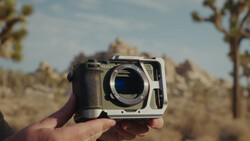
Coming to you from Kyle Meshna, this candid and detail-rich video makes a surprisingly convincing case for why the Sony RX1R Mark III might be the most underrated camera of 2025. Meshna spent eight months shooting with it across Tokyo, Patagonia, the Tetons, and the ski slopes of Nikko before putting his verdict on camera. The core argument is simple: 61 megapixels of full frame resolution in a body that weighs under 500 g, and nothing else on earth does that. That's not a marketing claim; it's just a fact with no current competitor to contradict it.
Meshna runs through what makes the camera genuinely excellent before getting into where it frustrates him. The Sony AI autofocus, the same system in Sony's top-tier bodies, is packed into this tiny fixed-lens camera and performs accordingly. He one-handed it through Tokyo street markets and used it while skiing without a bag. He handed it to his wife on a multi-day trek in Patagonia with nothing more than a quick explanation of the aperture dial, and the autofocus did the rest. He even put it through what he calls the "drift test," tracking a drifting Porsche, and it held up. The Zeiss 35mm f/2 lens draws some criticism online for corner softness and chromatic aberration wide open, but Meshna pushes back on that hard, arguing the rendering has a character that clinically sharp modern lenses simply don't produce.
Where it gets interesting is in the tradeoffs. The lack of IBIS is Meshna's biggest real-world complaint, especially shooting handheld in low light at 61 megapixels, where any camera shake gets magnified. The mechanical shutter tops out at 1/2,000th of a second at max aperture, and switching between mechanical and electronic shutter requires going into the settings menu every single time, with no hybrid option. The EVF is a 2.36 million dot panel that feels out of place at this price point. Weather sealing is absent entirely, which stings when you compare it directly to the Leica Q3. The tilt screen that existed on the Mark II is gone without explanation. None of these are minor quibbles at $5,100. Meshna is also clear that this camera doesn't make sense as a first or second body for most people, and that alternatives like the Sony a7CR offer far more flexibility for less money.
What he doesn't fully resolve on paper, but works through with real footage and field results across multiple trips, is whether the image quality-to-size ratio is genuinely worth all of that. Check out the video above for the full breakdown from Meshna.



1 Comment
Even if the Sony was ten times better, I would still rather have a Leica.