
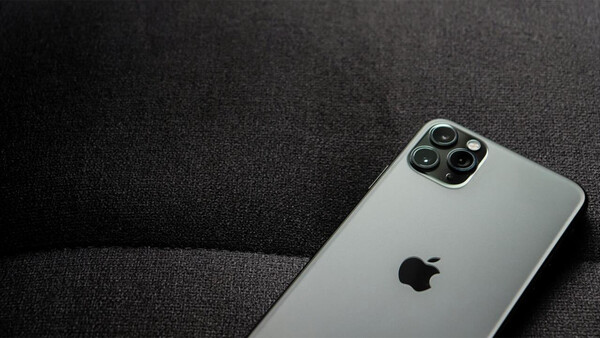
Nearly everyone has a smartphone in today's world. They have come so far, and the technology inside them is extremely impressive. When you think back 20 years ago, they had a small screen and could only be used to make calls. Now, you can use them for pretty much everything: to call people, to listen to music, use them as GPS to get around, and in a lot of cases as a camera.
The cameras in the latest phones, such as the iPhone 16 Pro Max, are more advanced than ever. With multiple lenses, powerful sensors, and intelligent image processing, they can produce results that rival traditional cameras in many everyday scenarios. While they may not fully replace professional-grade equipment, for most users, the difference is becoming harder to notice.
Below, we look more into smartphones and whether they can replace your camera in 2026.
Smartphones Are Convenient
A good place to start is convenience. When it comes to photography, professional photographers are used to carrying around larger DSLR or mirrorless cameras to capture high-quality images, but the majority of people simply aren't. For everyday life, carrying a bulky camera, extra lenses, and accessories just isn't practical. Your smartphone, on the other hand, is always with you. Whether you're heading out for dinner, exploring a new city, or capturing a quick moment with friends, it's there and ready in seconds, no setup required. And when you do take photos, they are really good quality, ideal for sharing on social media or getting printed.
App-Based Editing
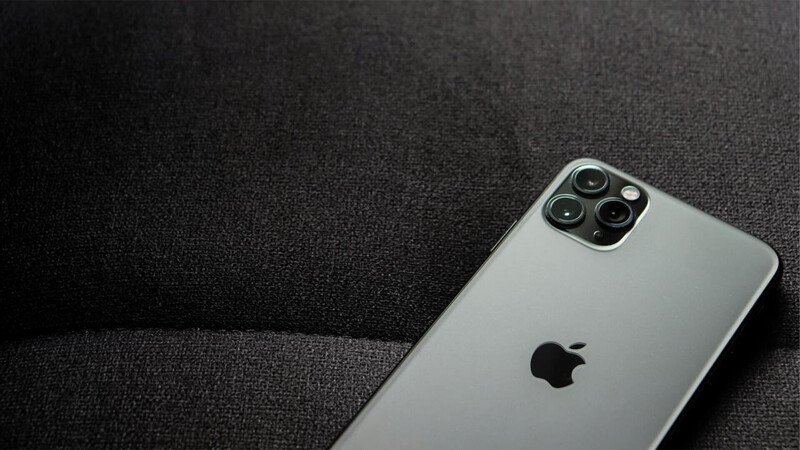
We mentioned above how you can use your phone for a lot of things. One thing we didn't touch on is the apps you can use, some of which are perfect for photo editing. Now you can get out your iPhone 17 (if you are looking to buy one, Back Market is a leading global marketplace for verified refurbished electronics), take an impressive photo due to the quality lenses, and then make the photo even better with the myriad of photo editing apps available. While professional photographers may still prefer desktop editing for full control, for most people, app-based editing offers more than enough power to elevate their images.
Image Quality
One area that is interesting is the image quality. Smartphones have made huge strides, but they haven't completely closed the gap to professional-grade cameras (but for a lot of people, this doesn't matter). On the surface, photos taken on modern devices look incredibly sharp, vibrant, and ready to share. For social media, websites, and everyday use, the difference between a smartphone and a dedicated camera is often minimal. However, when you look a little closer, the differences start to show. Dedicated cameras still benefit from larger sensors and higher-quality lenses, which allow them to capture more detail and handle a wider range of lighting conditions. This becomes particularly noticeable in low light, where cameras retain more clarity and less noise, while smartphones rely heavily on software to brighten and smooth the image.
Overall, smartphones are incredibly impressive, and for many people, they've already become the go-to choice for everyday photography. But they're not a complete replacement for dedicated cameras, at least not yet.
What are your thoughts on smartphones being used as a camera? Do you think people will switch to using phone-only cameras instead of bringing a digital camera with them? Let us know in the comments below. We look forward to hearing from you.




13 Comments
Simply answer: NO.
Smartphones are used to take 92-94%of all photos worldwide. Totally replace, probably not. But for the most part yes they do.
They're the Instamatics of this generation. But the question was will they replace *your* camera?
I’d say no. But day to day it’s what’s in my pocket and a camera isn’t.
the Leica Lux app takes beautiful pictures on my 17 pro max. You can still see some of the weird processing going on when simulating bokeh and such.
I like the results to the point I splurged and bought the Leica grip. Stupid expensive for what it is but it does transform the experience to something more traditional.
It won’t replace any of my gear. But since it’s always in my pocket I’ll make the best of it. And it’s better than nothing!!!
When was this written? It was posted 6 hours ago, but...
"The cameras in the latest phones, such as the iPhone 16 Pro Max"
...the 16 Pro Max is last year's phone.
Either this article was pulled out of a freezer and defrosted, or the writer's a tad behind the times.
An iPhone 17 Pro Max has finally replaced my Panasonic LX10 for EDC. It's got a long way to go to replace my Sony a1 for event work, but I could see using it for grip & grin party/reception/dance floor shots with a grip on it and an LED video light in my left hand.
You can't be serious....
For me it's not about the image quality that phones can produce because they can produce amazing image quality for a variety of photography. It's about the tactile experience. It's interesting over the last couple of years.... we have seen attachments added to phones to make them more like cameras and then we've seen cameras that operate almost like phones for me. The reason I don't use a phone at all for taking any photos as I don't want to be looking at icons on the screen. I don't want to be reminded me of my bills in my emails and my text messages and I'm yet to see anyone. Put their phone into Aeroplane Mode when they're out taking photos not one person does it...... so essentially for me when I watch people take phone photos. They are immediately distracted a second later by some other pop-up and for me that ruins the experience of immersion in photography.
I'm more accustomed to using my smartphone as a supplement for wide-angle shooting.
Smartphones have improved amazingly, I have a Pixel 10 Pro and it's great as a "always have with you" camera but for me personally, I still want to use a "proper" camera because I enjoy the ergonomics of using a DSLR or a mirrorless camera. But the Pixel 10 Pro is the first phone camera where I would be quite happy taking photos and not think, oh I wish I had my "real" camera with me.
Obviously a smartphone can take a fine picture. And most people viewing a picture probably could not tell what type of camera it was made with. Smartphones appear to be getting better at computational photography, giving the human more tools at his disposal for shortcutting traditional editing software.
But how well can a smartphone make decisions? Can it tell whether moving water in a stream should be sharp or blurry? Does it offer control over shutter speed which would enable the operator to capture the motion that he wants? How about depth of field? With their small sensors, virtually everything in a smartphone can be in focus, but what if I want shallow depth of field? What if I want to compress the foreground and background with a much longer focal length lens? Or shoot wide angle the next minute? Can a smartphone give you the control over aperture, shutter, and focal length? If not, it's merely taking a picture; it's not making a picture. For a photographer, it's a big difference.
"But how well can a smartphone make decisions? Can it tell whether moving water in a stream should be sharp or blurry?"
My Sony a1 can't. That's a decision I make.
One can easily control focal length, and with third-party apps, one can certainly control shutter and ISO. Selective focus can be achieved with "portrait mode", and phones/apps that save depth maps can modify this after capture.