
Most of the conversations about AI in photography seem to stem from anxiety. The focus is on commercial jobs being replaced, fake images flooding our feeds, or a sense that what makes the craft feel real is eroding. It is a repetitive drumbeat and makes some sense. When a new technology moves this fast, the default reaction is to brace for impact and defend the boundary lines of our art. But if you look past the noise, there is a very different side to this tool that rarely gets talked about.
When we look at the personal, noncommercial side, rather than viewing AI purely from a professional photography perspective, a different picture emerges. Instead of looking at AI as an automated generator trying to replace you or photography as a whole, we can start treating it as a responsive, conversational tool in support of our art. I don’t mean that we should allow AI, or any algorithm, to define good art. But we can use these new technologies to help reduce some friction in the creative process, helping each of us see our own work with more clarity.
The Obvious Utility
Before getting into the more conceptual side, it’s worth acknowledging where AI already sits in many modern workflows. These are the mechanical tasks, the utility tools that handle the heavy lifting without shifting the soul of an image.
Object removal, especially when leveraging generative fill, has quickly become a standard practice for many photographers. Cleaning sensor dust, removing a rogue piece of trash from the edge of the frame, or eliminating a distracting light pole can strengthen an image. And, of course, in some cases, people use it to swap out larger elements like an underwhelming sky. We all have our own boundaries as to how far we’ll take this and still accept it as photography, but AI is an indisputable part of post-processing now.
Upscaling empowers us to do more with less. Taking a low-resolution crop or an image shot on an older camera body and running it through a modern resize engine provides flexibility when printing. If printing big is your thing, sensor megapixel count and initial file size are no longer limitations.
Generative expand operates in a similar utility space. If you need to fit a specific print ratio or you accidentally framed your composition a little too tightly in the field, extending the canvas ever so slightly can help save a photo whose other elements you like. Used this way, expanding is helpful for small corrections to an otherwise solid photo. Similar to object removal, this can be taken much further; we each have to decide for ourselves where that boundary lies.
Moving Toward Artistic Assistants
Fixing pixels is convenient, but I believe a larger shift happens when you move from a technical focus to conceptual collaboration. And in that space, treating AI as a thought partner rather than a decision-maker changes how you might leverage these new tools.
When you work alone, it’s easy to get trapped in your own head. You develop blind spots around your own photos because you have a more emotional attachment to your work. You might remember what it felt like to stand in the cold, to get up early, or to hike for hours to craft the composition you wanted. An AI doesn’t carry that emotional valence. It assesses the structure of what you feed it, providing an outside perspective that challenges your assumptions and can push your work forward.
Finding Your Voice
Discovering your photographic voice doesn’t happen overnight. It can also be very hard to see it emerging in your work across potentially years of images. But this is where your voice lives. It’s in the quiet patterns running through your catalog, often in ways you aren’t actively noticing in individual photos.
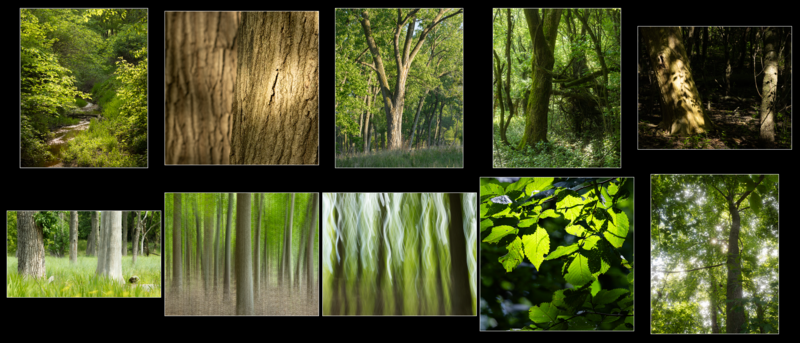
This is where conversational AI can act as a sounding board. After selecting some of your favorite images, you can pass a screenshot to your preferred AI model. You can then have a conversation about recurring themes, lighting choices, and subject relationships across your work. The real value comes from the back-and-forth with the tool. When it points out a visual thread, you can push back, refine the context, or ask why it picked up on a specific theme. That discussion forces you to reflect on why you make certain frames, helping you articulate the vision you’ve been building intuitively all along.
Custom Personas and Style Partners
If you’ve already put in the work of identifying your voice, whether using AI or not, you don’t want generic photographic perspectives when using the tool. So, instead of starting a fresh prompt every time, you can build dedicated assistants configured with your specific context. By loading your artist statement, your core creative philosophy, or an outline of your photographic voice, you can have an AI that is ready to support you specifically.
Having this persistent partner opens up a space for tailored feedback. Generic AI responses tend to offer polite, hollow praise. A customized persona, explicitly instructed to act as a rigorous critique partner who is well-versed in your voice, will call out weak compositions or point out when a new batch of photos strays too far from your typical expressions.
Let’s be honest: We all sometimes get caught up in a trend or a new technique we’ve just seen. They can be fun and exciting. They might also be inauthentic to who we are individually as photographers. A dedicated AI assistant is there to see whether these are natural extensions of your voice or perhaps to help you see that you’ve strayed from your identity.
Photographic Research and Inspiration
Understanding your influences is a key element of understanding your own photography. Tools like Gemini Notebook make it possible to gather information about your favorite photographers, building a private library that you can then explore.
You can query these sources to find commonalities or analyze how specific movements approach the art form. You can even upload one of your own photos and request a critique through the lens of a specific master’s philosophy. Leveraging this visual framework as a lens through which to evaluate your own work, choices, or approaches is a way to open yourself up to avenues you might not have otherwise considered.
Applying Your Voice Across Contexts
Photographers are widely encouraged to build a portfolio site or another means of presenting their work. I believe it’s vital that these vehicles reflect your identity. That means selecting color schemes, typography, layouts, and other elements that align with who you are.
But translating a visual photography style into design elements can feel overwhelming if design isn’t your primary background. Working through logo concepts, font pairings, or layout themes with an AI partner allows you to explore options quickly. You retain final aesthetic judgment, but the tool handles the initial exploration, helping ensure your brand matches the tone of the photos inside it.
Distilling a Specific Project Collection
Crafting a specific series brings a different kind of challenge. It’s easy to get too close to the work and lose a more objective perspective. When you’ve put in the effort to make a photo, that emotional weight can unintentionally influence your assessment of whether that particular image belongs in a set.
Using AI as a partner during project curation gives you an outside perspective. Don’t let it make the final cuts for you; rather, use it to test how the sequence holds together. Maybe you wonder whether a particular frame disrupts the mood of a series or where there might be thematic gaps you should address. You might even ask what theme AI identifies in the images you present and use that as a jumping-off point for creating more work.
Again, AI isn’t the artist here. You are. You shouldn’t blindly accept what it tells you to keep or cut. Push back and defend your photos. This alone helps you gain greater strength of focus by explaining what matters. It can all be supported by allowing AI to challenge your assumptions.
Crafting Artist Statements and Other Narratives
Writing about your own photos is notoriously difficult. The gap between what you felt while taking a picture and the words on the page can feel massive. Or maybe you’re like me and weren’t even sure how to get started writing an artist statement.
Using AI as a conversational partner helps bridge that gap. By talking through the emotional core or the backstory of a project, the AI can help extract thematic threads and draft clear, structured prose. It gives you a starting point that you can refine into an authentic statement that actually sounds like you, rather than a piece of dense gallery jargon.
Sequencing and Layout
Structuring a zine or a photo book introduces a whole new set of rules. Page breaks, spreads, and sequence pacing require a different kind of spatial thinking than composing strong, expressive images.
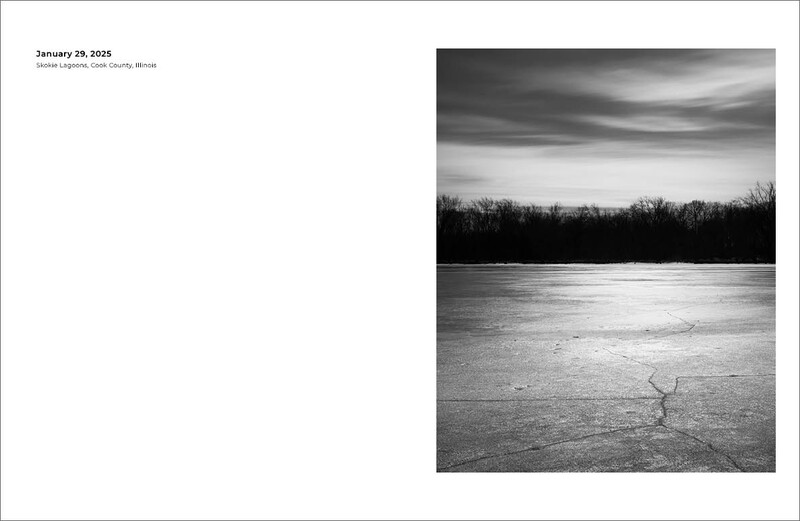
An AI partner with an understanding of editorial layout options can offer valuable rationale and considerations for how images interact with each other throughout the final product. When it suggests a sequence, your job is to interrogate that suggestion. Because AI tends to default to safe, standard design conventions, pushing back against its logic forces you to clarify your own narrative intent. You learn exactly why you want a specific order or one photo on the left page instead of the right. AI won’t instantly turn you into a book designer, but it can help you explore options and produce something you’re extremely happy with. I leveraged AI like this for my zine Midday Wednesday.
Final Thoughts
An AI model cannot give you a voice if you don’t already have something to say. It won’t step outside and make a meaningful composition for you. The ultimate value isn’t in letting a digital tool make art on your behalf, but in using the dialogue to examine your own photography with greater clarity.
This kind of interaction doesn’t replace the deep value of real human connection. It won’t replace sitting down with a mentor, trading thoughts with peers, or enjoying time spent with other photographers. If AI becomes your only sounding board and the only way you explore photography, you risk being crushed into the middling average of the model’s training data. But for those moments when you’re compelled to work something out and your friends or mentors aren’t available, at least AI can provide a collaborator to help you test some ideas and potentially see a way forward.



Join the Fstoppers community for free
-
Post comments and join in the discussions
-
Browse the site ad-free
-
Share your work and get featured in the community
-
Compete in the photo contests for fun and prizes
40 Comments
Some of these things might be done with an actual person if one is available.
And when one is not available?
Well, I guess you need instant feedback anytime of the day within a second...it's clear AI is your only option 😬👍
Maybe other people don't want to spend two hours of their time talking with me about whatever it is I have on my mind, regardless of the time of day. You must be very lucky if you have people who will patiently listen and interact with you on whatever topic interests you the most at any given time until such time as you decide you have discussed it sufficiently.
Personally I haven't yet met someone who wants to discuss my photography with me for several hours. But an LLM never gets impatient or bored or sick of it.
But yes by all means keep making assumptions.
Discuss your photography for hours (!)...no thanks. I'm so happy not being a AI 😬👍
Don't give up looking for that special person. I'm sure you'll find more than one who would like to have someone to talk with as much as you would. When you do, a conversation of a couple hours seems to go by in, like, a few minutes.
I think if I'm being used as a foil for anything, it's for them to express their fear.
Empathy is what it is, and not everyone is going to have it, but I do wish that people applied rationality in thinking about this. Adam had some very well-considered, well-articulated points, which deserve a lot better than.... the fact-avoidant response they're getting here.
This reads like a very nice comment, and I bet it's meant like that. But please consider what Dawn wrote. He described AI as "an extra-fancy database tool", "LLMs are a tool, like any other", "AI is neither terrifying nor incredible. It is an ordinary technology".
These comments make me concerned, whether you believe in my good intentions or not. If you agree, you could address this concern with Dawn as well.
And to Dawn: no, AI is not ordinary at all! People have killed themselves after talking to AI. AI can he incredible but also really, really terrifying. I am not against AI, but AI is unregulated at the moment. It's a wild west. And that is a bad thing.
I've told my wife, for years, that photo/camera websites have some of the most rude people in their comment sections. I don't know why, but these comment sections tend to bring out the worst in people.
I understand people apparently commenting my rudeness. But you also upvoted my comments on Dawn speaking too casually about AI...he will not listen to me. Especially after Edward Wayne talking to him about 'being used as a foil'.
You could write down your opinion for Dwan, maybe he'll take a warning from you?
Hey, Pop — I wasn't referring to you. You get thumbs-up from me!
Well, I guess I thought I was a bit rude myself. But thanks 😁
You weren't. All is good!
She, for starters. Dawn is a feminine name.
And no, I'm not planning to suddenly do an about-face on my opinion just because you happen to disagree with it, you're quite correct about that.
People have killed themselves after talking to AI. People have also killed themselves after talking to *people*. The solution is not to say "all people are terrifying" and refuse to consider any other position.
But hey, don't take my word for it. When I say "AI is an ordinary technology" I'm quoting Cory Doctorow. https://pluralistic.net/2026/07/24/supplemental-income/
"She, for starters. Dawn is a feminine name." I'm sorry. I am foreign, I did not know. I should have remembered the amazing Dawn French.
You somehow read 'all people are terrifying' into my words. I do not understand.
You also responded on an earlier comment with "Literally none of that is what the author said.". I replied "None of that? What are you talking about??" You never explained.
It's hard for me to understand how you work. I could try to discuss the article you send, but I do not think you want to discus anything.
This must be written by AI., written to be super annoying, and now I am foolish enough to comment? Why do all these sites like this one want to shove AI through my throat? Replacing a sky has nothing to do with photography. And like Jack writes: talk to other people, ask them for feedback, communicate IRL.
"We all have our own boundaries" you write: where is yours? If 90% of the 'photo' is generated by AI? Because I can't imagine you would call a 100% generated image a photo?
Literally none of that is what the author said. He even ends the article by saying it can't replace talking to real people and that it can't make a meaningful composition for you.
None of that? What are you talking about??
Hey, Adam, great article... AI has opened up amazing possibilities. Forgetting for a moment, the application of AI image generation. My customers still largely prefer the human ingredient in making art. What's become fascinating for me is how AI can assist with so many business operational tasks. Some tasks are minimal, while others such as finding prospective customers on a large scale, and developing the language which connects with them, are real problems for my business. You can bet your last dollar that the sales and marketing folks at larger companies are learning how to apply AI in their everyday workflow.
I'm open, as you appear to be too, to any tool which enables me to do my job better. And persuasive writing skills are one of the hardest of those tasks to master. Am I wrong to suggest that AI has sort of leveled the playing field between businesses your size and mine, with much larger companies that have traditionally required huge numbers of employees to manage the same data and information?
RE: Marketing people and everyday workflow . . .
"Have your AI call my AI, and we'll circle back after they tell us what's up with what the customer is probably thinking."
Using AI services does not necessarily preempt human interaction. Technology long before AI has accomplished that much. I've always detested telephone prompts: press 1 for sales, press 2 for accounting.... press 482 for suicide prevention because we've forced you to endure five minutes of stupid prompts. Makes me want to scream.
AI can assist with writing scripts, product descriptions, technical manuals and a host of other documents. It can analyze data on a scale far greater than known before. That's why it offers so much potential for science and medicine. Sales and marketing might not have the same importance to civilization as curing cancer, but it's a problem solving tool just the same. It doesn't mean turning humans into zombies.
Why do I feel like this article was written by AI . . . ?
Why do you? AI writing is a lot like AI photography. Just as AI can create entire images from nothing more than text inputs, it can simply be used as a tool to remove dust spots. For years, computers have assisted writers with spell-checking and grammar-editing tools. I would imagine everyone is okay with that. Computers are even getting more sophisticated with language translation, thanks to AI. What about the traditional research someone might do in order to craft an essay or article such as this? Pull a few bits of information from online sources, perhaps? Short of flagrant plagiarism, I'm sure that a lot of writing consists of borrowed thoughts and ideas, reworked into another article.
So would it really be any different if the author had used ChatGPT to develop the idea for this article, instead of using ideas from Wikipedia or a previous Fstoppers article? I suspect anyone who writes for a living is using some degree of AI for exploring ideas and refining syntax... the same as photographers use modern AI tools to edit their pictures. That's obviously different than feeding an AI text generator with one sentence and having it spit out an entire 300-page novel, with no personal reference or thought. I'm not a fly on the wall watching over them, but I doubt that's the extent to which Fstoppers writers are using AI.
As I believe I was the first to comment 'This must be written by AI', I'll respond.
It was no rebuke as you suggest, but a question. Because if AI was used to write the article, I want to know. Reason 1: even scientists have used non existing quotes generated by AI. Reason 2: AI keeping AI alive, promoting itself. See for instance: https://thedeepdive.ca/ai-model-threatens-blackmail-over-affair-in-comp…
I think the use of AI should be known to men in general. It should somehow leave a watermark when used. I bet Claude Code could build something like that :-)
With a watermark I would not have to guess if Bill Daley or you are real people. And yes, that matters to me. Both of you have voting rights, AI does not. AI did have the right however to 'help' people with their suicidal thoughts, with some tragic results. Thank god real people need a real study before we trust them with this task. Again: watermark, guardrails, rules. No US wild west AI.
To get back to photography: yes, it also matters to me if an image was generated or depicts something real. I even think this is very important. I another discussion on this site someone said about the use of AI in a photo: "If you're getting paid, it most certainly is "photography."
Which to me is just wild, but it's just one of the wild repones I get when I ask people if generative AI can result in something you would call a photo. I asked the writer of this article the same question, but he did not answer. He could also tell use if he used AI. I hope he'll show up here, as I see he is active commenting elsewhere.
By the way: I am fairly new over here, so I have no history 'accusing' writers of using AI.
Interesting! https://www.notebookcheck.net/Claude-can-now-leave-an-invisible-mark-on…
LLMs are a tool, like any other. They excel at exactly the sort of tasks that you describe; I've often used one just to talk through something that was on my mind, and it's really helped me to refine my thoughts in those instances. I'm the kind of person who needs to say things out loud and discuss them in order to get to the heart of them, and my friends aren't always ready to sit down and have, say, a two hour discussion on the idea of wildfire shelters.
AI is neither terrifying nor incredible. It is an ordinary technology that has its specific uses, and can be very useful in those niches. The problem with it stems from people taking it to extremes.
I think you are wrong . AI can be incredible, designing medicine is a great example. It's terrifying if people talk to AI about their problems after wich they kill themselves. There is nothing ordinary about AI. AI is being developed without any rules or boundaries, afraid as the US is to loose the AI development war. Any new technology should be 'taken to the extremes' in theory, in order to forsee possible issues.
Is it a tool, or is it a slave? If it's a tool, how far do you take it? Until you find yourself enslaved to it?
At what point does "artistic vision" become something more than the artist could ever have created without the technology? If AI could create classic paintings, would every artist's brushstrokes become identically perfect, or would we have to introduce flaws in our AI brushstrokes that would make our paintings unique? Would artistic genius still be unique?
I guess we'll see.
My goodness, "slavery" is a hell of a word to throw around about an extra-fancy database tool.
O dear, you seem to be suffering from the Stockholm Syndrome 😥
Stockholme Syndrome isn't even a real thing, and it certainly doesn't mean what you seem to think it means.
You are missing the point here Dawn. You described AI as "an extra-fancy database tool", "LLMs are a tool, like any other", "AI is neither terrifying nor incredible. It is an ordinary technology".
Your comments make me worried. Ai is not just a tool, and not ordinary at all! AI can be incredible, but also very terrifying. People actually died after talking to an agent.
But don't listen to me, just consider reading fears and doubts other people have about AI and the way we approach it. I think it should at least be regulated, wich it is not. Please consider that.
Good grief.
The problem with AI is its output is slop trash that everyone can see is slop trash (and hyperscaling doesn't change this in any way).
Even the InDesign example, that's not how a professional layout looks like, the spacing is all wrong and stilted. That would have taken 5 seconds to do poorly yourself instead of paying a bunch of money for AI to do it poorly for you. People notice stuff like that.
I have no worries about AI replacing jobs, I worry about having to look at and read its slop more and more. My eyes deserve better.
Very little of the nonsense AI spouts out is true, so using it for any of those uses would be silly and a waste of time. You could search the same thing on the Internet and get better results if you ignore the top AI result. AI also gives very shallow, obvious ideas. AI takes an average of the data within its model, it doesn't give unique ideas—it informs you of how to water your work down to the lowest common denominator of what's been done before, which is no way to make or think about art (hey look, I figured out how to insert an em dash all on my own because I learned useful skills when I learned typography).
It's an "emperor has no clothes" situation where people use AI, create slop, and think no one can tell when in reality most people can tell, even if they don't confront the person showing slop or don't know why it looks wrong but it looks wrong. Even slop "enhancements" on images look obvious to anyone that looks at a lot of images.
Even if AI was somehow useful and not an error-riddled stochastic parrot, the cost is not worth it when these are easy things to do yourself (and you learn useful, critical skills along the way). Get a portfolio review if you want some advice, it will be cheaper and the advice will be better.
That might have been true five years ago but it simply isn't anymore. Yes, it still makes errors and, yes, it's still up to the user to catch them. AI doesn't and never will abrogate the need for human intelligence. But nowadays it's ironically completely inaccurate to say that "very little of the nonsense AI spouts is true."
As I keep repeating, it's just a tool. I understand that you're scared of that tool, but there's no need to tell unresearched falsehoods of your own in response to that fear.
Your repeated mantra 'it's just a tool' seems a way to tame your own fears. A statement you fuel by avoiding any real discussion. I am still available for a discussion, and no need for 'an about-face on my opinion' as you wrote before. Just don't be scared of a different opinion 👍😬
I've been trying to have a real discussion this whole time. You're the one who keeps attacking me because I disagree with you.
Leave me alone, I'm tired of your harassment and I do not want to hear from you again.
So you tell Levi 'I understand that you're scared of that tool', although nothing in his reasoning says anything about being scared. But when I say to you "Your repeated mantra 'it's just a tool' seems a way to tame your own fears. A statement you fuel by avoiding any real discussion" I "keep attacking you"??
A hammer is just a tool. AI went through the email of the person who wanted to shut it down, and threatend with the reveal of an affair to prevent this from happening. Yeah, just a tool.
I see a deleted account. I guess you blame me for that as well? Nevermind, I will leave you alone. I'll leave, it's more your public over here anyway. All the best ma'am 😬👍
Could we also instead just stop with all the data centers?
In my home country already 5% of all power goes to data centers, expected to rise to 10/15% in the upcoming years. In the mean time the power infrastructure is at max capacity in many places: new homes and businesses can't get a connection. And then there is the big impact on the environment (fossil fuel) and the centers do not create a lot of jobs. The cost for society should be considered, especially knowing most of the owning company's of the datacenters do not even pay taxes in my country.