

When you calculate whether photography can support you financially, you start with the obvious math: how many sessions per month, times your session rate, equals annual income. That number looks promising. It is also wrong, because it does not account for the dozens of expenses that sit between your gross revenue and the money you actually take home.
Nobody warns you about most of these. They are not gear purchases or creative investments. They are the mundane, recurring, often invisible costs that erode your margins month after month, and the photographers who fail financially are rarely the ones who could not find clients. They are the ones who did not know their real number. Here are fourteen of them.
1. Software Subscriptions That Add Up to Over $100 a Month Before You Open a Single Image
Adobe Lightroom and Photoshop: $10 to $55 a month depending on the plan. A CRM: $20 to $40 a month. An email marketing platform: $15 to $30. A scheduling tool: $10 to $15. Cloud backup: $7 to $15. Accounting software: $15 to $30. A gallery delivery platform: $10 to $25.
Each one seems small in isolation. Together, they are $100 to $200 every month, billed whether or not you shoot a single frame. That is $1,200 to $2,400 a year in fixed overhead before you earn a dollar, and canceling any of them creates a workflow gap that costs you time, which also costs money. The subscription model means you never own the tools you depend on, and the prices increase annually with the quiet confidence of a company that knows you cannot easily leave.
2. Self-Employment Tax: The 15.3% You Did Not Know About
When you worked for an employer, they paid half of your Social Security and Medicare taxes. You never saw it because it came off the top before your paycheck arrived. When you are self-employed, you pay both halves: 15.3% on net self-employment income, on top of your regular federal and state income tax.
For a photographer earning $60,000 in net profit, that is roughly $9,180 in self-employment tax alone, before income tax, before state tax, before anything else. This is the number that blindsides first-year freelancers who budgeted based on their gross revenue without accounting for the tax burden of being your own employer. Set aside 25% to 30% of every dollar you earn in a separate account and do not touch it until tax season. If you want a comprehensive breakdown of how to build pricing that accounts for taxes and every other expense on this list, Making Real Money: The Business of Commercial Photography covers the cost-of-doing-business calculation that turns guesswork into a formula.
3. Equipment Depreciation: Your Camera Loses Value the Day You Open the Box
You bought a camera body for $2,500. Two years later, the successor is announced. Your body is now worth $1,400 on the used market, and in another two years it will be worth $800. The camera did not get worse. It takes the same photos it always did. But the market has moved on, and the resale value reflects the market, not the capability.
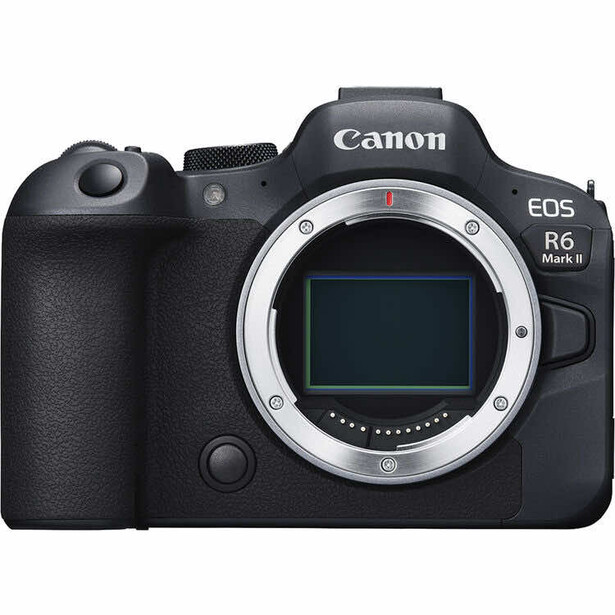
Lenses depreciate more slowly (another reason to invest in glass over bodies), but they still lose value. Strobes, modifiers, tripods, and accessories often depreciate even faster because the used market for accessories is smaller and less liquid. If you are running a business, you need to mentally amortize your gear over its useful life and include that depreciation in your pricing. A $2,500 body that lasts four years costs you $625 a year, or roughly $52 a month, whether or not you use it.
4. Website Hosting, Domain Renewal, and the Portfolio Platform You Pay for Whether or Not You Book
Your domain costs $12 to $20 a year. Your hosting plan costs $15 to $40 a month. If you use a separate gallery delivery platform, that is another $10 to $25 a month. If you have a custom email through Google Workspace, add $7 a month.
These costs are invisible when business is good. They become very visible during a slow month when you are paying $60 to $80 for a digital storefront that nobody is walking into. But you cannot cancel them during slow months because the website is how clients find you, and disappearing from the internet during a drought guarantees the drought lasts longer.
5. The Unpaid Hours of Emailing and the Miles Driven to Consultations
For every hour you spend behind the camera, you spend one to three hours on communication that nobody pays you for. Inquiry responses, follow-up emails, scheduling back-and-forth, revision discussions, delivery logistics, and the clients who ghost after five detailed messages without ever booking.
Add the miles: driving to consultations, scouting locations before a shoot, driving to and from the session itself, driving to a second location mid-session if the plan changes. The IRS mileage deduction helps at tax time, but only if you track it, and most photographers forget to track it until April when the deduction is already lost. Install a mileage tracker on your phone the same week you register your business, and log every drive that has anything to do with photography. The per-mile deduction can accumulate into thousands of dollars annually, but the IRS requires documentation, and reconstructing a year of drives from memory in April is a losing game.
6. Health Insurance Premiums Outside Employer Coverage
If you are in the United States and you leave a salaried position with employer-sponsored health insurance, this is the cost that hits hardest. Marketplace plans for a single individual range from $300 to $700 a month depending on your state, age, and coverage level. For a family, that number can exceed $1,500 a month.
That is $3,600 to $8,400 a year for an individual, or up to $18,000 for a family, coming directly out of your photography income. If you have a partner with employer-sponsored insurance that covers you, this cost disappears. If you do not, it becomes one of the largest line items in your budget, and it must be factored into your pricing before you set a single rate. Many photographers who go full-time discover that health insurance, not gear and not marketing, is the expense that determines whether the business is viable.
7. The Second Shooter or Assistant You Occasionally Need
Weddings, large events, and complex commercial shoots sometimes require a second pair of hands. That second shooter or assistant charges $200 to $500 for a day, and their rate comes out of your margin, not the client's budget (unless you have structured your packages to account for it, which most photographers do not at first).
If you need a second shooter for ten weddings a year at $350 each, that is $3,500 annually that never appears in your revenue calculation but very much appears in your bank statement. Build assistant and second-shooter costs into your package pricing from the start, not as an afterthought that surprises you when the invoice arrives.
8. The Free Work You Did to Build Your Portfolio
The styled shoots, the friend-and-family sessions, the local business freebies, the trade collaborations. None of them were free. You drove to the location, used your gear (which depreciates), spent hours editing (which have a monetary value), and delivered finished images. You put in the hours, burned the gas, wore down the shutter, and delivered polished files. The only line item that read zero was the invoice.
Portfolio-building work is a legitimate investment in a young business, and it is covered extensively in our guide to building a portfolio from scratch. But it is an investment, not a zero-cost activity. If you shot 15 free sessions in your first year, each one costing three to five hours of your time plus travel and editing, that is 45 to 75 hours of labor you donated to your own future. Knowing that number helps you appreciate the real cost of those early months and ensures you stop giving away work once the portfolio is built.
9. Memory Cards, Batteries, and Hard Drives: The Consumables That Never Stop
A quality SD card costs $20 to $80. A CFexpress card costs $80 to $250. You need at least two of whichever your camera uses, and they occasionally fail or get lost. Batteries cost $40 to $80 each and degrade over time, holding less charge with each passing year. External hard drives for backup cost $80 to $200 per terabyte and fill up faster than you expect when you shoot raw.
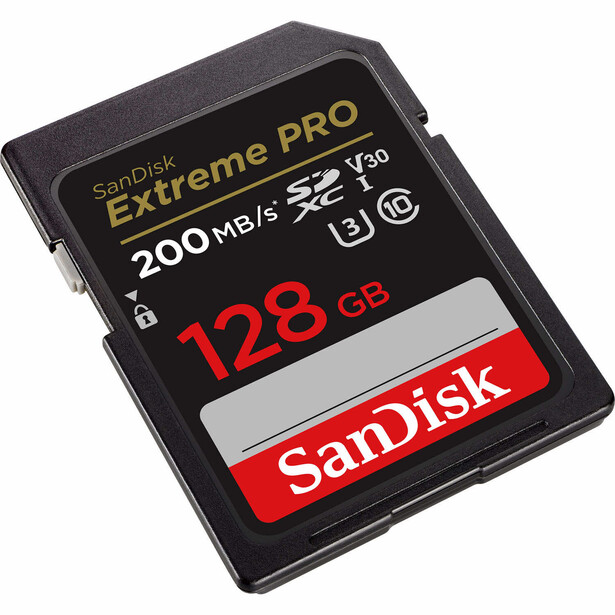
None of these are one-time purchases. They are recurring consumables that you replace on an irregular but unavoidable schedule, and because they do not arrive as a single line item on a monthly bill, they are easy to forget when calculating your costs. Track them. A working photographer easily spends $300 to $600 a year on consumable media and storage.
10. Client Gifts, Packaging, and Delivery Presentation
The branded USB drive. The linen box for print orders. The thank-you card with a handwritten note. The tissue paper, the ribbon, the custom sticker on the envelope. These touches make the client experience feel premium, and premium experiences generate referrals. But they cost money.
A branded USB drive with a custom case runs $8 to $15 per client. Print packaging adds $10 to $30. Thank-you cards and postage add $3 to $5. Multiply that by 40 to 60 clients per year and you are spending $800 to $3,000 annually on presentation materials that the client sees for five minutes before the images go on their phone. The presentation matters. It generates word of mouth that is worth more than the cost. But the cost is real, and it needs to be baked into your session pricing, not absorbed as an afterthought.
11. Business Registration, Permits, and Location Fees
Registering an LLC costs $50 to $500 depending on your state. Annual renewal fees range from $0 to $300. A business license from your city or county can cost $25 to $200. Depending on where you operate, you may also need a seller's permit if your state collects sales tax on tangible goods like prints or albums.
Then there are location fees. Many parks, botanical gardens, and public venues charge $25 to $200 for a commercial photography permit, and "commercial" includes any session where money changes hands. Private venues (hotels, estates, event spaces) may charge $100 to $500 for access. If you shoot on location regularly, these fees add up to $500 to $2,000 a year, and skipping them risks fines, ejection mid-session, or the kind of public confrontation with a park ranger that no client wants to witness.
12. Liability Insurance Beyond Gear Coverage
Gear insurance covers your equipment if it is stolen, damaged, or destroyed. Liability insurance covers you if someone trips over your light stand and breaks their ankle, if a strobe tips over and damages a venue wall, or if a client claims your work caused them some form of harm.
Most event spaces, hotels, and upscale venues will ask to see a certificate of insurance before they grant you access to shoot on their property. General liability policies for photographers cost $200 to $500. It is not optional once you are shooting in spaces you do not own, and the first time a venue asks for your certificate of insurance is not the time to start shopping for a policy.
13. The Retirement Contributions Nobody Is Making for You
No employer match. No automatic 401(k) deduction. No pension. When you are self-employed, every dollar you put toward retirement is a dollar you consciously choose to divert from your operating income, and when cash is tight (which it often is in the first few years), retirement contributions are the first thing that gets skipped.
A SEP-IRA allows self-employed individuals to contribute up to 25% of net earnings (up to a cap set annually by the IRS). A Solo 401(k) offers similar contribution limits. Both reduce your taxable income, which matters more when you are paying self-employment tax on every dollar. The math is clear: contributing even $200 a month from age 30 at a 7% average return produces over $240,000 by age 60. Skipping those contributions because the money is needed now costs exponentially more than it saves. Build retirement into your cost-of-doing-business calculation the same way you build in software and insurance. The Photography Business Training System covers the financial planning and business structure decisions that make contributions like this sustainable from the start.
14. The Administrative Hours That Are Essential but Unbillable
Contracts, invoices, file management, backup verification, catalog maintenance, social media posting, website updates, email organization, calendar management, mileage logging, receipt tracking, and the quarterly estimated tax payments that require their own calculations. None of these activities produce images. All of them are required to run the business that produces images.
A working photographer spends 5 to 15 hours per week on administration, depending on volume and how much they have systematized. That is 260 to 780 hours per year of unbillable labor. If your effective hourly rate for shooting and editing is $100, those administrative hours represent $26,000 to $78,000 in time that you are investing in the business without direct compensation. The only way to reduce this cost is to systematize (templates, automation, CRM workflows) or to outsource (a virtual assistant, a bookkeeper, an editor). Either approach costs money, but both cost less than doing everything manually and slowly forever.
The photography business that survives is not the one with the most clients or the best gear. It is the one whose owner knows the real number: the actual, complete, unglamorous total of what it costs to operate every month, including every item on this list. When you know that number, you can price your work to cover it. When you do not know it, you price based on what feels right, and what feels right is almost always too low.
If you want a structured framework for calculating your cost of doing business and building pricing that actually sustains a career, Making Real Money: The Business of Commercial Photography covers the complete financial architecture. And if you are still in the early stages of building the skills and portfolio that make a photography business possible, Photography 101 lays the foundation. Know your costs. Price accordingly. Everything else follows.





Join the Fstoppers community for free
-
Post comments and join in the discussions
-
Browse the site ad-free
-
Share your work and get featured in the community
-
Compete in the photo contests for fun and prizes
1 Comment