
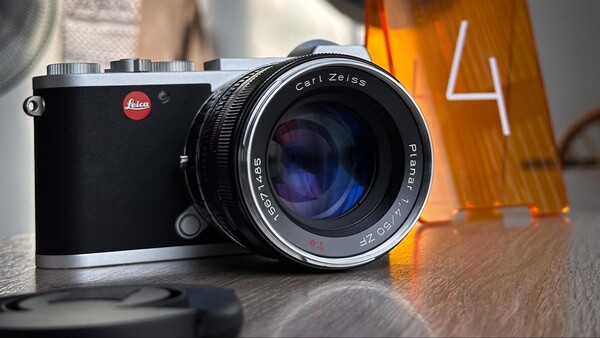
The word "investment" often gets thrown around among photographers whenever new gear is discussed, as if this buzzword gave them some bragging rights that they are somehow financially savvy. It's a comforting word that makes spending large sums of money sound responsible and even borderline strategic. But is your equipment purchase really an investment in the truest sense of the word? Let's take a step back and examine that.
What Is an Investment, Really?
Traditionally, an investment implies some form of monetary return over time. You put your money into something, and you expect it to yield more value with time, whether in direct profits, capital gains in assets, or any other form of measurable value. However, when it comes to photography, the measurable return is not that straightforward. For working professionals, it's much easier. So long as you do not make losses in your finances, your assets — your gear — are generating some form of profit for the business. But do you really always need the latest to perform the job? If anything, we as professionals rarely change our setup, as it poses a whole different risk of unfamiliarity during execution.
Things start to get even more complicated with the involvement of hobbyists, where the returns are not easily quantifiable, especially given the amount of money being thrown into this gear. Most hobbyists buy gear purely to fulfill creative satisfaction or to help them create images that were not possible before, and perhaps to claim some form of bragging rights that make their buying decision a bit more justifiable. These returns are mostly emotional, and there is no universal benchmark to measure whether these "investments" are worth it.
This is why I would think photography equipment purchases are not so much an investment but rather closer to a purchase of experience and joy — something closer to buying a new smartphone than stocks or real estate.
The Strange Photographer's Logic
Now, let's discuss this peculiar logic in how photographers think about gear. There is this observable behavior among photographers who often believe that a better camera automatically means better images. They romanticize new tools, imagining how a different lens or body will elevate their work. But here's a familiar scenario — how many of you find yourselves buried deep in YouTube reviews or blog posts after buying a new piece of equipment, subconsciously trying to validate that you needed that purchase? This is where you are looking for emotional self-justification, because why would you still look at reviews when you have already bought the equipment?
And here's the kicker: the idea of getting a linear improvement in camera quality with each new model is flawed. Yes, technological gains are real, but photography is not a graph of measurable upgrades. It's a mix of creativity, vision, discipline, and technique — and these don't come pre-installed with the latest firmware update.
Business Needs vs. Hobby Wants
As I've briefly covered in the earlier section, it's easier to justify a gear purchase as an investment when photography is your main business. A new camera may increase efficiency, open new connections, or simply be a tool that pays for itself. If you are making a profit by the end of the year, the ROI is financial and quantifiable.
But for hobbyists, the payoff is fuzzier. If happiness, inspiration, or a fresh perspective is what you gain, then yes, it might be your version of "return" — enough to justify the cost. But it's also a slippery slope, especially when you are spending so much chasing a non-financial return that can become a habit like every other consumer-driven dopamine loop and eventually become unsustainable.
What You Want vs. What You Need
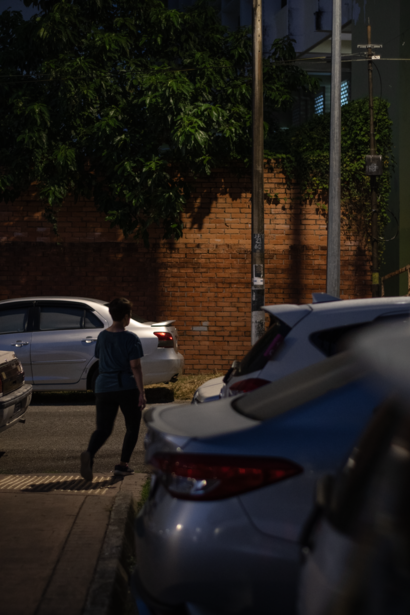
This is where the concept of diminishing returns comes in. That ultra-specialized lens or high-resolution body may promise to deliver more, but if your technique is not at a level to fully extract those benefits, the upgraded specifications are mostly pointless. More megapixels are meaningless if you're not printing large or pushing the shooting envelope. And if you're only sharing to the web or social media, a mid-range camera from a decade ago will do more than fine.
Let's also acknowledge this: modern cameras are extremely capable and are pushing the boundaries of what was once possible, increasing hit rates. But at the same time, they're also becoming increasingly complex. Even for people like me, who are lucky enough to spend a lot of time with various types of gear, it's still a struggle to dial in the right combination of settings to fully extract their benefits at split-second moments. Yes, we can customize our cameras the way we want, but try doing it for five different cameras with five different builds and you will find yourself scrolling through endless menus, forgetting settings, or worse — blaming the gear when frustration sets in, especially after spending that much money.
You are going to need both strong technical fluency and creative vision just to use them properly, and that can only come with a lot of practice — not buying more. Notice how we have not even talked about fully deploying their benefits in large prints to show their difference in technological improvements, and not just to show how much you can crop in on social media thumbnail screens as trending content.
When Should You Buy?
I would say a good time to upgrade is when your current setup is limiting your upward potential. If your skills are outpacing your gear and you're bumping into technical barriers that hinder your creative output, then yes, it's time. But in most cases, the gear is already beyond our current skill sets.
This is where things get complicated again, where the dilemma between buying now or later sets in. For many professional photographers, including myself, we may find ourselves buying upfront in anticipation of an upcoming project, hoping to push our delivery standards. And that's risky. Buying gear for a hypothetical future often ends up unused, collecting dust while your expectations quietly morph into guilt. On the other hand, waiting too long to buy might leave us unprepared when an opportunity does arrive, along with the real risk of not being able to execute what you had in mind.
There's no perfect answer — but I have always relied on sharpening technique first before getting new gear. We should also consider the bigger picture: whether a system has potential for upward growth in the future as your skills also grow, and whether that aligns with what you are aiming to achieve. Medium format systems and technical cameras are a good example of this.
What You Should Consider Instead
Before buying your next piece of gear as a quick fix, ask yourself what you're truly trying to solve. Is it creative stagnation? Frustration with results? A feeling of being left behind? More often than not, you may find the solution isn't in the gear, but in the technique.
My role here isn't to preach gear minimalism, but to potentially help reduce the guilt and buyer's remorse. Tools only become valuable when they're deployed meaningfully. A feature-packed body does nothing if you don't have the technique to match it. Likewise, buying another high-end lens doesn't guarantee a better image — if anything, it just magnifies the same habits you had before. If you're looking to invest in something that genuinely moves the needle, a course like The Well-Rounded Photographer: 8 Instructors Teach 8 Genres of Photography may offer more lasting returns than a new body.
In my journey, I've grown to appreciate older or stripped-down cameras more. Not because they outperform newer ones, but because I have spent enough time with them to know them inside out. They do exactly what I expect them to, and nothing more. They're simple. Reliable. And most importantly, they allow me to focus on photography and craft rather than technology.
Modern gear may offer efficiency, but at the cost of complexity. And in a world where we often equate technological capability with progress, we sometimes forget the quiet value of a tool that just works — without the need for endless customization, without burying the creative process under layers of menus.
I strongly believe that we are currently living in an age where luxury products are increasingly democratized, made worse by marketers who convince us that our lives are incomplete without the latest version of everything. But I often wonder — how many of us actually know why we're buying what we're buying?


18 Comments
Unless your lens is made of gold, it isn't an investment per se. It is a tool. But tools can be an investment in your career or in yourself.
yes if its an investment into career or business then its a need and not just a want. That itself is worth it
Investing brings a somewhat different perspective to mind than simply the merits of gear upgrades. As a business owner over a long period of time, we all have to make decisions constantly about when and why to upgrade technology. Nothing spectacularly insightful there.
But when I think of investing, my mind wanders to stocks and bonds. I never had much patience with them, often overreacting to volatile market news. Ross Perot's charts and graphs in 92 convinced me the dollar was ready to collapse and the country's economy was headed for disaster, so after selling all my investments, I proceeded to miss one of the biggest bull runs in stock market history. Old timers might get a kick out of that story. I tried commodity futures too since it appealed to my short term emotional makeup. But after a couple forays losing several thousand bucks in a day or two with that, I decided there were better places to invest. Which, namely, was me.
Instead of handing money over to market forces I could never control, I determined to invest in anything or everything that improved my working skills. For decades I was happy to buy hardware, software, attend workshops and trade shows... whatever I had the money for that would be an investment in me. After all, anything tangible that I could buy which enabled me to grow my business was better than giving my money to pirates in the financial markets. Worked out fine. Don't recall ever buying something that didn't get put to good use.
Indeed investing in ourselves is probably the best investment ever. be it health or monetary
Half an hour it took me to write three paragraphs and I can't even see who's giving me down votes. Did Fstoppers grey those people's identities out on purpose? I certainly don't mind a different opinion from someone who disagrees, but these anonymous votes from folks who can't even bother to write a single sentence in reply make me wonder why I waste the time giving them that opportunity.
Hi Ed, I do appreciate your point of view all the time. Unfortunately, there are a lot of jokers that created fake accounts just to down vote on things they don't agree on. As far as I understand we don't intentionally grey out accounts to hide their identities. They just happen to be those who created fake accounts.
From a pro perspective, I only upgrade a camera if my existing one breaks or dies. Any camera made over the past 15 years is a tool more than capable of allowing me to do the job of making images.
From a hobby perspective, I'm actually downgrading my gear, buying older lenses and film cameras.
If buying something new makes you happy and gives you joy, that's the best kind of investment to make. That will be my argument when I break it to my wife I need a Leica M11.
You are totally right! I still can't believe half of my cameras are 10 years old now and I don't feel the need to upgrade. The latest camera I have is a Canon R5, which allows me to do both videos and stills comfortably. I really don't need anything at the moment, if anything it's just my knowledge and capability that needs further upgrades.
You bring up a very interesting (and wholly relatable) point about the prevalence of downgrading. I've combed the thesaurus for words to describe the feeling. Case in point, the last decade has witnessed a slow progression in my proclivities from wholly digital, then to large format film and onto tiny medium format film box cameras, even ultra large format cameras. Truly, the "tech" is lower in terms of electronics but some mechanical camera mechanisms are literal engineering marvels. So, is the downgrade even a downgrade, or is it a redirection of the same intention? Maybe that's just what I've convinced myself to believe.
It's an concept that I've been kicking around and likely you can relate: some photographers end up going through the same low tech evolution, or maybe devolvement, where we oddly settle into what fits us best. If not that, perhaps we become comfortable enough in our relative skins to branch into more esoteric camera territory. Maybe Picasso got it right.
" So, is the downgrade even a downgrade, or is it a redirection of the same intention?"
My opinion is that it's a redirection, or intentional direction that's resisted being controlled by technology all along. The love of art is not rooted in software updates or new gadgets. It's created from the mind and the heart. We bought a piano about 30 years ago, just as electronic keyboards were becoming popular. We considered the latter, but ended up buying a beautiful grand piano, one that would last a lifetime. And it has, while the electronic keyboard ran on a small floppy disc and would have maybe lasted ten years. Whatever I buy, I want something that lasts.
Valid observations here I believe, Ed. You also raise another equally interesting point when it comes to the intentions behind our gear load outs when you mention the grand piano. True, the grand is a more deliberate investment; more qualitive in comparison to the electric board, a purchase that will last. However, the keyboard can be thrown into the backseat of a car, it's more portable, has more versatile applications, while of course carrying its own inherent limitations and strengths. I think parallels can be drawn with our photography tool choices. Hammers and nails and Maslow and all that. Really thought-provoking stuff here.
I'm sure that I could be a textbook case study for "The Law of the Instrument." I've lived in the same house for 45 years. I drive a 2004 Jeep Cherokee. I've used the same Nikon D800 since 2013. Been married to my lovely wife for 33 years. And I'm really thankful for every one of those things. Gratitude and acceptance of who and what you are is the key to good health and well being. Sometimes you just don't need to change. I wish I had learned that a long time ago.
It can test your value system though. I've also been self employed since about two years out of college... makes it about 48 years now. Almost all aspects of my work with printing and graphic arts have evolved into places I would never have imagined. And the way of communicating with customers and sales strategy seems very different too. But all I've got is the same hammer. With virtually every marketing expert on the planet advising that 21st century sales goes through SEO and social media, I ignore them and get on the telephone nearly every day for an hour or so and call prospects. Most times all I get to talk with is voice mail. But at least it's a human voice and I'm not waiting around for someone to find me. It might best be described as working inside a comfort zone. For sure that's the way I built the business. It might be called stubborn. That's the problem with growing older... the world demands change, but not all of us see it as a better place. As for that piano or electronic keyboard... whatever makes you happy.
I think based on your context, it is not a downgrade at all, it only felt so probably because we get to access to these high end equipments that we can only dream of back in those days. And yes, whatever that fits us best and needs to get the work done the way we desire it to be.
I'll also add my first and only ultra large format camera cost nearly $6K US ha!
Mine is starting to “feel” like an investment. Most of my lenses I buy used and for whatever reason used Nikon F glass has been rising in price. If I look at current local listings for the last half dozen lenses I bought, every single one of them is worth more now than what I paid for them. ;)
Hmmm weird.. over in my place, Nikon F glass prices are really bad. But now with the headline of earth image shot with Nikon, it might be different, but I haven't checked. Smart choice buying used.
Probably when you got it, everyone jumped into mirrorless and wanted to let it go quickly therefore reduced the prices
Same where I am. I keep an eye on Facebook Marketplace and buy F glass if the condition and the price is good, at every opportunity. All the lenses I picked-up 12-18 months ago have now doubled or tripled in price. Same with Leica too.
Lenses are a good investment.
I feel this in my soul. I'm lucky enough to own a couple pristine AI-S F mounts which came with my F3 HP... that my dad picked up nearly thirty years ago now for $10 at a pawn shop. Yeah, really. One of the lenses is the GORGEOUS 85mm F/1.4 which is still running around $500-$700 on eBay. Wild stuff.