

Every profession has its unresolvable debates. Chefs argue about whether a hot dog is a sandwich. Musicians argue about whether music theory stifles creativity. Photographers have their own collection of eternal conflicts, and what makes them special is that nobody has ever won any of them. Not once. Not in forums, not in comment sections, not at workshops, and not at the bar after a shoot. Here are the ten battles that will outlive us all.
1. Raw vs. JPEG
This is the debate that launches a thousand forum threads and resolves exactly none of them. The raw side argues that shooting JPEG is throwing away data, surrendering creative control, and accepting a camera's processing decisions as final. The JPEG side argues that they've been delivering professional work in JPEG for years, their clients can't tell the difference, and they'd rather spend their evenings with their families than recovering shadow detail at 11 PM.
Both sides are correct in their own context, which is why the argument never ends. A wedding photographer delivering 800 images on a tight turnaround has a legitimate case for JPEG. A commercial photographer delivering five hero images for a national campaign has a legitimate case for raw. The problem is that neither side argues from context. They argue from principle, as if the format choice is a moral position rather than a workflow decision.
The raw purists will tell you that shooting JPEG is "baking in" decisions you can't undo. The JPEG defenders will tell you that getting it right in camera is a skill, not a limitation. Both of these statements are true. Neither of them will end the argument. You could present a blind test where nobody can distinguish the output, and both sides would find a reason to dismiss the results. This one runs on identity, not evidence.
If you're on the raw side and want to make sure your editing workflow justifies the file size, Mastering Adobe Lightroom covers the import-to-export pipeline that makes raw processing efficient rather than tedious.
2. Zoom Lenses vs. Prime Lenses
The prime lens camp believes that a fixed focal length forces you to move, think, and compose with intention. They cite sharper optics, wider apertures, lighter weight, and the creative discipline of working within constraints. They will tell you, with the conviction of someone describing a spiritual experience, that the moment they switched to primes was the moment their photography matured.
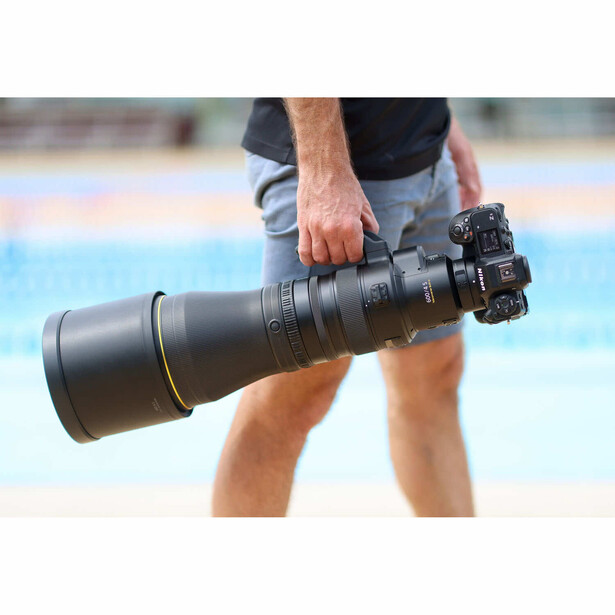
The zoom lens camp believes that versatility is its own kind of discipline, and that missing a shot because you were changing lenses is a worse outcome than shooting at f/2.8 instead of f/1.4. They cite speed, flexibility, fewer lens changes in dusty environments, and the practical reality that clients don't care whether the image was shot on a 50mm prime or a 24-70mm zoom as long as the result is sharp, well-composed, and delivered on time.
The prime shooters think the zoom shooters are lazy. The zoom shooters think the prime shooters are impractical. Neither group will ever concede, because both are solving different problems and calling it the same debate. A street photographer and a wedding photographer have fundamentally different needs, but the argument treats "prime vs. zoom" as if there's one correct answer for all of photography, which there isn't and never will be.
3. Canon vs. Nikon
The original holy war. The Pepsi vs. Coke of photography. The argument that defined gear culture for an entire generation and continues to generate heat long after Sony arrived and ate both their lunches.
Canon shooters cite color science, skin tones, and an ecosystem that's been the professional default for decades. Nikon shooters cite dynamic range, build quality, and a lens legacy that stretches back to the 1960s. Both sides have valid points. Neither side cares about the other's valid points. The argument isn't really about cameras. It's about identity, investment, and the sunk-cost psychology of having committed thousands of dollars to a system you now need to defend.
The funniest part is that in 2026, the differences between Canon and Nikon at any given price tier are smaller than they've ever been. Compare the Canon EOS R6 Mark III to the Nikon Z6 III. Autofocus performance is comparable. Image quality is comparable. Lens lineups are maturing. The spec sheets are nearly identical. And yet the arguments persist, because they were never about specs. They were about tribes, and tribes don't dissolve just because the evidence stops supporting the rivalry.
Sony shooters watch from the sidelines, occasionally interjecting that they've had eye-detect AF since 2018, which does nothing to calm anyone down.
By the way, Canon is better.
4. Natural Light vs. Flash
The natural light photographer treats available light as a creative philosophy. The flash photographer treats it as a starting point. The argument between them has been running since the invention of the speedlight and shows absolutely no signs of fatigue.
The natural light side argues that flash looks artificial, disrupts candid moments, and introduces a technical barrier that separates the photographer from the subject. The flash side argues that "natural light photographer" is often a euphemism for "photographer who never learned to use flash" and that limiting yourself to available light means accepting whatever the environment gives you, whether it's flattering or not.
Both sides have their heroes. Natural light portraits can be stunningly beautiful. Flash-lit portraits can be stunningly beautiful. The tool is not the variable. The photographer is the variable. But acknowledging this would end the argument, and neither side wants that, because the argument is part of the identity.
The natural light photographer's Instagram bio says "natural light photographer." The flash photographer's Instagram bio does not say "flash photographer," because they use both, which is the point the natural light side never quite addresses.
If you've been meaning to cross the line and finally learn flash, Fundamentals of Lighting breaks down the essentials without assuming you've ever touched a strobe.
5. Full Frame vs. APS-C
One side cites physics. The other side cites their bank account and back pain. Neither is wrong, and the argument has been going since crop sensors first appeared in affordable camera bodies.
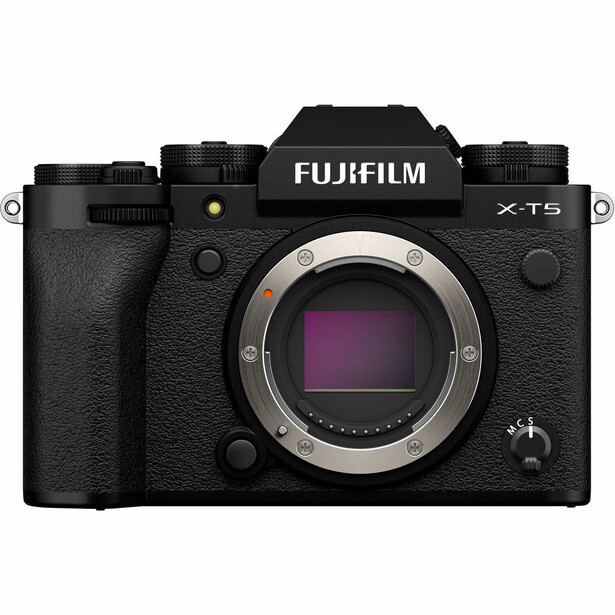
The full frame camp argues that a larger sensor means better low-light performance, shallower depth of field, wider field of view at equivalent focal lengths, and more data per pixel. These are all true. The APS-C camp argues that modern crop sensors have closed the gap dramatically, that the reach advantage benefits wildlife and sports shooters, that the systems are lighter and cheaper, and that the money saved on a body can be spent on better glass. A camera like the Fujifilm X-T5 makes that case persuasively. These are also all true.
The argument becomes genuinely irritating when full frame shooters treat APS-C as a stepping stone rather than a valid system, or when APS-C advocates pretend that sensor size makes zero difference. Both positions are condescending in opposite directions. The honest answer is that full frame is better in some measurable ways, APS-C is better in other measurable ways, and most photographers would produce identical work on either system because their images are limited by skill, not sensor area.
But "it depends on your use case" doesn't generate engagement, so the argument continues.
6. Whether You Should Shoot in Manual Mode or Use Semi-Auto Modes
Manual mode purists treat aperture priority like training wheels. Aperture priority shooters treat manual mode purists like they enjoy unnecessary suffering. The argument is old enough to vote and shows no signs of maturing.
The manual camp argues that full control over every exposure variable produces more consistent results and a deeper understanding of light. They believe that relying on the camera's meter is a crutch, and that real photographers should be able to set exposure without assistance. The semi-auto camp argues that aperture priority with exposure compensation is functionally identical to manual in most situations, faster to adjust in changing light, and that spending cognitive energy on shutter speed during a fast-moving session is energy that should be spent on composition and timing.
In practice, most working professionals use a mix of both depending on the situation. Manual for controlled environments with consistent light. Aperture priority for dynamic situations where light changes faster than you can dial in settings. The debate is less about which mode is better and more about which mode makes you a "real" photographer, which is a question that has no answer because it's not a real question.
The tell is always the same: the manual mode purist who insists on shooting manual in all conditions is usually spending more time adjusting exposure than taking photos, and the aperture priority shooter who refuses to learn manual is usually struggling the moment they step into a studio. The correct answer is both. Nobody wants to hear that.
If you're still shaky on the relationship between aperture, shutter speed, and ISO that makes both modes work, Photography 101 covers the fundamentals that make the manual vs. auto debate irrelevant.
7. Whether Watermarks Help or Hurt Your Business
The pro-watermark camp says they protect your images from theft, identify your work when it's shared without credit, and serve as passive marketing when photos circulate on social media. The anti-watermark camp says they look amateur, distract from the image, and won't stop anyone with five seconds and a clone stamp from removing them anyway.
Both sides have data. Watermarked images do get credited more often when shared casually, because the name is right there and removing it requires effort most people won't invest. But watermarked images also look worse, because a semi-transparent logo across a carefully composed photograph does exactly what the anti-watermark camp says it does: it makes the work look less professional.
The argument is really about what problem you're trying to solve. If your primary concern is theft prevention, watermarks are a speed bump, not a wall. If your primary concern is presentation quality, watermarks are a liability. If your primary concern is brand visibility, watermarks work, but so does a well-tagged social media post that doesn't deface the image.
The debate surfaces approximately once a month in every photography group on the internet, runs for three days, and changes zero minds before disappearing until next month.
8. Whether Film Is 'Better' Than Digital
This is a philosophical argument wearing a technical disguise, and it has been running continuously since roughly 2003 with no signs of reaching a conclusion.
The film camp argues that analog capture produces a rendering quality, a tonal response, and a color palette that digital cannot replicate. They cite the organic grain structure, the highlight roll-off, the way Kodak Portra 400 handles skin tones, and the intangible "feel" that film delivers. The digital camp argues that modern sensors exceed film in resolution, dynamic range, low-light capability, and cost per image by orders of magnitude, and that any "film look" can be approximated in post-processing.
Both sides are right in ways that don't address what the other side is actually saying. The digital camp is arguing about technical capability. The film camp is arguing about experience and aesthetics. These are different conversations happening in the same thread, which is why neither side ever feels heard and why the argument never reaches resolution.
The real question isn't whether film is better than digital. It's whether the process of shooting film (the slowness, the intentionality, the cost per frame, the delayed gratification of development) produces a different kind of photographer and a different kind of image. The answer is probably yes, but "probably yes, with caveats" doesn't fit on a bumper sticker, so the debate continues in its simplified, binary form.
9. Whether AI Tools in Editing Are Cheating
This one is newer than the rest but has already achieved the same level of irresolvable intensity. The introduction of generative fill, AI sky replacement, AI object removal, and AI-assisted retouching in tools like Adobe Photoshop and Lightroom has split the photography community along a line that nobody can agree on where to draw.
One camp says that Photoshop was already "cheating" in 1995, and that AI tools are just the next evolution of post-processing. Dodging and burning was manipulation. Compositing was manipulation. Content-aware fill was manipulation. Generative fill is just faster manipulation. The line between "acceptable editing" and "cheating" has always been arbitrary, and moving it forward to include AI is no different from every previous expansion of the toolset.
The other camp draws a hard line. Removing a pimple is editing. Replacing a sky is fabrication. Generating content that wasn't in the original capture crosses a boundary that separates photography from digital illustration, and calling the result a "photograph" when significant elements were created by an algorithm is dishonest regardless of how good it looks.
The reason this argument will never resolve is that both sides are working from different definitions of what a photograph is. If a photograph is "light captured by a sensor at a specific moment in time," then AI-generated elements disqualify it. If a photograph is "a visual product created using a camera as the primary tool," then AI-assisted editing is just another tool in the kit. Until the industry agrees on a definition (it won't), the argument will continue at full volume in every comment section where the topic is raised.
Wherever you land on the AI question, the foundational retouching skills that predate generative fill aren't going anywhere. Skin Retouching Course for Beauty, Fashion, and Portrait Photography teaches the manual techniques that both camps still agree count as "real" editing.
10. Whether Gear Matters or Doesn't Matter
The "gear doesn't matter" crowd says that a great photographer can make compelling images with any camera, and that obsessing over equipment is a distraction from developing the skills that actually determine image quality. Composition, light, timing, and connection with the subject matter more than any spec on any body.
The "gear matters" crowd points out that the people saying "gear doesn't matter" almost always own very expensive gear, which undermines the message somewhat. They argue that certain jobs require specific capabilities (try shooting a wedding in a dark church with an f/5.6 kit lens, or track a bird in flight with a ten-year-old autofocus system) and that pretending otherwise is performative humility at best and dishonest at worst.
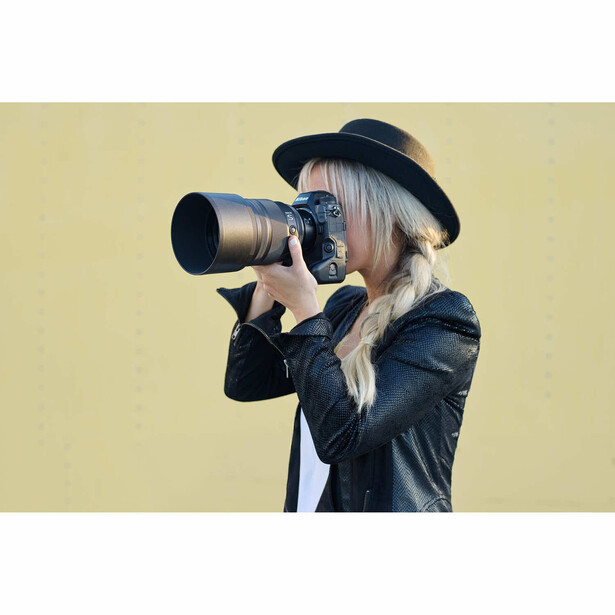
The truth, as with most items on this list, is boringly nuanced. Gear matters when it solves a specific problem that your current equipment can't. Gear doesn't matter when the limitation is you, not the camera. Most photographers would benefit more from a workshop than a new lens, but most photographers would also benefit from a new lens at certain inflection points in their development. The two positions aren't contradictory. They're contextual.
But "it depends" has never won an argument on the internet, so the gear debate will continue forever, fueled by the people who just bought something expensive and need validation and the people who haven't bought anything new in five years and need to feel superior about it.
If you'd rather invest in skills than glass, The Well-Rounded Photographer covers eight genres with eight instructors and costs less than a single lens filter.
Conclusion
The beautiful thing about these arguments is that they're not really about the topics they claim to be about. They're about identity. Choosing raw over JPEG, primes over zooms, or natural light over flash isn't just a technical decision. It's a declaration of what kind of photographer you are, and defending that choice feels like defending yourself.
That's why nobody ever changes their mind. The argument was never about the answer. It was about belonging to the side that believes it has the right one.
Now if you'll excuse me, I need to go argue with someone about whether 24 megapixels is enough. It's not.

Join the Fstoppers community for free
-
Post comments and join in the discussions
-
Browse the site ad-free
-
Share your work and get featured in the community
-
Compete in the photo contests for fun and prizes
6 Comments
Item number “0” should be, “If you’re happy with your prints, then you can skip this article”. 😂
As somebody who's worked for over a decade in silver, cyanotype, inkjet, and the occasional anthotype...I'm ashamed to say I've never ever been WHOLLY satisfied with any print I've ever made.
RAW v jpg?
If you shoot RAW, you can downgrade the files to jpg “and your clients can’t tell the difference.”
If you shoot jpg, you can’t upgrade to RAW;
And if you find something truly interesting in the image that you’re willing to work a little to get more from the image?
Tough luck.
And the only time you spend time, dragging something out of the shadows in RAW? It’s only if you find something truly interesting that’d been lost in jpg.
ha ha...so true in your conclusions...like any argument context is king. I'm sure the energy resources used to post and publish all the content (written and YouTubed) of these arguments would power my house forever and a day!
Us photographers; we are a curious bunch. You don’t hear of plumbers arguing over which brand of wrench is better, or carpenters debating whether nails are better than screws.
One not mentioned is "Using the camera's Auto Mode" vs any of the other modes. The point is you pay for it and the manufacturer does put a history as far back as film to perfect their auto mode selections. Like when Sony came out in 2013-14 the Mod 1's even have a two level selection that even covered night with a flash on top that did a two shot in camera mix to one image. You can also select RAW or Jpeg or both going to the SD card.
Least many forget the on camera apps (no longer available but if you have all do not reset the camera) of all i still like the "Digital Filter" reason it lets you select sky and foreground with any setting you can think of as well as it has presets. Again it puts all together in camera even a horizon adjustment before sending to the SD card in RAW, Jpeg or both. Best for Astro Milky Way where the sky is somewhat blown out or you have a bright foreground and with a bright sky but with settings (like doing manual) you can get that dark sky. Ok the best thing is you do not need to carry a boat load of filters and holders on a trail walkabout.
I still use my A7RM2 and A7SM2 just for the apps again they were low cost and are forever !
All the mentioned items are very true in this article!