
The popular rule of selling unused gear after six months describes one specific kind of author, and photographers who keep specialized equipment connected to their actual practice are not the kind it had in mind.
There is a familiar discomfort that gathers around certain shelves. Conversations about unused equipment almost always drift toward cameras and lenses — the upgrade cycle, the marketing loop, the question of whether the next body will finally matter. The rest of the gear sits outside that conversation: older lights, flash meters, modifiers, filters, control tools from directions explored years earlier, equipment that hasn't been part of daily practice for a long time and yet is still there. Harder to explain, harder to call unnecessary even when unused. And the longer those objects stay where they are, the more insistently the same logic appears around them.
"If you haven't used it in six months, sell it." It sounds mature. It sounds like advice from someone who stopped collecting and started working. Applied to creative practice, it isn't advice at all. It's a model of authorship borrowed from another field and presented as common sense.
The rule didn't grow inside photography. It came from personal efficiency culture, from minimalism, from the operational management of private space — and there it works. A kitchen tool you haven't touched in half a year probably isn't yours anymore. A jacket that missed a full season is occupying space rather than serving you. The logic is clean: object equals function, unused function equals waste. The same logic works for operational tools in any profession. A carpenter who hasn't picked up a specific plane in months probably doesn't need it. Function is the only layer, and when function disappears, the object becomes inventory.
Creative practice is where the logic stops fitting. The object here carries two layers at once: function, and the residue of a direction the author once entered. A flash meter is a small example that makes the distinction visible. It belongs to a model of photography where exposure was established before the shutter opened, not reconstructed afterward from a histogram. Most photographers no longer need one daily. That doesn't automatically turn it into inventory. It may still mark a way of working with light the author once learned, used, and still has available.
The six-month rule treats only the functional layer. Applied without that distinction, it isn't universal wisdom. It is one model pretending to cover territory it was never built for.
The rule doesn't arrive alone: it carries a specific picture of what an author should look like, and that picture is worth naming. In this picture, the author is an operational unit: production is regular; the inventory matches current assignments; anything that doesn't earn its place gets shed; identity matches output. Open directions are read as unfinished business rather than as capacity. A wide range of possibilities looks like a failure to decide. This model is sold today as professionalism, as discipline, as maturity — and it is none of these things. It is a transplant from operations and startup logic: minimize, optimize, eliminate anything that doesn't produce a regular return. In its native environment it works. Inside creative practice it produces one specific, quiet distortion: operational cleanliness gets mistaken for artistic maturity.
There is another way to be an author, and it doesn't get named often, because the dominant vocabulary has already labeled it as disorganization. In this model, what you make this week is a cross-section. What you are consists of more than that cross-section: directions opened, languages learned, methods parked but not abandoned.
Holding those directions open isn't attachment to the past. It is the condition that makes nonlinear development possible at all. An object connected to one of those directions performs two jobs at once. It functions when needed, and it marks the direction as still available to its author.
Equipment here materializes not "I shoot," but "I can." This isn't opposition to professionalism. It describes a different relationship between author and practice — research rather than operations. The criterion for keeping a tool isn't whether it was used this quarter, but whether the direction behind it is still part of the author's working range.
What this changes is the meaning of the word "sell." For a household object, selling produces space and a small return. For a tool tied to a direction the author has actually worked through, selling produces space, a small return, and the closure of one open line. The author can decide to make that closure — it's a legitimate choice — but it should be named for what it is, not laundered through the language of optimization. "I am closing this direction" is honest. "I am decluttering" is a euphemism that hides the second half of the transaction from the person making it.
And the real damage isn't in the sale itself. It's slower than that. Once the six-month rule becomes the operating filter, the author stops noticing entire regions of his own practice. Possibilities that aren't active right now stop being counted. They stop being included in the definition of what he does. They become background, then inventory, then absence. The object leaves the shelf at the end of the process, not at the beginning — which is the part most discussions of decluttering creative space miss entirely. The loss isn't the moment of letting go. The loss is the gradual narrowing of what the author still considers his, and the narrowing is invisible because it's framed as discipline.
So the test isn't the number of items on the shelf. It isn't how recently any of them were used. It's what stands behind each object. Behind some objects there is a direction the author actually worked through — a method he owned, a language he learned, a project he carried. That is the trace of a path, and keeping it isn't hoarding. It's the material form of a range that still belongs to him. Behind other objects there is no path, only the idea of one: a future image promised by the purchase, a status, a story someone wanted to enter but never did. Different situation. Not worse, not immoral, just different. A fantasy of a practice, rather than the residue of one.
Lived experience behind the object, or an intention that never arrived. The two look identical from outside, which is exactly why they get collapsed under a single label. Recognizing the operations model in your own decisions isn't a failure; recognizing the research model in them isn't a triumph. They are two ways of working, and the only real question is which one is actually describing what you do.
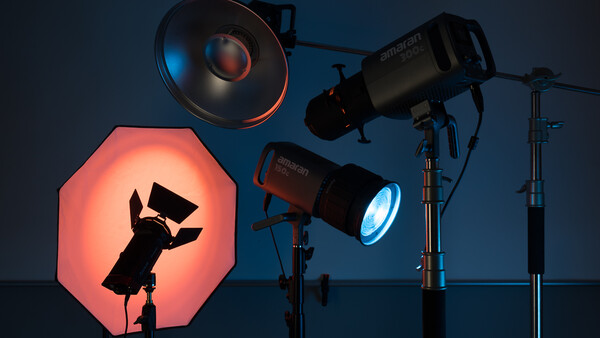
To clarify one thing: cameras and lenses are the wrong place to look for this distinction. They are a consumer category, complete with their own marketing loop, their own dopamine cycle, their own promise of a future image attached to each new model. GAS, as a concept, was invented for this category, and inside it the concept is mostly fair. The acute case sits elsewhere — in light, in light measurement, in tools for shaping and controlling a light source, in modifiers with specific scattering characteristics, in filters, test instruments, non-standard sources. This layer rarely gets bought for status. It accumulates slowly, across years of direct work with the physics of the image, one object at a time, each entering the practice when a new question opens.
This is the equipment the six-month rule punishes hardest and most wrongly. Objects that enter a practice slowly, in response to specific investigations, don't run on a six-month cycle. They were never operational tools in the first place. They are part of the author's intellectual and visual biography, and biography doesn't turn over quarterly.
As long as only one model of authorship has a name, the people working inside the other one keep being positioned as defective versions of the first. They get asked why they aren't following the mature advice, and any answer sounds like a justification. Naming the second model changes the position entirely. It isn't "I am failing to optimize." It is "I am keeping my range open." Those are not the same sentence. The first is apology. The second is description.
None of this makes the research model universally correct. There are practices where the operations model fits better, and authors who have honestly chosen it. The point isn't that one is artistic and the other isn't. The point is that both exist, both have internal logic, and the dominant vocabulary has been hiding that by calling one of them maturity and the other clutter.
The six-month rule isn't wisdom. It is a model of authorship presented as common sense. It works for one kind of practice and damages another. The author who keeps specialized equipment connected to directions he has actually worked through isn't an under-optimized operator. He is operating inside a different model, with different criteria, and that model deserves to be named instead of pathologized.
Recognizing this isn't permission to keep everything. It is something narrower and more useful — the right to work by the logic that actually describes your practice, instead of by a logic written for somebody else's. The question is not how much can be kept, but what kind of practice each object can still honestly name.




Join the Fstoppers community for free
-
Post comments and join in the discussions
-
Browse the site ad-free
-
Share your work and get featured in the community
-
Compete in the photo contests for fun and prizes
No comments yet