

In contemporary photography, effects often look like ideas, and imitation easily appears intentional. Quick visual formulas create an impression of creativity long before any thought has a chance to appear.
Why do we so easily mistake imitation for creativity, and an effect for an idea? When I review my own photographic archive, it becomes clear that a significant portion of it belongs to what is conventionally called kitsch: in these photographs, the effect replaces meaning. For me, it marks a limit rather than a direction. These images are not bad, but they create a kind of glass ceiling. It is in this area that many photographers who consider themselves creative tend to stop, even though they often repeat ready-made schemes in practice.
What Is Kitsch?
To define the term, Clement Greenberg, a foundational figure in modern art criticism, described kitsch as a language of ready-made effects that give the viewer immediate emotional confirmation without requiring any internal work. In other words, kitsch is a set of techniques or effects inside an image that do not encourage the viewer to think because the result is clear and predictable. There are many such photographs because they are structured around an already expected reaction. They are not bad because of this, but they are unmistakably aligned with what the viewer already anticipates.
Proper light, clean composition, a slight dramatic shift, soft mist, a color accent. Such an image almost always generates an immediate response. It is liked, praised, and easy to imagine in a textbook on basic visual appeal. But this is exactly how kitsch works. It functions as a tool of accelerated communication rather than as a form of thought. The effect arrives before the idea. At some point, it becomes clear that the most beautiful image is not necessarily the strongest one. It is simply the most predictable.
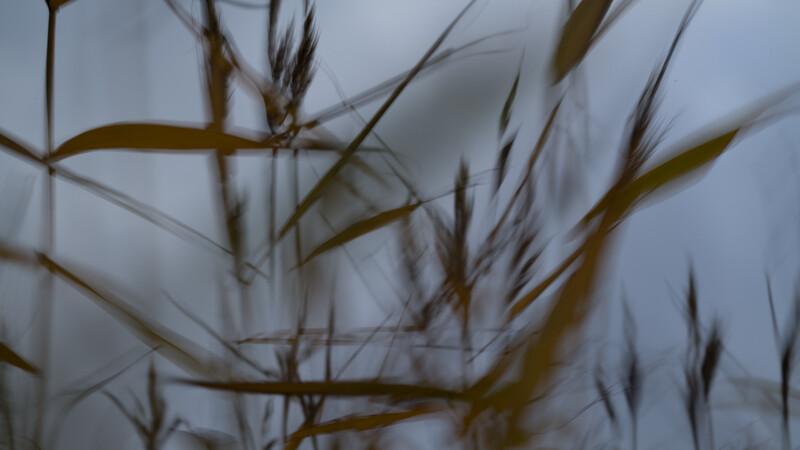
The Source of Algorithmic Popularity
Social media create an environment in which predictable effects become the basic visual language. The algorithm registers only the fact of reaction, not its depth. It rewards brightness, recognizable motifs, repeating patterns, and a sense of instant clarity. These elements are neutral by themselves, but together they form a system of accelerated communication. In such a system, kitsch stops being something questionable. It becomes a way to deliver an impression quickly. In an environment optimized for immediate attention, complexity gives way to speed.
It is no surprise that photographers adapt to this logic. The algorithm defines the rules, and most photographers adapt accordingly. Educational content on YouTube operates under the same principles: it is not designed to develop taste or encourage exploration. It sells a guaranteed result, not development. The entire construction revolves around one question: how to produce an image that works every time. A separate market of predictability emerges from this. It is not a flaw in the industry or a sign of decline. It is a rational answer to the demands of platforms where an image is evaluated by how quickly it delivers a return, not by whether it carries any real necessity. In these conditions, kitsch cannot be “bad.” It can only be expected and functional. For a professional, however, there is a risk: the more predictable the result, the easier it becomes to replace the author because the effect does not carry authorship.
Where Kitsch Ends and Creativity Begins
Against this background, it becomes easier to see where creativity appears. The race for effects does not remove it; it simply outlines the boundary. When any technique can be repeated easily and accessed as an instruction, it becomes clear that creativity begins beyond the guaranteed formulas. An effect attracts the eye but does not hold it. Imitation reproduces the appearance but does not form a language. Images that step outside the comfort zone stop being instrumental. They require a different pace of viewing.
An effect by itself does not make a photograph kitsch. An effect can be part of a language if it is integrated into the structure of a decision rather than replacing it. Kitsch arises not in the moment of visual appeal but in the absence of a reason. It appears where the effect exists instead of thought, rather than together with it.
Creativity emerges in decisions that are not tied to speed, convenience, or instant approval. It appears in those elements that make the viewer pause rather than simply react. Perhaps we too easily accept as creativity what is merely convenient to show. An effect may be part of a decision, but it cannot be its reason. This difference builds professional resilience.
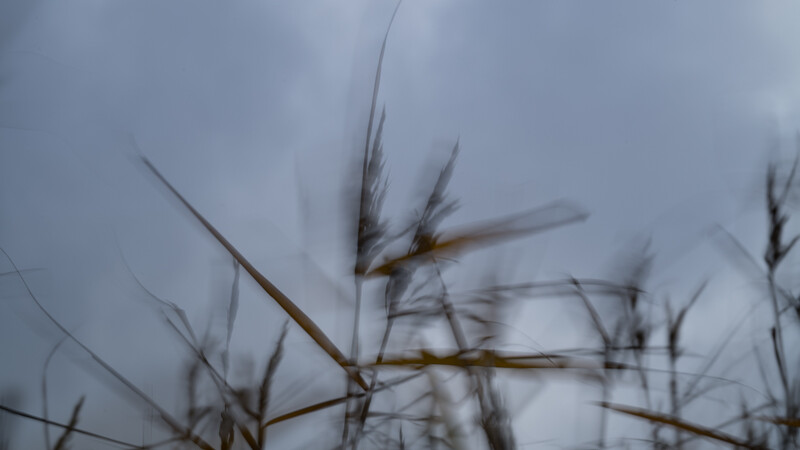
Important Questions to Ask Yourself
To distinguish an effect from a choice, two questions are enough. The first is: “What does it look like?” It exposes any imitation because it points to the source, whether it is a style, a trend, or a ready-made pattern. The second is: “Why is it this way?” It touches the internal logic of the image and shows whether there is any real necessity behind the form. If the first question is easy to answer, and the second produces nothing, then the effect has replaced the idea. If both questions open the structure of the decision, then thought appears in the photograph. For a professional, this distinction is not theoretical. An effect makes an image immediately recognizable, but just as quickly makes the author replaceable. A choice makes the work less convenient but stronger in the long term.
As this difference becomes more visible, the professional field appears oversaturated with images that create an impression but do not continue beyond it. They are precise in effect but do not extend into perception. And the opposite is also true: even the quietest image begins to work differently when it is driven by necessity rather than by a template. There is no romance in this distinction. It is not an effort to oppose the market. It is an attempt to mark the point where photography once again becomes a form of thought rather than a form of packaging.
In an age when any visual effect can be produced without human involvement, the only human part of a photograph is the reason it exists. This is where two simple questions regain their relevance. “What does it look like?” shows what is in front of us, whether it is an imitation, a repetition, or a ready-made formula. “Why is it this way?” reveals whether the photograph contains a decision, an idea, and a sense of necessity. An effect answers only the first question. Creativity answers both. This is why an effect attracts immediate attention but makes the author replaceable, while a choice sustains the work in the longer term. This distinction answers the question at the beginning of the text: we mistake imitation for creativity when we see the reaction but not the reason. And only the reason keeps the photograph human.



Join the Fstoppers community for free
-
Post comments and join in the discussions
-
Browse the site ad-free
-
Share your work and get featured in the community
-
Compete in the photo contests for fun and prizes
38 Comments
In the first sentence of the fourth paragraph, Alvin Greis wrote:
" ..... a slight dramatic shift ..... "
I have no idea what that could mean. Can you please give some examples of it, or an explanation of what you mean?
Thanks!
I appreciate Alvin's deviation from articles which merely debate one brand of photography gear vs another... but, honestly, I'm struggling to understand the whole thing. I think it boils down to one central idea or concept but gets wrapped up in a web of seemingly tangential thoughts.
To be sure, I look forward to Alvin's pieces. I'm not entirely sure though after reading this article twice what is meant by effects. My mind first went to special effects like Photoshop art filters, but then I'm thinking that he's talking about any image lacking originality. My problem with Alvin is that I'm searching for visual examples; after all, photographers are visual people, but he's talking about an idea for the sake of philosophical argument.
I avoided visual examples deliberately. Examples tend to invite imitation and quick testing rather than reflection.
This text examines how effects replace decisions, and that mechanism is easier to recognize when it isn’t tied to a specific image or technique. Once an example appears, attention shifts to whether it works, whether it’s done well, or how it could be improved. The substitution itself disappears.
The goal wasn’t to demonstrate an effect, but to make the reader notice when a recognizable result is mistaken for an idea.
But the thing is, some of us are completely confused by the things you write. We know that the article is about a topic we are interested in, so we read it, but we are confused. So we read it again, and read parts of it over and over, and still can't figure out what you mean.
But there are times when we don't have the time, or the mental energy / stamina, to keep reading and rereading. We just want something fed to us in a very easily digestible form, and then we can think harder and deeper on it if we choose, when we have more time. But when everything is so cryptic or hidden behind phrases that we don't immediately "get", then it is easy to just skip it and not return.
Not every text is meant to be easily digestible on the first pass. Some ideas only start to work when they’re reread and considered in relation to other texts. I try to write pieces that function this way, as part of a connected line of thought that retains its usefulness over time.
What’s rare today is having a place like FStoppers where this kind of writing doesn’t simply get skipped and is actually read and discussed.
That's because I suspect Tom and I are rare individuals, in that we prefer meaningful engagement over simpleminded responses. Without our comments, your articles might have been greatly ignored. I only say that for the reason that you may want to reconsider how you write for the benefit of a wider audience. Most readers, if not tuning you out from the start, will probably not have the patience to be thinking about how one idea builds on the next. The sunset example that you added to the conversation greatly improved my understanding of the concepts you've tried to explain. Even if you choose not to include pictures, demonstration by written examples typically clarifies vague words and terminology. You try to do the same thing by giving titles to your photographs... clarify the viewers understanding of the image. The same idea would seem to be appropriate for written texts.
Every last picture made on this planet begins with an idea, and created as a result of a series of decisions... even the most banal snapshot is still constructed from ideas and decisions. Arguably unprofessional or lacking artistry, but decisions nevertheless. All I think you're doing is elevating one sort of decision that you determine to be of greater thought and meaning over another. But fundamentally all images begin and are executed in the mind. Simple decisions regarding the degree of saturation in our image does indeed impact the story it might be telling. It certainly represents how the photographer felt about the landscape he was looking at through his own eyes. It seems like you're underestimating the creative thought that might be underlying one image, and overestimating that of another.
Somehow there has to be a purpose for your theory. That's why I like visual examples. Otherwise it's not useful. And evaluating an image on the basis of whether it works, triggers an emotional response, or how it could be improved, is the recipe for growth as a photographer. I see nothing wrong with recognizing the merits of other photographs and learning from them... copying to the extent that we learn how to develop our own style. Take away the premise that I care about social media's algorithmic popularity (I don't), and this entire subject seems to make even less sense. I make pictures that naturally resonate with me... images that have detail and visual interest. I compose what I like, not what Instagram favors. Consulting analytics or comparative strength of decisions for guidance in making a photograph is like consulting the laws of gravity before deciding to go for a walk.
This isn’t about whether a photo involves ideas or decisions. It always does.
The question is whether the photo works because of the subject, light, and composition, or whether it only starts to look convincing after contrast, black and white, or other effects are added.
Here’s what I mean in very practical terms.
Take a sunset. Putting a big orange sun in the middle of the frame can look great. It usually does. The photo works mostly because sunsets already look good, not because of a particular decision you made. In other words, the image feels convincing because the scene itself already carries a strong visual impact.
Now take that same sunset and use it differently. Maybe the light brings out something odd on the street, creates an awkward shadow, or clashes with what’s happening in the scene. Or you photograph fifty people all taking the same sunset photo on their phones. In those cases, the sunset is no longer the point. It becomes a tool, or even something you are commenting on.
That’s the difference I’m talking about. Not whether decisions exist, they always do, but whether the image relies on a familiar visual appeal to look good, or whether that appeal is being used deliberately to say something beyond itself.
I totally relate, Ed. If someone is going to use the word "effects" in a way that is so different form how I have always seen it used, then it would be best if the writer would begin by giving us a very clear, direct definition of the term before proceeding. I may be in total agreement with what Alvin wrote in this article, but I would never know that I am in agreement because I don't really know what it is that he was trying to say, because of the overly confusing writing style. Being confusing and cryptic does not somehow bring a greater depth to the ideas. It just causes us to miss the point.
That’s why I used the sunset example earlier. It’s the same idea, just without terminology. Sometimes an image looks convincing because the scene already does the work. Other times, it only starts to work after familiar effects are applied. I’m just pointing at that difference.
And to be clear, this isn’t about good or bad. Many photographers are perfectly happy with familiar results, and there’s nothing wrong with that.
The distinction only matters if someone is interested in developing a more individual visual language over time. In that case, relying too much on ready-made appeal can quietly become a trap. This text isn’t an instruction, and it’s not something anyone has to follow. It’s simply a reminder of that trade-off.
I still don't really know exactly what you mean when you speak of "effects". But I appreciate your answer and agree with much of what you write.
I clarified what I mean by “effects” in a separate comment below, after a question about creativity came up.
By “a slight dramatic shift,” I mean a small, familiar adjustment that signals importance without changing the image’s structure. For example, darkening the sky slightly, adding contrast to the subject, or pushing color or tone just far enough to register as dramatic, but not enough to alter what the photograph is actually about.
These shifts are easy to repeat and instantly readable. They generate an emotional response on their own, which is why they often function as effects rather than as decisions.
Thank you! Now I understand what you meant.
Yes
When I shoot, my goal is to find things that have a positive impact on me ... things that I see and am wowed" by. Then as I shoot I try to capture that thing in the way that best shows the aspect of that thing that wows me.
For example .....
If I am photographing a buck deer, and his physical stature makes a huge impression on me, I will try to shoot him in a way that showcases his musculature and stature. If his antlers are the thing that most impresses me, I will try to photograph him in a way that best showcases his antlers.
If I am photographing a snake, and the thing that most impresses me about the snake is how its coloration blends in perfectly with the habitat, then I will try to photograph it in a way that shows how well camouflaged it is.
So that is how I think when I am shooting a subject. I am not consciously thinking about whether the way I shoot it will result in something that looks like an effect, or if it will look like true creativity. I actually think that creativity is something that is supposed to happen organically, not intentionally. I mean in my opinion if an artist starts out thinking, "ok, I got to make something really extra creative looking today" then whatever they do is probably going to be a failure. But if they are so moved by something in real life and then they try to capture the essence of that thing that moved them, they will be creative without consciously setting out to be creative. To me that is what genuine creativity is.
So. Alvin, I would like to know if you think I am wrong in the way I am thinking about this. Or am I thinking in a way that is similar to whatever you were trying to express in the article?
I follow pretty much the same path as you in making a picture, except that I run in the opposite direction from snakes. I'll bet you even admire the work of other wildlife photographers, and have many of their images etched in your mind as subjects and compositions that you might like to shoot yourself. I don't think that our photographic growth is stimulated as much by theory as it is practical exposure to style and technique of other photographers that stir our interest. For years, I would look at a picture that I liked and ask to myself: "How did they do that?" So we possess a library of ideas stored in our mind for when an opportunity to make a photo arises. I suspect Alvin follows more of his own inner voice, although I fail to understand how the creation of an ICM photo is any different than a wildlife or landscape image, in terms of the idea and decision making process. See the idea somewhere... copy it. Eventually maybe improve upon the idea.
Nothing of any particular genre appears to be entirely unique. That's never been my objective. And I honestly don't care if there are a million other images just like mine, or interpreted by the viewer as creative or not. I simply enjoy making detailed, visually interesting images that please me. I much prefer to have the viewer comment on my attention to detail... the little things that make a print appear polished. If it finds a home with someone else, great; otherwise I'm okay with someone calling it a snapshot. I'm not sure that the issue is much more complicated than either you like it, or you don't.
Ed wrote to me:
"I'll bet you even admire the work of other wildlife photographers, and have many of their images etched in your mind as subjects and compositions that you might like to shoot yourself. I don't think that our photographic growth is stimulated as much by theory as it is practical exposure to style and technique of other photographers that stir our interest."
Yes, Ed, I certainly do that. But I also imagine things. I see things in my mind's eye, things that I have never seen or heard about before, and then I figure out if there is a way to make a photo that resembles what I see in my mind's eye.
For instance, years ago I imagined a Red-bellied Woodpecker high in the treetops, looking for food under the bark of Birch trees. I did not see a Red-bellied Woodpecker up high in the treetops. I saw them down lower on the tree trunks. And I did not see them in Birch trees, because none of them grow in the area where I was seeing Red-bellied Woodpeckers. But I just had this idea; combining things that I had seen here and seen there, but never seen together. And I wanted a photo that looked like what I saw in my mind's eye.
So I found a place with a bunch of Birch trees, and gathered downed limbs that could act as the trunks of small trees. And I bought a few yards of material at the sewing store that was a blue that could come close to the blue of the sky. And I got stakes and a hammer and lumber and went to where the Red-bellied Woodpeckers were and drove the stakes into the ground and zip-tied the Birch limbs to them and erected a framework with the lumber and hung the blue cloth over it, and then I put suet into the crevices of the bark on the Birch limbs, and set up my blind and waited for hours until the Woodpeckers came and figured out that there was suet to eat on these new-to-them limbs. And I was then able to make photos of the vision that I had thought up.
So it is often just going afield and seeing things that inspire me on the spot. Sometimes it is as you say, seeing the work of other wildlife photographers, and looking for ways to incorporate some element of their work into the photos I take. And at other times it is just thinking something up and then trying to make it happen in real life so that I can get photos of it.
Your definition of creativity stated below is derived from its root word create, but create and creativity are not exactly the same words, or used for the same purpose. My computer dictionary defines create as "bring something into existence" and creativity as: "the use of the imagination or original ideas, especially in the production of an artistic work."
Therefore, your imagination in producing the picture described above was a highly creative act, to a far greater degree than simply bringing a picture into existence (creating something). That said, viewers of our work rarely appreciate the creativity involved, and therein lies the danger of obsessing over viewer recognition of creativity. If you were to show me the picture that you made in this instance, I would have no idea how much work had been required to make it. Undoubtedly you disguised the man-made elements very well. In this case, creativity is shaped by the process, not simply judged by the outcome, and you demonstrated considerable creativity in making the photograph.
To answer your question, can I first ask what creativity means to you in photography?
I tend to take things literally and expect others to do the same. So when I think of the concept of creativity, I immediately think of the verb "to create". This means to make something; to bring something into existence. If something does not exist, and then I do things and the result of what I do causes a new thing to exist, then I have created it, and that means I have exercised creativity.
So to me, "creativity" in photography means exactly what it means in every other realm of life. We need to be consistent when we use words, and stick to strict literal definition usage, or else communication can become vague or cryptic or confusing, so we all need to speak exactly the same language at all times. We need to know for sure what someone is saying or writing, not wonder about what they are saying or writing.
So to exercise creativity in photography means to bring a photographic image into existence. It means that if I take a photo of the telephone pole out by the street, then I have exercised photographic creativity because that photo did not exist before I took it and it exists after I take it, so I brought it into existence; I created.
But what I wanted to know, why I wrote my previous question to you, was to find out if you think of my photographic process and mindset as being creative, or if you have come up with some alternative, personal definition of the term that would deem my efforts to be non-creative.
Honestly, I do not want to be invited to think deeper about this issue, as I already think a lot about everything without being invited or inspired to do so. I just want to know what you think; what your opinion of my photographic process is, and how it fits into your concept of "effects" and creativity.
Let me clarify how I’m using these terms, because I think this is where the confusion sits.
When I talk about an effect, I’m not talking about a Photoshop tool or a technical adjustment. I’m talking about a perceptual outcome. An effect is something that produces a predictable viewer response. It’s about what the image does when it’s seen, not about which slider was moved.
Everyone likes sunsets. That reaction is already built in. In that sense, a sunset can function as an effect. An image can feel strong because it triggers a familiar response, even if there isn’t much else happening visually. In those cases, the effect replaces the idea.
The same logic applies to creativity. In a professional context, creativity isn’t just the act of making something exist. It’s the creation of something meaningfully new. Very often, what feels “new” is simply a repetition of something we already know works, because we’ve seen it work before. That’s also an effect.
So the distinction I’m making isn’t about whether someone is creative or not. It’s about whether a photograph relies on a familiar response to carry it, or whether it introduces something that changes how that response is formed.
That’s all the text is pointing at.
One more important nuance.
Anything genuinely new is risky. It can fail, it can be misunderstood, and it often doesn’t produce an immediate response. That’s why, in everyday practice, it’s much easier to rely on familiar effects than to search for something that hasn’t been proven yet.
There’s nothing wrong with that. These are simply different approaches. One prioritizes reliability and predictability. The other accepts uncertainty in exchange for the possibility of something new.
The point isn’t to judge either path. It’s just to be aware of which one you’re choosing, and why.
Okay, we're in this deep... might as well drown ourselves. Just when I thought that I've fully grasped what you're saying, you manage to throw one more line into the conversation that I'm probably misunderstanding... again.
You say:
"So the distinction I’m making isn’t about whether someone is creative or not. It’s about whether a photograph relies on a familiar response to carry it, or whether it introduces something that changes how that response is formed."
You write an entire comment describing what constitutes a creative image vs. the type of image which triggers a predictable viewer response. I think I get it. And then you say the distinction is not about creativity. Even after clarification of word use, that's the type of sentence that compounds the confusion.
You’re right, that one’s on me. I mixed two things into one comment while trying to answer several questions at once, and that made it confusing.
I’m not evaluating people or their creativity. I’m describing a mechanism inside the image itself. That line was referring to the article, not redefining creativity.
You understood the idea correctly. I just collapsed different comments into one. Sorry about the confusion. When I rush, my English clearly takes a hit.
I've often wondered about that... I'm guessing that you speak several languages. Finnish, English, maybe some Swedish, French or German? If English is not your native language, you do a better job of writing with it than most Americans do. Just a little confusing, at times. :-)
Yes, Russian is my native language. English is a working language for me.
Thanks for your patience. I appreciate the time and attention these discussions take.
I think I am finally beginning to understand what you wrote in the article, thanks to you being so patient and responding to all of these comments and questions.
After reading your most recent explanation (the one this comment is a reply to), it is becoming clear to me that whether one uses "effects" or creativity can not be separated from what one is trying to express with the photo that they make.
For almost all of the photography I do, almost all of the images I make, the one thing I am trying to express through the image is how beautiful or majestic my subject is. I simply want to show beauty to the viewer. It is the subject's beauty that I want to capture when taking the image. I am not wanting to get people to question their long-held values. I am not wanting to show people a big problem or issue that they did not know existed. I do not want to show people the hardship that other people or animals go through. I just want to show others how beautiful wild animals are. To me, the appreciation of beauty is the most important thing in all the world. So that is what I want to convey in the images that I create.
Hence, I think that the "effects" that you speak of may communicate, or show, that beauty as well as any of the things that you think of as "creativity". If a well known and easily recognized effect conveys the beauty more readily than some alternative method, then I will of course use that effect. Honestly, the way I make the image, my thought process while making it, is not important. The final result is truly the only important thing. What matters is whether the photo shows off how great something looks. So if these "effects" are able to accomplish that, then those effects are the right thing to employ in the making of the image.
Comments like this genuinely make me happy.
Disagreement is important, and it doesn’t have to end in consensus. What matters is taking the time to think it through and refine your own position, or confirm that it doesn’t need refining.
There may also be a "belongingness" effect by using the same effect as your fellow club members use. In an article I wrote on Creativity, I used the example of a filter I used to call "Craptalius" which added wispy flares to the image. Search for the word, you will likely find the article!
This immediately made me think of a comment my sister made about particular photographs of interesting looking buildings/architecture. She said it's like the photographer can take a photo from any angle and will get a good looking photo simply because the building looks very photogenic but it tells us nothing about the photographer and the building does 'all of the talking' in the photo. People would look at the photo and marvel at the subject, not engage with the photographers vision.
This also ties in with certain lenses or styles people use. I've seen some very competent photographers who's photos using a 28mm (as an example) and distinctive contrasty black and white, photographing architecture with a silhouetted person somewhere in the photo becomes too obvious and predictable, even though the photographer clearly is very experienced. The first paragraph in this article made me think of this example. People trading on a predictable look (effect if you will), like it is their thing (backed up by lots of Instagram praise) but ultimately not really showing us anything different.
Thanks, this gets right to the core of what the text is about. The contrasty black and white example is especially on point, I’ll actually be writing about that next month.
That’s exactly what I mean by an effect: a result that is almost guaranteed to be liked, regardless of what the photographer is really doing.
I primarily shoot in black and white but the look I was talking about is where the contrast is like the white and black keys on a piano. You can tell the photographer has masked parts to really deepen the blacks against bright white tones, also often made with very sharp lenses and maybe even a high MP camera. I don't mean to criticise their photographs, just pointing out I see it a lot.
I'd be interested in your take on contrasty B&W because contrast and tone are really a couple of the primary elements of B&W photography. My photographs taken in the city I live in need a fair bit of contrast to help add depth to the photos or they would just end up looking flat and boring. Quite honestly, I don't know how anyone could photograph B&W street style photos without adding contrast and avoiding flat looking photos.
I’m not against contrast or black and white at all. You’re right, without contrast most B&W work would collapse visually.
What I’m pointing at is the moment when contrast stops being a structural necessity and turns into a default look. When it’s applied in the same way regardless of the scene, because it’s known to work and to be liked.
That’s the line I’m interested in. Not “should we use contrast,” but “does this image need this contrast to function, or would it still say the same thing without it.”
And to be honest, the temptation of black and white is very strong. Almost anything starts to look a bit more “artistic” or abstract once color is removed, and I completely understand why that’s appealing. Those doubts are natural, especially when you work with tone and contrast every day.
I edit my photos individually (and I find it's quite quick and easy to do in B&W) as I feel the edit has to complement and enhance the photo but still give my photos some uniform identity...hopefully.
Thanks for this interesting article! It's nice to read something that steers away from the usual gear discussion.
I can see why there is confusion about some of the terms you picked — for instance, 'effects' — especially when the three images chosen for the article feature motion blur.
At the risk of oversimplifying (forgive my attempt to do so), one could say that choosing 'effects' is a shortcut to appreciation.
However, I think that this explanation of why people take that shortcut avoids a more critical discussion. Embracing the effect for the sake of recognition is just the byproduct of a deeper confusion about photography itself, and at a higher level, a confusion between art and photography.
When the art critic Gillo Dorfles visited the Institute of Design in Chicago during the '50s, he met young students who were preparing not to become artists but rather visual designers. That distinction was still clear at the time. Nowadays, everyone is an artist. Of course, any counterargument wouldn't work as "art is in the eye of the beholder".
The effect is, therefore, for many also — and probably foremost — a shortcut to art. The thing is, a romanticized idea of art is the most common perception of art, "A painting that – and here lies the serious misunderstanding – ends up representing not a possible model of art but rather the art tout court" to quote Marra.
Everyone is, to some extent, even at a superficial level, familiar with paintings, from the Renaissance to Impressionism. But, in the photography world, far too few know about Duchamp, Serra, Kiefer, and so on. On top of that, I can't help but wonder: how many can see the relation between Duchamp and photography?
Thanks for this comment — I genuinely appreciate it.
I think your point about “effects” is absolutely fair. In a craft-oriented environment, the word is usually read as something technical, a Photoshop move. In an art context, I’m using it in relation to perception and response. That gap probably deserved to be stated more directly.
From my point of view, an artist is someone who can anticipate how a work will be perceived and communicate an intention clearly through visual means. When everyone finds something completely different in the same image, that’s not necessarily a virtue. Often it signals a lack of precision rather than openness.
I also agree that the sacralization of the word “art” helps create a certain aura around the profession, while the market usually operates by very different logic.
And yes, the lack of visual literacy is clearly present in photography as well. There are far more skilled operators of technology who call themselves artists than artists who consciously choose the camera as a tool. At the same time, photography obviously has many important functions outside of art, and that distinction matters.
I’m glad to see this line of discussion here. Comments like this make the conversation worth having.
Piero D wrote:
"But, in the photography world, far too few know about Duchamp, Serra, Kiefer, and so on. On top of that, I can't help but wonder: how many can see the relation between Duchamp and photography?"
I am among the photographers who have never heard about any of these people who you name here. So I guess I am part of the problem .... if indeed it is actually a problem.
I see a marked distinction between painters and photographers. Most all painters are interested in art; in artistic expression. Whereas many, many, many photographers are not really interested in photography - their actual interest is in the subject matter that they photograph, not in the photography itself.
For instance, someone may be obsessed with NFL football, and eventually become a sports photographer who gets credentialed and hired to shoot NFL and college football games from the sidelines. This person may actually be a full time career photographer, but their interest is not in photography, it is in football. Photography is just the vehicle that gets them to have a career that is in some way connected to football.
Ditto for paparazzi photographers, whose real love is for celebrities and gossip, not for photography.
Ditto for wildlife photographers like me, whose real love is for the wild animals, not for the artistic expression exercised via photographing them.
Ditto for fashion photographers, whose life's obsession is with fashion and designers and models, and not so much in the photography that they do.
So it is that many, perhaps even most, of the world's best photographers are not even that interested in photography itself, but rather in the things that they are photographing. That is why someone like myself, whose life is all about wildlife photography, has never heard of the photographers you mentioned. Because if they did not photograph wild animals that are native to North America, then I probably have little to zero interest in whatever it is that they created.