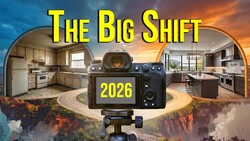
Commercial real estate photography is getting more serious, and agents are paying attention. If you already shoot residential listings, there’s a clear opening to step into higher-paying work without starting over.
Coming to you from Nathan Cool Photo, this practical video breaks down the difference between branding shoots and transactional commercial real estate listings. The bigger opportunity sits in the transactional side, where buildings are listed for sale or lease. These listings function a lot like residential ones, which lowers the barrier to entry if you already know that world. You’re not reinventing your process. You’re adapting it to larger spaces, different client expectations, and more detailed marketing materials. The demand is rising as more decision-makers review properties remotely and narrow options online before ever stepping on a plane.
Shortlisting drives much of this shift. Executives and investors scan listings and quickly eliminate what looks unimpressive. Strong images move a property into the “worth a closer look” pile. Agents know this and compete hard to win listings, using professional media to impress property owners during presentations. When one broker upgrades their visuals, others follow. You’re seeing better photos on sites like LoopNet and Crexi for that reason. The agents are not just selling buildings. They’re selling themselves.
Commercial listings also rely on marketing pieces you may not deal with in residential work. Offering memorandums, often called OMs, are detailed brochures that present the property, the location, traffic patterns, and business potential. These are polished documents, printed professionally, shared on Zoom calls, and handed out in boardrooms. They require strong exterior photos, interior coverage, drone perspectives, and detail shots that highlight assets like dock doors, power panels, parking ratios, and ceiling heights inside warehouses. A 32-foot clear height in a distribution space isn’t a footnote. It’s a selling point that needs to be shown clearly in an image.
Video, drone clips, and 3D tours are becoming common additions. If you use tools like the iGUIDE Planix XR1 for accurate floor plans, you can replace the need for brokers to measure spaces themselves. Accuracy matters in commercial deals. You can also offer advanced editing services that go beyond standard color and vertical corrections. Item removal and virtual staging help brokers present potential during executive presentations. These enhanced images may never appear on the public listing, but they help secure decisions behind closed doors.
Pricing works differently. Instead of flat per-property fees, many charge hourly with a two-hour minimum. Travel time is often billed. The spaces are larger, and you’ll walk more, so keeping gear simple helps. HDR blends, occasional flambient techniques, and window pulls still apply, but you’ll spend more time collaborating with the broker to capture what matters to investors rather than what feels pretty.
Finding clients takes initiative. Search LoopNet or Crexi by your city, sort by oldest listings, and look for weak photos. Reach out to the listing agent directly. Offer a discounted reshoot or introduce yourself for upcoming properties. The first job builds the portfolio you need. From there, referrals start to move. Check out the video above for the full rundown from Cool.


Join the Fstoppers community for free
-
Post comments and join in the discussions
-
Browse the site ad-free
-
Share your work and get featured in the community
-
Compete in the photo contests for fun and prizes
1 Comment
If you purely looking at it from a money perspective yep there's money in real estate photography but I'll say this as someone that likes to be creative it is the most bat shit boring photography you'll ever do. You've given a bunch of rules that you really have to stick to and there's very very little creativity in it and that's not a path I wanted to go down. I could make money out of real estate photography but for me making money is not my goal never has been even though I shoot professionally and do make money which is kind of a counteraction to that I suppose. It is just that shit boring.