You arrive somewhere beautiful, raise the camera, and every frame comes back looking like a postcard someone else already took. Too much to look at can stall your composition faster than too little, and the fix often starts with seeing less of the scene through a viewfinder, a long lens, or an in-camera crop mode.
Omar Gonzalez spent a fall trip in Vermont fighting exactly that problem, and he's candid that the first day went badly. Everything he shot felt like a tourist snapshot, and he got frustrated enough to stop vlogging altogether. That turned out to have an upside. With the camera talk gone, he started enjoying the fog, the drive, and the trees changing color around him. Gonzalez splits image makers into two rough groups: people who can scan a scene and pull a dozen hidden photographs out of it, and people like him who have to see a frame before they recognize it. If you're in the second group, a crowded, gorgeous location is one of the hardest places to work.
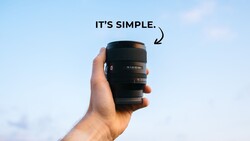
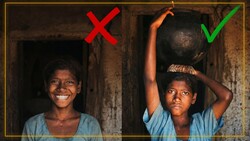
His answer is a set of what he calls compositional blinders, three ways to cut down the visual noise until a picture shows up. The first is to close or turn off the rear LCD and work only through the viewfinder. A small window pressed against your eye removes the periphery and makes you build one frame at a time instead of taking in the whole valley. The second is a long lens. A 70-200mm zoom is a reasonable start, Gonzalez carried a 300mm, and he points out that something as long as 1,000mm will pull out shapes nobody standing beside you will notice. At those focal lengths, context drops away, and a viewer reads patterns and forms instead of a place. He already uses this approach for abstract city work, and he says it works just as well on the road.
Painters solved this long before cameras existed. Art students still carry a small cardboard window, sometimes called a viewfinder card, to isolate a section of a landscape before they sketch it. In the 18th century, landscape painters and tourists used the Claude glass, a slightly convex tinted mirror that shrank a sprawling view into a compact, framed image. Gonzalez's suggestion that newer shooters practice composing with their eyes alone, zooming and framing in their heads without a camera, sits in that same tradition. The crop mode on the Hasselblad has its own history, too. Hasselblad and Fujifilm released the original XPan in 1998, a rangefinder that exposed 24 x 65mm panoramic frames on ordinary 35mm film, and its look built a loyal following among street and landscape shooters. If you try this on your next trip, pick one constraint per outing rather than switching between all three. A morning committed to a single long focal length or a single aspect ratio forces your eye to adapt, and that adaptation is what carries over when you go back to shooting freely.
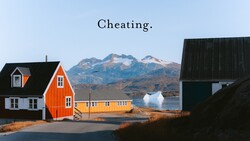
One morning, walking around the small town where he was staying, Gonzalez used the third method, an in-camera crop mode. On the Nikon Z6III, he shot with the square crop, and he flags a Nikon behavior you should know before relying on it. When you set a crop like 1:1 on that camera, the RAW file is cropped too, so the pixels outside the square are gone for good. Many other systems crop only the JPEG and keep the full sensor area in the RAW file, which leaves room to change your mind later. On the Hasselblad 907X & CFV 100C, he used the XPan mode, which chops off the top and bottom of the frame and leaves a long, cinematic strip to fill.
That XPan strip paid off at an old historic rail yard. With the vertical dimension mostly removed, Gonzalez could build images from left to right, catching one element on one side and another element across the frame, without trying to make every corner of the scene work at once. He describes it as noticing "there's something over there" and simply letting the wide shape hold both. After that, he started having fun and came away with photographs he was happier with.
The Vermont photographs Gonzalez brought home are in the video above.



Join the Fstoppers community for free
-
Post comments and join in the discussions
-
Browse the site ad-free
-
Share your work and get featured in the community
-
Compete in the photo contests for fun and prizes
1 Comment
Leafing one of the hardest to capture mainly to a native of the area one day it is there and the next gone you just live it. You got lucky not having a Nor'easter or that first cold front with high winds like mostly in October that brings the first snow fall.
You also have clouds in the sky where most try to not get in the frame for they will be bright and blown out with no detail also on that note most will want to capture on a cloudy day for it reduces the shining of light refection off the leaves. BUT camera setting to play with, like when capturing white bird or birds in general to get sharp and in focus you use your exposure wheel and go down -3 ev, My A7RV has a -5EV and with Zebras on you go so far as to get rid of them but in post just increasing shadows/exposure etc. you get a bright and sharp image as long as you have a camera with ISO Invariance, just saying know your camera and you know what you can do.
Well fast glass is not really needed for you will "Be there at f/8 or around that and if in manual mode you just up the SS but some how the camera in Aperture gets the right speed, you pay for it!!!
Yes a great telephoto with great range is a must, I use the Sony FE 24-240mm f3.5-6.3 OSS but in APS-C mode 36-360mm in camera crop. close to a 400mm but remember in post you can crop more also. Also carry a 35mm or 50mm macro for those close ups of leaves and other things. If you feel the need a FE 200-600mm in APS-C 900mm with a 2x teleconverter 1200 then in APS-C 1800 mm on shoulder harness and on your chest at the ready maybe with a stand by camera.
You have to remember it is your peripheral vision not clear or sharp that overwhelms and remember to hold out your arms and put thumbs together with fingers up to help.
Also on maps find rivers or streams or small falls with floating leaves. Some things are close even. So a walk on a trail or two also and getting out of your car and just stand in front and capture the road ahead with all those colored leaves on the road.
One thing photographers for get about in the woods at fall time is one Bears so have Bear spay another is Diamondback rattlers that are under leaves and fallen trees and limbs so snake boots or snake shield plates on your shins up to knees but beware when sitting or even look twice when squatting to do #2. A short spray of bear spray before sitting or kneeling. Yes photographers have been found dead deep in the woods due to snake bites unseen for years so wear one of those gear finders or a emergency GPS on your back pack shoulder. You just never know.
I once came across a full skeleton of a deer with leaves all over it. Just saying be aware and have a friend with you but tell someone where you are going and if posable have some one tracking your phone.
Also If you have a dashcam you can get an image that you could not stop for like a deer on the side of the road.
A great thing to have or rent is a Humvee with a turret on top with a driver so you could capture on the way while on back dirt roads! Just thinking about what if!!
When driving those back roads using Map app in car so not to get lost always have a full tank.
1. You can see a story and capture it. Pa. Grand Canyon
2. Just leading lines with leaves
3. Stopped after crossing a bridge and walking back with with Camera EV at -5EV to get cloud detail.
4. While driving on a dirt road in the Pa. Grand Canyon as the passenger with camera on my lap stopping next to this deer that just stood there looking at me.