

After years of evolving as a photographer and filmmaker, I realized my website was cluttered and was not landing paid client work. With guidance from a marketing strategist, I honed my messaging and focused on how I help clients. Let’s discover how we can transform our site into a compelling platform that resonates with our audience.
I have had my website up and running for more than 12 years, starting out as an amateur photographer. When I finally left my corporate job in 2024 and went full time, I revamped the site to ensure I could land local photography and filmmaking jobs, since websites are often the first point of contact. A harsh critique from a marketing strategist made me realize that my website was completely confusing my audience. In this article, I want to share my journey of fixing my website and the lessons learned so that it may be of benefit to you.
The Trap of the Cluttered Portfolio
Up until 2015, my website focused solely on landscape photography, but as my interests grew to include street photography, portraits, and occasional model shoots, it became a place to showcase them as well. My YouTube vlogging habits morphed into serious filmmaking, including documentaries, travel films, and other short films about art and athletes. I showcased these films on my website, too. On top of that, I hosted photography courses on my website. I was even offering photography services for hire, listing family portraits and corporate shoots.
At one point, I hired a marketing agency, and they flooded my pages with heavy text that simply did not sound like me. I was told to use as many keywords as I could for search engines.
To verify that I did a good job, I copied and pasted my website URLs into an AI tool to see if it represented me well. The AI gave me green signals and reached a positive conclusion, but it was just pulling generic internet research. I mistakenly felt happy about it, completely unaware that my message was entirely lost.
- Stop trying to be everything to everyone: You must avoid listing every possible niche, style, or service on your website.
- Do not rely blindly on AI or marketing agencies: You should not let algorithms or outside agencies dictate your voice. AI might give you a green light based on generic internet standards, but it cannot define your unique identity or how you actually sound.
- Keep your messaging authentic: You must ensure the text on your website actually sounds like you, rather than a corporate brochure full of fluff.
The Wake-Up Call
In 2025, I met a marketing strategist in Spain who acts as a thinking partner for solo creators. During our sessions, she asked me to set my website aside for a moment and simply tell her who I am. I gave her my standard response: I am a photographer, a filmmaker, and a writer. I added that I teach photography and proudly explained my corporate background as a software architect. I even handed her my printed visiting cards. Her feedback was harsh but incredibly necessary. She told me that I sounded like just another photographer and that she would forget me within minutes because I had not defined myself. She pointed out that, because of my background, I was approaching my business as a project manager rather than a marketing strategist. I put my ego aside and realized she was absolutely right.
- Ditch the standard job titles: You should stop introducing yourself simply as a "photographer" or "filmmaker." These titles are too common and do not separate you from the crowd.
- Define your lasting impression: You need to recognize that potential clients will quickly forget you if you do not communicate your unique value immediately.
- Seek honest, objective feedback: You should find a trusted mentor or strategist who will give you harsh, truthful critiques about your current branding, rather than just telling you what you want to hear.
Defining How You Help
To fix this, she gave me a specific exercise: define myself in 10 words, or at most, under 30 words. The focus was no longer on what I am, but strictly on how I help people. She instructed me to look through my past client testimonials and ask myself why people actually hired me. When I dug into those testimonials, the real value I provided became obvious. My introduction transformed from a list of job titles into an actionable solution.
I kept "Filmmaker, Photographer and Educator" on my cards, but my actual definition changed. I started saying, "I craft honest, cinematic films that share your story and connect with your audiences on a deeply human level." If I met a potential student or a learner, I started saying, "I help people master photography with my practical courses and writing so that they stop stressing over gear and start creating work that inspires." These sentences are now reflected on my website's landing page, and this theme spreads across my website. If you are looking to sharpen the craft behind that message, The Well-Rounded Photographer: 8 Instructors Teach 8 Genres of Photography is a useful way to figure out which genre deserves your focus.
Here is what you should do:
- Focus on how you help, not what you do: You must write a 10- to 30-word statement that clearly defines the problem you solve for your clients.
- Analyze your testimonials: You should read through past feedback to discover the actual, practical reasons clients choose to work with you.
- Make your value actionable: You need to clearly state the end benefit your clients receive, such as capturing their honest stories or learning photography without the technical stress.
Prioritizing and Purging
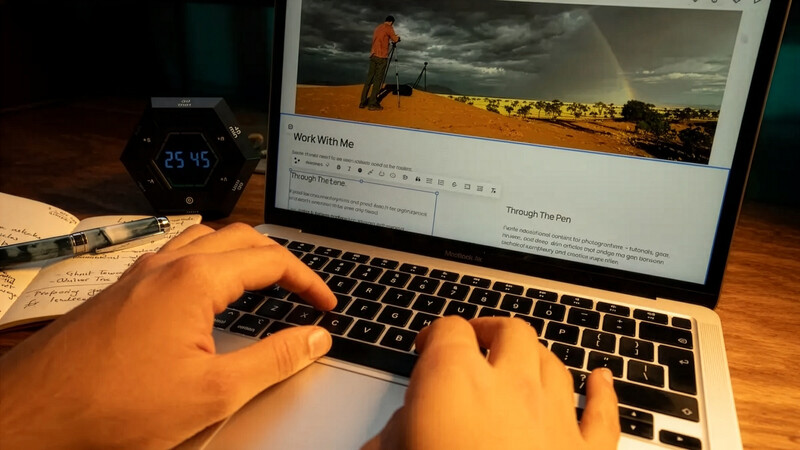
Armed with this clarity, we looked back at my chaotic website. The thinking partner told me to pick my top two priorities and ruthlessly cut the rest. My primary goals were clear: I wanted to land cinematic storytelling projects and sell my photography courses. I removed street photography, portraits, corporate shoots, and one-on-one workshops from my site entirely. They were just low-priority wishes, not my core business. I realized that Instagram was a better place to showcase that work than confusing a potential client on my website. I completely revamped the website to make it about the visitor, rather than a monument to myself. I organized my portfolio strictly around what mattered, displaying documentaries first, cinematic films next, and keeping only landscapes in my photography gallery. My "Work With Me" section became clear and concise. If landscapes are going to carry your gallery, Photographing the World 4: Advanced Landscapes covers the shooting and post-processing that make those images worth leading with.
Here is what you should do:
- Pick your top two priorities: You must identify the two main services or products that actually drive your business and focus your website entirely on them.
- Purge low-priority offerings: You should delete the services you offer only occasionally or out of obligation. Keep your portfolio tightly curated and relevant to your main goals.
- Make the website about the visitor: You need to stop making your website about your own ego. Restructure your landing pages and service sections to directly address visitors' needs and explain exactly how you can serve them.
As a result of this transformation, even my About Me page changed from a long story about my corporate background to a page about how I help people.
Final Remarks: Impact on My Business
Ever since the revamp of my website, I confidently send people to my website instead of sending them a bunch of URLs pointing to specific pages on my website, my YouTube channel, and my Instagram. I have been contacted several times and have landed two filmmaking projects after the updates to my website. I believe it is because of the clear, concise message available to visitors. The website is about how I help people while also showcasing the films and photography I am truly proud of.





Join the Fstoppers community for free
-
Post comments and join in the discussions
-
Browse the site ad-free
-
Share your work and get featured in the community
-
Compete in the photo contests for fun and prizes
2 Comments
Your timing was perfect, Muji. I've been giving this a lot of thought the last couple weeks and coming to all the same conclusions that you have. It's not easy though, moving from about me to about them. In a lot of cases, I wasn't entirely sure what my customers even needed beyond the product itself. For most of my first 40 years in business, there were lots of prospective customers and not very many competitors. I never really had to figure out what to say. I could rely on walking randomly into a few local businesses and coming out with an order.
However, with the internet there are millions of photographers selling photography, so the old statistical probability of selling stuff just by getting in the way of enough prospects no longer works. In other words, I can walk in and out of businesses all day long, day after day for months, and sell nothing. So I absolutely have to distinguish myself from the crowd of photographers by solving a problem in addition to offering a product. Not only that, cold calling businesses on the street no longer even yields a two-minute introduction with an owner or manager. It wasn't always that way but nowadays everyone is out to lunch or in a meeting and can not be disturbed. I don't know how you feel about SEO but I think we have to take a more proactive role in getting the right prospective accounts to our website before we even have a chance to tell them what we can do for them. As futile as it seems, a voice mail coupled with an email to the decision maker often gets them to my website, where the story begins. Crafting that story is difficult when you've never had to do it.
Thank you for sharing the insights.