
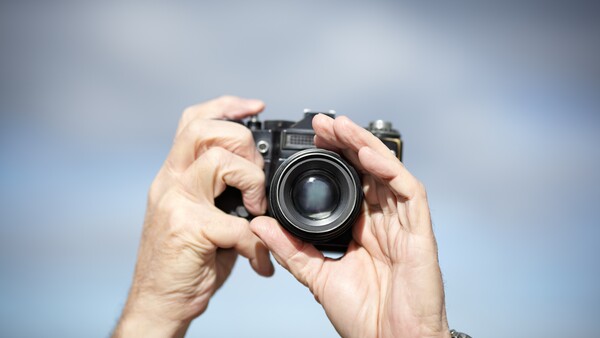
There's a lie we tell ourselves about photography equipment: that the camera doesn't matter. It's a comfortable fiction that lets us sleep at night, convinced that our artistic vision transcends mere machinery. But here's the uncomfortable truth that every photographer who lived through the transition from point-and-shoot to SLR knows deep in their bones: the moment you first wrapped your hands around a "real" camera, everything changed.
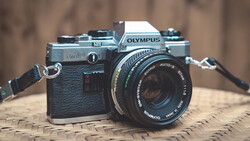
For me, that camera was a Canon EOS Rebel K2. Your first real camera might have been a Nikon N80, a Pentax K1000, or any number of entry-level SLRs that served as gateways into serious photography. The specific model doesn't matter—what matters is that moment when you realized you weren't just taking pictures anymore. You were making photographs.
The Physical Reality: When Cameras Had Gravity
Weight as a Statement of Intent
The first thing that hits you isn't the viewfinder or the manual controls—it's the weight. My Canon EOS Rebel K2, even without a lens attached, had a presence that demanded attention. Where a compact camera could disappear into a jacket pocket, the K2 announced itself. This wasn't something you forgot you were carrying.
That weight wasn't just about physics—it was about psychology. A camera you could slip into your pocket let photography remain casual, almost accidental. But this camera required a strap that could handle its bulk, a bag designed for purpose, and most importantly, intentionality. You didn't accidentally bring this camera somewhere. You made a conscious decision to be a photographer that day.
The grip molded itself to my freshly-graduated-from-high-school adult hands rather than prioritizing compactness. The controls suggested extended shooting sessions. Even the sound it made—that distinctive mirror slap when the shutter fired—provided feedback that serious machinery was taking your photograph seriously. This was equipment that expected commitment and rewarded it with capability.
The Language of Serious Equipment
Everything about handling a real camera spoke a different language from the compact cameras most of us had used before. The lens mount, solid and precise, suggested permanence and system thinking. The viewfinder didn't just show you the scene—it invited you in. The manual controls weren't hidden in menus but presented themselves prominently, begging to be used.
Even the way you held it changed your relationship to photography. No more arm's-length shooting while squinting at a tiny LCD screen or looking through a non-SLR viewfinder with parallax error. Your eye came to the viewfinder, your face met the camera, and suddenly you were inside the frame instead of just looking at it. The camera became an extension of your vision rather than a separate tool you operated.
The Viewfinder Revolution: From Guessing to Knowing
Seeing What the Lens Sees
Perhaps nothing distinguished a real camera more dramatically than looking through that optical viewfinder for the first time. After years of compact camera viewfinders that showed you an approximation of what you might capture, the through-the-lens view of an SLR was revelatory. What you saw was exactly what the lens would capture. No parallax errors. No guesswork about framing. No mental calculations for close-up work.
The difference was like switching from looking at a photograph of a window to actually looking through the window itself. There was depth, presence, and immediacy that separate viewfinder windows could never provide. You weren't composing a photograph anymore—you were inhabiting the scene you wanted to capture.
The Autofocus Revolution
My Rebel K2 offered multiple autofocus points spread across the frame, something I'd never experienced before. Suddenly, I had to make conscious decisions about not just what to photograph, but precisely where within the frame the camera should achieve critical focus. The concept of focus tracking, of selecting specific focus points for different situations, introduced layers of creative control that simply didn't exist in the point-and-shoot world.
This wasn't just technical advancement—it was creative liberation. Off-center subjects could be tack sharp. Moving subjects could be tracked across the frame. The camera became a partner in creative decision-making rather than just a device that captured whatever you pointed it at.
Manual Controls: The Democracy of Creative Decision
Liberation from Program Mode
The Canon EOS Rebel K2 offered something revolutionary to someone coming from compact cameras: choice. Real choice, not just a selection of scene modes that made mysterious adjustments behind the scenes. Aperture priority let you control depth of field. Shutter priority let you freeze motion or embrace blur. Manual mode handed you complete creative control.
At first, this freedom was terrifying. Compact cameras had trained me to trust the machine's judgment about exposure, even though it was wrong a lot of the time. But gradually, as I learned how aperture affected depth of field and how shutter speed controlled motion, I realized the camera was teaching me to see differently. Every photograph became a series of conscious decisions rather than a single moment of recognition. The physical interface of these controls mattered enormously. The main command dial fell naturally under my thumb. The exposure compensation button was exactly where my finger expected to find it. These weren't just conveniences—they were invitations to experiment with creative control that compact cameras had never offered.
The Learning Curve
This transition came with a temporary price. For the first few months with my K2, my "keeper rate" actually went down. The camera gave me enough rope to hang myself with poor exposure decisions, missed focus, and camera shake from longer focal length. But it also gave me enough rope to pull myself up to the next level of photographic competence.
The complexity wasn't merely technical—it was philosophical. Compact cameras had made photography about capture; the K2 made photography about choice. Every photograph now required decisions about depth of field, focus point selection, and exposure strategy. For someone accustomed to point-and-shoot simplicity, this represented a fundamental shift in how I approached the craft.
The Psychological Transformation: From Casual to Committed
Carrying a real camera sent unmistakable social signals. Other photographers could spot an SLR user from across a room, and that visibility created immediate community. The camera became a conversation starter, a badge of seriousness that marked the transition from casual photography into deliberate artistic pursuit.
This social aspect created feedback loops that reinforced learning. SLR users naturally gravitated toward conversations about photography technique, camera clubs, and educational resources. The equipment itself became a community identifier in ways that compact cameras never achieved. When someone showed up to a photo walk with an SLR, everyone assumed they knew what they were doing. That assumption created pressure to live up to the equipment, which ultimately made you a better photographer.
The Film Factor: When Every Frame Mattered
The Economics of Deliberation
Shooting with the Rebel K2 meant shooting film, with all the discipline that implied. Digital photography was still years away from mainstream affordability, meaning every frame carried economic weight. At roughly fifty cents per exposure including film and processing, you learned to be selective in ways that digital would later eliminate.
The delay inherent in film processing created unique psychological dynamics. You might wait days or weeks to see results from a shooting session, creating anticipation and delayed gratification that reinforced the importance of technical competence. Bad exposures weren't just aesthetic failures—they were economic losses that motivated more careful technique.
The Tactile Relationship
Film photography created a physical relationship with your images that digital has never quite replicated. Loading film into the camera, advancing frames manually, rewinding at the end of a roll—these actions created ritual and rhythm around photography. You were aware of frame count, protective of remaining exposures, strategic about when to change rolls. The sound of film advancing, the satisfying click of the film canister being removed—these tactile experiences created memories that persist decades later. Modern cameras might be technically superior in every measurable way, but they've never replicated the visceral satisfaction of that mechanical interface between photographer and medium. There was a certain je ne sais quoi that I've never been able to find in a digital camera of any sort.
Technical Foundation: Learning Photography the Hard Way
Manual Exposure as Education
The Rebel K2 forced me to understand the relationship between aperture, shutter speed, and ISO in ways that automatic compact cameras never could. When you control these settings manually, you internalize how they affect not just exposure but creative expression. Wide apertures for shallow depth of field. Slow shutters for motion blur.
This technical foundation proved invaluable when digital photography arrived. Photographers who learned manual exposure on film cameras adapted quickly to new technology while maintaining their hard-earned understanding of fundamental photographic principles. The camera had taught us to think photographically, not just to operate equipment.
The metering system in the K2, while fairly sophisticated for its time and price point, still required interpretation and understanding. You learned to read light, to compensate for backlit subjects, to understand when the meter might be fooled by unusual lighting conditions. These skills transferred directly to every camera that followed.
System Thinking
Perhaps most importantly, the K2 introduced the concept of photography as a system rather than just a tool. Different lenses for different purposes. Filters for specific effects. Flash units for controlled lighting. The camera was the heart of an expandable system that could grow with your interests and abilities.
This system thinking changed how I approached photography problems. Instead of accepting the limitations of a fixed-lens camera, I began thinking about what was right for each situation, and I only started with one zoom lens. Just having variable focal lengths was a revelation.
The Modern Legacy: What We Lost and What We Gained
The Digital Disruption
The transition from cameras like the K2 to digital SLRs represented both tremendous progress and subtle loss. Digital eliminated the cost penalty for poor technique, making photography more accessible but also removing much of the economic discipline that film imposed. We gained the ability to experiment freely but lost the contemplative approach that expensive film encouraged.
The fundamental concepts that distinguished real cameras from point-and-shoots—manual exposure control, interchangeable lenses, through-the-lens viewing—remain unchanged in today's mirrorless systems. The implementation has evolved dramatically, but the core functionality that made SLR ownership transformative persists across the digital divide. Modern cameras have resolved most of the technical limitations that made film SLRs challenging while maintaining the essential character that made real camera ownership transformative. The psychological impact of serious equipment remains largely unchanged, even as the technology has evolved beyond recognition.
The Tactile Memory
Perhaps the most profound legacy of cameras like the Rebel K2 lies in the tactile memories they created. The weight of the mirror slap, the resistance of the film advance, the mechanical precision of the zoom ring—these physical interactions created a connection between photographer and equipment that modern cameras struggle to replicate. The sentimentality with these cameras is significant for many of us.
Practical Applications: Lessons for Modern Photographers
What Today's Shooters Can Learn
The experience of transitioning to a real camera offers valuable lessons for contemporary photographers, regardless of their equipment choices. The key insights from the film SLR era remain relevant:
- Intentionality Matters: The weight and complexity of cameras like the K2 forced photographers to be deliberate about their shooting. Modern photographers can benefit from artificially imposing similar constraints—setting daily shot limits, using single focal length lenses, or committing to fully manual exposure modes.
- Technical Foundation Enables Creativity: Learning manual exposure control provided creative flexibility that served throughout my career. Modern shooters should resist the temptation to rely exclusively on automatic modes, even when those modes are highly sophisticated.
- Investment Drives Engagement: The financial and psychological investment required by film SLR systems created deeper engagement with photography. Modern photographers might consider ways to increase their investment—joining photography groups, entering competitions, or committing to long-term projects.
Equipment Philosophy for the Digital Age
My Rebel K2 era established principles that remain valid for modern equipment decisions. Choose capability that exceeds your current skills rather than merely meeting them. Think in terms of systems rather than individual devices. Don't underestimate the value of equipment that feels substantial and purposeful, even if modern engineering allows for lighter alternatives. The physical relationship between photographer and equipment matters more than specifications suggest. The camera that challenges you, that demands your best effort, that makes you a more thoughtful practitioner—that camera, regardless of its age or technology, becomes your real camera.
The Broader Cultural Impact
Photography as Democratic Art Form
Cameras like this played a crucial role in democratizing serious photography. By making professional-level features accessible at consumer prices, these cameras expanded the population of people who could meaningfully engage with photography as an art form rather than just a documentation tool. This democratization had profound cultural implications. Wedding photography, portraiture, and event documentation were no longer exclusively professional domains. The rise of semi-professional photographers—people with day jobs who shot weekends for extra income—can be traced directly to the accessibility of affordable SLR systems. The impact extended beyond economics into artistic expression. Photography contests and exhibitions saw dramatic increases in participation as technical barriers to quality image-making decreased. Museums and galleries began recognizing amateur photographers whose work achieved professional quality using accessible equipment.
Educational Transformation
The widespread adoption of accessible SLR cameras revolutionized photography education. Community colleges and continuing education programs experienced massive increases in photography course enrollment. Photography workshops evolved from professional development seminars into popular leisure activities. Cameras like the K2 also created a new category of photography educator—the advanced amateur who could teach basic technical skills to beginners. Camera stores became informal education centers, with knowledgeable staff providing tutorials that would have required professional instruction just years earlier.
Personal Reflection: The Camera That Changed Everything
Looking back, my Rebel K2 wasn't just my first real camera—it was my first real photography teacher. It demanded that I understand exposure, composition, and timing in ways that no automatic camera ever could. It rewarded careful technique and punished sloppy habits. It made me work for good photographs in ways that ultimately made me a better photographer.
Many photographers who made the transition from compact cameras to SLRs during this era have similar stories (and I hope you're share yours). Different camera models, different specific experiences, but the same fundamental transformation from casual picture-taker to serious photographer. The equipment didn't just capture better images; it created better image-makers.
Conclusion: The Weight of Memory and Progress
The Rebel K2, and cameras like it, occupy a unique position in photographic history. They were simultaneously the culmination of film camera development and the foundation for everything that followed. For photographers who made the transition from compact cameras to real cameras during this era, these machines represented invitations to take photography seriously, complete with all the responsibilities and rewards that seriousness entailed.
The weight of the camera in your hands, the precision of the viewfinder, the authority of manual controls—these weren't just features, they were transformative experiences that changed how photographers saw themselves and their relationship to the craft. The learning curve was steep, the investment significant, and the commitment real. But for those who made the journey, the rewards justified every challenge.
Today's photographers enjoy unprecedented technical capabilities at prices that would have seemed impossible in the film SLR era. Modern cameras eliminate most of the technical barriers that made cameras like the K2 challenging to master. This is undeniably progress—photography has never been more accessible or capable of producing stunning results. Yet something intangible was lost in this evolution. The deliberation that film costs imposed. The satisfaction of mastering complex manual controls. The pride of ownership that came with serious equipment. The physicality of the mechanics in a film camera. These elements combined to create a particular kind of photographic education that shaped not just technical skills but artistic sensibility.
For those who remember the thrill of first looking through an SLR viewfinder, the satisfaction of nailing manual exposure, or the excitement of seeing perfectly sharp prints from carefully composed negatives, cameras like the Rebel K2 represent more than equipment. They represent a moment when photography demanded more from us, and in return, gave us more than we knew was possible.
That relationship between photographer and equipment, mediated by weight and complexity and commitment, created foundations that persist long after the cameras themselves have been relegated to closets and attics. The technical skills translate directly to digital equipment. The compositional discipline carries forward to unlimited frame counts. The creative confidence built through mastering real cameras enables artistic risks that point-and-shoot users rarely attempt.
In the end, the question isn't whether cameras like the Rebel K2 were objectively better than what came before or after. They weren't. They were simply different in ways that mattered enormously to the photographers who used them. They offered a particular kind of photographic experience—demanding, rewarding, transformative—that shaped a generation of image-makers.
For photographers who never experienced this transition, the lesson isn't to seek out vintage equipment or artificially impose difficulties. It's to understand that the relationship between photographer and equipment matters more than specifications suggest. The camera that challenges you, that demands your best effort, that makes you a more thoughtful practitioner—that camera, regardless of its age or technology, is your real camera.


Join the Fstoppers community for free
-
Post comments and join in the discussions
-
Browse the site ad-free
-
Share your work and get featured in the community
-
Compete in the photo contests for fun and prizes
13 Comments
My first real camera was a Pentax 35mm of some sort or another. At more than 35 years since I bought it, it was way too long ago to remember the details about that camera. I don't remember whether I used auto or manual settings. The most I had ever used prior to that was a Kodak Instamatic camera. But my expectations were high with my 35mm camera. And I remember distinctly, as if it were yesterday, the disappointment I felt after getting a couple rolls of film developed. My pictures looked nothing like the ones I was seeing in Sports Illustrated or National Geographic. The camera was surely defective. How could I have bought an expensive camera and produced such crappy pictures? Made no sense. So other than a few snapshots of my young kids at that time, I never had the motivation to develop better photography skills. It wasn't until digital 5MP cameras came along in about 2003 that I undertook photography seriously. Without the cost of film and developing, I was committed to figuring out why my pictures were so bad, and how to improve.
Ed, your story really resonates with me. That moment of expecting Nat Geo-quality results and getting... well, not that... is such a universal experience. I think we all went through that humbling realization that the camera was just the first step.
My first real camera was a Chinon CS with a 50mm f1.7 lens, it was manual exposure only and used match needle metering. It was also very heavy and awkward to hold I remember. I don't miss 35mm film photography one bit and I am so thankful that digital photography came about. I don't want the heft of a DSLR these days or the hassle of changing lenses, I am quite happy using a compact or a bridge style camera such as my Lumix LX1 and my Olympus Stylus 1, both old cameras I know but both serve me well
Match needle metering is my favorite! I thought it was so neat when I was a kid. Those fully manual cameras were unforgiving teachers, but they sure made you understand light.
My first serious camera was a Canon FX, back in the mid-'60s. Totally manual, and I made the dog's breakfast of everything I tried to shoot. It wasn't until the late '70s that I finally found a serious mentor that guided and encouraged me. Evolving forward a bunch of years, and a truckload of lessons have been learned; some were easy, some were painful. One of the painful ones had to do with ergonomics. I had bought a Lumix GX8 which delivered great images - BUT - the ergonomics sucked pond water in my hands. The meat of my thumb overlaid the white balance switch on the camera back and I found myself inadvertently changing the white balance. Fortunately, I shoot RAW and could fix the images in post. Then, along came the Lumix G9. All the critics were raving about this camera. I found a local dealer that had one in stock, and went to try it on. The ergonomics are as close to perfect in my hands as I could want. It went home with me that day and the GX8 was sold at the same time. Lesson learned, somewhat expensively. The big lesson here is "Fit to Purpose". I see no good reason to move to another platform, having found the instrument of choice that truly fits me and delivers great results. Sadly, Panasonic has found it appropriate to change the wonderful form factor of the original G9 with the introduction of the G9M2, and the fit is far inferior for me. The instrument of choice helps me to be a far better photographer with its superior fit to body and purpose, and I have come to know it intimately by spending hours with it in my hands. There is complexity in cameras with extensive menu systems, yet understanding the menus and documenting the selections made me learn and be a better photographer all around.
What a journey! Your point about ergonomics is so important and often overlooked in reviews. I've seen too many photographers (including me) struggle with cameras that had great specs but just didn't fit their hands or shooting style. That "fit to purpose" philosophy is spot on.
It's all a matter of perspective...
Where do I start? I bought a Canon AE-1 in the Fall of 1977 and used the shutter priority of the camera exclusively for a month or so and then wondered what would happen if I went off the auto setting. What happened was dreadfully over and under exposed pictures even with Fotomat processing trying to compensate from my errors. I went to the library and took out book after book until I had a basic grasp of what I was doing. I'm totally self taught (consider that good or bad as you wish) in photography so I paid the price to learn. Fast forward to processing B&W negs and color slides (positives) using a Jobo machine and turning my bathroom into a darkroom and then tearing it all down when the wife needed to take a shower. The amount of labor and time to play the photography game in manual days was large not to mention the costs. I used to buy 100 foot lengths of Ektachrome 64 (out of date by the way and run exposure tests on them) to save on the costs of film. And on and on.... until digital photography came along and made my life easy. Lamenting about the heft of a camera, the limitations making one think in a different way can all be duplicated using a modern digital camera. I would never want to go back to all that time and labor intensive work. Be glad and rejoice that modern technology gives us all the chance to live in either world.
Lewis, the AE-1 was such a gateway drug for so many of us. In fact, an A-1 was the first camera I bought as an adult looking to get back into film. You're absolutely right about the labor intensity of film photography. Modern digital really does give us the best of both worlds; we can impose film-like constraints when we want to learn, but we don't have to live with them.
My first real camera was the fully manual Nikon FM. It simply had a 3 LED meter in the viewfinder. It was a very accurate light meter. Started out with a Nikkor 50mm f1.8 and then got a Vivatar 28m f2.8. Even after getting a telephoto, I much preferred using the wide angle.
Reminds me of my favorite camera, my Rollei 35. It has a similar LED meter in the viewfinder!
Ah to be young again. Holding my Speed Graphic. Nothing like the sound of the film holder shoved into the back. Shooting NCAA basketball with a dozen film holders, that's 24 exposures for the entire game. Then run over to the darkroom to develop them. Pick two of the wet negatives to print. Take the two prints to the sports editor. Who'd quickly look, tear one up tossing it in the trash. Why do we pay you for such junk? Placing the other on the machine that transmitted the print to the press for tomorrow's paper. Want a bigger print, just aim the enlarger at the wall. When you start with a 4x5 inch negative, print size is whatever you want. Is it more fun now with my D850's. Don't miss the chemicals. But sometimes I miss the black cloth on my head, looking at the image, upside down, on the ground glass. I do like having my iPhone in my shirt pocket, always ready. However I've found the phone shots are better if there is a lens cloth in the pocket too.
Now you're talking about serious photography! A Speed Graphic for sports - that's both impressive and slightly terrifying. My favorite sports photo (Ty Cobb sliding into third base by Charles Conlon) was taken on a large format camera too!