Most people learn the rules of composition before they ever learn how to see. You’re told to line things up with the rule of thirds, to balance shapes, to avoid the center. But if you’ve ever felt like those rules start to box you in, you’re not alone. Creativity slips away when you start thinking about what you should do instead of what looks right.
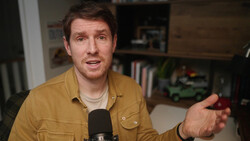
Coming to you from Rick Bebbington, this thoughtful video questions the way photographers are taught to follow compositional “rules.” Bebbington argues that they’re not really rules at all, just guidelines to help you understand why some images feel right. Once you learn them, though, they can start to act like a cage. He points out that staying inside those boundaries can make your work predictable and safe, which might be fine at first, but it won’t get you far. He talks about letting go of formulas and instead focusing on what draws your attention in the first place. That instinct, he says, is what gives your work personality and emotion.
Bebbington describes his own process as almost unconscious. When he’s out shooting, he doesn’t think about diagonals or thirds. He looks for what catches his eye, what feels right, and what tells a story. If the subject doesn’t interest him, no amount of “correct” framing will save the shot. He believes composition isn’t about strict order but about connection, how each element interacts with another and whether the photo feels balanced, even if it breaks the rules. His approach is about seeing rather than analyzing, walking around, adjusting, and noticing what changes with every small movement. That kind of awareness, he says, makes more difference than any compositional grid.
He also talks about what happens once you’ve found a scene that pulls you in. The goal isn’t to cram it full of detail but to clean it up, to make sure nothing distracts from what matters. Bebbington gives an example of a simple shot he took of a tree and a road. It wasn’t remarkable, but taking a few steps forward changed everything, removing clutter from the edges and leaving a stronger image. It’s a reminder that moving your position often matters more than changing lenses or settings. That’s also why he dislikes using tripods. They lock you into one point of view, while he prefers freedom to move and refine the frame.
Toward the end, he compares composition rules to scaffolding. You need them at first to build structure, but if you leave them up, you can’t see the finished work. He suggests learning the rules, using them to understand structure, then taking them down so you can explore what feels natural. Light, he says, is the real turning point—when you start noticing how it interacts with your subject and not just the shape of the scene. Pair that with a subject that means something to you, and the composition starts to take care of itself. Check out the video above for the full rundown from Bebbington.



Join the Fstoppers community for free
-
Post comments and join in the discussions
-
Browse the site ad-free
-
Share your work and get featured in the community
-
Compete in the photo contests for fun and prizes
No comments yet