Take a single trip with six different cameras and a hard question follows you home: which one actually earned its place in the bag? Peru offered a real test of that, pitting a video-friendly workhorse against a stills machine that stopped everyone cold.
That question came from a viewer after the Peru travel series, and Omar Gonzalez answers it by pulling back the curtain on the whole kit. He shot the Sigma BF because the trip was built around it, but he also carried a Fujifilm X-T5, a Nikon Z 6 III that his son used, a DJI Pocket 3 for vlogging, an Osmo Action 4, and his phone. Gonzalez is upfront that this was too many cameras, and he prefers fewer cards and fewer folders when the editing starts. But this trip demanded more than one body, and the reasons come down to what each camera could and could not do.
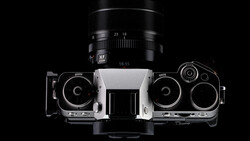
The split was clean. The Sigma BF handled stills, but it struggled with video: no in-body stabilization, and a slower readout that left motion looking wobbly. For video, Gonzalez leaned on the Fujifilm, paired with the Sigma 17-40mm f/1.8 and a wider 10-18mm. Switching between photo and video on the X-T5 is fast, so he kept a magnetic ND filter on the 17-40mm for clips, then pulled it off to grab stills with a Sigma prime. He shot Nostalgic Neg straight out of camera, a profile that suited Peru's reds and desert tones far better than the more Caribbean-looking Provia. On the Nikon side, the FTZ adapter let him mount a 27mm f/1.4 built for DSLRs, a lens he already uses for paid work.
When it came to the actual photographs, though, Gonzalez gives the win to the Sigma BF without much hesitation. The JPEGs came off the card with richer color, finer contrast, and a finished look that needed almost nothing. He nudged the high-contrast frames a little, but most images were done the moment he shot them. The food photography, in particular, stood out. His one real gripe is sharpness. The Sigma BF renders on the crisp side, and there's no in-camera setting to dial it back, which stings if you happen to love the softer character of an original 5D or classic Fujifilm files.
Shooting straight out of camera is having a moment, and this trip shows why it holds up. For years the default advice was to shoot log or raw and fix everything later, but that workflow buries you in color grading and LUTs before a single video goes live. Gonzalez skipped log on the Sony a7 IV entirely for this project so he could turn edits around fast, and he let Fujifilm's film simulations and Sigma's JPEG engine carry the look. If your goal is to publish quickly and travel light, picking a color science you trust and committing to it in the field removes an entire editing stage. Match your profile to the location the way Nostalgic Neg matched Peru's dust and warmth, and the camera does the grading for you.
The takeaway lands on ergonomics versus results. The Fujifilm X-T5 was easier to live with, more versatile with its zooms, and better at jumping between stills and clips in a single afternoon. But no one looking at the final gallery can tell which camera shot what, and by that measure the Sigma BF produced the images Gonzalez keeps coming back to.
Watch the full breakdown in the video above to see how each camera performed across Peru and why the final call surprised even the person who asked.




Join the Fstoppers community for free
-
Post comments and join in the discussions
-
Browse the site ad-free
-
Share your work and get featured in the community
-
Compete in the photo contests for fun and prizes
No comments yet