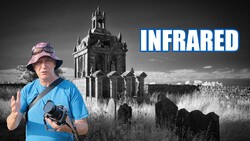
Shooting infrared for nearly 20 years gives you a certain confidence about what to expect when you pick up a converted camera. A full spectrum converted Sony a7 is a different beast entirely.
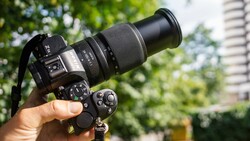
Coming to you from Jason Friend Photography, this hands-on video follows Friend through a real day of shooting with a full spectrum converted Sony a7 along the coast, testing filters, chasing light, and working through some genuine surprises along the way. The core difference between a dedicated infrared conversion and a full spectrum conversion is that the latter removes the blocking filter entirely and replaces it with clear glass, which means every wavelength, UV, visible, and infrared, hits the sensor. That sounds freeing, but in practice it means you're relying on front-of-lens filters like the Hoya R72 to control what the camera actually sees. Friend walks through the logic clearly, including a diagram showing where UV and infrared sit relative to the visible spectrum, which is genuinely useful if you've never thought much about what your sensor is actually blocking.
One of the more interesting moments is when Friend puts on a UV IR cut filter, expecting it to essentially turn the full spectrum camera back into a standard visible light camera. It doesn't work that way. The colors come out noticeably off, and the explanation is straightforward: the camera's processor is calibrated for the manufacturer's specific blocking filter, not a generic third-party one. It's a small but real limitation that shapes how useful the camera is outside of infrared and black and white work. Friend also tests whether standard infrared shooting remains practical on a regular unmodified camera, and the answer is yes, technically, but with serious tradeoffs depending on how modern the body is.
Where the full spectrum conversion genuinely earns its keep is in flexibility. With the Hoya R72 fitted, Friend shoots handheld infrared in conditions that would require a tripod and much longer exposures on an unconverted body. That's not a minor convenience. If you want to shoot infrared spontaneously and move fast, a converted camera changes what's actually possible. Friend also tests a 10-stop neutral density filter for long exposure black and white work at a coastal location he's been trying to get a definitive shot of for some time. There's also a third shooting mode the full spectrum camera makes possible that Friend doesn't fully cover here, saving it for a dedicated follow-up video, and the early results he describes are worth waiting for. Check out the video above for the full rundown from Friend.



Join the Fstoppers community for free
-
Post comments and join in the discussions
-
Browse the site ad-free
-
Share your work and get featured in the community
-
Compete in the photo contests for fun and prizes
1 Comment
Something just found not long ago, that is about deer vision. Deer are basically color blind and can not see reds or orange and everything during daytime is like tan but during sunset/rise times green and blue are seen very well and blues standout like a state troopers blue light special, so do not wear camo in shades of blue or green.
Ok, for those who are hunters deer can see both UV and IR the reason for the ability for a buck to run in thick woods without touching anything!!!
A major find is that their urine glows in UV spectrum so other deer can find out where others are! so with a full spectrum camera a hunter can also find where they tend to go. YES you could carry a UV light and it would glow for you but the Deer would see you for miles.
So a used camera converted may be the new tool for tracking deer or maybe there will be video camera available that are full spectrum.
They can see you coming even at night.