Choosing the right starter kit in photography isn't just about budget. It's about whether the gear you buy actually helps you learn. The wrong setup early on can slow your development in ways that take years to undo.
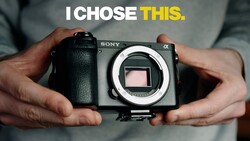
Coming to you from The Bergreens, this practical video walks through exactly what he'd buy if he were starting photography from scratch in 2026, drawing on 15 years of professional shooting across weddings, travel, landscapes, portraits, and commercial work. He breaks the video into two distinct paths: one for hobbyists and one for aspiring professionals, and the distinction matters more than most beginner guides acknowledge. For the hobbyist path, Bergreen recommends skipping full frame entirely and going with an APS-C camera like the Sony a6700 or the Canon EOS R7, both sitting around $1,500 new, with used options available at lower price points. His reasoning is straightforward: today's APS-C cameras are smaller, lighter, and deliver image quality close enough to full frame that most hobbyists will never notice the difference. Pair that with a single fast prime and you have a setup that forces you to learn composition by moving your feet rather than rotating a zoom ring.
For the professional path, Bergreen shifts to full frame, recommending cameras like the Sony a7 IV, Canon EOS R6 Mark II, or Nikon Z6III as solid mid-tier starting points. These aren't the flagship bodies, and Bergreen is explicit that you don't need the top-of-the-line models to shoot professionally. On the lens side, he starts with either a 35mm prime or a 24-70mm zoom, with the caveat that if you go the zoom route, you should treat it like a prime: decide your focal length before you raise the camera, not after. Third-party manufacturers like Viltrox, Sigma, and Tamron come up as legitimate alternatives for anyone trying to keep costs down without sacrificing optical quality.
One of the more useful threads running through the video is what Bergreen says to avoid buying, not just what to buy. Large lens collections, specialty glass, elaborate lighting rigs, and piles of accessories are all on his "not yet" list, and his logic is hard to argue with: gear you don't fully understand yet doesn't make you better, it just weighs down your bag and your bank account. He's also direct about the single thing that actually improves your photography, which isn't gear. That part of the conversation, along with his specific second-lens recommendations for both paths and the full breakdown of when to step back a camera generation to save money, is worth hearing in his own words. Check out the video above for the full rundown from Bergreen.



Join the Fstoppers community for free
-
Post comments and join in the discussions
-
Browse the site ad-free
-
Share your work and get featured in the community
-
Compete in the photo contests for fun and prizes
2 Comments
“gear you don't fully understand yet doesn't make you better”I totally agree with this view. For photographers, photography skills including composition, lighting, post-color grading and so on come first.
I can't imagine advising anyone new to photography to buy a short focal length prime lens, especially anyone interested in landscape or travel photography... two of the more popular reasons someone might want to take a step into photography beyond the smartphone in their pocket. Most people beginning serious photography probably don't even know all of the type of images they're going to be interested in. A short prime seems fine for portraits where, yes, it's easy to zoom with your feet.
Zooming with your feet, however, works really poorly when you're at the edge of a cliff with a four-hundred foot drop. Or you might not care to hike five miles to eliminate a few distractions on the sides of your composition. Or risk trespassing on private property in order to get closer to your subject.
And how a prime lens is a better lens for learning composition escapes me as well. It sounds a lot like the theory that shooting film is a better teacher because it forces you to slow down. Nonsense to both. Being able to get immediate feedback from a digital camera, and see immediately the compositional options from cropping with a zoom lens, are great teaching tools. My first and only lens for several years after buying a D800 was a Nikon F/4 24-120, and it served me well for a variety of purposes including landscape, product, a few real estate assignments, and some headshots. A short prime could never have provided that flexibility.