You don’t need another lens. You need a reason to press the shutter.
That might sting a little, especially if you’ve been eyeing an upgrade, but it hits at the core of how you actually improve. Better gear can help in certain situations, but it won’t fix hesitation, lack of direction, or random shooting with no purpose. Intention will.
Coming to you from The Bergreens, this thoughtful video opens a new series with a blunt claim: more gear will not make your photos better. Bergreen argues that every strong image starts with purpose, not specs, pointing to the common habit of blaming the camera for missed focus or flat light. It’s easier to fault equipment than to admit you didn’t slow down or think through the frame. You’ve probably done it. If only you had that newer body, that sharper 35mm, that faster autofocus. The video pushes back on that reflex and replaces it with a question that’s harder to avoid: why are you taking this photo?
Bergreen defines intention in clear terms. It’s the purpose behind the shot. Maybe you want to tell a story. Maybe you want to capture a fleeting moment with your kids. Maybe you want the viewer to feel calm, tension, nostalgia, or awe. Without that decision, you fall into accidental shooting. The video gives a simple example: grabbing a quick phone photo without thinking about framing, light, or background. The result is usually forgettable. When you lift your dedicated camera, though, something shifts. You think about composition. You adjust your angle. You wait a beat longer. That difference is intention, and it changes the outcome before you even touch your settings.
The video also breaks intention into practical categories. You can have emotional intention, where you aim to make the viewer feel something specific. You can have compositional intention, where you use framing, light, or negative space to guide the eye. There’s narrative intention, where the goal is to suggest a story beyond the single frame. There’s even ethical intention, where you think about how your subject is represented. Instead of wandering through a scene hoping something works, you choose a direction and build the image around it.
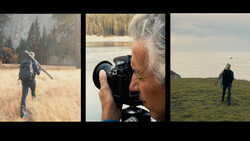
Where this gets especially useful is in the field. Bergreen suggests choosing a clear goal before you shoot. Ask what you want the viewer to notice or feel. Then set a guiding rule. If you want peace, maybe you soften the light and simplify the frame. If you want chaos, you embrace clutter and tension. The video demonstrates this by photographing the same space three different ways, each with a different intention. Same room. Same basic elements. Completely different results. That exercise alone is worth trying during your next outing.
There’s also a look at client work, where intention is often non‑negotiable. When you’re hired to show how a product fits into someone’s life, you don’t guess. You plan. You storyboard. You think about details that won’t happen by accident, like visible steam drifting off a snowmobile in cold air. Those shots require timing and awareness. When you operate that way in personal work, your images start to feel more deliberate and less random.
Check out the video above for the full rundown from Bergreen.




Join the Fstoppers community for free
-
Post comments and join in the discussions
-
Browse the site ad-free
-
Share your work and get featured in the community
-
Compete in the photo contests for fun and prizes
1 Comment
Bergreen is right: intention is the antidote to accidental shooting. But for the serious practitioner, 'intention' can feel frustratingly vague. How do you actually apply it in a split second on a street corner?
I have found that intention isn't a feeling—it’s a structural discipline. It’s the speed at which you decode the geometry of a scene before the shutter ever moves.
I’m in Seattle’s Pioneer Square this morning, and the 'intention' isn't just to 'capture the mood.' It’s to author a frame where the 19th-century brick textures and the filtered winter light serve a specific geometric narrative. If you don't build the stage first, your 'intention' is just a wish.
Don't just ask why you are taking the photo. Ask how the architecture of the frame is supporting that 'why'. When you master the structure, the gear finally becomes what it was meant to be: a transparent extension of your authority, not a crutch for your hesitation.