A perfectly sharp photo of something nobody wants to look at twice loses to a slightly soft photo of something interesting. That single trade-off runs underneath a whole approach to shooting that treats technical skill as the least of your worries.
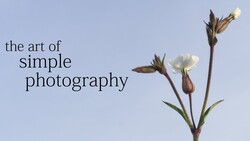
Andrew Banner skips the technicalities on his channel because he thinks they're neither that important nor that hard to learn, and he spends this walk through an industrial estate proving the point. He lands on three skills: observation, turning up, and being inquisitive. To keep himself honest, he's shooting with a manual 25mm lens, and he admits outright that one or two frames might not be nailed on sharpness. The subjects are a new-build railing that reads well in high-contrast black and white, a soft plant tangled against a chain-link fence and a shipping container, an empty car park with a single van. None of it is the sort of thing most people would stop for.
Banner's argument about observation cuts against the excuse most people reach for. He says if you've passed a driving test in a western country, you're already more observant than you give yourself credit for. The skill is in how you see things, not whether you can. Turning up gets its own place on the list because you can't observe anything from your sofa, and he cops to spending the morning doom-scrolling before getting out the door. Being inquisitive means refusing to write anything off as boring until you've actually worked it, walked around it, tried it low, tried it from the other side. Every photo he took that day, he says, started as a boring subject.
The habit worth stealing here is one you can build without a camera in your hand. Banner points out that observation, turning up, and curiosity all work whether you're carrying gear or not, so a walk to work becomes practice: the drain cover, the overflowing bin, the road sign, the steps. Come back later with the camera for the ones that stick. This lines up with how a lot of working photographers describe getting sharp, the idea that seeing is a trainable muscle and the equipment is just the tool that records the result. It also reframes the gear-upgrade urge. A more capable body unlocks possibilities only if you already know how to unlock them yourself, and traveling somewhere epic won't hand you epic images if you can't make one at home.
There's a useful bit of reasoning behind why he ranks concept over settings. Point the camera anywhere and you have millions of possible compositions, but only a handful of exposure and focus permutations. Spend your attention on the part of the equation with the most variables. That's why he'll happily accept a softer frame if the image says something, and why he warns against getting too clinical. Character, mystique, and grit don't require every edge to be crisp.
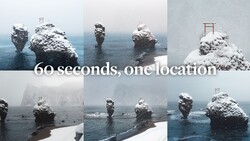
Banner gathered a set of extra images from this one location, all within half a mile of where he parked, some from an earlier visit, and some from a 90-minute stretch the weekend before. See how he works each ordinary subject in the video above.

Join the Fstoppers community for free
-
Post comments and join in the discussions
-
Browse the site ad-free
-
Share your work and get featured in the community
-
Compete in the photo contests for fun and prizes
No comments yet