Ask ten photographers what makes a good photograph and you'll get ten different answers, and the person asking might have given a completely different reply three decades earlier. That gap between the beginner's checklist and the experienced eye is where the real lessons hide.
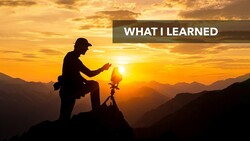
Working through a list of observations built over a long career, Adam Gibbs starts with the thing nearly every nature shooter chases: light. Gibbs still believes good light matters, but he draws a sharp line between light that's dramatic and light that suits the subject. His example is the crowded viewpoint at sunrise, where a dozen people stand shoulder to shoulder shooting identical conditions, yet only a handful walk away with a memorable frame. The light didn't make those images. It enhanced something that was already there. Some of his favorite work happened under flat, overcast skies that fit the subject better than any golden hour would have.
From there, Gibbs moves to composition, and his advice runs against instinct. Early on he tried to cram everything into the frame: the mountain, the lake, the flowers, the clouds. He eventually realized he wasn't composing, he was recording. Now the harder question is what to leave out, and he admits that deciding what doesn't belong is often tougher than deciding what does. A single tree, a few rocks, patterns in the sand. Simple work carries a clear idea of what you want to say, and that clarity tends to survive long after busy images stop holding attention. He extends the same discipline to the shape of the frame itself, treating aspect ratios as different canvases rather than afterthought crops. On his Fujifilm GFX 100, he'll switch between 4 by 3, square, 6 by 7, and 4 by 5 before the shutter fires, changing the balance of a scene without moving the tripod an inch.
His take on gear cuts through the usual upgrade pressure. Gibbs shoots the GFX system because he enjoys using it, not because he needs 102 megapixels, and he's blunt that the camera doesn't make him a better photographer. His recommendation is to buy what fits your budget and your subject, and to rent before you commit if you're unsure. He points out that a bird-in-flight shooter has no business reaching for medium format, since the long glass doesn't exist for it and the camera isn't fast to work with. Match the tool to the job, then choose the version of that tool you'll actually want to pick up.
There's a broader shift underneath all of this that's worth naming for anyone building a body of work. Gibbs keeps circling back to place, and specifically to returning to the same location again and again until you stop photographing a spot and start knowing it. That runs against the way most photography content pushes you toward the next epic destination, the next bucket-list peak, the next flight. Repeat visits teach you how a season turns, where light lands in different months, how weather rearranges a familiar view. Landscape photographers who commit to a single patch of woodland or coastline near home tend to develop a personal voice faster than those constantly chasing somewhere new, because the location stops being a subject and becomes a study. That habit pairs naturally with the slower, more patient way of working Gibbs describes, where standing in one place and watching often does more than covering ground ever could.
He's honest, too, about the outings that produce nothing. Some days the conditions don't cooperate, your head isn't in it, and nothing connects, and Gibbs argues that doesn't make the day a failure. You were outside, you observed, you learned. His closing thought reframes the whole question he opened with: a good photograph is one that means something to the person who made it, and if you enjoy the process, the pictures gradually take care of themselves. Settle in and watch the full set of hard-won lessons in the video above.
Join the Fstoppers community for free
-
Post comments and join in the discussions
-
Browse the site ad-free
-
Share your work and get featured in the community
-
Compete in the photo contests for fun and prizes
No comments yet