You look at a photo and decide almost instantly whether it works, long before you've weighed composition or settings. That fast reaction turns out to be a useful tool, and learning to name it can sharpen how you choose which shots to keep and which to walk away from.
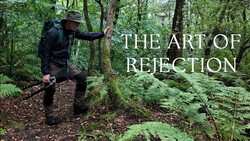
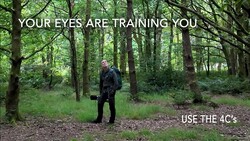
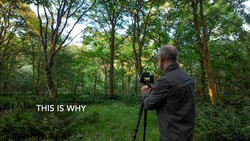
The idea comes from Simon Booth, who walks through a wood photographing sycamore leaves while asking a single question of every scene lined up in his viewfinder: does a positive word come to mind? Booth uses "beautiful" most often, but "atmospheric," "peaceful," and "elegant" all count. If one of those words attaches itself to what you see on the LCD, chances are the image is worth your time. If instead you land on "cluttered," "messy," "awkward," or "confusing," that's your signal to move on and look for something better. He applies the test at the moment a shot is set up and dialed in, when the technical decisions are done and only the response to the picture remains.
Booth photographs three scenes across the video and refuses to say whether he likes any of them, handing that judgment to you instead. Two are close-up leaf studies where a bright subject sits against a darker background, and he lowers the exposure so the subject pops off the screen. The third is a wider woodland scene he shot several videos back, now under fully open canopy and harsh overhead light, which he admits is working against him. He shoots one at f/16, another at f/19, and asks you for a word for each, positive or negative. There's also a word he holds back for most of the video, one he says is as damaging as "messy" but sits quietly in the middle rather than at either extreme.
That middle word is where the method earns its keep. Booth names it "ordinary." Woodland is chaotic by default. The forest floor is a tangle of twigs, leaves, and competing textures, and your job is to pull beauty out of that mess rather than pretend it isn't there. A cluttered frame announces itself as a failure right away, so it's easy to reject. Ordinary is sneakier. An ordinary shot is competent, correctly exposed, cleanly composed, and completely forgettable, which is exactly why it slips past your filter and into your keeper folder. The word test works because it forces a verdict that "technically fine" never delivers.
This kind of self-editing matters more now that shooting costs nothing. When every outing produces hundreds of frames, the bottleneck shifts from capture to selection, and most of the work of becoming a better photographer happens at the culling stage. Naming your reaction gives you a repeatable filter you can apply in the field, before you've hauled a card full of near-misses home. It also builds the habit of shooting less and choosing better, which pushes you toward the intimate landscape approach that rewards patience over volume. If you tend to fire away and sort it out later, flipping the order and deciding at the viewfinder trains your eye faster than any amount of post-processing. The technique costs nothing and travels with you into any genre, from macro to street to portraits.
Watch the full walk-through above to see which words Booth's three shots pulled from him and whether that final leaf swung as decisively as he predicted.


Join the Fstoppers community for free
-
Post comments and join in the discussions
-
Browse the site ad-free
-
Share your work and get featured in the community
-
Compete in the photo contests for fun and prizes
No comments yet